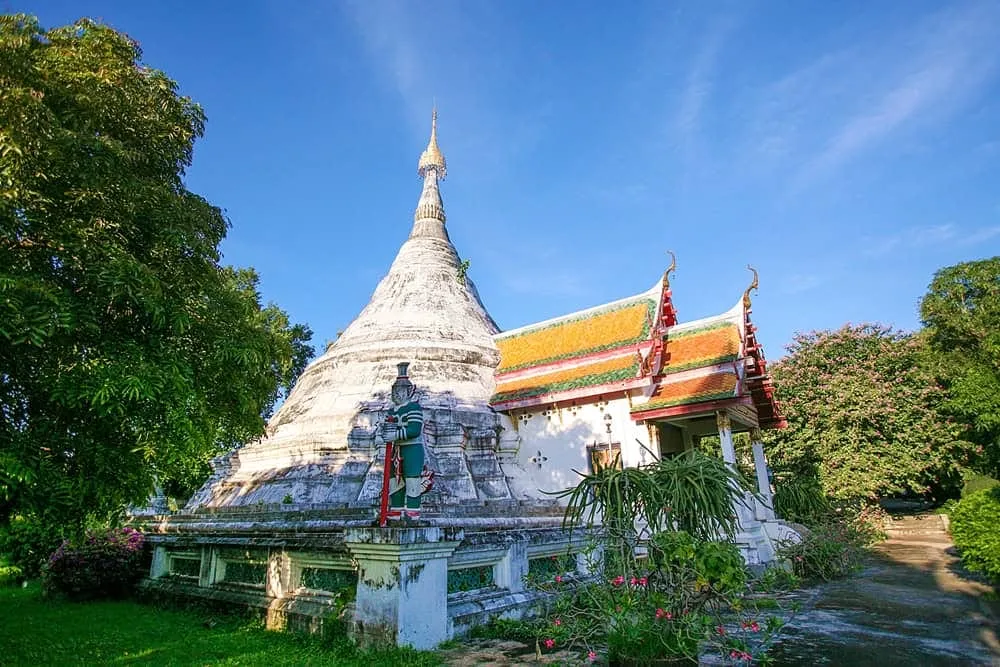





The ordination hall at Wat Si Talaram is built in European style (columns, a pediment roof, arched openings), a striking break from the wooden temple styles you’d expect this far north, and the temple’s actual standout feature rather than the wooden-pillar look older listings describe. Tak sits outside the historic Lanna kingdom’s borders, and this Mon-heritage temple’s architecture reflects that different regional history.
The name itself carries a story. Wat Si Talaram was originally called Wat Nam Huk, after a dry-season phenomenon: water from Khlong Mae Tho used to split and bend forcefully toward the temple’s river landing. Once both banks were filled in, the current stopped behaving that way and the old name lost its meaning. King Mongkut, Rama IV, renamed the temple Wat Si Talaram in the 19th century, a name believed to honour its founder, a local resident named Bun Yen.
Alongside the European-style ubosot, the grounds keep older wooden buildings and monks’ residences, and a carved wooden structure houses a Buddha image from the Ayutthaya period. The combination, a colonial-influenced hall next to traditional wooden monastic buildings, is what makes a stop here worth the short walk from central Tak, more than any single object on display.
Insider Tip: Pair this with Trok Ban Cheen, a historic alley of Chinese shophouses about 450 metres away: herb shops, tea cafes and family homes still operating out of buildings from around the same era as the temple’s older sections.
A full visit takes 30 minutes to an hour. There’s no fixed schedule for monk activity to plan around, so don’t count on catching a chanting session. Treat any you see as a bonus rather than the reason to come.
- Entry: Free
- Hours: Daily, daytime visits recommended
- Highlight: European-style ordination hall
- Former name: Wat Nam Huk
- Getting there: Taksin Road, Rahaeng subdistrict, central Tak
Wat Mani Banphot, about a kilometre away, is the other easy pairing if you’re spending a morning on Tak’s older temples. Dress modestly and remove your shoes before entering any of the halls; this remains a working temple with its own community, not a historical display.
Location & Directions
Mueang Tak, Tak
Tak, Thailand
Show your taxi or Grab driver
วัดสีตลาราม (วัดน้ำหัก)
Frequently Asked Questions
Is Wat Si Talaram free to visit?
Why is the ordination hall built in a European style?
What does Wat Si Talaram mean, and why was it once called something else?
Is Wat Si Talaram a Lanna-style temple?
How do I get to Wat Si Talaram?
Spotted something out of date or incorrect? Let us know
Stay Near Wat Si Talaram
Live prices for places closest to Wat Si Talaram: tap a pin to compare.