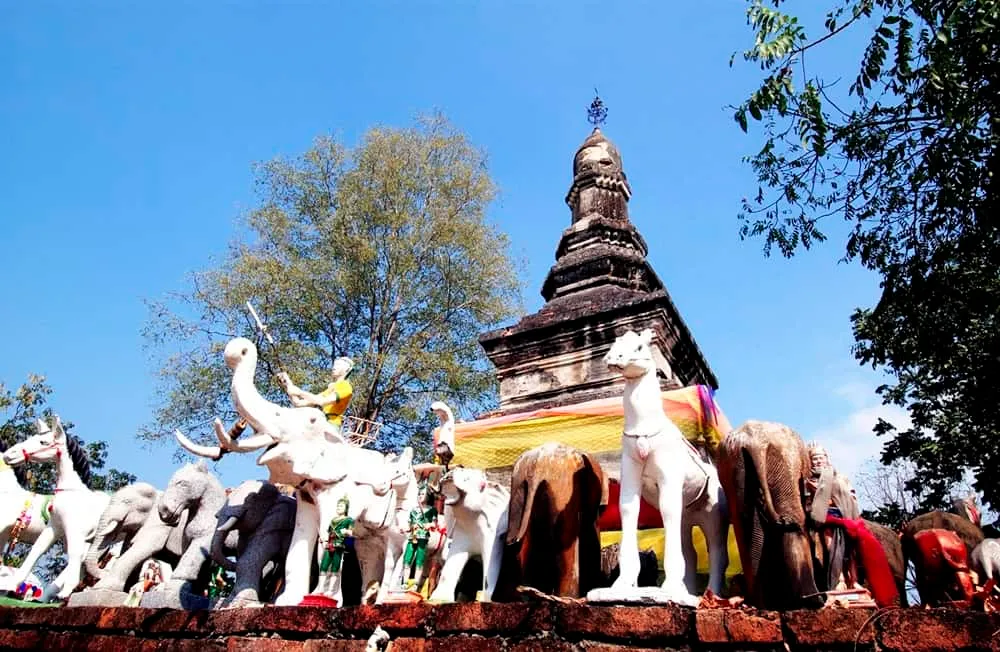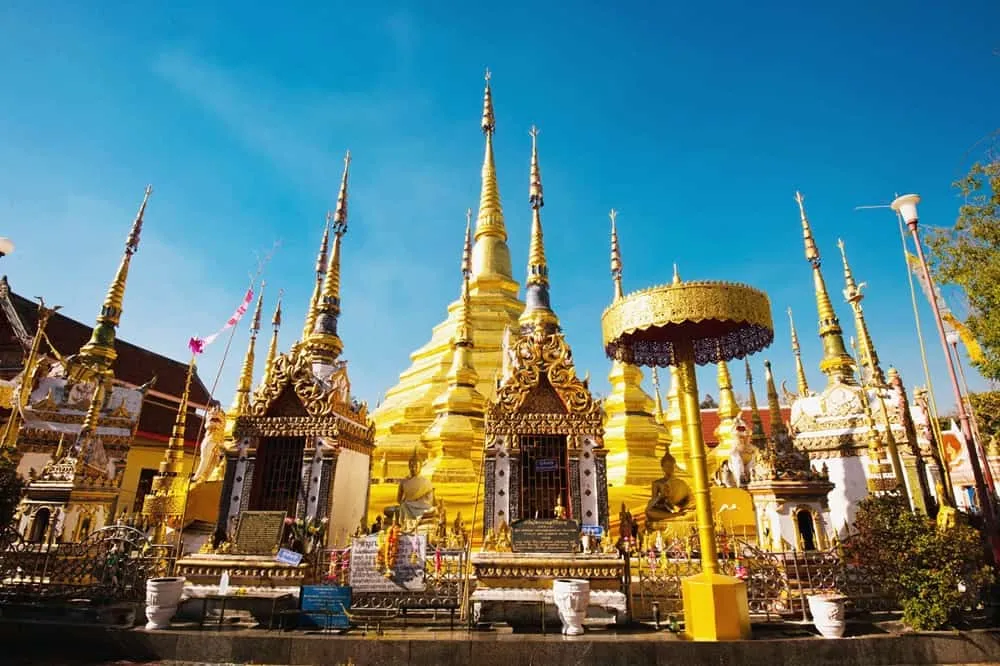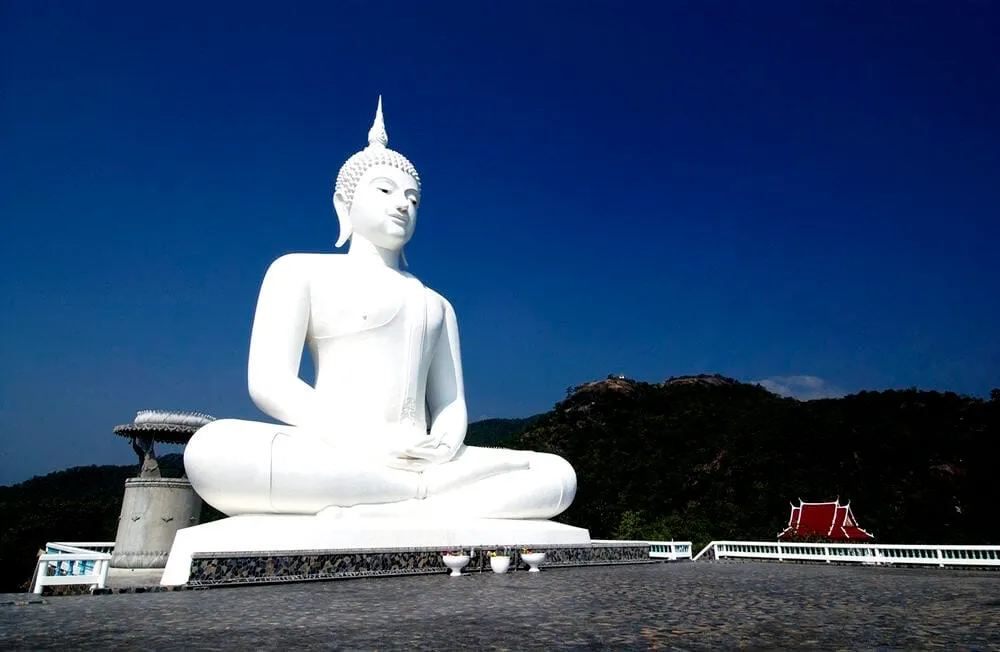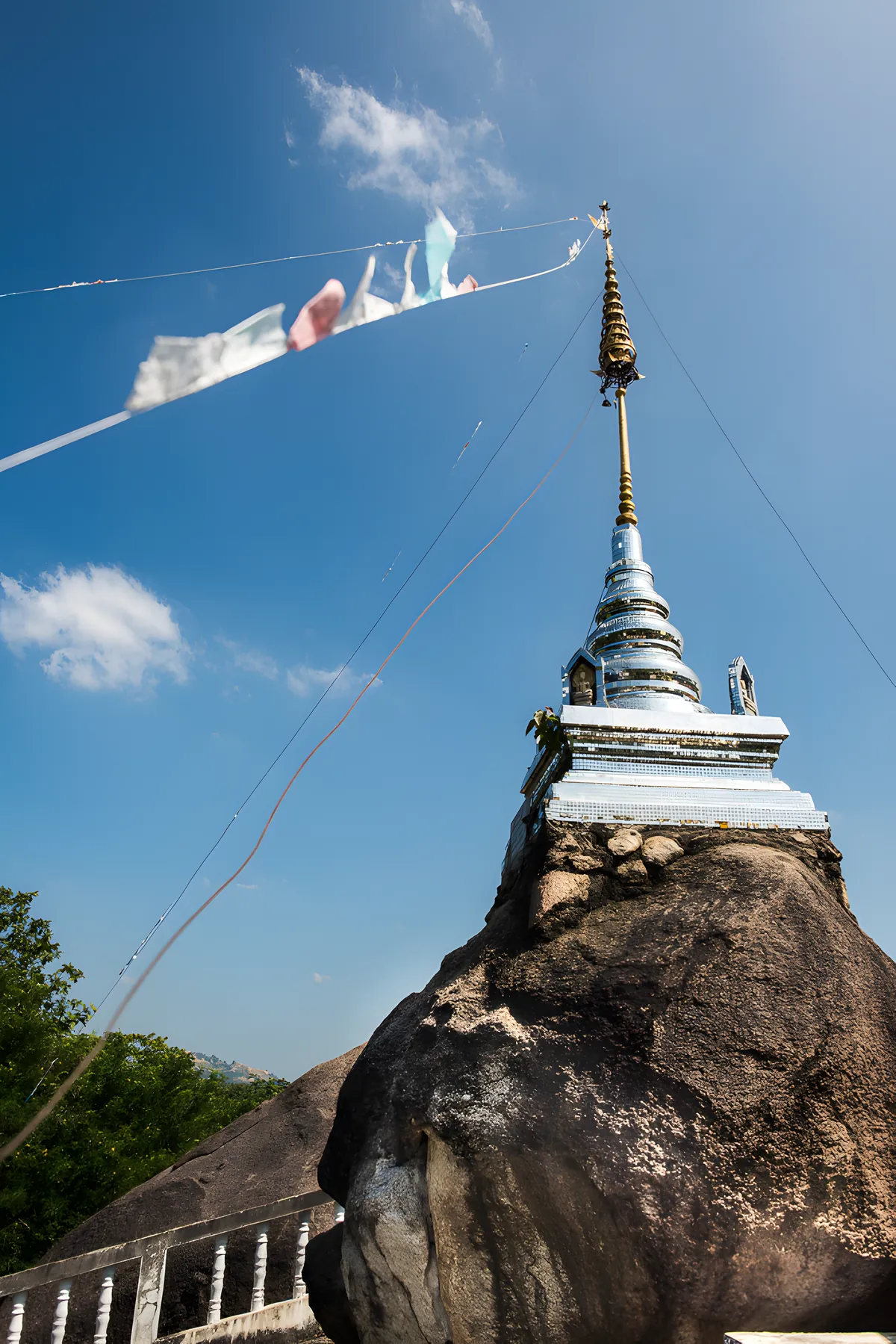

Wat Chon Prathan Rangsan exists because a dam flooded eight villages. When the Royal Irrigation Department built the Bhumibol Dam on the Ping River in the late 1950s and early 1960s, the rising reservoir swallowed the sites of eight temples in the old Ban Na sub-district: Wat Thapo, Wat Thaduea, Wat Luang, Wat Sitan, Wat Banhuai, Wat Dongkaew, Wat Thatloi, and Wat Umwab. The department resettled the affected communities into a new planned village and, on 10 April 1962, registered a single replacement temple here, naming it Chon Prathan Rangsan (“created by the Irrigation Department”) to record why it exists. Locals still call it Wat Chatsan, after Ban Chatsan (บ้านจัดสรร, “allocated village”), the resettlement community it serves.
That history, not an ancient lineage, is the real reason to stop here. The temple sits in Sam Ngao town, overlooking the Bhumibol Dam reservoir rather than any borderland; despite what older listings claim, this district is nowhere near Myanmar. The nearest Thai-Myanmar crossing, at Mae Sot, is a separate district roughly 100 km to the southwest across mountainous terrain: Sam Ngao’s geography is defined by the dam and the Ping River valley, not a frontier.
The temple once held a small community museum, Nidhi Wichit Phiphatchanodom, displaying roughly 800 artifacts (pottery, weaving tools, and pre-Sukhothai pieces) salvaged from the flooded Ban Na villages before the water came up. It’s permanently closed now, with the collection moved elsewhere for conservation, so don’t plan a special detour around it; call the local contact number first if it matters to your trip.
Insider Tip: Combine a stop here with a look at the Bhumibol Dam itself, a short drive north. The reservoir the temple’s history is tied to is the more dramatic sight, especially at the end of the dry season when the drawdown exposes the old shoreline.
Watch out: Don’t confuse this temple with Wat Chonprathan Rangsarit in Pak Kret, Nonthaburi, a much larger, better-known meditation temple with a near-identical Thai name. Both were founded by the Royal Irrigation Department, which is likely how the names ended up so close, but they’re unrelated sites 400 km apart.
Basic temple etiquette applies: remove shoes before entering any building, dress with covered shoulders and knees, and keep your feet pointed away from Buddha images. Public transport to Sam Ngao is limited: a car or motorbike from Tak town (roughly an hour via Highway 1 and Highway 104) is the practical way in.
- Entry fee: Free
- Founded: 10 April 1962, by the Royal Irrigation Department
- Why it exists: Replaced 8 temples flooded by the Bhumibol Dam reservoir
- Local name: Wat Chatsan (after Ban Chatsan resettlement village)
- On-site museum: Permanently closed
- Not to confuse with: Wat Chonprathan Rangsarit, Pak Kret, Nonthaburi
Location & Directions
Sam Ngao, Tak
Tak, Thailand
Show your taxi or Grab driver
วัดชลประทานรังสรรค์
Frequently Asked Questions
Is Wat Chon Prathan Rangsan near the Myanmar border?
Is Wat Chon Prathan Rangsan the same temple as Wat Chonprathan Rangsarit in Nonthaburi?
Can I visit the temple's museum?
Why is the temple called Wat Chatsan locally?
Is there an entry fee?
Spotted something out of date or incorrect? Let us know
Stay Near Wat Chon Prathan Rangsan
Live prices for places closest to Wat Chon Prathan Rangsan: tap a pin to compare.