




Wat Huai Pla Kang
วัดห้วยปลากั้ง
Wat Huai Pla Kang sits on a hillside on the northern edge of Chiang Rai, its most visible feature a milky-white statue of Guan Yin (Chao Mae Kuan Im), the Buddhist goddess of mercy, rising roughly 69 metres above the surrounding rooftops — about the height of a 25-storey building. Entry to the temple grounds is free; a lift inside the statue to the viewing deck costs 40 THB for foreigners and 20 THB for Thai nationals, running 07:00-18:00 daily. The temple grounds themselves stay open until 21:00.
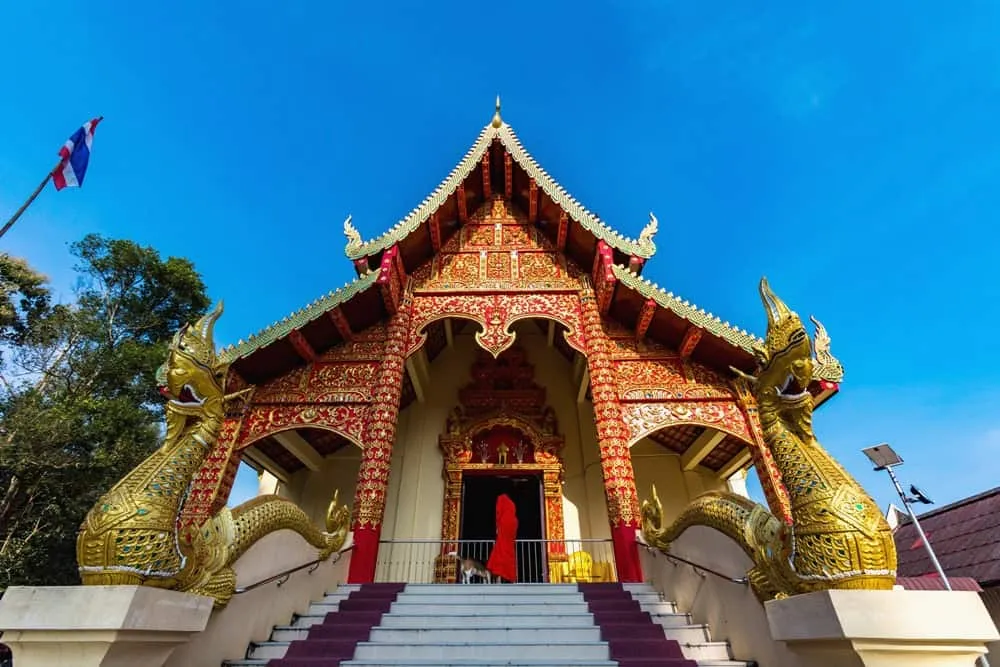
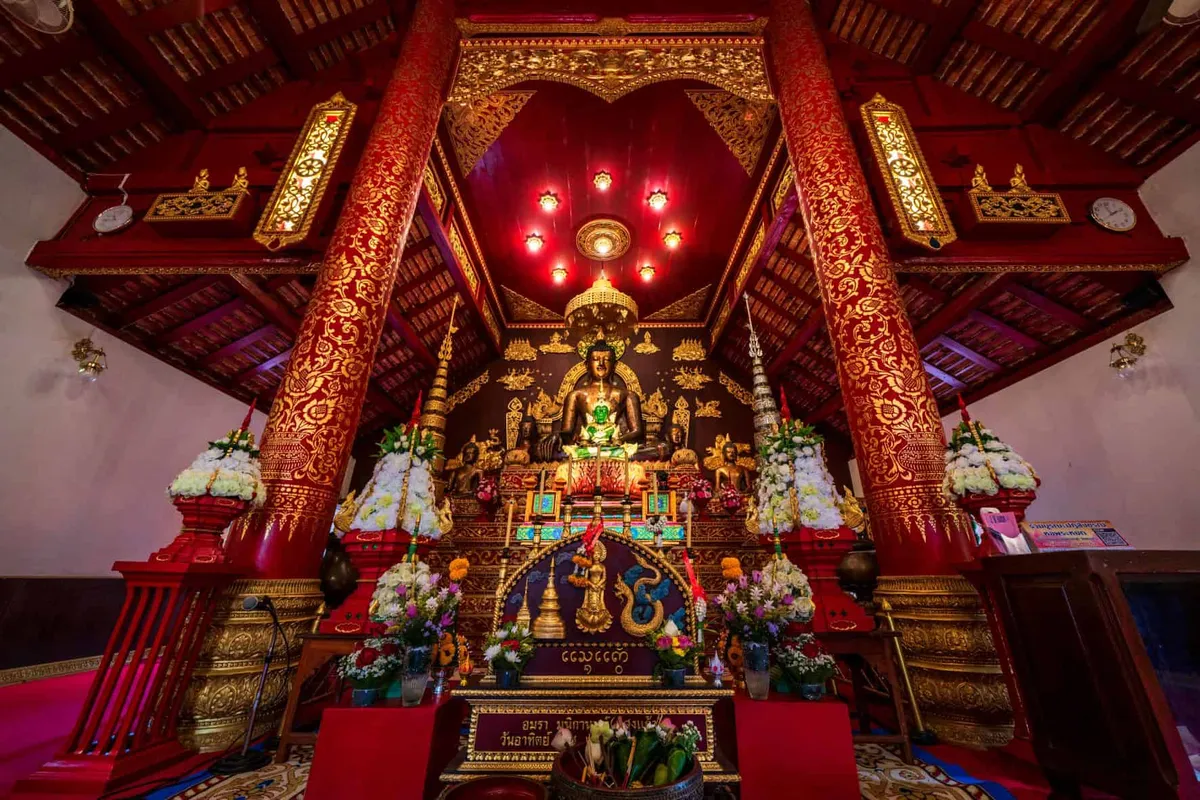
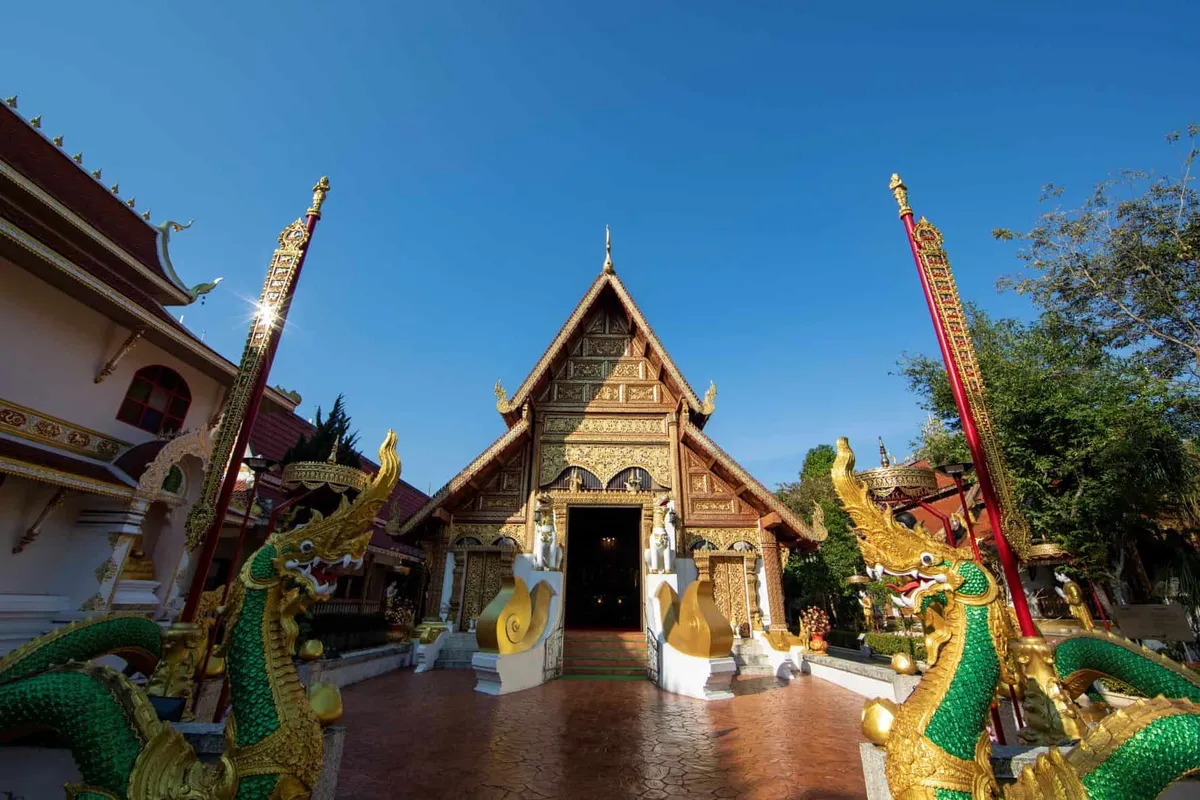
Local villagers began building a monastery on this site in 2001, and Phra Achan Phob Chok Tissawangso became its founding abbot; the site was formally registered as a temple, taking the name Wat Huai Pla Kang, in July 2009. His name lives on in the grounds’ other major landmark, the nine-tiered Phop Chok Dhamma Chedi, whose construction began in 2007. Each tier wears a Chinese-style tiled roof finished with dragon motifs, climbing to a bell-shaped spire in a Burmese style, with twelve smaller chedis ringing the base. Inside, a seated Guan Yin was carved from fragrant sandalwood shipped in from China, Myanmar and India — worth the stop even if you skip the lift outside. A separate white stucco ubosot (ordination hall), reached by a naga-flanked staircase, holds the temple’s principal white Buddha image.
The compound draws steady day-trip traffic from central Chiang Rai, about 15-20 minutes away by car, much of it stacked onto the same route as Wat Rong Khun (the White Temple) and Wat Rong Suea Ten (the Blue Temple). Morning is calmer — arrive before 09:00 and the lift queue is short, the light flatters the white statue, and the surrounding hills can still carry a trace of cool-season haze. By midday, tour coaches fill the car park and the wait for the lift can run past 30 minutes.
Watch out: the lift only runs until 18:00 even though the grounds stay open until 21:00 — arrive later and you can still walk the grounds and see the statue lit up after dark, but you won’t get the view from inside it.
Insider Tip: Skip the lift queue and take the external staircase around the statue’s base instead — it’s free, less crowded, and brings you close enough to see the dragon-tile detail on the chedi roofs that the ground-level view misses.
The best climbing season for comfort runs November through February, when Chiang Rai mornings sit in the high teens to low twenties Celsius rather than the muggier heat of April and May. Dress modestly for both the ubosot and the interior of the Guan Yin statue — shoulders and knees covered, as at any working Thai temple. Parking is free and unshaded, and a paved path connects the car park to the chedi, ubosot and statue base; the site involves some uphill walking between the three main structures but is manageable for most fitness levels. Sarongs are not always available on-site, so bring your own cover-up rather than rely on a rental.
- Entry fee: Free to the grounds; lift to the Guan Yin viewing deck 40 THB (foreigners), 20 THB (Thai nationals)
- Hours: Temple daily 07:00-21:00; lift 07:00-18:00
- Guan Yin statue height: Approximately 69 metres
- Main pagoda: Phop Chok Dhamma Chedi, nine tiers, construction began 2007
- Getting there: ~15-20 minutes by car from central Chiang Rai; often combined with Wat Rong Khun and Wat Rong Suea Ten
Location & Directions
Mueang Chiang Rai, Chiang Rai
Chiang Rai, Thailand
Show your taxi or Grab driver
วัดห้วยปลากั้ง
Frequently Asked Questions
How tall is the Guan Yin statue at Wat Huai Pla Kang?
Is Wat Huai Pla Kang free to enter?
What is the nine-tiered pagoda on the grounds?
How do I get to Wat Huai Pla Kang from central Chiang Rai?
What should I wear to visit?
Is Wat Huai Pla Kang busy?
Spotted something out of date or incorrect? Let us know
Tours visiting Wat Huai Pla Kang

Stay Near Wat Huai Pla Kang
Live prices for places closest to Wat Huai Pla Kang — tap a pin to compare.