Wat Rong Khun (White Temple)
วัดร่องขุ่น
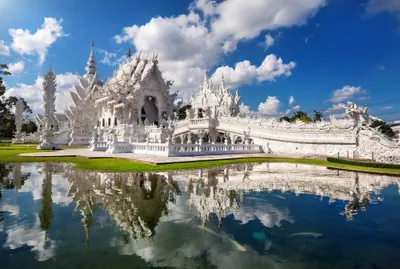
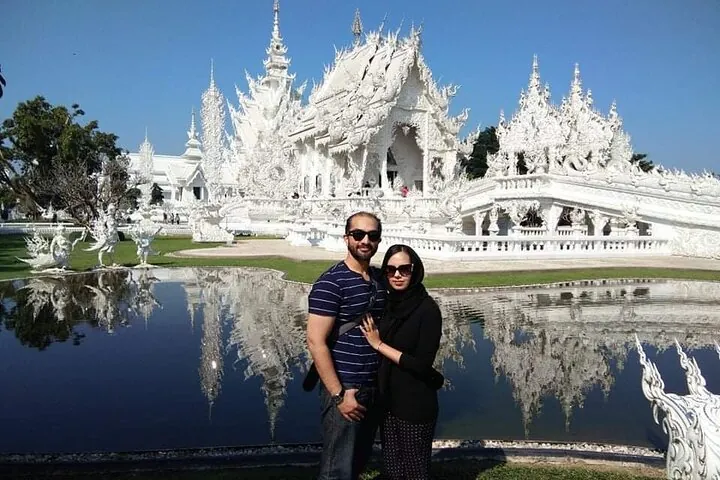
Wat Rong Khun — the White Temple — is contemporary artist Chalermchai Kositpipat’s all-white, mirror-flecked Buddhist temple on the edge of Chiang Rai, and one of northern Thailand’s most photographed sights. Foreign entry is 200 THB (raised from 100 in January 2026, now including the Cave of Art), and it opens daily from 08:00 to 17:30.
Why It’s White — and Covered in Mirrors
Chalermchai began the temple in 1997 and is still building it; the full plan runs to nine structures and may take decades more to finish. The white plaster stands for the purity of the Buddha, and the thousands of small mirror fragments set into it represent the Buddha’s wisdom, catching the northern sun so the whole building glitters. It is privately funded and privately run — closer to a living artwork in the shape of a temple than a conventional wat, which is why it looks like nothing else in Thailand.
The Bridge of Hands
The approach is the set piece. To reach the main hall you cross a narrow bridge over a pit of hundreds of pale hands reaching up from below — human greed, desire and suffering — past fanged guardians, and into the ubosot beyond. Crossing it is meant to be read literally: you leave the cycle of worldly attachment and step toward enlightenment. There’s no turning back on the bridge (one-way, for the symbolism and the crowds), so take your photos before you start across.
Inside the Ubosot
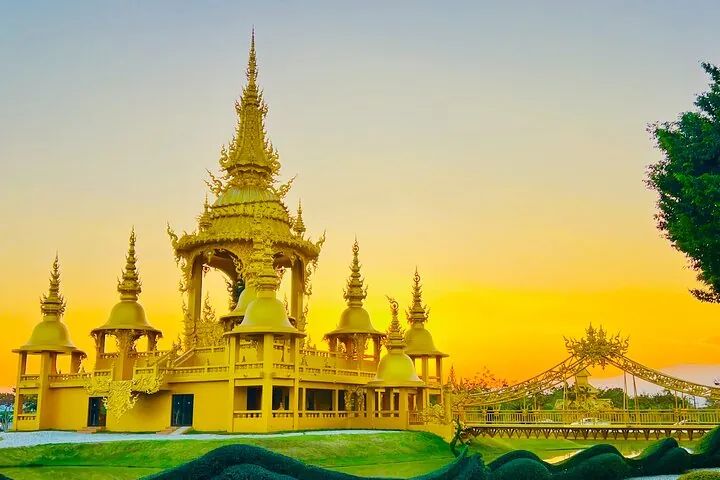
The interior is where the temple turns strange. Behind a traditional golden Buddha, Chalermchai’s murals fold the modern world into Buddhist cosmology — superheroes, spaceships, film characters and scenes of war and environmental ruin stand in for the temptations and chaos of contemporary life. Photography isn’t allowed inside, which is part of why it stays striking. Outside, the golden building nearby is actually the toilet block, gilded on purpose: gold for the body and material things, white for the mind.
Visiting the White Temple
The temple is about 13 km southwest of Chiang Rai town. Foreign entry is 200 THB and includes the Cave of Art; Thai nationals, over-70s and children under 120 cm go free. It’s open 08:00–17:30 with last entry around 17:00, and an hour to ninety minutes is enough to see it properly. A songthaew from the Chiang Rai bus station is the cheap option; a Grab or a half-day tour pairs it neatly with the Blue Temple and the Black House.
Insider Tip: Be at the gate for the 08:00 opening. By 10am the coaches from Chiang Mai arrive and the bridge becomes a slow-moving queue — and the early light is far kinder to both the glare and your photos.
Watch out: It’s a working temple, so the dress code (covered shoulders and knees) is enforced, and the bridge is strictly one-way — line up your shots before you cross rather than trying to stop halfway.
- Entry fee: 200 THB foreigners (free for Thai, over-70s and under-120cm); includes the Cave of Art
- Hours: Daily 08:00–17:30 (last entry ~17:00)
- Where: About 13 km southwest of Chiang Rai town
- Artist: Chalermchai Kositpipat — begun 1997, still unfinished
- Allow: 1–1.5 hours
Watch Before You Go
Watch before you go: Wat Rong Khun
Good to Know
Good for
On site
Location & Directions
Moo 1, Phahonyothin Rd, Pa O Don Chai, Mueang Chiang Rai District, Chiang Rai 57000
Chiang Rai, Thailand
Show your taxi or Grab driver
วัดร่องขุ่น
Frequently Asked Questions
What are the opening hours and entrance fee for the White Temple?
Where is the White Temple located?
Who built the White Temple and why does it look so unusual?
What is the significance of the bridge with the outstretched hands?
What else is there to see besides the main temple?
When should I go to avoid the crowds?
Spotted something out of date or incorrect? Let us know
Tours visiting Wat Rong Khun (White Temple)




Stay Near Wat Rong Khun (White Temple)
Live prices for places closest to Wat Rong Khun (White Temple) — tap a pin to compare.