
Wat Yai Chaimongkhon
วัดใหญ่ชัยมงคล
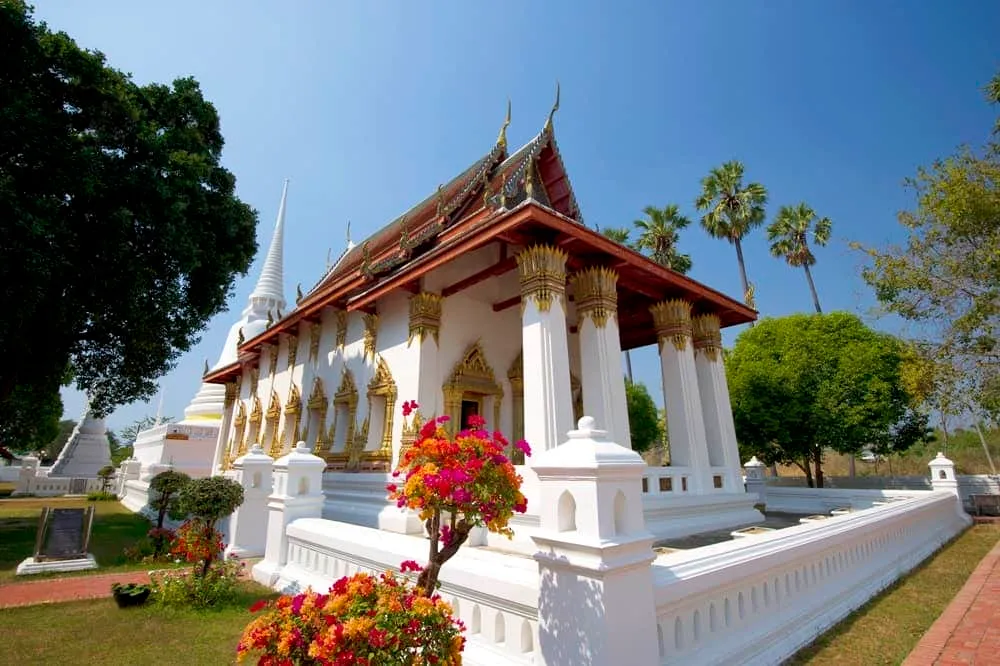
Wat Yai Chaimongkhon’s great chedi rises about 62 metres over Ayutthaya’s southeastern outskirts, high enough to spot from the historical park’s main ruins across the river. King Naresuan ordered it built in 1592 to mark his victory over the Burmese, renaming the older Wat Pa Kaeo in the process. Entry is 20 THB for foreign visitors, free for Thai nationals, and the grounds are open daily 08:00-17:00.
History
The temple began in 1357 as Wat Pa Kaeo, founded by King U-Thong, Ayutthaya’s first ruler, as a forest monastery for monks returning from ordination in Sri Lanka. It stayed a modest site for over two centuries until King Naresuan’s reign. In 1592, following his campaign against Burmese forces that ended a period of Ayutthayan vassalage, Naresuan commissioned the towering chedi that gives the temple its current name: Chai Mongkhon, Auspicious Victory. Popular retellings tie this directly to the famous elephant-back duel with the Burmese crown prince, but that duel is traditionally placed at Nong Sarai near Suphan Buri, and its exact details are disputed among historians. Some question whether a formal one-on-one duel took place at all. What’s on solid ground is the chedi itself and the year it went up to commemorate Naresuan restoring Siamese independence.
What to expect
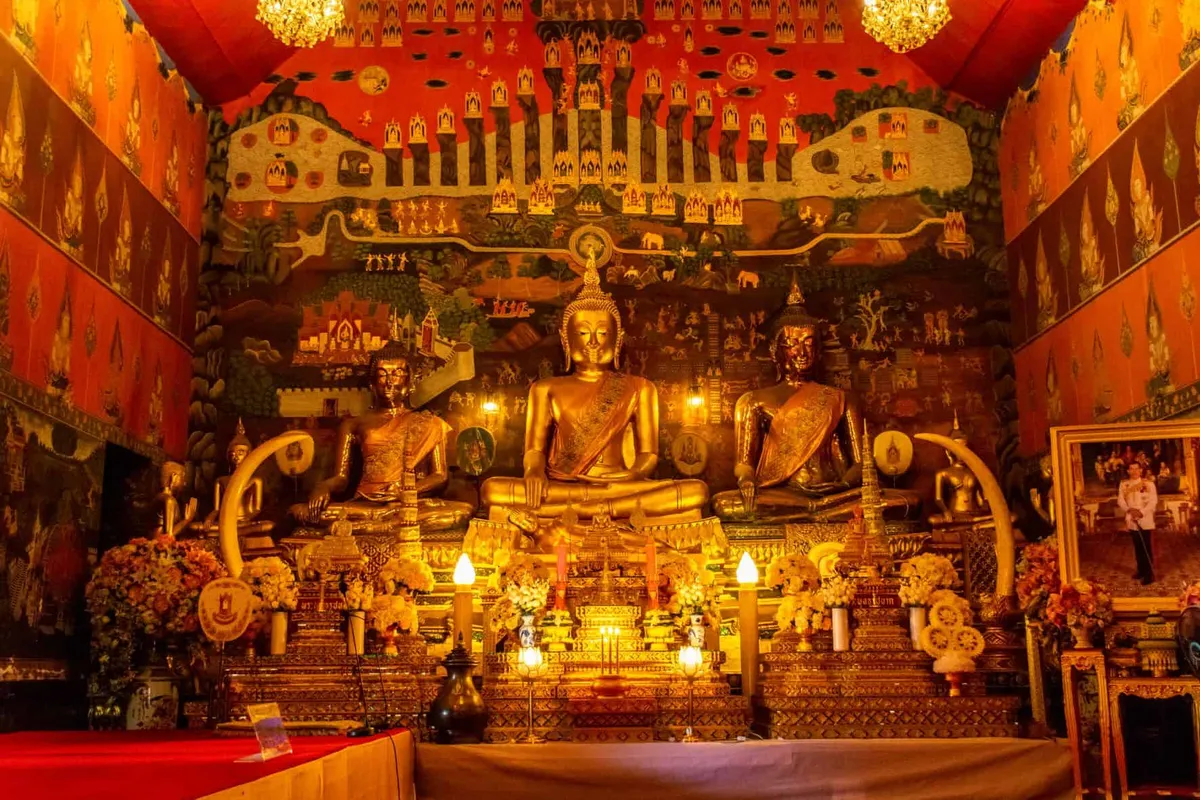
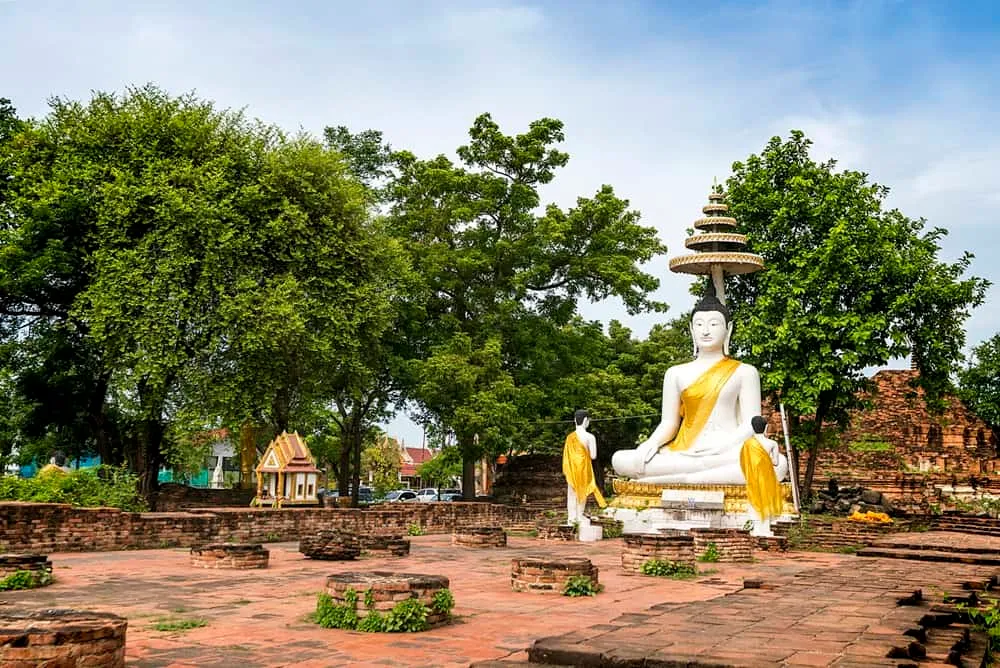
Steep stairs wrap the chedi’s base and lead to a platform partway up, not the summit, with views across the monastery grounds and the flat countryside beyond Ayutthaya’s old city island. At the base, a “saffron gallery” of seated Buddha images, each wrapped in orange cloth, runs around the structure in rows, a detail that photographs well in the early morning light before tour buses arrive. In the compound’s northeastern corner, a reclining Buddha roughly 30 metres long lies inside a part-open shelter; the current statue dates to a 1965 reconstruction after the original suffered damage, but it remains the image most visitors linger over.
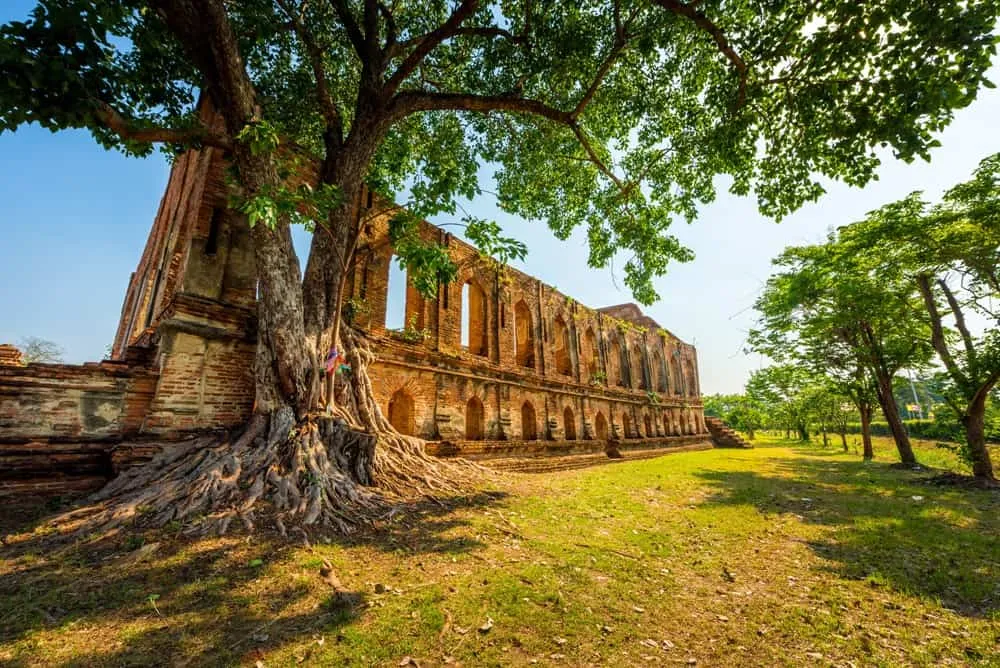
Unlike the roofless brick ruins that dominate much of Ayutthaya Historical Park, Wat Yai Chaimongkhon is a working monastery with resident monks. Morning and evening chanting still happens here, and prayer halls function as places of worship rather than fenced-off archaeology. That mix, restored monument plus living religious practice, is what separates it from sites like Wat Mahathat or Wat Chaiwatthanaram.
Insider Tip: Combine the visit with The King Naresuan the Great Monument near Wat Phu Khao Thong, about 15 minutes away, a natural pairing since both sites trace back to the same king and era, even though the monument commemorates a different, separate episode of his campaigns.
Watch out: The chedi stairs are narrow, uneven, and get slippery-hot in direct sun. Skip the climb in flip-flops, and carry water: there’s little shade once you’re on the platform.
Practical information
The temple sits about 3km southeast of Ayutthaya’s main historical park cluster, across the river from sites like Wat Phra Si Sanphet. Tuk-tuk gets you there in around 10 minutes; cycling takes about 20. Dress modestly (shoulders and knees covered) and remove shoes before entering any roofed shrine building. Most of the grounds are open-air with limited shade, so a hat and water matter more here than at temples with covered walkways.
- Entry fee: 20 THB (foreigners), free (Thai nationals)
- Hours: Daily 08:00-17:00
- Built: Chedi raised 1592 under King Naresuan; original monastery founded 1357
- Highlights: Climbable chedi platform, saffron-robed Buddha gallery, ~30m reclining Buddha
- Getting there: ~3km southeast of the main historical park, 10 minutes by tuk-tuk
Bang Pa-in Palace, the royal summer retreat about 30 minutes further south, pairs well with a Wat Yai Chaimongkhon morning if you’re spending a full day in Ayutthaya.
Location & Directions
Phra Nakhon Si Ayutthaya, Phra Nakhon Si Ayutthaya
Ayutthaya, Thailand
Show your taxi or Grab driver
วัดใหญ่ชัยมงคล
Frequently Asked Questions
Is Wat Yai Chaimongkhon free to enter?
What are the opening hours?
Did King Naresuan really fight an elephant duel here?
Can you climb the chedi?
Where's the reclining Buddha?
What should I wear and how do I get there?
Spotted something out of date or incorrect? Let us know
Tours visiting Wat Yai Chaimongkhon




Stay Near Wat Yai Chaimongkhon
Live prices for places closest to Wat Yai Chaimongkhon: tap a pin to compare.