
Huai Hong Khrai Royal Development Study Center
ศูนย์ศึกษาการพัฒนาห้วยฮ่องไคร้
Huai Hong Khrai began with a direct instruction from King Bhumibol on 11 December 1982: build a study centre suited to northern Thailand’s conditions, on land straddling Pa Miang and Mae Pong subdistricts in Doi Saket, and use it to demonstrate forest and watershed restoration alongside farming methods ordinary households could replicate. More than four decades on, the roughly 8,500-rai site still functions as a working research station rather than a museum piece, with the grounds open to visitors daily from 8:30 AM to 4:30 PM.
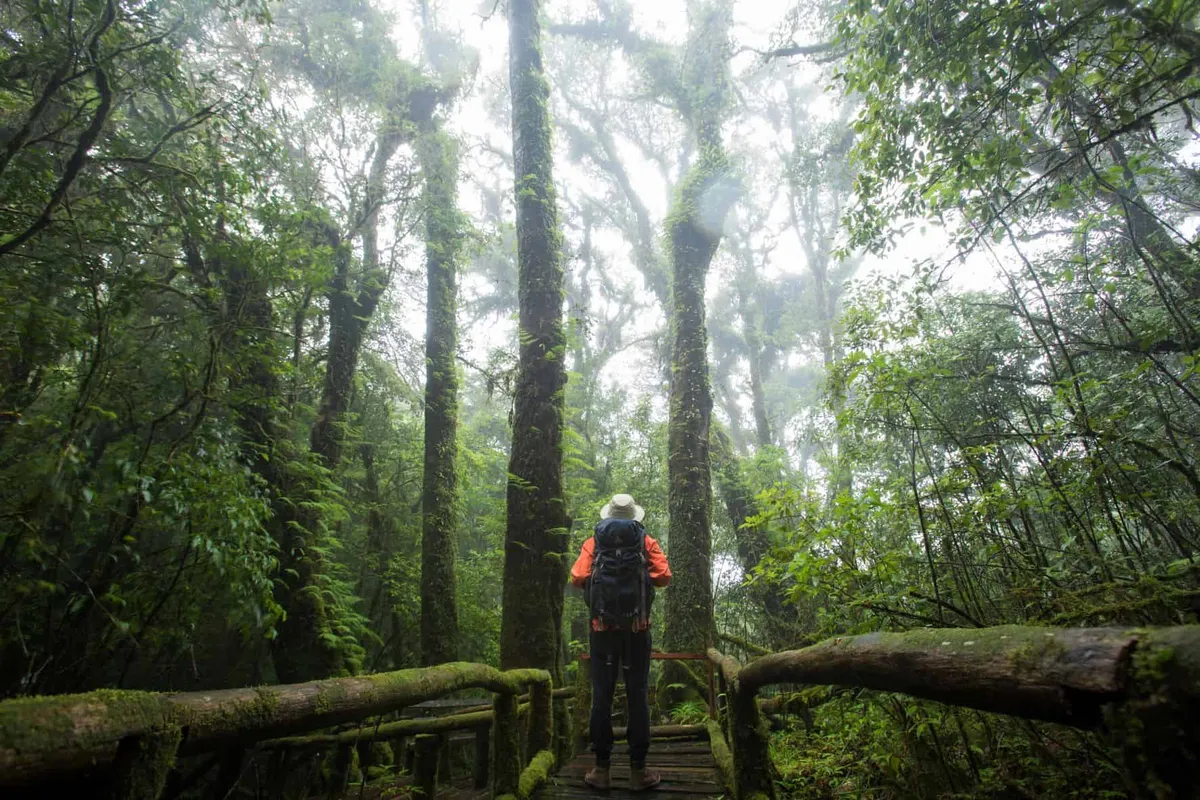
Seven marked spots make up most of a self-guided visit: two reservoir areas built for water management research, a wildlife and livestock zone focused on animal husbandry trials, an 11-point nature study trail through the surrounding forest, a garden laid out to display all six of Thailand’s royal development study centre models side by side, a vegetable cultivation research plot, and a seventh reservoir area popular for birdwatching and fishing. Walking between them, you pass the wooden research buildings and information boards that have accumulated over the decades, with wooded hills forming a consistent backdrop rather than a single dramatic viewpoint.
Formal study tours (the kind aimed at students, farmers, and visiting officials) need to be booked ahead and generally run on weekdays only. That’s a separate track from simply turning up to walk the trails and see the reservoirs, which is open every day of the week; the weekday-only rule applies to the guided, appointment-based programme rather than general access to the grounds. Watch out: if you’re specifically after a guided explanation of the research (rather than just walking the grounds yourself), call ahead to confirm a weekday slot rather than assuming staff will be available to walk you through on a weekend.
Mornings are the more comfortable time to visit: northern Thailand’s afternoon heat builds quickly on the open trail sections, and the research areas are more active earlier in the day. Comfortable shoes matter more than they might sound, since covering all seven check-in spots means real walking distance across open and shaded ground alike.
Insider Tip: Skip the idea of “doing” all seven spots in order: the reservoir-and-birdwatching area furthest from the entrance rewards a slower pace more than a checklist approach, especially if you brought binoculars.
- Entry: Free
- Hours: Grounds open daily 8:30 AM-4:30 PM; guided study tours are weekday-only by appointment
- Founded: 1982, on King Bhumibol’s royal initiative
- Size: About 8,500 rai across Pa Miang and Mae Pong subdistricts, Doi Saket
- Distance: ~27 km northeast of Chiang Mai city via Route 118
Huai Hong Khrai shares this stretch of Doi Saket with Tweechol Botanical Garden, a 302-rai private garden with bike and golf-cart trails, and Mae Kuang Udom Thara Dam, where you can kayak or just take in the reservoir view, both closer to central Chiang Mai than to the San Kamphaeng handicraft corridor, making a loop through this side of the valley a straightforward half-day out of the city.
Location & Directions
Boundary of Pa Miang and Mae Pong subdistricts, Doi Saket, Chiang Mai
Chiang Mai, Thailand
Show your taxi or Grab driver
ศูนย์ศึกษาการพัฒนาห้วยฮ่องไคร้
Frequently Asked Questions
Is Huai Hong Khrai in Doi Saket or San Kamphaeng?
What exactly is this place?
Is it open every day, or just weekdays?
Is there an entrance fee?
How far is it from Chiang Mai city?
Spotted something out of date or incorrect? Let us know
Popular tours in Chiang Mai





Stay Near Huai Hong Khrai Royal Development Study Center
Live prices for places closest to Huai Hong Khrai Royal Development Study Center: tap a pin to compare.