Three Pagodas Pass
ด่านเจดีย์สามองค์
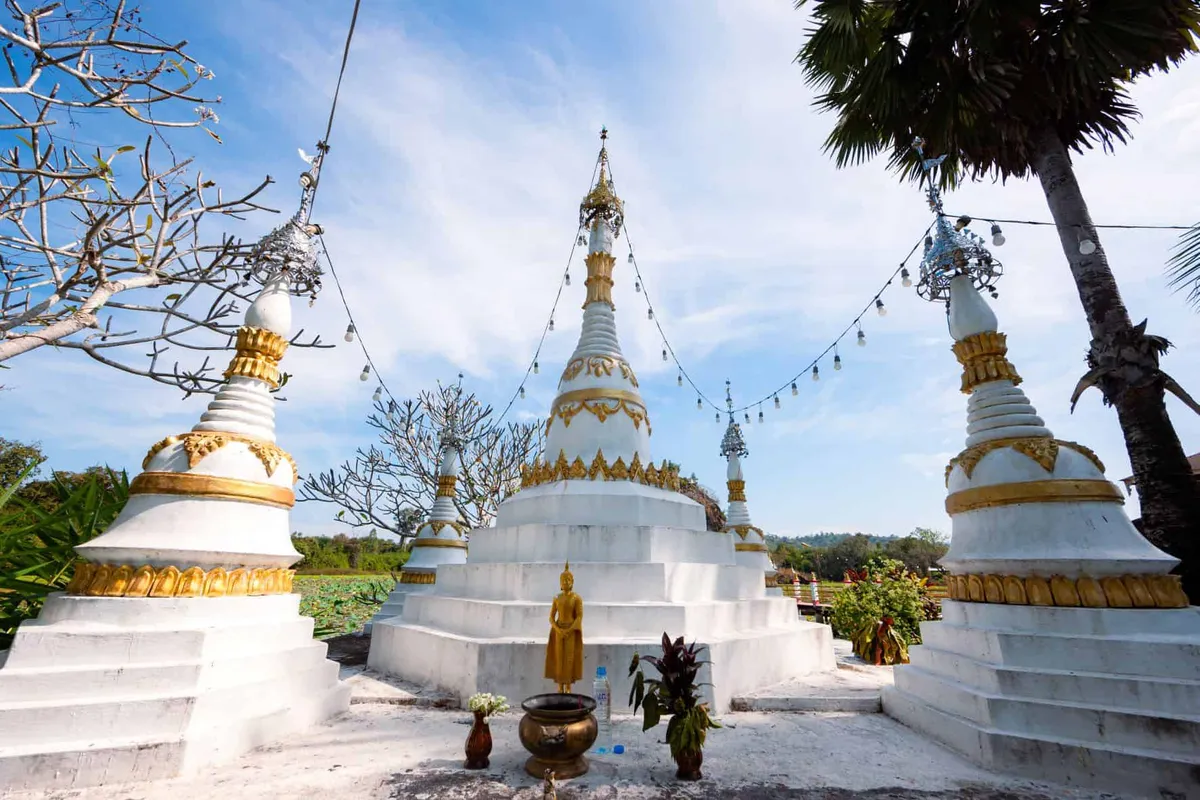
Three small, whitewashed chedis mark Dan Chedi Sam Ong — Three Pagodas Pass — on the Thai side of the Myanmar border near Sangkhlaburi, Kanchanaburi. Entry is free. Despite how the pagodas are sometimes described, they aren’t ancient: records point to them being erected in 1929 as a peace marker, and they now appear in stylised form on Kanchanaburi province’s official seal.
What makes the pass genuinely significant is the route itself, not the age of the monuments. This gap in the Tenasserim Hills has been the main invasion corridor for Burmese armies into Siam since the Ayutthaya period, starting with the first documented incursion in 1548. Centuries later, during World War II, Japan drove a branch of the Death Railway through this same corridor, at a brutal cost in Allied POW and forced-labourer lives. Standing at the pass today, that weight of history sits behind a fairly ordinary scene: three modest stupas, a scattering of souvenir stalls selling Burmese wooden furniture, jade carvings, and textiles, and a steady trickle of day-trippers rather than a grand monument.
Crossing into Myanmar here is a different matter from simply viewing the pagodas. This is a local/temporary border point, not a full international checkpoint — day access into the Myanmar town of Payathonzu has historically been reserved for Thai and Myanmar nationals carrying local border passes, not foreign tourists with passports. The wider border area has also seen real instability: this stretch has periodically closed amid fighting between Karen and Mon armed groups and Myanmar’s military, including a clash reported near the pass in 2021. None of that stops a visit to the Thai-side pagodas and market, but don’t plan a trip assuming you’ll be walking into Myanmar — check the current situation in Sangkhlaburi first.
- Entry: Free
- Pagodas: Three small stupas, erected 1929 as a peace marker — not ancient
- Historical role: Main Burmese invasion route since 1548; WWII Death Railway corridor
- Crossing into Myanmar: Not reliably open to foreign passport holders; local border passes only
- Border market: Wooden furniture, jade carvings, textiles, on the Thai side
Insider Tip: Treat this as a history stop rather than a temple pilgrimage — the real interest is standing on a route that shaped Thai-Burmese history for 500 years, not the pagodas’ architecture, which is plain by Thai temple standards.
Watch out: Don’t expect to walk across into Myanmar on a whim. Border access rules for foreigners here change with little notice, and staff at the checkpoint can turn visitors back even when the market is open.
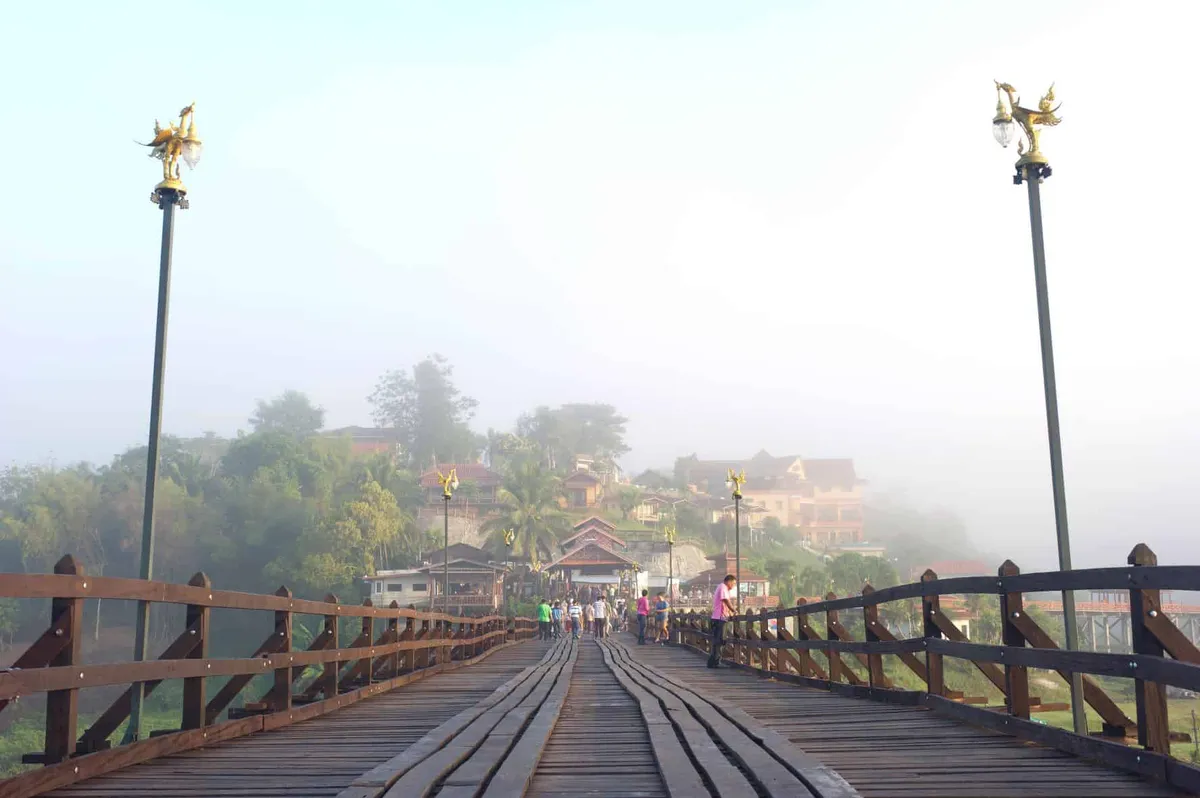
The site sits a manageable drive or songthaew ride from Sangkhlaburi town. Combine it with Sapan Mon Bridge, Thailand’s longest wooden bridge, for a fuller day around the Mon and Karen communities of the district, or with Khao Laem National Park if you want reservoir scenery alongside the border history.
Location & Directions
Moo 9
Kanchanaburi, Thailand
Show your taxi or Grab driver
ด่านเจดีย์สามองค์
Frequently Asked Questions
Are the three pagodas ancient?
Can you cross into Myanmar at Three Pagodas Pass?
Is it safe to visit right now?
Is there a fee to see the pagodas?
What's at the border market?
Spotted something out of date or incorrect? Let us know
Popular tours in Kanchanaburi

![Erawan Waterfall and Kanchanaburi Private Tour [Optional Luxury]](https://images.thaiholidayguide.com/images/tours/erawan-waterfall-and-kanchanaburi-private-tour-optional-luxury.webp)



Stay Near Three Pagodas Pass
Compare places to stay in Kanchanaburi, or open the map for options closest to the attraction.