
Bo Aong Pagoda
เจดีย์พระธาตุโบอ่อง
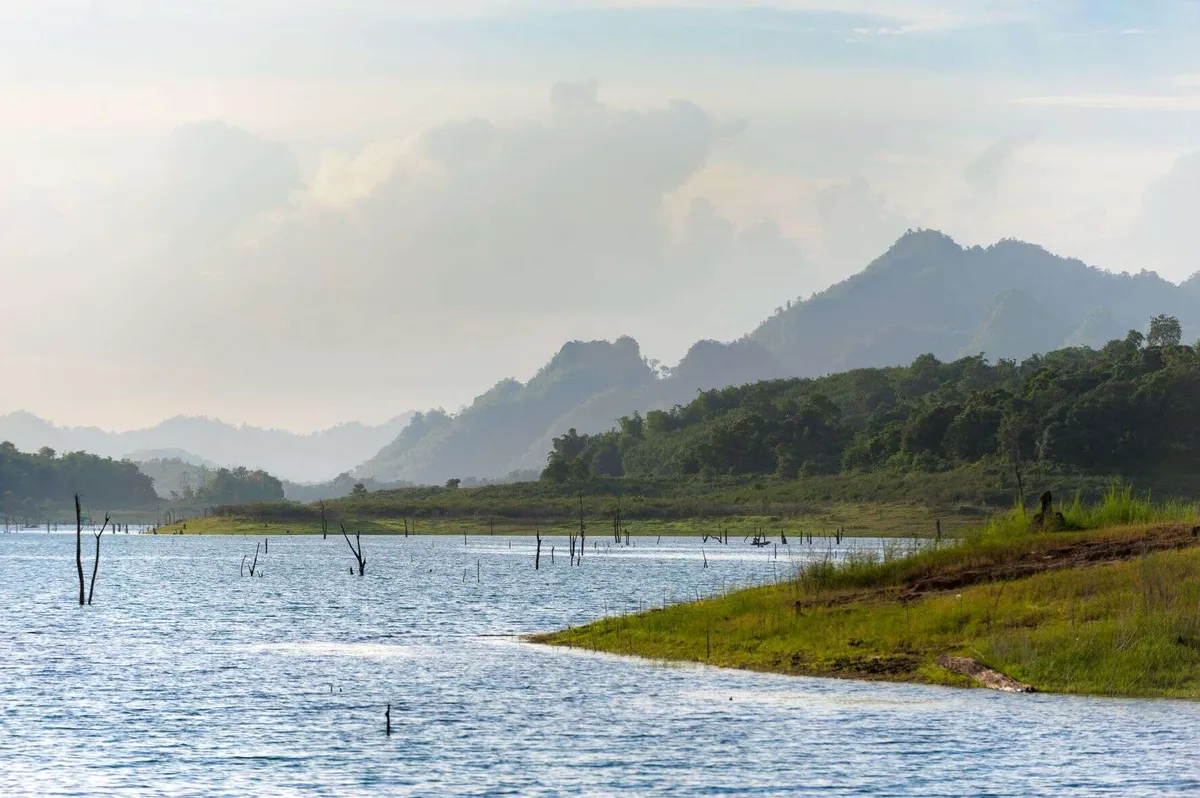
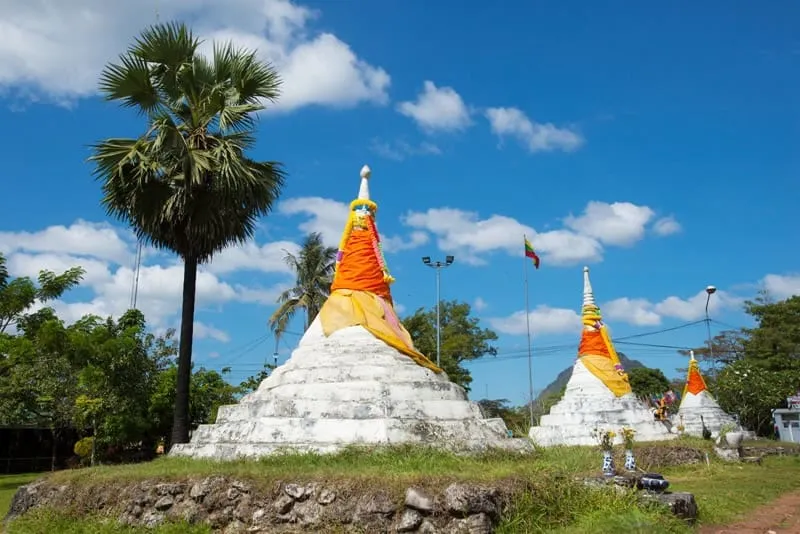
Phra That Bo Ong is a small Mon-style stupa — roughly six metres tall on a base about three metres square — standing alone on a limestone islet in the reservoir behind Vajiralongkorn (Khao Laem) Dam, in the remote Pilok area of Thong Pha Phum district, Kanchanaburi. There’s no road to it. The only way in is a hired longtail boat from the reservoir shore, and there’s no admission charge.
The chedi sits ringed by a shallow, lotus-dotted pond that draws a resident colony of purple swamphens, known locally as blue moorhens, with the still reservoir and forested hills as backdrop. There’s no prayer hall, no vendor stalls, no monastery complex around it — just the stupa and the water. It’s regarded as one of the oldest shrines in the district and matters to the Karen and Mon communities who settled Bo Ong village on the lakeshore. Once a year, on the full moon of the fourth lunar month, Mon and Karen devotees make the boat crossing together to pay their respects — the closest thing the site has to a festival.
No one records exactly when the chedi was built. Local tradition ties its origin to a visit from the Buddha, said to have converted a giant on the site through his teaching — the kind of founding legend attached to a number of old Mon and Karen shrines in this part of Kanchanaburi, more folklore than documented history.
Insider Tip: Budget the whole day for this one. It typically runs around two hours’ drive from Kanchanaburi town to the reservoir shore, then close to an hour by longtail boat to reach the islet. There’s no boat-hire counter or fixed schedule — ask in the village or arrange a boat through a Thong Pha Phum guide before you set out. Expect to pay roughly 1,000-1,500 THB for the return crossing, less per head if you can split it with other travellers.
Bring water, sun protection and cash; there are no shops on the islet and few along the approach road. Pair the trip with the wider Pilok mining-village area or Khao Laem National Park, which borders the same reservoir system, and aim for the cooler, drier months from November to February, when the lake is calmer and the drive more comfortable. This is one of the more far-flung corners of Kanchanaburi — the payoff is a genuinely quiet, working shrine rather than a polished tourist stop.
- Style: Small Mon-style stupa, about 6m tall on a 3x3m base
- Access: Longtail boat only — no road reaches the site
- Boat hire: Roughly 1,000-1,500 THB return, arranged locally
- Best time: Nov-Feb for calmer water; full moon of the 4th lunar month for the annual pilgrimage
- Entry fee: Free
Location & Directions
Pilok, Thong Pha Phum, Kanchanaburi
Kanchanaburi, Thailand
Show your taxi or Grab driver
เจดีย์พระธาตุโบอ่อง
Frequently Asked Questions
How do you get to Bo Aong Pagoda?
Is there an entry fee?
What is Phra That Bo Ong?
When is the best time to visit?
Can you stay overnight near the pagoda?
Spotted something out of date or incorrect? Let us know
Popular tours in Kanchanaburi

![Erawan Waterfall and Kanchanaburi Private Tour [Optional Luxury]](https://images.thaiholidayguide.com/images/tours/erawan-waterfall-and-kanchanaburi-private-tour-optional-luxury.webp)



Stay Near Bo Aong Pagoda
Live prices for places closest to Bo Aong Pagoda — tap a pin to compare.