





Hell Fire Pass Memorial Museum
ช่องเขาขาด
Hell Fire Pass is the Konyu Cutting, a 25-metre-deep, 110-metre channel that Allied prisoners of war and conscripted Asian labourers hand-cut through solid rock in 1943 for the Thailand-Burma Railway. The name comes from how the site looked at night: men worked round-the-clock shifts under Japanese command, the rock face lit by carbide lamps and fires, in conditions that killed thousands from starvation, disease, and exhaustion. The museum and trail, roughly 80 km northwest of Kanchanaburi town in Sai Yok district, are run by Australia’s Office of Australian War Graves and free to enter, funded by donation.
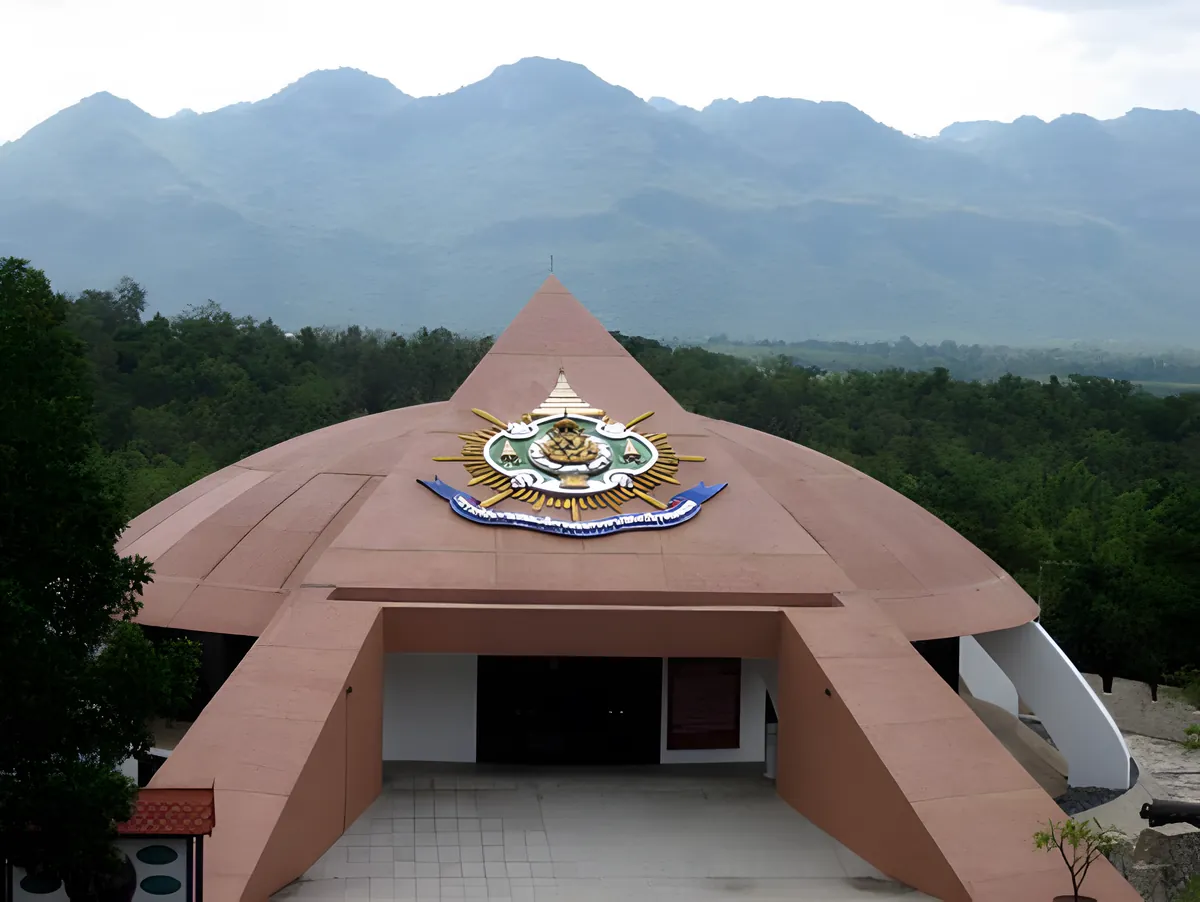
Inside, the museum holds POW testimony recordings, personal artifacts, and photographs documenting the railway’s construction and the men who built it. A handheld audio device (200 THB refundable deposit) guides you through the exhibits and, if you take it outside, the walking trail itself — recorded accounts from survivors play at specific points along the cutting. Allow 45 minutes to an hour for the museum alone before heading down to the pass.
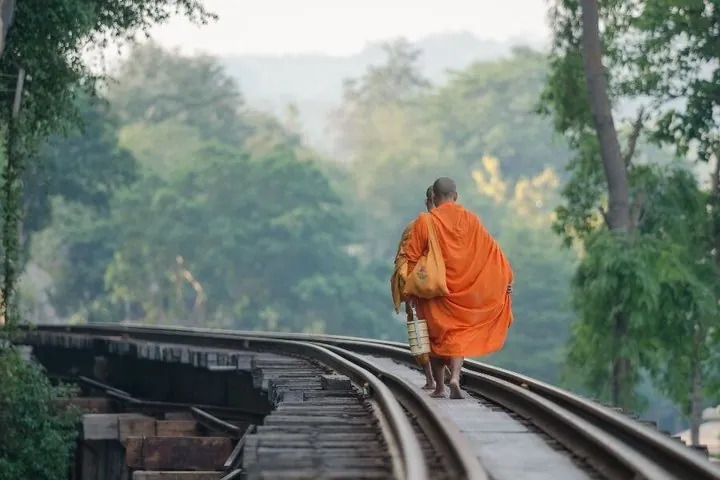
The trail down into Hell Fire Pass and back is about 1 km and takes 30-45 minutes on uneven rock steps — manageable for most visitors with reasonable fitness. From there, the full Memorial Walking Trail continues roughly 4 km one way along the original railbed, past Hin Tok Cutting to Compressor Cutting and the site of the Pack of Cards Bridge, where a section of trestle collapsed during construction. The full round trip runs 2.5-3 hours over broken, shaded-in-parts terrain — only worth attempting if you’ve got the morning free and sturdy shoes.
Standing in the cutting itself, between rock walls carved by hand with picks and hammers, is a different experience from reading about it. There’s little to see in the way of monuments beyond a few memorial plaques set into the rock — the site relies on the scale of the cutting and the audio testimony to convey what happened here, not staging. Visitors tend to go quiet.
Watch out: This is a memorial to mass suffering and death, not a scenic stop to fold into a river-and-bridge day trip without thinking about pacing — give it your full attention rather than rushing through between other Kanchanaburi sights.
Insider Tip: Go in the morning. The cutting has almost no shade, and by early afternoon the exposed rock radiates heat that makes the full 4 km trail uncomfortable.
Bring water and a hat regardless of which trail length you choose — there are no shops at the site itself. There’s no public transport out here; most visitors arrive by rented car, motorbike, or organised tour from Kanchanaburi town, about 1.5 hours away via Highway 323. The centre closes on major Thai public holidays and typically shuts the trail for a few weeks of maintenance around May — call 0 3491 9605 or check ahead if you’re planning a special trip. Pair it with Bridge Over the River Kwai, the Thailand-Burma Railway Centre, or Chong Kai War Cemetery for a fuller picture of the Death Railway’s history.
- Entry: Free (donation-funded); 200 THB refundable deposit for the audio guide
- Hours: Daily 09:00-16:00, closed major Thai public holidays and for periodic trail maintenance
- Short trail: ~1 km round trip through the cutting, 30-45 minutes
- Full trail: ~4 km one way to Compressor Cutting, 2.5-3 hours round trip
- Getting there: No public transport — car, motorbike, or tour from Kanchanaburi town (~1.5 hours)
Location & Directions
Mu 11
Kanchanaburi, Thailand
Show your taxi or Grab driver
ช่องเขาขาด
Frequently Asked Questions
Is Hell Fire Pass free to visit?
How long is the walking trail?
Is Hell Fire Pass ever closed?
How do I get to Hell Fire Pass from Kanchanaburi town?
What should I bring?
Spotted something out of date or incorrect? Let us know
Tours visiting Hell Fire Pass Memorial Museum



Stay Near Hell Fire Pass Memorial Museum
Live prices for places closest to Hell Fire Pass Memorial Museum — tap a pin to compare.