

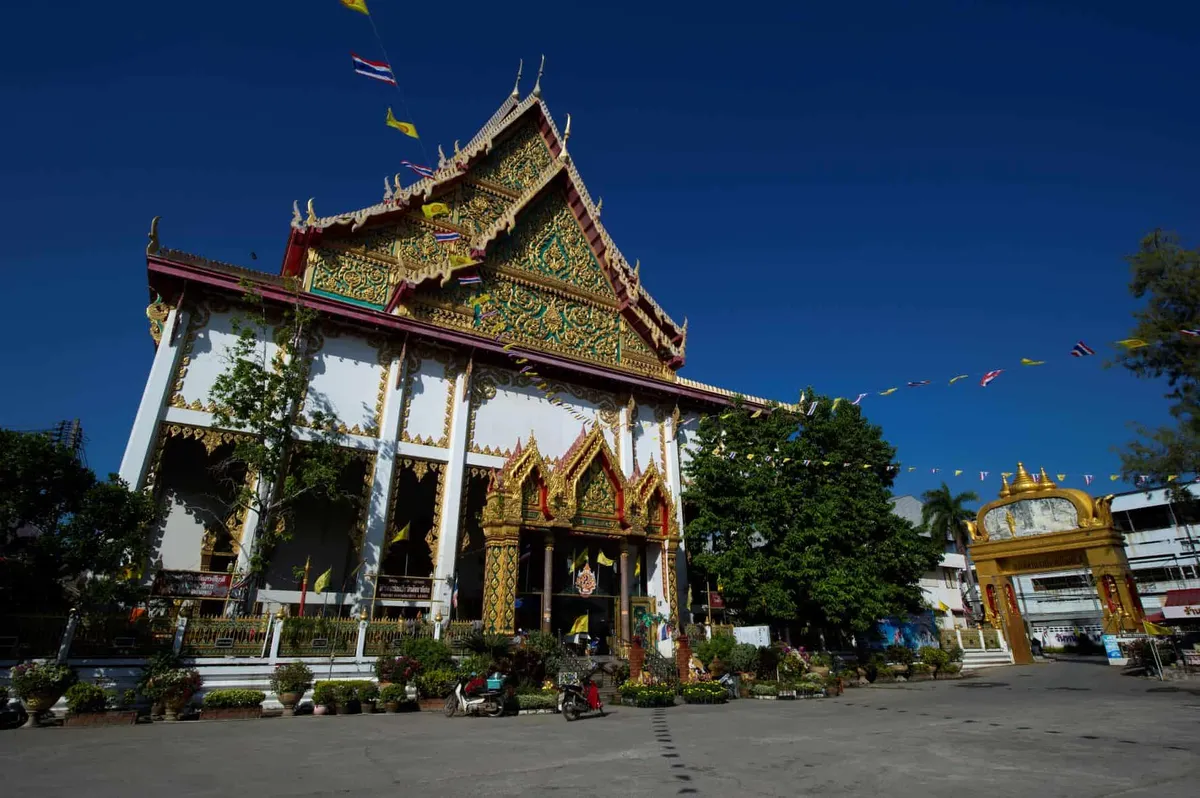
Wat Ang Thong Worawihan stands on the east bank of the river directly opposite Ang Thong’s city hall, its bell-shaped chedi wrapped in gold mirror glass. Entry is free, and the gates are open daily from 08:00 to 17:00.
The temple in its current form dates to 1900. King Rama V merged two smaller neighbouring temples, Wat Pho Ngoen and Wat Pho Thong, both built during his father Rama IV’s reign, and named the combined site Wat Ang Thong. The “Worawihan” in its name marks it as a third-class royal monastery, a status granted for historical or royal significance rather than size. That makes it a Rattanakosin-era temple, not an Ayutthaya one, whatever older listings claim about its architecture.
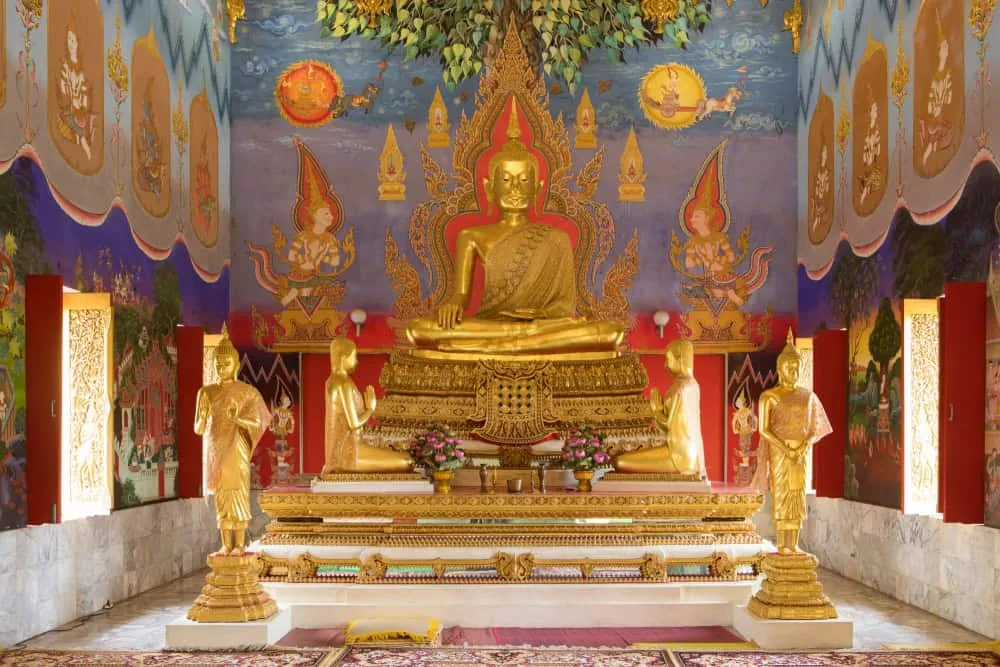
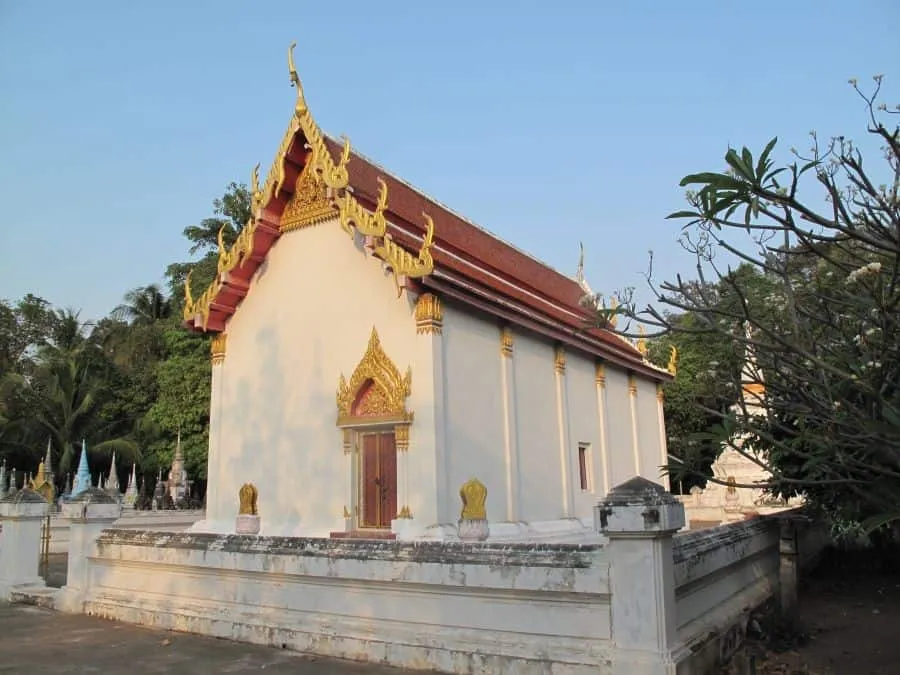
The main draw is the ubosot and its gold-mirrored, bell-shaped chedi, a style typical of 19th-century Bangkok-school temple building rather than the Khmer-influenced prangs found further south in Ayutthaya. Rows of teak monks’ quarters line the grounds, built in a style the Fine Arts Department credits to the early Rattanakosin period. Morning and evening chanting drifts across the compound as resident monks go about their routines, and incense smoke hangs over the offering tables near the main hall.
Insider Tip: Visit before 9 AM if you want the courtyard to yourself — this is a working neighbourhood temple, not a tour-bus stop, so mid-morning is usually quiet regardless, but early light suits photos of the gold-mirrored chedi best.
- Entry fee: Free
- Hours: Daily 08:00-17:00
- Built: 1900, merging two earlier Rama IV-era temples
- Status: Third-class royal monastery (Worawihan)
- Location: East bank of the river, opposite Ang Thong City Hall
Dress modestly — covered shoulders and knees — and remove your shoes before entering the ubosot. The temple is an easy stop for anyone passing through Ang Thong between Bangkok and the north; pair it with the province’s more famous reclining Buddhas at Wat Pa Mok Worawihan or Wat Khun Inthapramun, both a short drive away, or with the province’s craft villages — Ang Thong is known for its drum-making and basketry workshops, a different side of the same town.
Location & Directions
Mueang Ang Thong, Ang Thong
Ang Thong, Thailand
Show your taxi or Grab driver
วัดอ่างทองวรวิหาร
Within Walking Distance




Frequently Asked Questions
Is Wat Ang Thong Worawihan the same as the famous reclining Buddha temples in Ang Thong?
Is Wat Ang Thong Worawihan free to visit?
How old is Wat Ang Thong Worawihan?
What does 'Worawihan' mean in the temple's name?
How do I get to Wat Ang Thong Worawihan?
Spotted something out of date or incorrect? Let us know
Stay Near Wat Ang Thong Worawihan
Compare places to stay in Ang Thong, or open the map for options closest to the attraction.