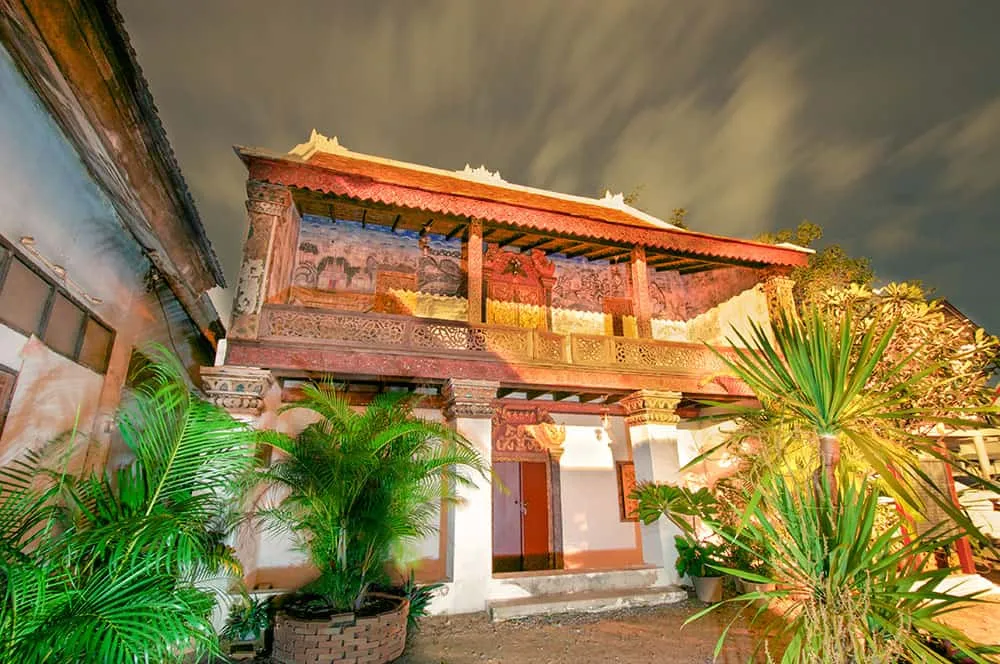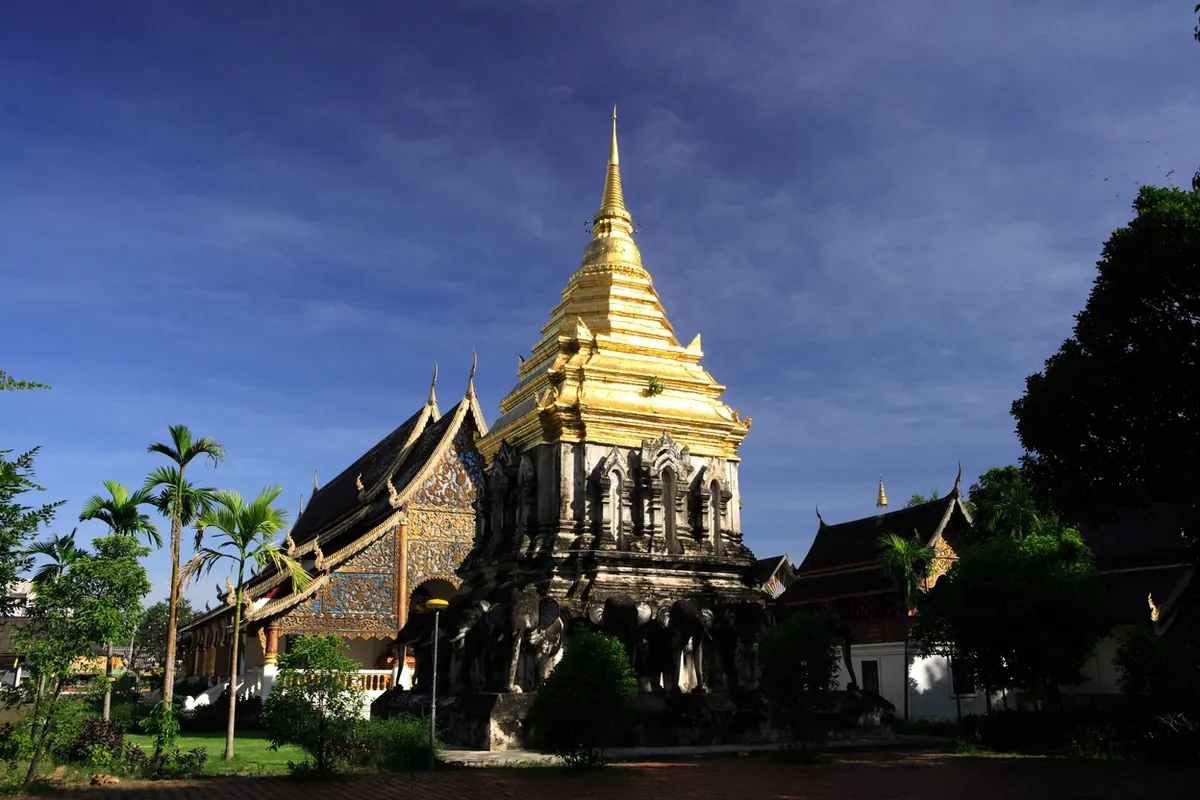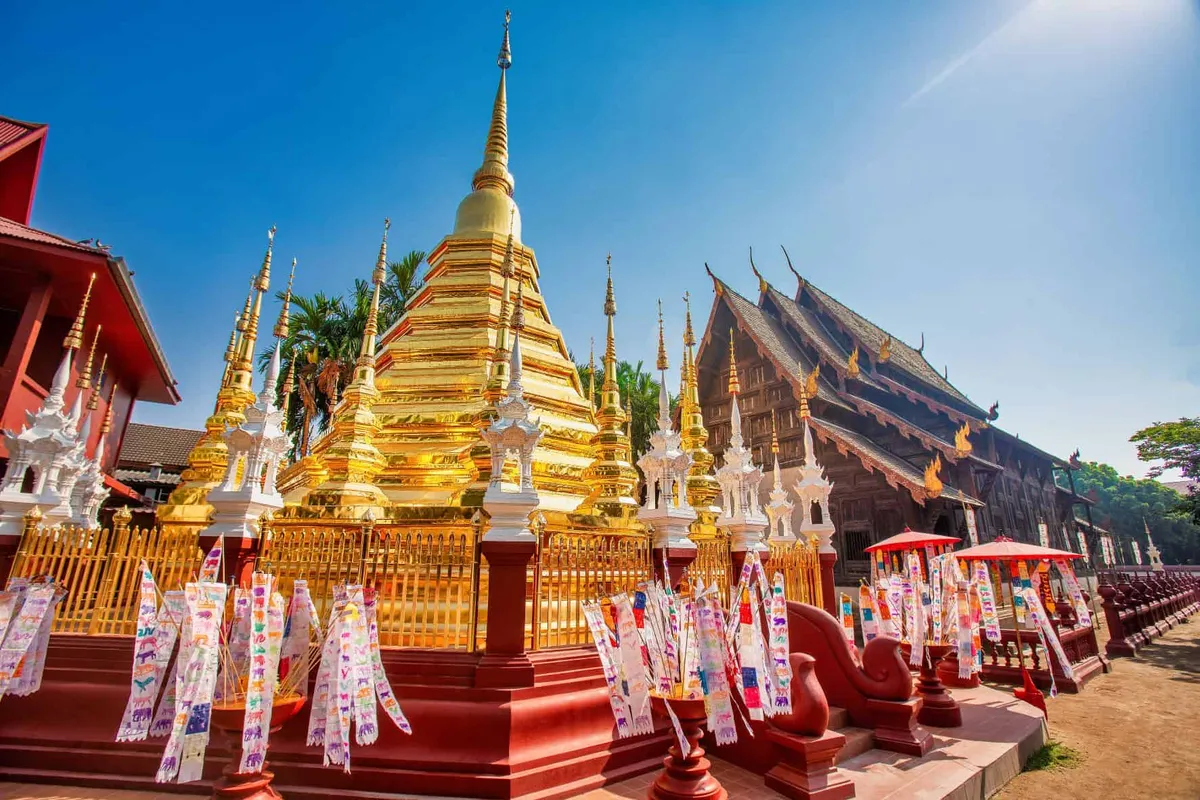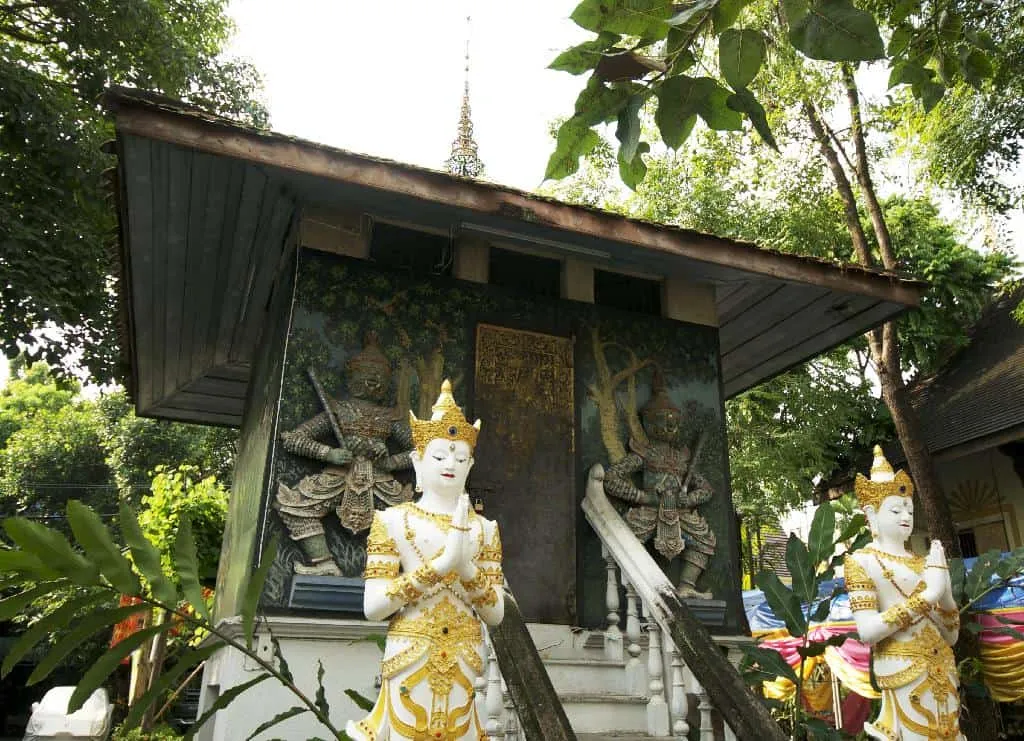



Wat Ou Sai Kham sits on Chang Moi Kao Road, about 200 metres northeast of Tha Phae Gate, just outside Chiang Mai’s old-city moat. It’s a small, easy-to-miss compound: a viharn, an ubosot, a Ho Trai scripture library, and a chedi, with a single large white Chinthe lion guarding the main gate. Entry is free and the grounds are open through daylight hours. The name translates roughly as “temple of golden sand.”
The reason to seek it out is inside the viharn: seven jade Buddha images in varying shades of green, the largest of them 109 cm tall and around 900 kg, widely cited as the largest Burmese-jade Buddha statue in Thailand. Alongside the jade figures sits a Lanna-style Buddha image over 200 years old, predating the temple’s 1841 rebuild. Local tradition puts the site itself at more than 300 years old, though little written record survives from before the 19th-century reconstruction.
Chang Moi Kao Road sits in a stretch of the old city most visitors bypass on their way between Tha Phae Gate and the Ping River. That’s part of the appeal: Wat Ou Sai Kham gets a fraction of the footfall of the big-name temples inside the moat, so the jade Buddha hall rarely has more than a handful of visitors at once, even mid-morning. The compound is compact enough to see properly in 15-20 minutes, which makes it an easy add-on rather than a destination that needs its own trip.
- Entry fee: Free
- Hours: Daily, daylight hours
- Location: Chang Moi Kao Road, ~200 m NE of Tha Phae Gate, outside the old-city moat
- Highlight: Seven jade Buddha images, largest ~109 cm / 900 kg
- Getting there: Walkable from Tha Phae Gate; songthaew or tuk-tuk from elsewhere in the old city
Insider Tip: This is one of the few old-city temples most Tha Phae Gate day-trippers walk straight past. Combine it with a Chang Moi ramble or a stop at Warorot Market a few minutes further on. You’ll likely have the jade Buddha hall close to yourself outside weekend mornings.
Watch out: There’s a public restroom on-site, useful if you’re doing a longer old-city walking loop, but it’s easy to miss the small signage pointing to the jade Buddha hall itself. Look for the “Jade Buddha” markers near the viharn entrance.
Cover shoulders and knees and remove your shoes before stepping inside any of the halls. For more of this stretch of the old city, Wat Ket Community across the river makes a good pairing with its own riverside temple and museum.
Location & Directions
Mueang Chiang Mai, Chiang Mai
Chiang Mai, Thailand
Show your taxi or Grab driver
วัดอู่ทรายคำ
Frequently Asked Questions
Why is Wat Ou Sai Kham known for jade Buddha images?
How old is the temple?
Where exactly is it, and is it free to enter?
What does "Ou Sai Kham" mean?
How do I get there from the old city?
Spotted something out of date or incorrect? Let us know
Popular tours in Chiang Mai





Stay Near Wat Ou Sai Kham
Live prices for places closest to Wat Ou Sai Kham: tap a pin to compare.