



Wat Phrathat Chae Haeng is Nan province’s most sacred temple: a 55.5-metre gilded chedi on a hill east of the Nan River, built during the reign of Phaya Kan Mueang (1326-1359) to enshrine Buddha relics gifted by the Sukhothai king. Entry is free, and the temple opens daily from 06:00 to 18:00.
Experience
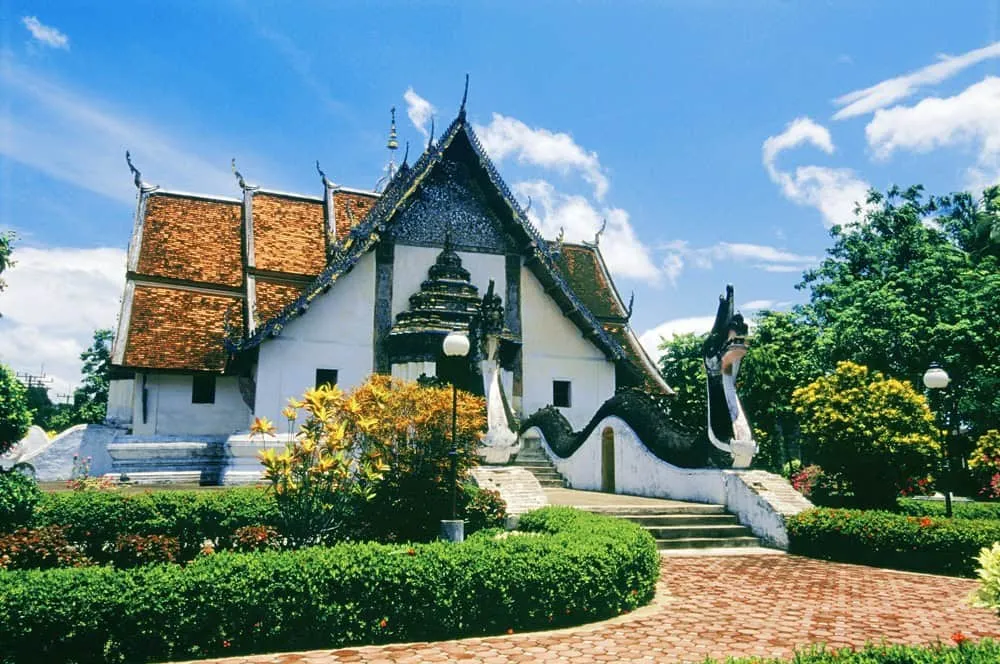
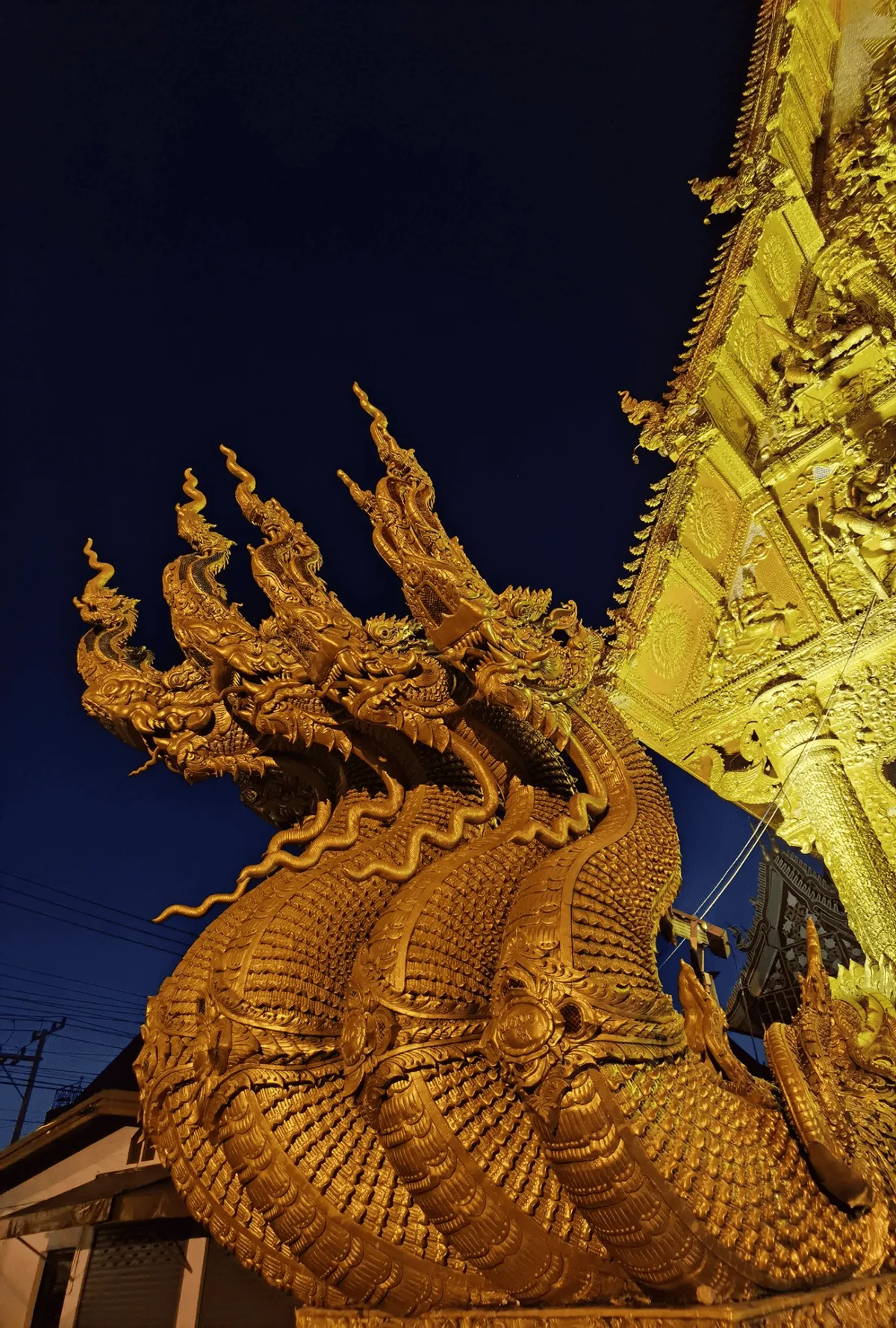
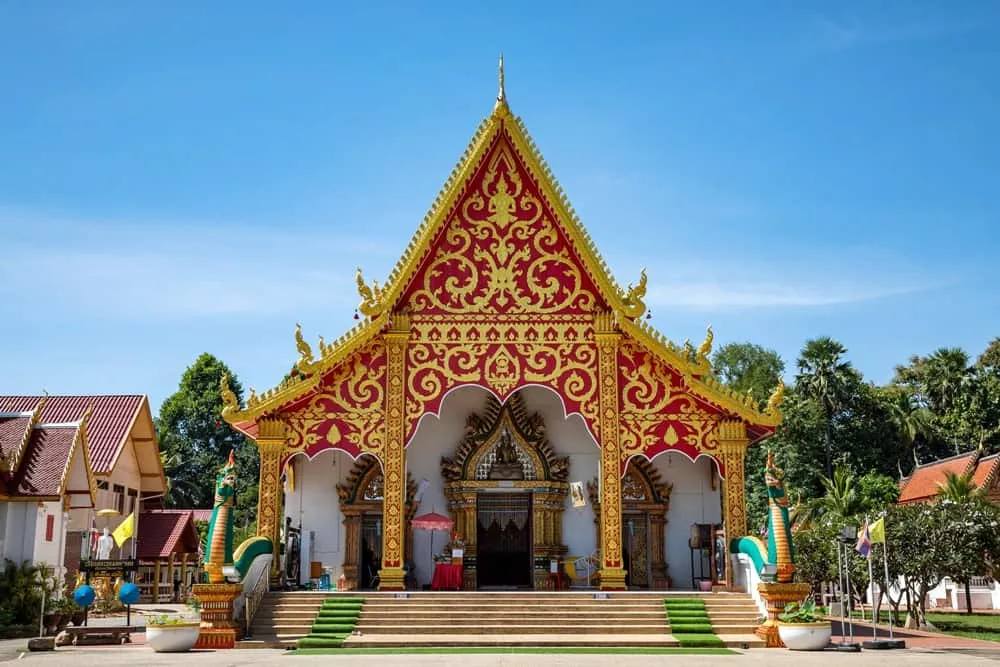
The chedi sits on a square base 22.5 metres per side, sheathed entirely in gilded copper alloy — it catches the light hard at midday and glows amber at dusk. A pair of naga serpents flank the staircase at the entrance, their scaled bodies curving up toward the gable, where a stucco Naga Kiao motif marks what local guides call the signature of Nan-style temple art. Inside the compound, the chedi’s bell-shaped silhouette is thought to have been influenced by the older Chedi Phra That Hariphunchai in Lamphun, part of the same wave of Lanna religious architecture that spread across the north from the 14th century onward.
The relic housed inside — Phra Borommathat Chae Haeng — carries a specific cultural weight beyond its age. In Lanna belief, each of the 12 zodiac years has a designated “home” temple whose relic protects people born under that sign; Chae Haeng is the temple for the Year of the Rabbit. Thai and Lao visitors born in a Rabbit year make a point of climbing the naga staircase at least once, circling the chedi three times clockwise, and leaving an offering — a practice you’ll see happening quietly on any given morning, not staged for tourists.
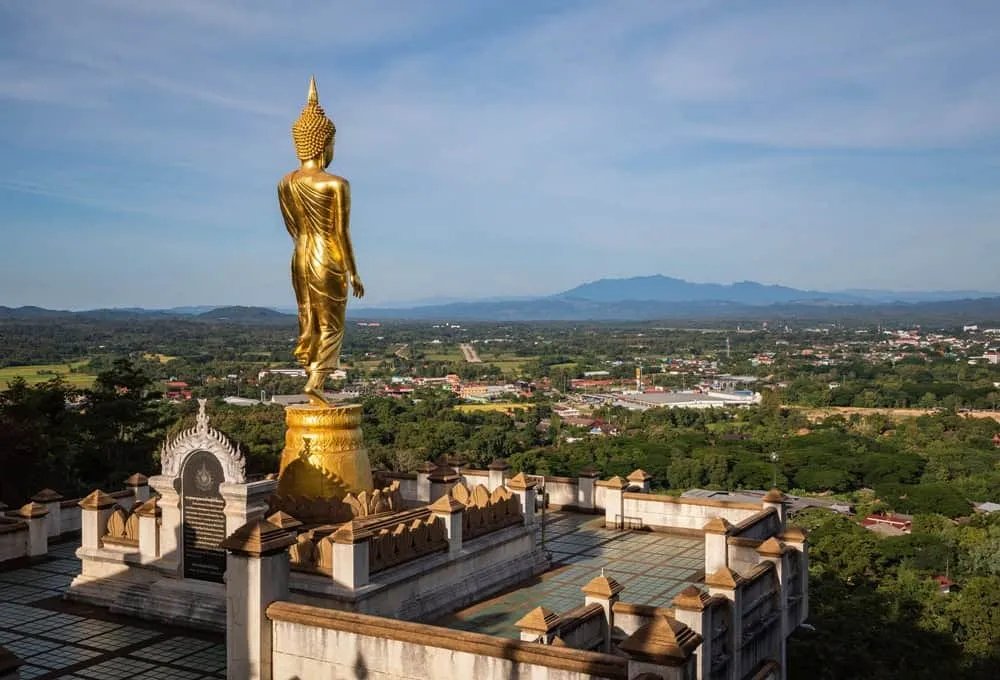
From the raised platform around the chedi’s base, the view opens west across the Nan valley — rice fields on the flood plain and the river curling below, with the rooftops of Nan’s old town visible on the far bank. The hill sits in what was briefly Nan’s political centre after the ruling family moved the capital here from Pua in the 14th century, before it shifted again to the present town site across the water.
Atmosphere & Timing
Early morning is the best window: monks make their rounds before 07:00, the site is near-empty, and the gilded surface catches low sun without the midday glare that washes out photos from ground level. The temple sits away from Nan’s small night-market crowds, so even at midday it rarely feels busy — a contrast to how packed the approach gets during the Hok Peng Festival, a seven-day pilgrimage held on the full moon of the sixth Northern Thai lunar month (roughly February or March), when villagers in traditional dress carry gold pagoda replicas up the staircase and a temporary market and folk-performance stage take over the temple grounds.
Insider Tip: Combine the visit with Wat Phumin and the National Museum of Nan on the town side of the river — all three are within a 10-minute drive of each other, and doing Chae Haeng first (before the heat builds) leaves the afternoon free for the town-centre sites.
Watch out: The naga staircase has no handrail on one side and gets slippery within minutes of rain — Nan’s afternoon showers arrive fast between June and October. Wear closed shoes with grip, not flip-flops.
Practical
Wat Phrathat Chae Haeng is in Phu Phiang district, about 3km east of central Nan across the river — a 10-15 minute ride by tuk-tuk or rented motorbike; there’s no direct public bus. Dress modestly (shoulders and knees covered) and expect to remove your shoes before stepping onto the chedi’s raised platform. As a working Royal Temple (Phra Aram Luang), it observes normal Buddhist etiquette rather than museum-style visiting hours — quiet voices, no pointing feet at the Buddha images, and no climbing on the naga statues for photos.
- Entry fee: Free
- Hours: Daily 06:00-18:00
- Chedi height: 55.5m on a 22.5m-square base
- Getting there: ~3km east of Nan town, across the Nan River in Phu Phiang district
- Best time: Early morning before 08:00, or during the Hok Peng Festival (Feb-Mar full moon)
Location & Directions
89 Mu 3 Phuttha Bucha Road
Nan, Thailand
Show your taxi or Grab driver
วัดพระธาตุแช่แห้ง
Within Walking Distance




Frequently Asked Questions
Is Wat Phrathat Chae Haeng free to enter?
How tall is the golden chedi?
Why is this temple linked to the Year of the Rabbit?
How far is Wat Phrathat Chae Haeng from Nan town?
What is the Hok Peng Festival?
Do I need to cover my shoulders and knees to enter?
Spotted something out of date or incorrect? Let us know
Stay Near Wat Phrathat Chae Haeng
Compare places to stay in Nan, or open the map for options closest to the attraction.