Koh Tao is where Thailand learns to dive. The smallest of the main Gulf islands certifies more new divers than almost anywhere on earth, and the economics work in your favour: shallow, sheltered bays, short boat rides, and dive schools competing along one 1.85 km beach. But treating Koh Tao as a dive factory undersells it; the snorkelling from shore beats most islands’ boat trips, and the viewpoints earn their sweat.
The best things to do in Koh Tao are learning to dive, the boat trip to Koh Nang Yuan’s three-islet viewpoint, shore snorkelling at Tanote Bay and Shark Bay, Sairee Beach at sunset, and a scooter loop of the east-coast bays.
- Learn to dive, or log fun dives at the pinnacles
- Koh Nang Yuan and its three-islet viewpoint
- Tanote Bay: jump rock and shore snorkelling
- Shark Bay’s blacktip reef sharks (snorkel, not scuba)
- Sairee Beach sunsets and the evening strip
- John-Suwan Viewpoint above the southern capes
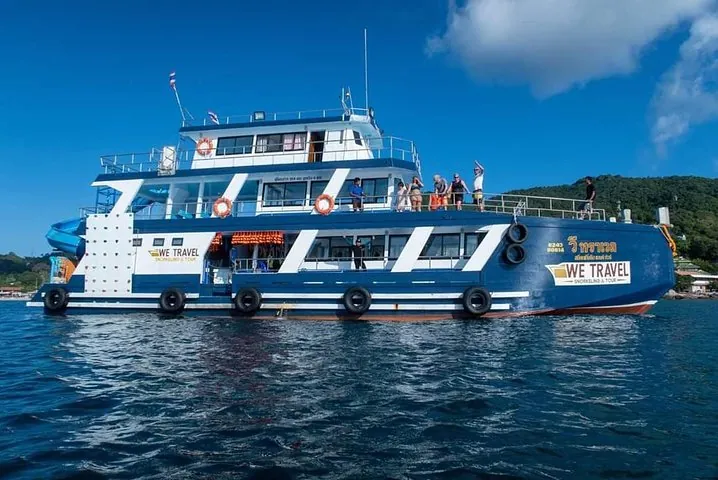
- A five-island boat day around the coastline
- Mae Haad village between ferries
- Freedom Beach and the quiet south
- Mango Bay on the empty north coast
- Signature activity: PADI/SSI dive courses: an Open Water certification takes about 3 days
- Best non-diving spot: Koh Nang Yuan (landing fee ~100 THB, roughly 09:00-17:00 for day visitors)
- Best time: February-September for calm water; October-December is the Gulf’s wet spell
- Getting there: Ferries to Mae Haad from Chumphon, Koh Phangan and Koh Samui
- Getting around: Scooter, songthaew or longtail: the east-coast roads are steep
- Typical stay: 3-4 nights (more if you’re doing a course)
Learn to dive: it’s why everyone’s here
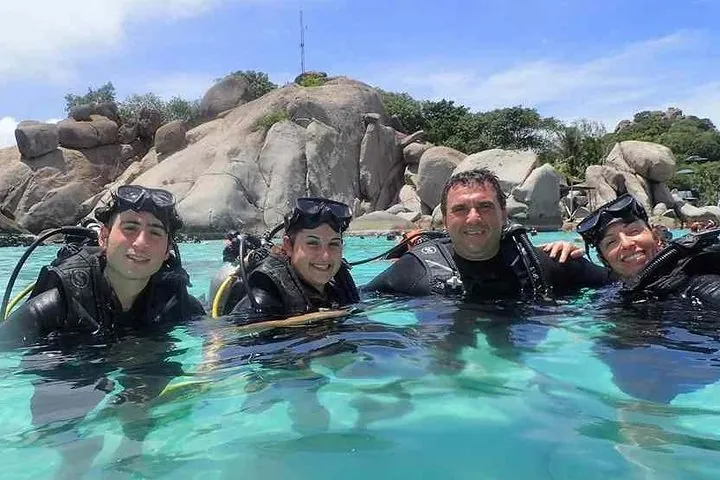
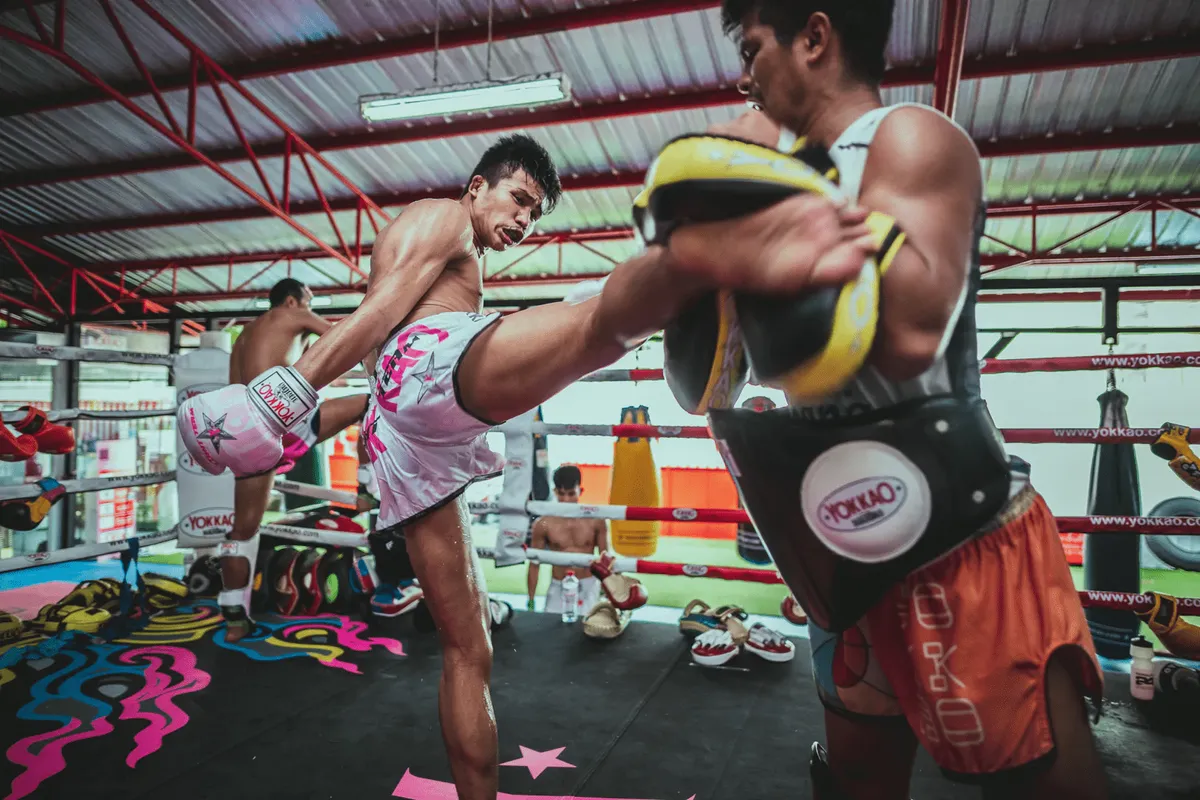
The island’s dive schools cluster along Sairee and Mae Haad, and the routine is the same everywhere: pool skills on day one, four open-water dives over the next two. A 3-day PADI Open Water course gets you certified to 18 metres; already-certified divers chase the big sites instead: Sail Rock fun dives run to the Gulf’s best pinnacle, where whale sharks pass through in season.
Pick your school by class size and instructor, not by price. The cheap end of the market saves you a few hundred baht and costs you attention underwater. Visit two shops, ask how many students per instructor, and trust the one that answers precisely.
Insider Tip: Book a morning boat for your fun dives. Afternoon boats fight more chop and more divers on the same sites. The 7am departure is the calm, clear version of the same reef.
Koh Nang Yuan: the three-islet postcard
Three tiny islets joined by a double-sided sandbar, a ten-minute longtail from Sairee: Koh Nang Yuan is the image on half of Koh Tao’s postcards, and the climb to the viewpoint platform is shorter than it looks. Day visitors pay a landing fee (commonly cited around 100 THB, confirm when booking your boat), and the island enforces its rules: no single-use plastic bottles or cans ashore. The buoyed swimming area and the Japanese Gardens reef beside it hold some of the clearest snorkelling in the Gulf.
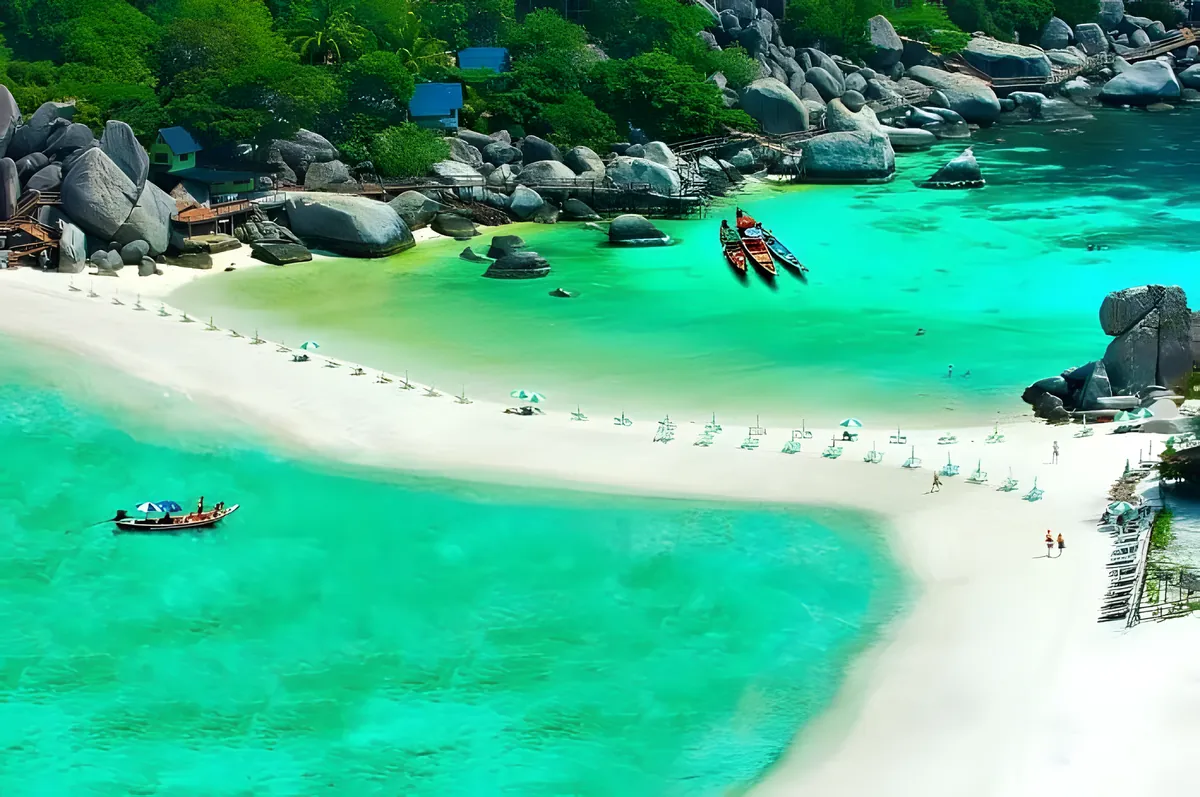
Go early or late; the middle of the day belongs to the speedboat tours from Samui. A small-group Koh Tao and Nang Yuan tour handles the logistics if you’d rather not haggle for a longtail.
The east-coast bays: Tanote, Shark Bay and the snorkel loop
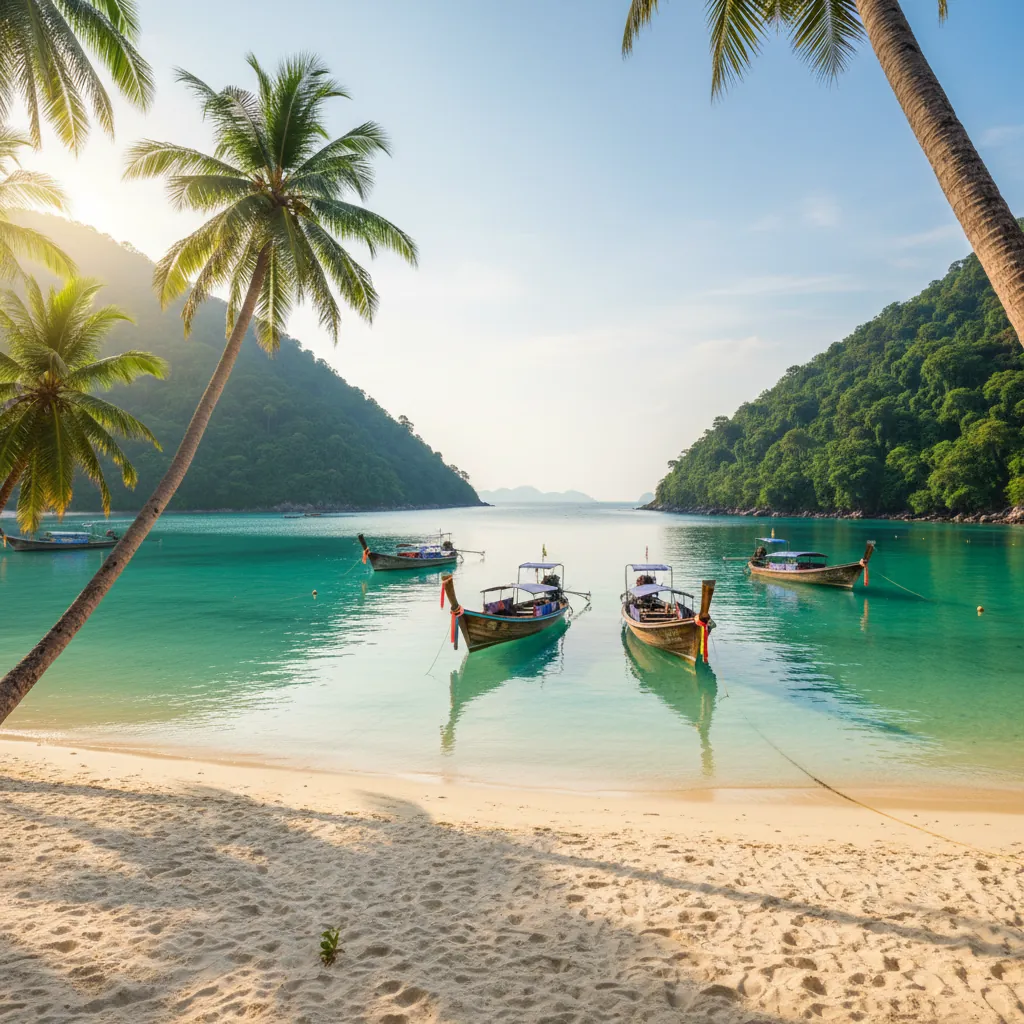
Koh Tao’s east coast is a string of half-moon bays where the snorkelling starts a few kicks from shore. Tanote Bay is the anchor: reef from 1-2 metres deep, a restaurant behind the sand, and the famous jump rock: 5-7 metres high, rope ladder up, one way down. The access lane is steep even by Koh Tao standards; take it slowly on a scooter or park at the top.
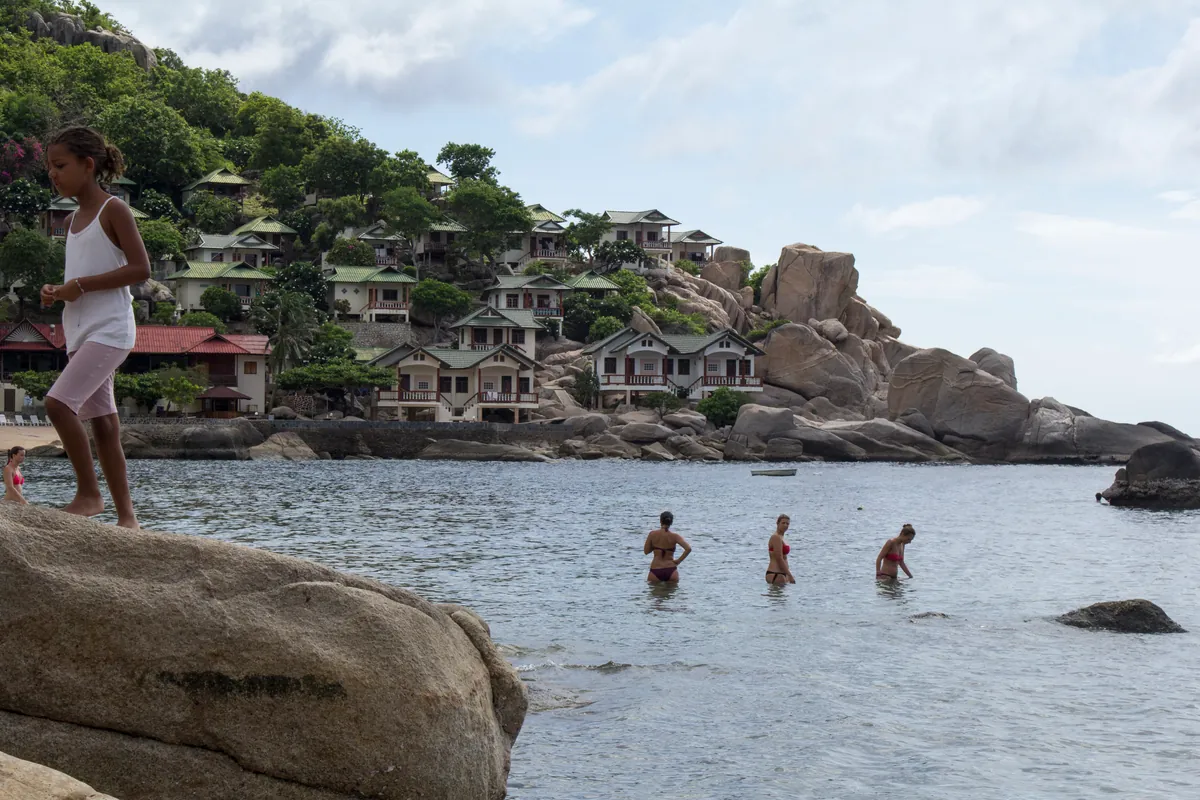
Shark Bay, at the island’s southern tip, is the one that surprises people: juvenile blacktip reef sharks patrol the shallows most mornings, entirely uninterested in swimmers. A full-day snorkelling boat strings the bays together, including Mango Bay on the empty north coast, if you’d rather skip the scooter hills.
Watch out: Scooter rental is Koh Tao’s classic dispute trap. Photograph every scratch on video before riding off, refuse to leave your passport if the shop will take a cash deposit instead, and skip the east-coast dirt tracks after rain. The steep concrete lanes are genuinely hard riding.
Sairee Beach: the island’s front porch
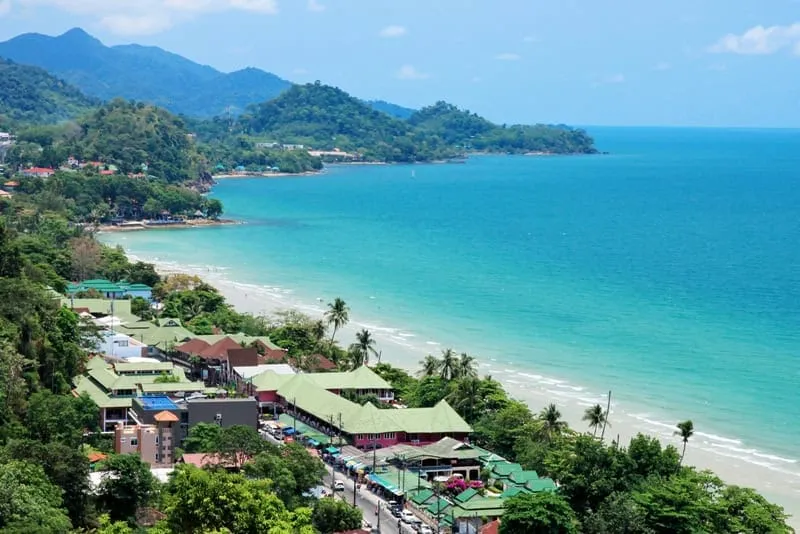
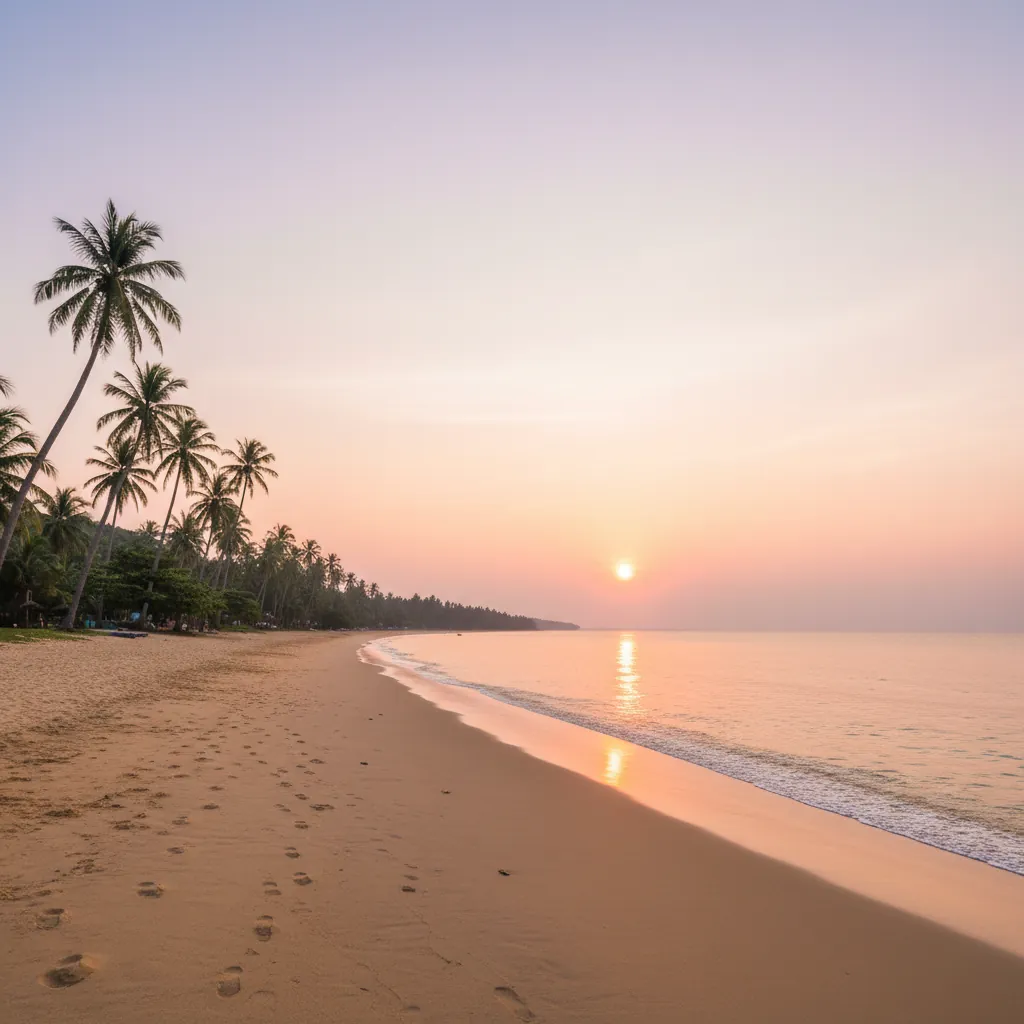
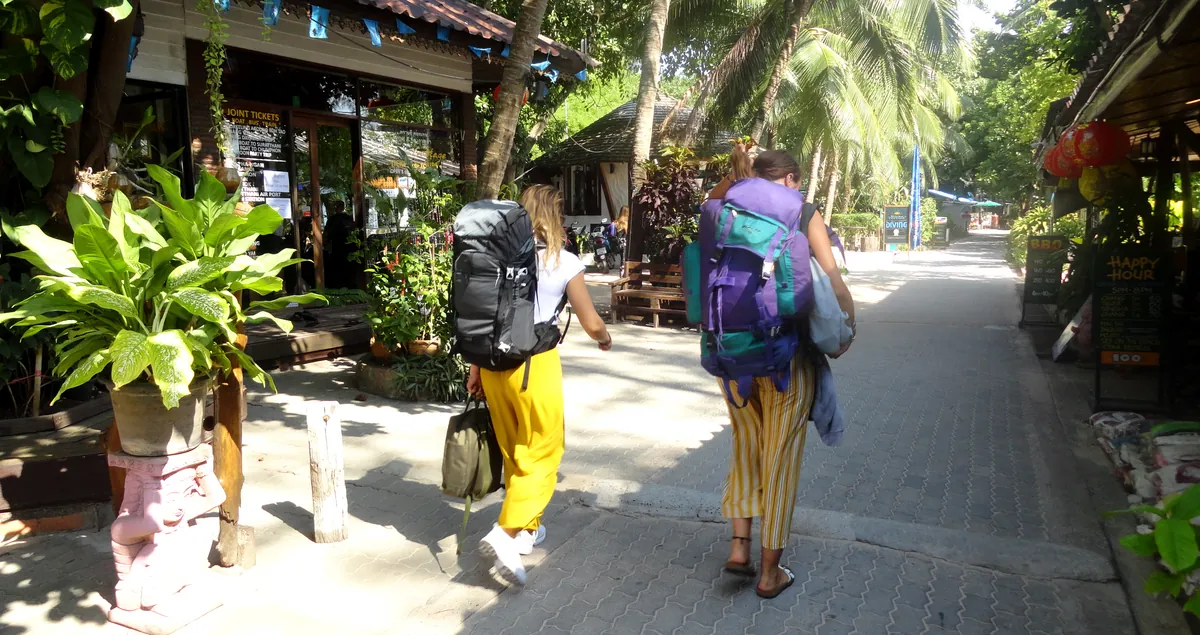
Every Koh Tao day ends up on Sairee eventually. At 1.85 km it’s the island’s longest beach, west-facing for a reliable sunset year-round, with a swimmable reef a short distance offshore. History hides at the south end: King Rama V’s royal cipher, carved into a boulder during his 1899 visit. After dark, the beachfront path becomes the island’s social spine: fire shows, beach bars and dive-school graduates comparing logbooks.
Viewpoints, the south, and the quiet corners
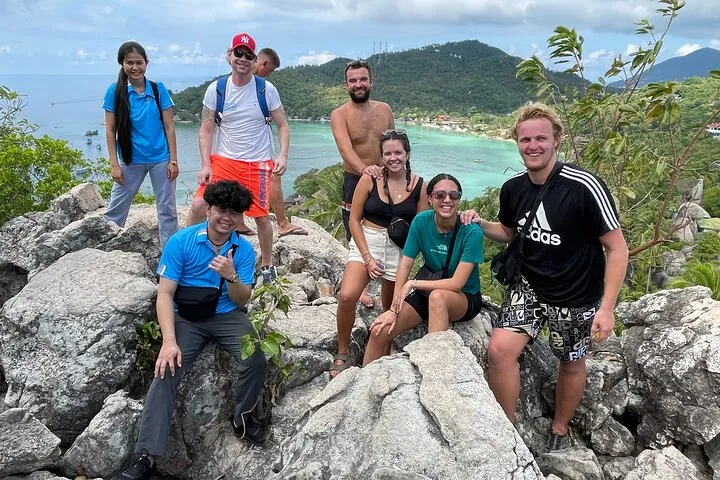
John-Suwan Viewpoint, above the isthmus between Chalok Baan Kao and Shark Bay, is the south’s answer to Nang Yuan, a short, sweaty scramble to a two-bay panorama. Freedom Beach below it stays quiet even in high season. Neither takes more than half a morning, which is exactly the pace the south of the island runs at.
For a structured day, the five-island loop circles the coastline’s highlights by boat, and a treasure-hunt day tour turns the same geography into a game if you’re travelling with a group.
Mae Haad: more than a pier
Mae Haad is where every ferry lands (Lomprayah, Seatran Discovery and Songserm all dock here, with routes to Chumphon, Koh Phangan and Koh Samui) and most visitors see only the walk from boat to taxi. Give it an hour: the village behind the pier has the island’s best cheap Thai kitchens, and Jansom Bay, fifteen minutes’ walk south, is a compact snorkel cove that day-trippers miss entirely.
Getting there and around
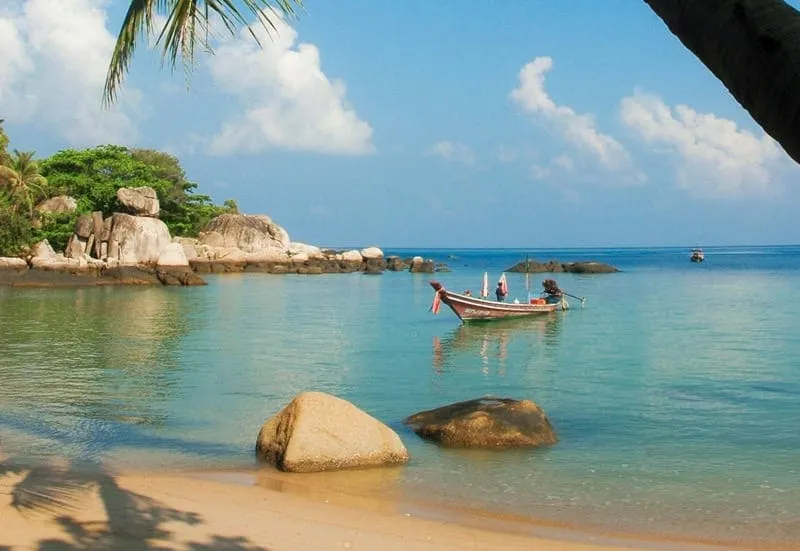
There’s no airport. Ferries reach Mae Haad from Chumphon on the mainland (the usual route from Bangkok, paired with an overnight bus or train) and from the neighbouring islands; book Koh Samui to Koh Tao ferry tickets ahead in high season, when the morning Lomprayah fills first. Island-hoppers coming from the Full Moon Party on Koh Phangan should note the morning-after boats are the crowded ones.
On the island, songthaews cover the west-coast spine and longtails serve the bays; scooters unlock the east coast if you’re a genuinely confident rider. Our Gulf islands itinerary slots Koh Tao into a ten-day Samui-Phangan-Tao run if you’re planning the full arc, and the most beautiful islands guide sets it against the Andaman alternatives.
How to plan your days
Non-divers: day one for Nang Yuan early plus Sairee’s sunset, day two on a scooter or boat around the east-coast bays, day three for the south: John-Suwan, Freedom Beach, Shark Bay snorkel. Divers: add the course days first and slot the island around your surface intervals; the viewpoints make good no-fly-day plans before you ferry out. For where to sleep, the picks on our Koh Tao guide cover Sairee’s action and the quieter southern coves.