


Doi Chang is an Akha and Lisu hill-tribe village at 1,697 metres in Chiang Rai’s Mae Suai district, on a ridge whose twin peaks are said to resemble a mother-and-calf elephant pair, the source of the name (“Doi Chang” means Elephant Mountain). It’s one of Thailand’s best-known specialty-coffee origins: villagers grow arabica on the surrounding slopes and roast it in small roadside operations. Entry is free.
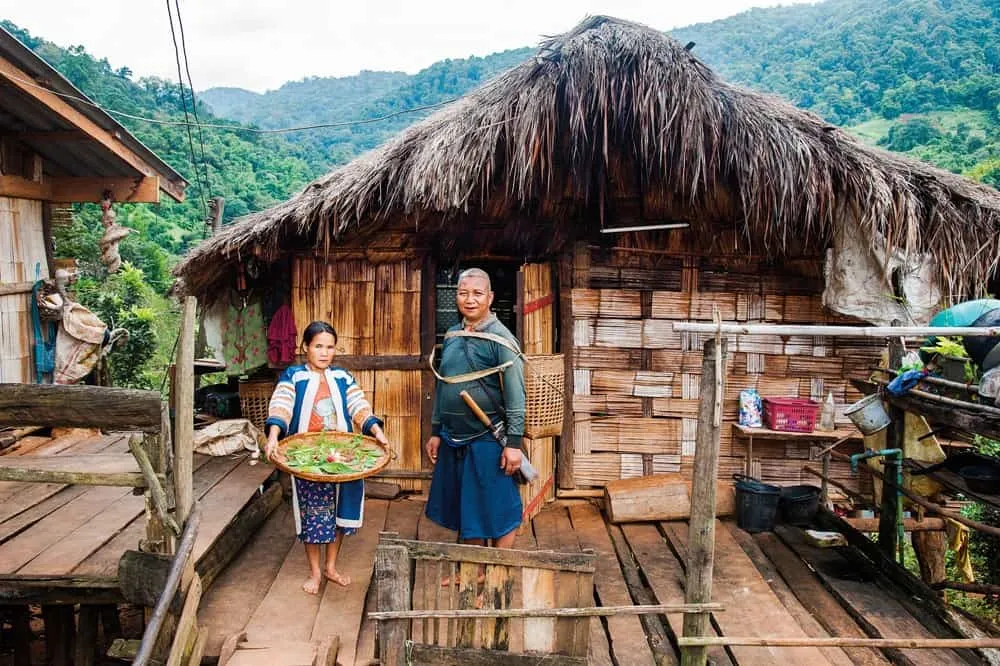
Hmong settlers were here first; Lisu families moved in and founded the village around 1915, and Akha households arrived from 1983 onward. Today around 4,700 people live across roughly 830 households in seven hamlets, a mix of Akha, Lisu and Yunnanese Chinese descent. Farming is still the main livelihood: coffee alongside cool-climate crops like peaches, plums, chestnuts and macadamia, which do well at this altitude.
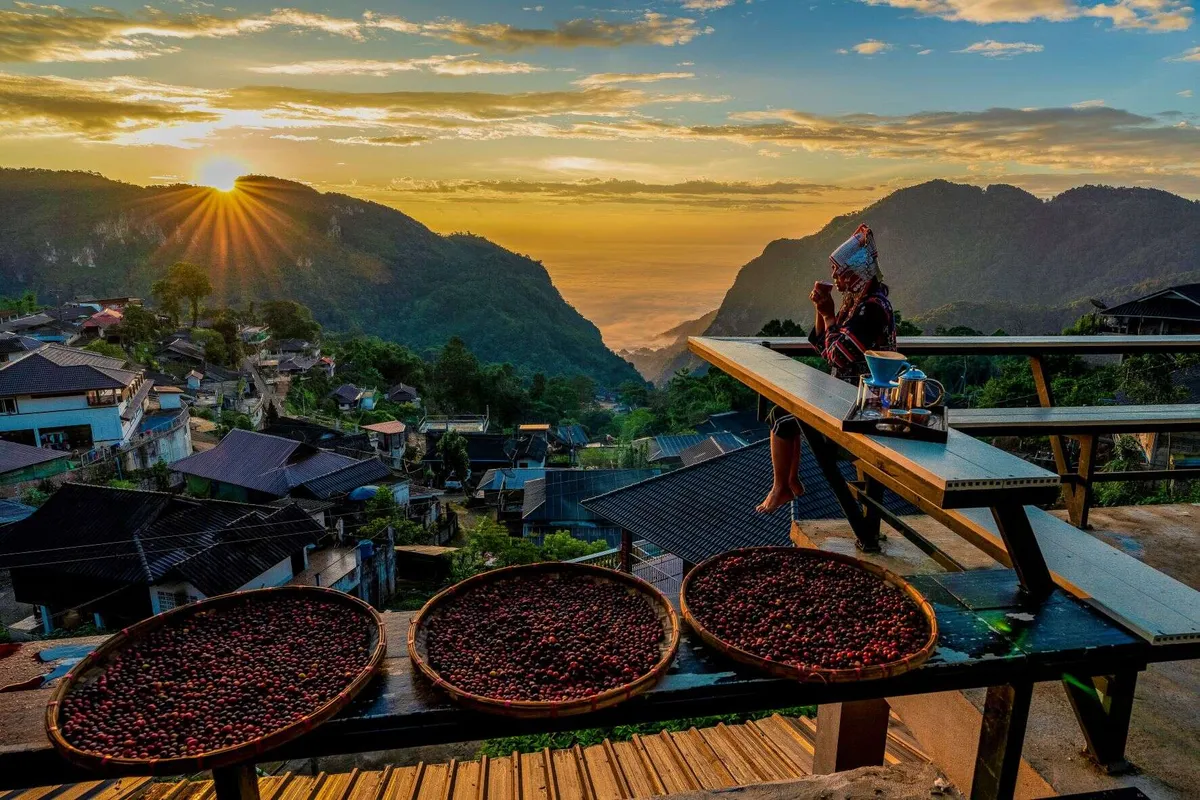
Coffee is the reason most visitors make the detour. Roadside roasteries sell beans straight from the trees around them, and several run simple cafes with mountain views where you can taste before buying. The Chiang Rai Highlands Agricultural Research and Development Centre, on the same road, has demonstration plots if you want to see how the plantations are laid out. Villagers also plant ornamental cherry trees that blossom for about three weeks from early January, drawing weekend visitors up from Chiang Rai town for the pink hillsides.
Insider Tip: Buy coffee at the roastery counters in the village rather than at shops back in town: same beans, lower price, and you can ask the roaster which batch is freshest.
Average temperature sits around 18°C, and it drops another 10-15°C at the summit, so bring a layer even in the hot season. Morning is the best time for clear views: cloud typically builds by midday, especially in the cool season. Akha Farm Ville and Wat Phra Chao Thongtip, both also in Mae Suai district, make easy add-ons if you’re spending a full day in the area.
Watch out: The final approach from Ban Huai Khrai is a narrow, steep, mostly-concrete road with no lighting. Take it slowly, especially after rain, and avoid it after dark if you’re not used to mountain driving.
Getting there means turning right at Ban Huai Khrai on the road to Doi Wawi, then continuing about 8 kilometres uphill. A minibus also runs daily from the Mae Suai District Office if you don’t have your own transport. For more on the village, the Wa Wi Subdistrict Administrative Organization can be reached on 0 5360 5950 or at vavee.com.
- Elevation: 1,697 metres
- Entry fee: Free
- Population: About 4,700, mainly Akha and Lisu households
- Cherry blossom season: About three weeks from early January
- Getting there: 8 km detour off the Doi Wawi road via Ban Huai Khrai; daily minibus from Mae Suai District Office
Location & Directions
Mu 3 Ban Doi Chang
Chiang Rai, Thailand
Show your taxi or Grab driver
ดอยช้าง
Frequently Asked Questions
What does "Doi Chang" mean?
Who lives in Doi Chang village?
Is Doi Chang free to visit?
When do the cherry blossoms bloom at Doi Chang?
How do you get to Doi Chang?
Spotted something out of date or incorrect? Let us know
Popular tours in Chiang Rai




Stay Near Doi Chang
Live prices for places closest to Doi Chang: tap a pin to compare.