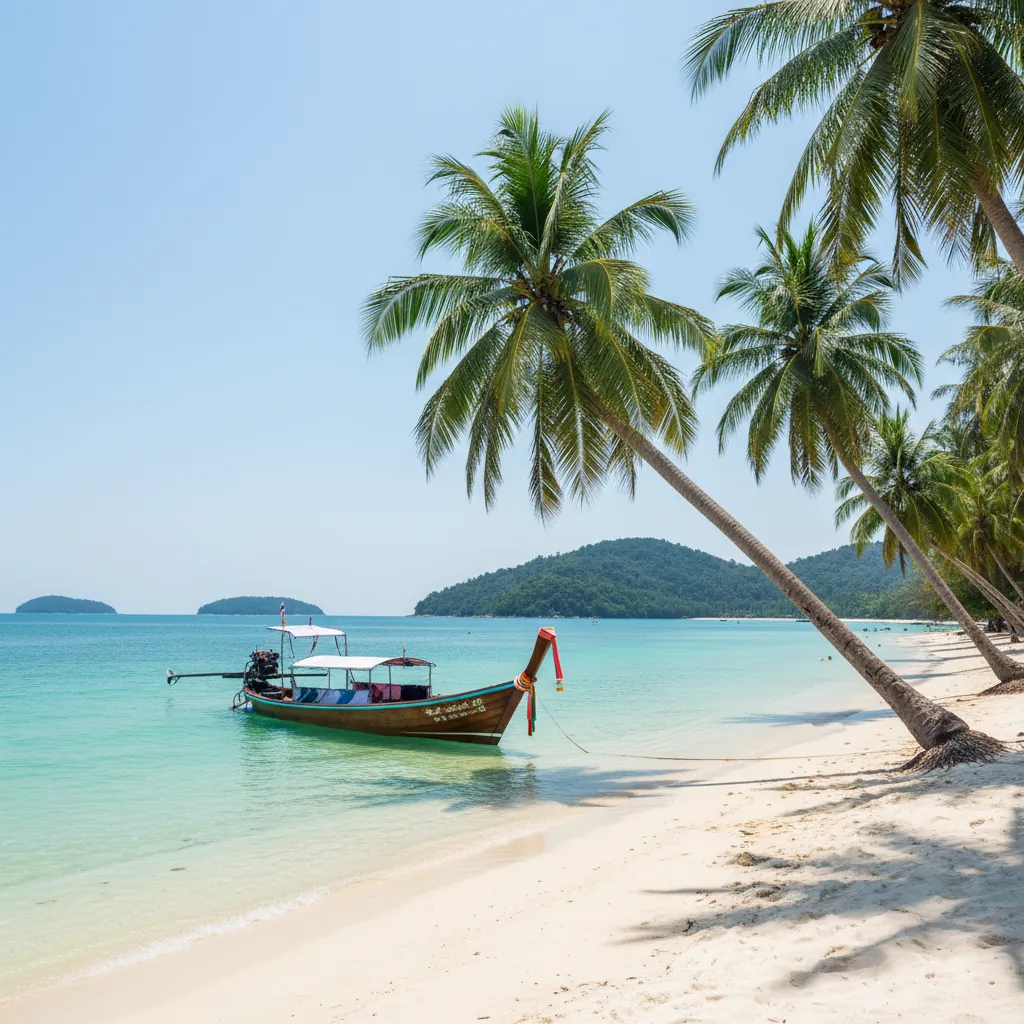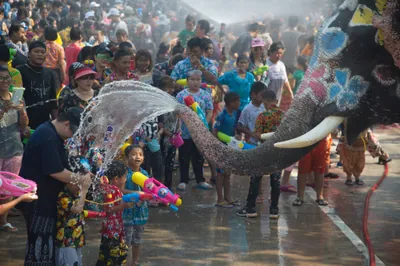







Thailand’s best-known attractions are spread across three very different regions — the temple-dense capital, the mountainous north, and the two island coasts of the south. The twenty below are grouped so you can see how they cluster. Early starts often mean lower temperatures and fewer tour groups, but opening times and crowd patterns vary by place.
Quick answer
Start with Bangkok if it matches your route, then compare The north and The Andaman south by season, travel time, and crowd level. Use this as a shortlist, not a fixed itinerary; skip anything that adds a long transfer for a small payoff.
| Best for | Pick | Why it belongs | Main tradeoff |
|---|---|---|---|
| Best first pick | Bangkok | Strongest planning anchor | Check travel time, season, and opening days before you commit |
| Best alternative | The north | Good second option when it fits your route | Check travel time, season, and opening days before you commit |
| Best different pace | The Andaman south | Different pace from the obvious pick | Check travel time, season, and opening days before you commit |
| Good fit when nearby | Kanchanaburi | Worth adding when nearby | Check travel time, season, and opening days before you commit |
How we picked these stops
These picks come from the attractions this guide covers in depth across the country, weighed by regional spread, entry cost, crowd timing and how feasibly each fits a first-trip route. Fees and opening hours change — verify the details of any attraction that anchors a travel day.
Bangkok
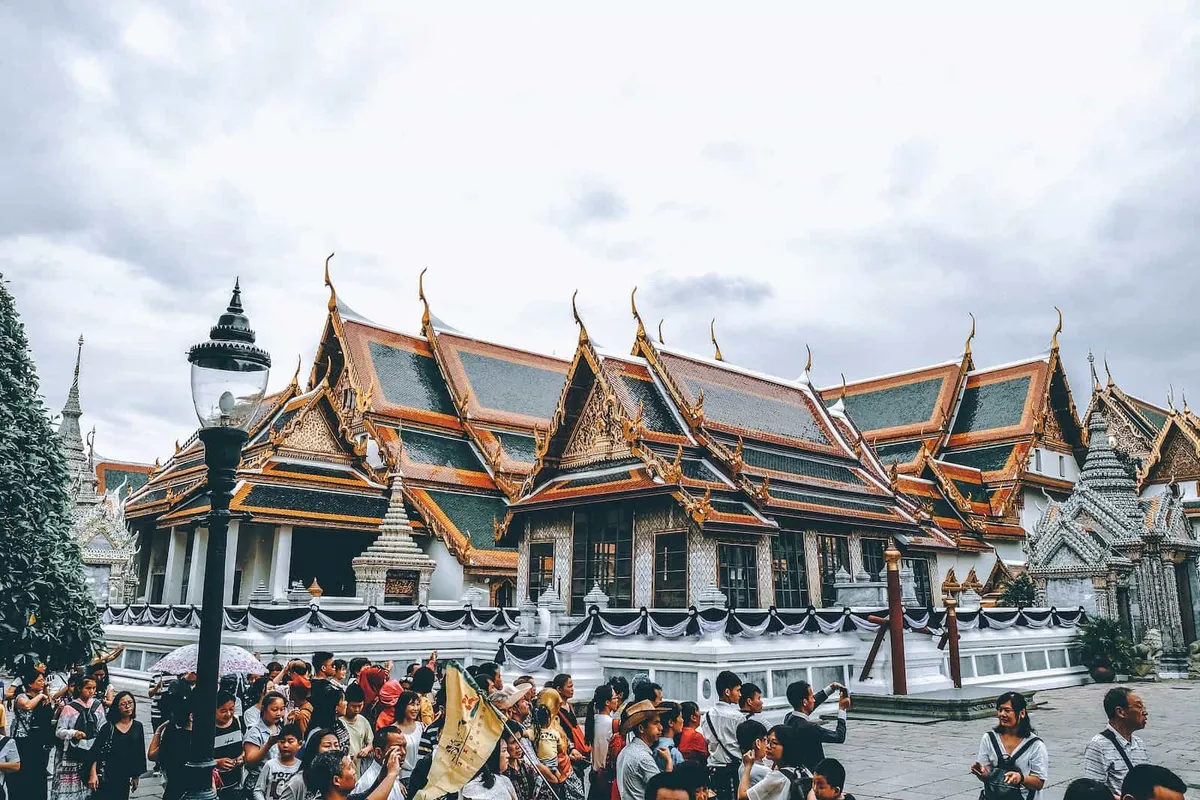
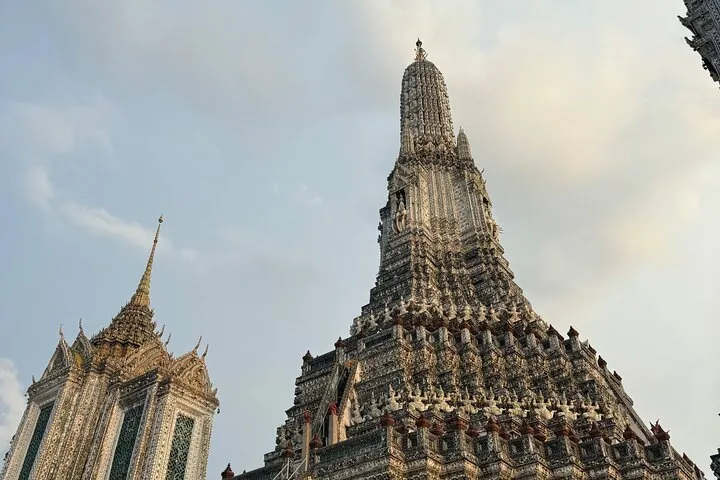
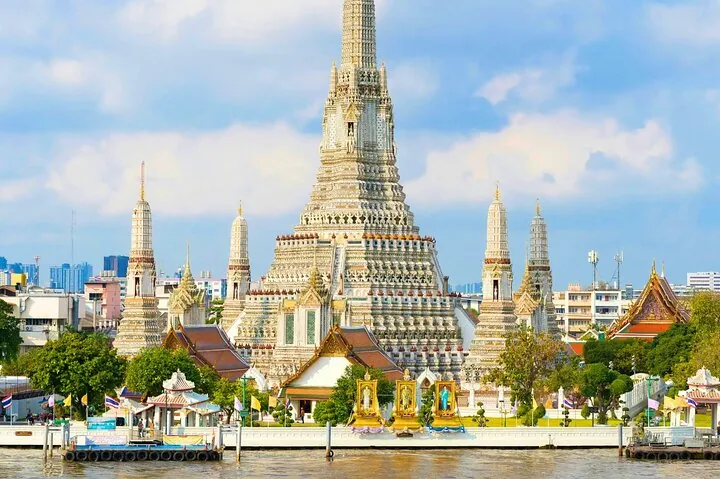
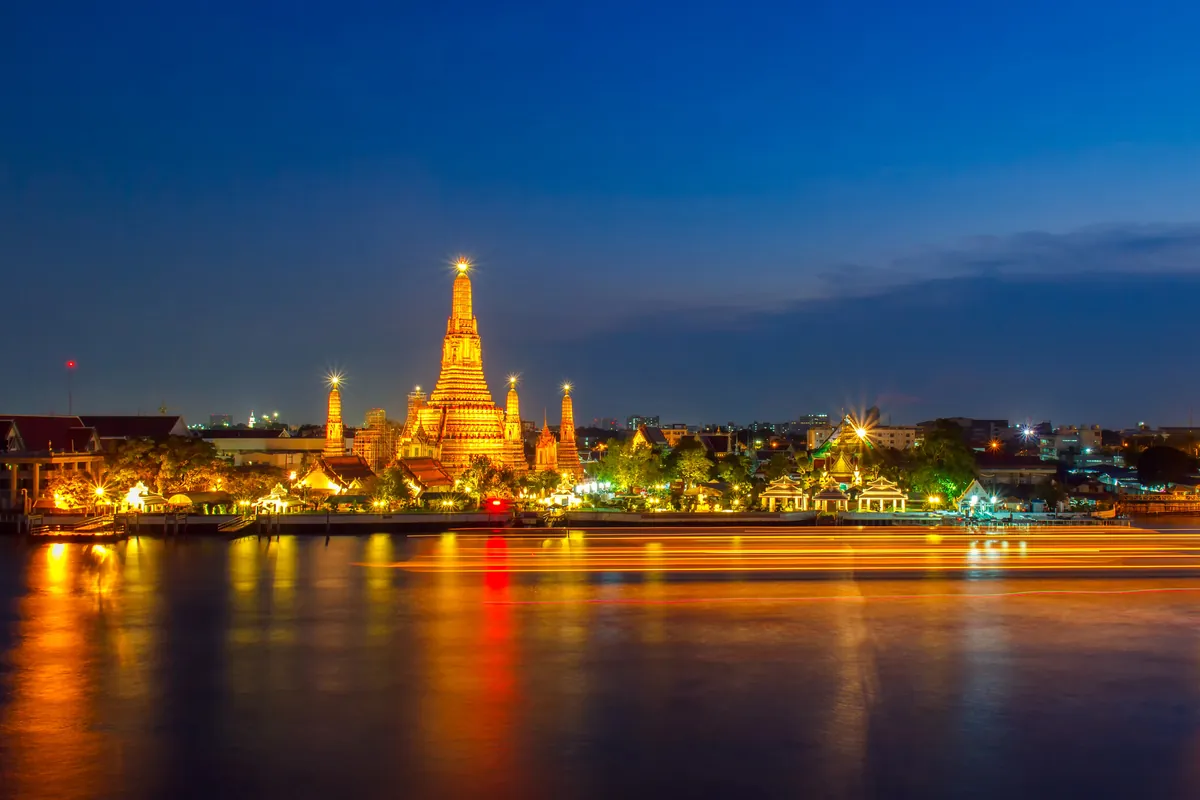
The Grand Palace and Wat Phra Kaew (Temple of the Emerald Buddha) reward an early arrival and careful attention to the dress code. Ceremonies and royal events can alter visitor routes, so check the official schedule. A short walk away, Wat Pho holds the 46-metre reclining Buddha, while across the river Wat Arun catches the late light on its porcelain-covered prang. Chatuchak Weekend Market has thousands of stalls, with trading days varying by section.
Within day-trip range, the former capital of Ayutthaya has brick prang and the Buddha head held by tree roots at Wat Mahathat. The floating markets and umbrella-folding railway market west of Bangkok require a separate journey. Further north, Sukhothai Historical Park preserves the 13th-century city associated with the Ramkhamhaeng inscription and the development of written Thai.
The north
Chiang Mai is the base for the north. Wat Phra That Doi Suthep, the golden temple on the mountain above the city, also works as a viewpoint, and the Sunday Walking Street fills the old town with crafts after dark. South of the city, Doi Inthanon contains Thailand’s highest peak, twin royal pagodas and cloud forest. Elephant Nature Park offers observation and feeding on selected programmes without riding; check the current programme before booking.
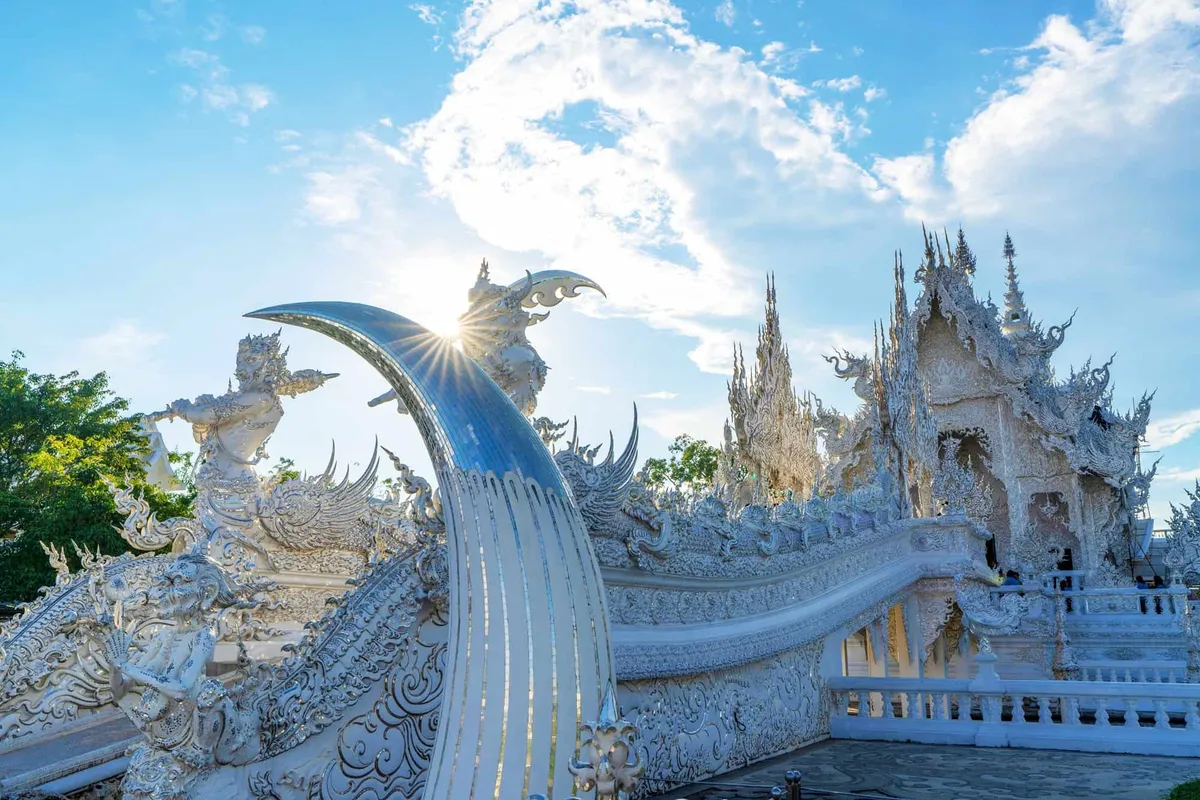
In neighbouring Chiang Rai, the surreal white Wat Rong Khun (White Temple) and the cobalt Blue Temple are modern artworks as much as places of worship, with the dark, strange Baan Dam (Black House) completing the trio.
The Andaman south
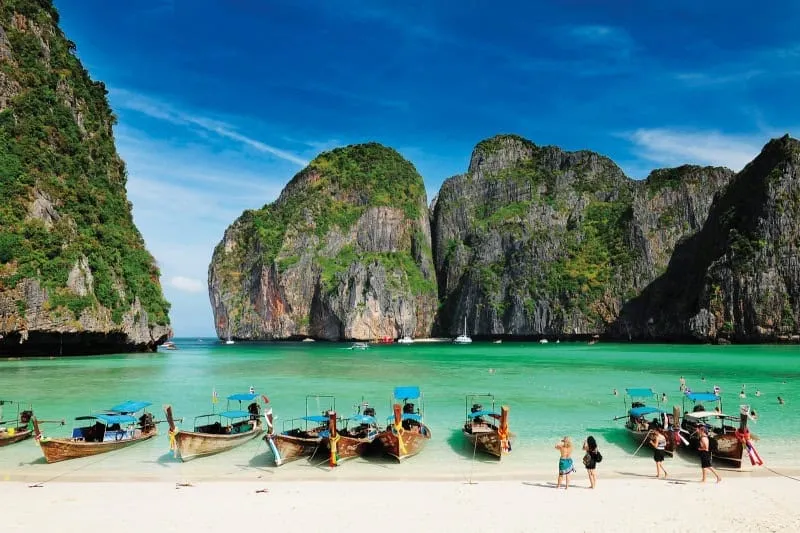
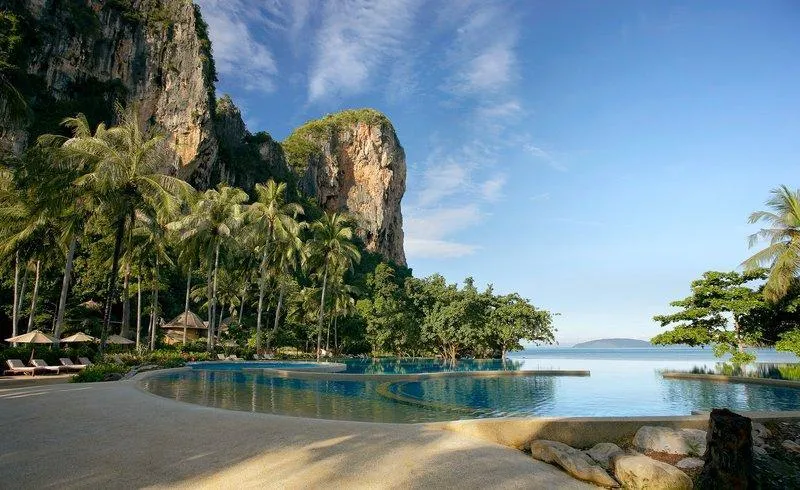
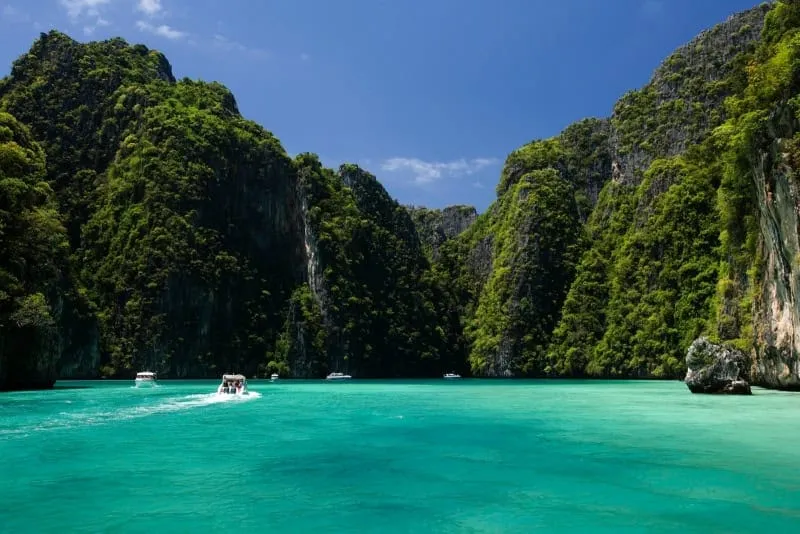
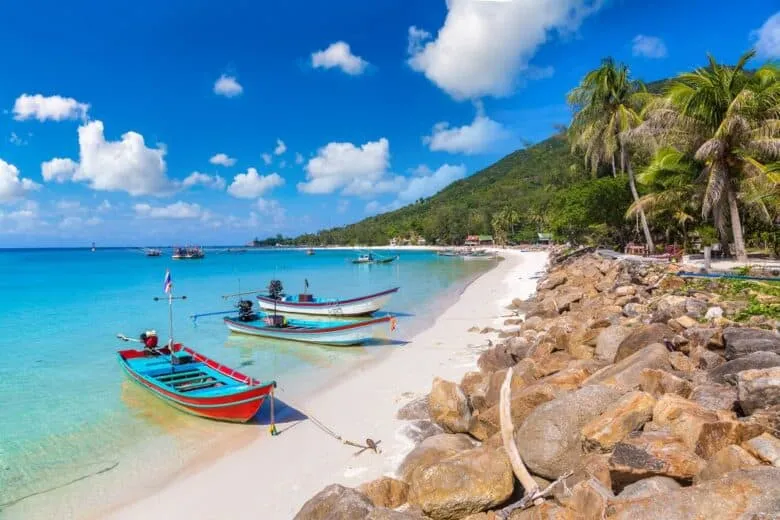
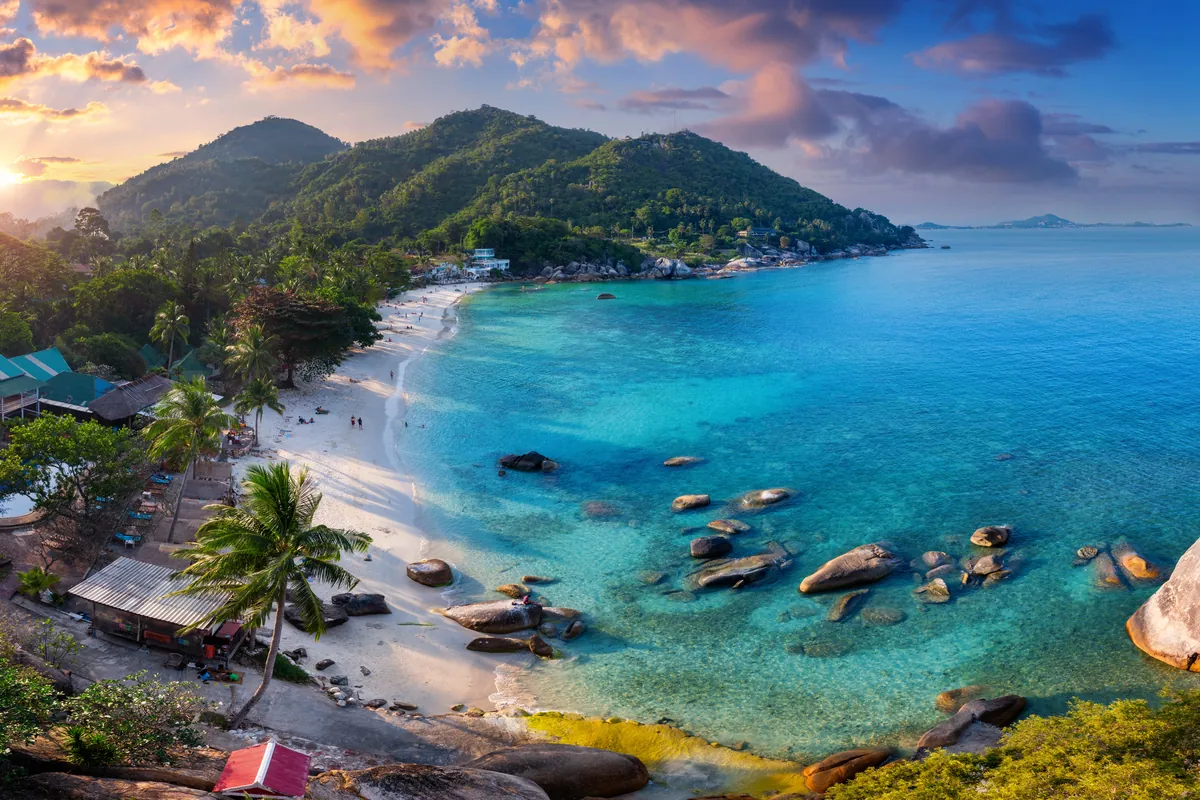
Off Krabi and Phuket, limestone islands shape many of the main boat routes. Maya Bay on Koh Phi Phi Leh normally closes from 1 August through 30 September and otherwise operates under visitor controls; the Phi Phi Viewpoint above Ton Sai frames the island’s twin bays. Railay, reachable only by boat, combines beaches and established climbing areas. On Phuket, Wat Kittisangharam (Big Buddha) reopened in March 2026 after the 2024 landslide, while Wat Chalong remains a separate temple stop. Check current Big Buddha access before travelling. Ao Phang Nga is commonly explored by boat or sea kayak.
Kanchanaburi
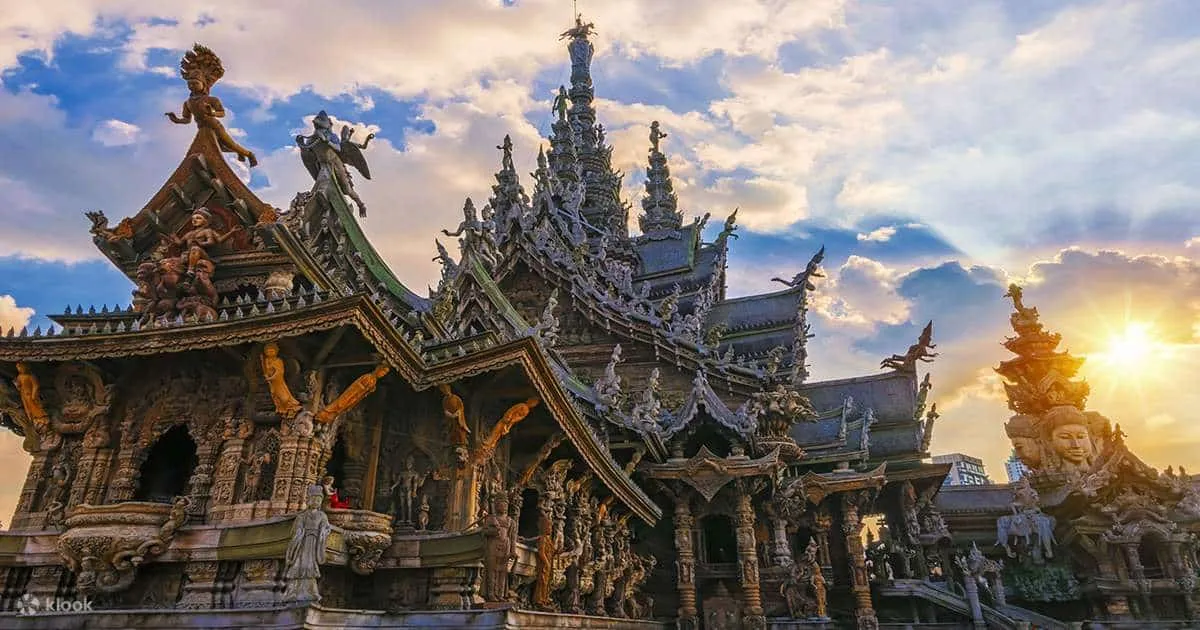
West of Bangkok, Erawan Falls rises through seven tiers. Swimming and upper-tier access can be restricted when water, fire or other safety conditions require it. The Bridge over the River Kwai and Death Railway memorials cover the area’s wartime history. On mainland Surat Thani, Khao Sok National Park has rainforest trails and raft-house stays on Cheow Lan Lake. In Pattaya, the all-teak Sanctuary of Truth remains under construction by hand.
How to choose what to do first
Choose by time of day, weather, and transport first. Thailand rewards early starts, and the best-looking stop on a map can be the wrong one if it puts you in midday heat or cross-town traffic.