


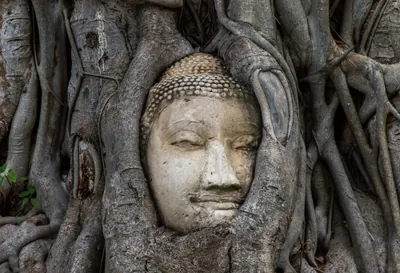




Monkhood and merit-making sit at the centre of everyday Thai Buddhism. Visitors will see saffron robes at dawn, temples filled on holy days, and family celebrations around ordination. This guide explains temporary ordination, alms giving, donations, and respectful behaviour (including guidance for women) and points to Poy Sang Long as a distinct tradition rather than duplicating festival coverage.
Quick answer
Treat monks as members of a disciplined religious community: give space, keep voices low, dress modestly at temples, and follow local cues for offerings. Temporary ordination is a meaningful merit-making path for many Thai men, not a casual tourist experience. Women should avoid physical contact with monks and follow local offering procedures. For Shan novice ceremonies in the north, see Poy Sang Long.
| Topic | Visitor-friendly approach |
|---|---|
| Seeing monks in public | Give way, keep calm, no grabbing for photos |
| Alms round | Observe; join only where organised/invited |
| Temple donation | Use official boxes; keep it quiet |
| Women & monks | No contact; follow local offering method |
| Ordination events | Respect family rites; ask before close photos |
| Poy Sang Long | Distinct Shan tradition. Use the event guide |
How we scoped this guide
We focus on what travellers encounter: dawn alms, temple visits, invitations to ordination celebrations, and northern novice festivals. Religious practice varies by temple and region. When claims are uncertain, we stay with practical visitor behaviour. Broader manners live in Thailand etiquette; dress rules in what to wear in Thailand.
Merit-making in plain visitor language
In Thai Buddhist life, merit (bun) is cultivated through good actions: supporting the monastic community, practising generosity, keeping precepts, and joining temple rituals. Families may mark birthdays, anniversaries, or life transitions with offerings. Visitors are welcome to observe and, where appropriate, donate quietly. You do not need to adopt a full religious identity to be polite.
Merit-making is related to, but not identical with, household spirit house offerings. Temples and monastic discipline are the Buddhist institutional core; spirit houses reflect other local strands that coexist in daily life.
Temporary ordination
Many Thai men ordain temporarily. Motivations can include:
- Making merit for parents
- Marking a transition into adulthood or before marriage
- Spending a rains retreat period in the robes
- Personal religious commitment for a set time
Ordination involves ritual, training, and community support. It is not a drop-in tourist package. If you are invited to attend a family ordination day as a guest:
- Dress modestly
- Bring an appropriate gift only if the family advises one
- Follow seating guidance
- Keep photography discreet and ask before close-ups
- Expect chanting, processions, and gift presentations to the temple
Foreigners sometimes explore longer-term monastic stays through established temple programmes. That path requires serious preparation, language reality checks, and temple approval, far beyond a holiday whim.
Alms giving (tak bat)
At dawn in many towns, monks walk a route collecting food offerings. The scene is quiet and purposeful.
Visitor etiquette:
- Stand aside and do not block the line
- Dress modestly if you plan to offer
- Use two hands or the locally shown method when placing food in the bowl
- Do not touch monks
- Keep phones silent; ask before filming faces at close range
- Do not treat the alms round like a street show
Some temples and community groups organise visitor-friendly alms events with clear instructions. Those are safer than improvising on a random soi. Food should be appropriate and respectful. Follow what locals prepare rather than offering inappropriate packaged jokes.
Temple donations and practical generosity
Temples accept support through donation boxes, envelopes for specific funds, and offerings of requisites. Practical tips:
- Prefer official boxes and labelled envelopes
- Small amounts given calmly are appropriate
- Do not wave cash for attention
- Receipts may be available for larger formal donations. Ask politely
- Buying flowers, incense, or oil at temple stalls for personal offering is common
Avoid anyone who aggressively “sells” blessings in a way that feels coercive. If unsure, observe Thai families for two minutes and mirror their quiet style.
Respectful behaviour around monks
For everyone
- Keep heads lower when passing close in confined temple spaces if locals do so
- Do not sit higher than monks in formal halls when seating is hierarchical
- Pointing feet at monks or Buddha images is careless. See gestures
- Speak softly; save loud haggling for markets
- Never touch a monk’s robes to “feel the fabric”
Guidance for women
Theravada monastic rules in Thailand prohibit physical contact between monks and women. Practical translation for visitors:
- Do not shake hands or hug
- When offering items, follow local method, often placing offerings so the monk can receive them without contact, sometimes via a cloth or a male helper
- On crowded transport, avoid pressing against monks; give space
- In photos, do not put an arm around a monk
These are respect practices, not personal judgments about travellers. Staff at temples are used to helping sincere visitors get it right.
Children and photos
Ask parents and temple staff before photographing ordination candidates or young novices at close range. Ceremonies can be emotional family moments.
Poy Sang Long as a distinct tradition
Poy Sang Long is a Shan (Tai Yai) novice-ordination festival celebrated notably in Chiang Mai and nearby communities, typically in the March–April period. Boys dressed in ornate formal attire process with mentors before ordination as novices. It is culturally specific and visually striking, and it has its own event page for dates, temple locations, and viewing etiquette: Poy Sang Long.
Do not flatten Poy Sang Long into a generic “Thai monk festival.” It is a Shan community rite of passage with Buddhist ordination at its heart. Visitors may watch respectfully at host temples such as those noted on the event page; there is generally no ticket, but ordinary temple dress and shoe rules apply.
Holy days, rains retreat, and trip planning
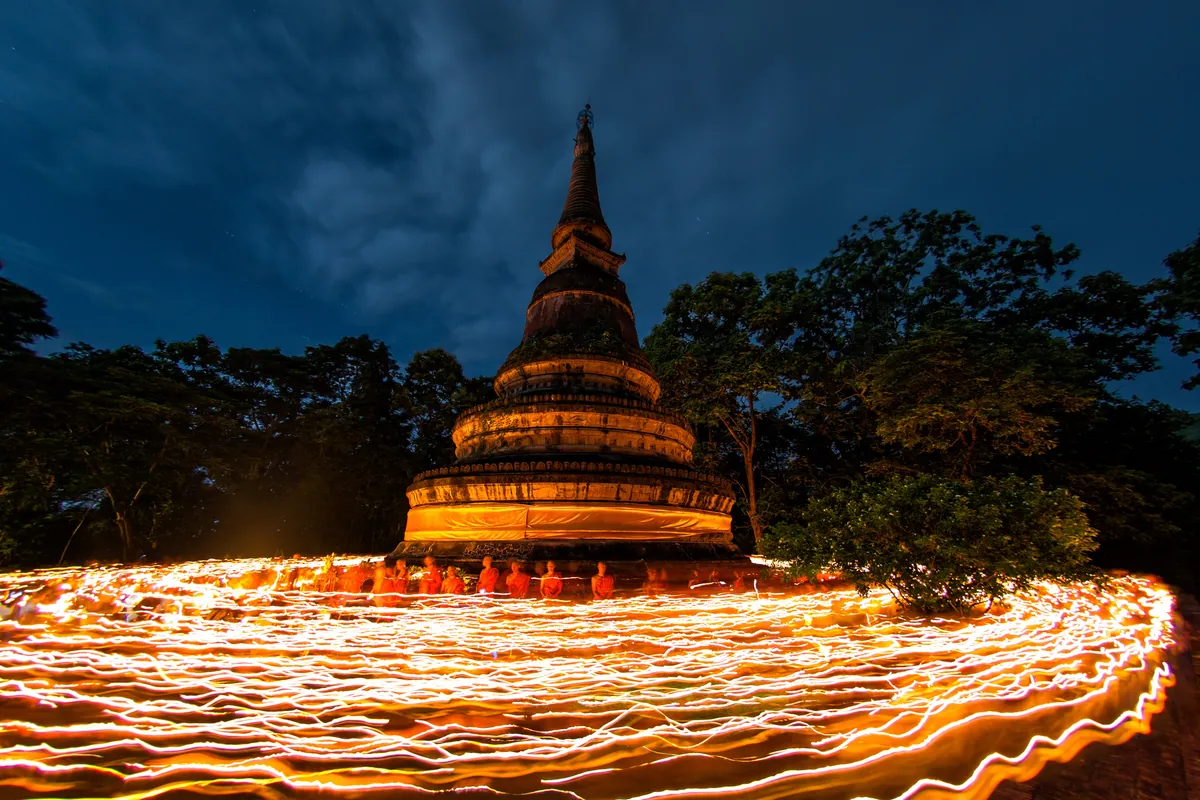
Ordination and merit-making intensify around the Buddhist calendar. Asanha Bucha and the start of Buddhist Lent (linked with candle festivals such as Ubon Ratchathani Candle Festival / Khao Phansa) are especially associated with monastic life. Makha Bucha and Visakha Bucha draw large temple crowds for evening candle circumambulations.
For nightlife and alcohol-sale impacts on those days, use the dedicated trip guide: Buddhist holidays and Thailand’s alcohol ban. This page stays on monastic culture rather than festival tourism.
Connecting to temples and dress
If you plan temple visits around merit-making mornings:
- Cover shoulders and knees: what to wear
- Review major sites: temples in Thailand
- Mind wider customs: Thailand etiquette
- Keep royal and public respect in view when ceremonies overlap national life: Thai monarchy for visitors
Practical visitor scenarios
Dawn in a provincial town: Monks approach with bowls. You step back, watch a family offer rice quietly, and take no flash photos.
Friend’s ordination in Bangkok: You wear long trousers, sit where directed, and congratulate the family softly afterward.
Chiang Mai in late March: You check the Poy Sang Long page, visit Wat Pa Pao or Wat Ku Tao as listed for that year, and keep to the edges of processions.
Temple donation: You place a modest note in the box, make a small personal bow if it feels natural, and leave without requesting a performance.
Related guides
- Poy Sang Long
- Temples in Thailand
- Thailand etiquette
- Thai spirit houses
- Buddhist holidays & alcohol ban
- What to wear in Thailand
Bottom line
Ordination and merit-making are living religious practices. Visitors show respect by giving monks space, following offering customs carefully (especially regarding contact rules for women) and treating ceremonies as family and community rites rather than spectacles. For the distinct Shan novice festival in the north, rely on the Poy Sang Long event guide for dates and places, and keep this page as your manners companion.