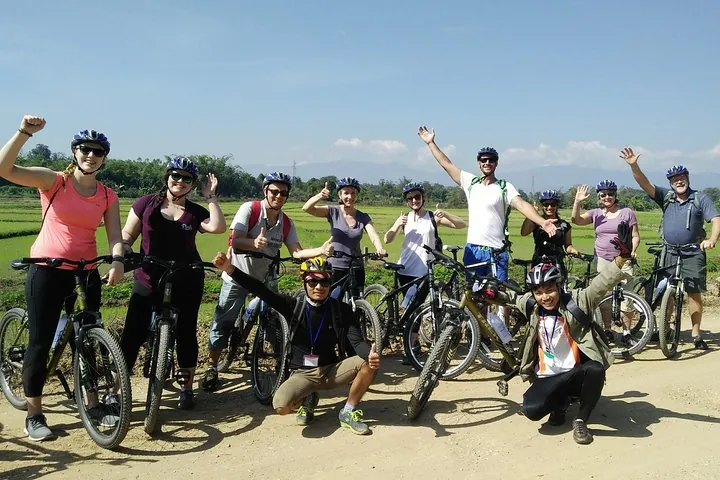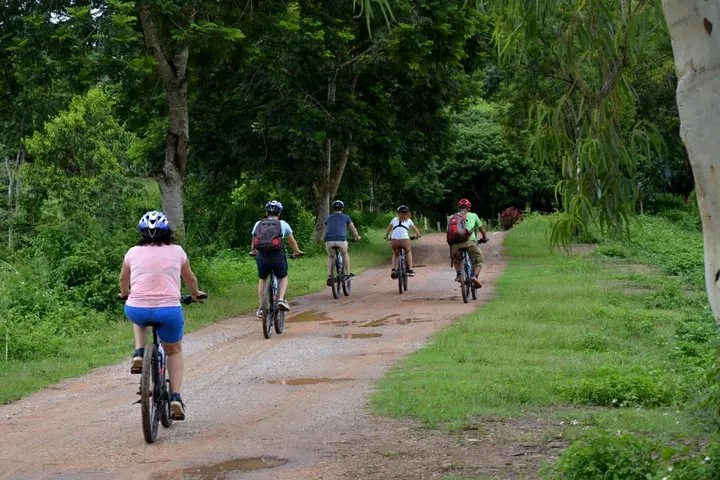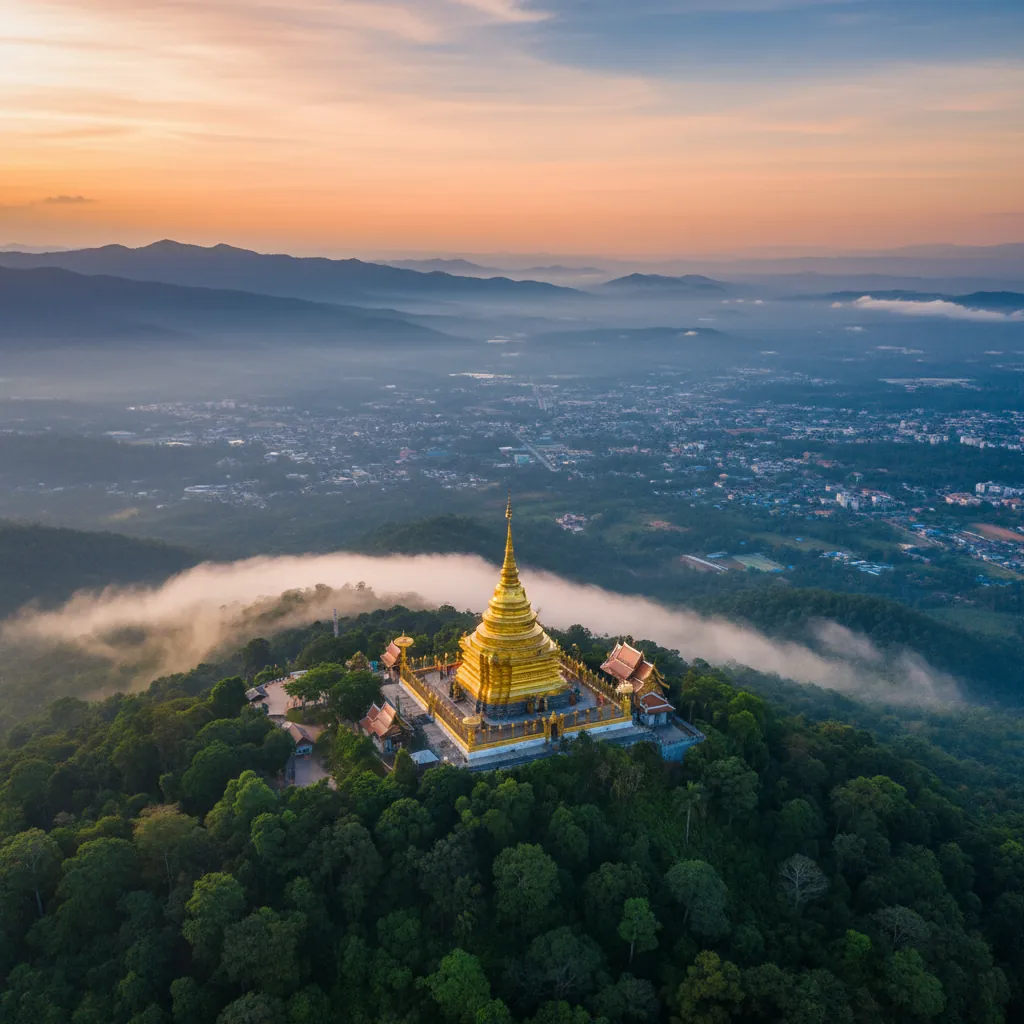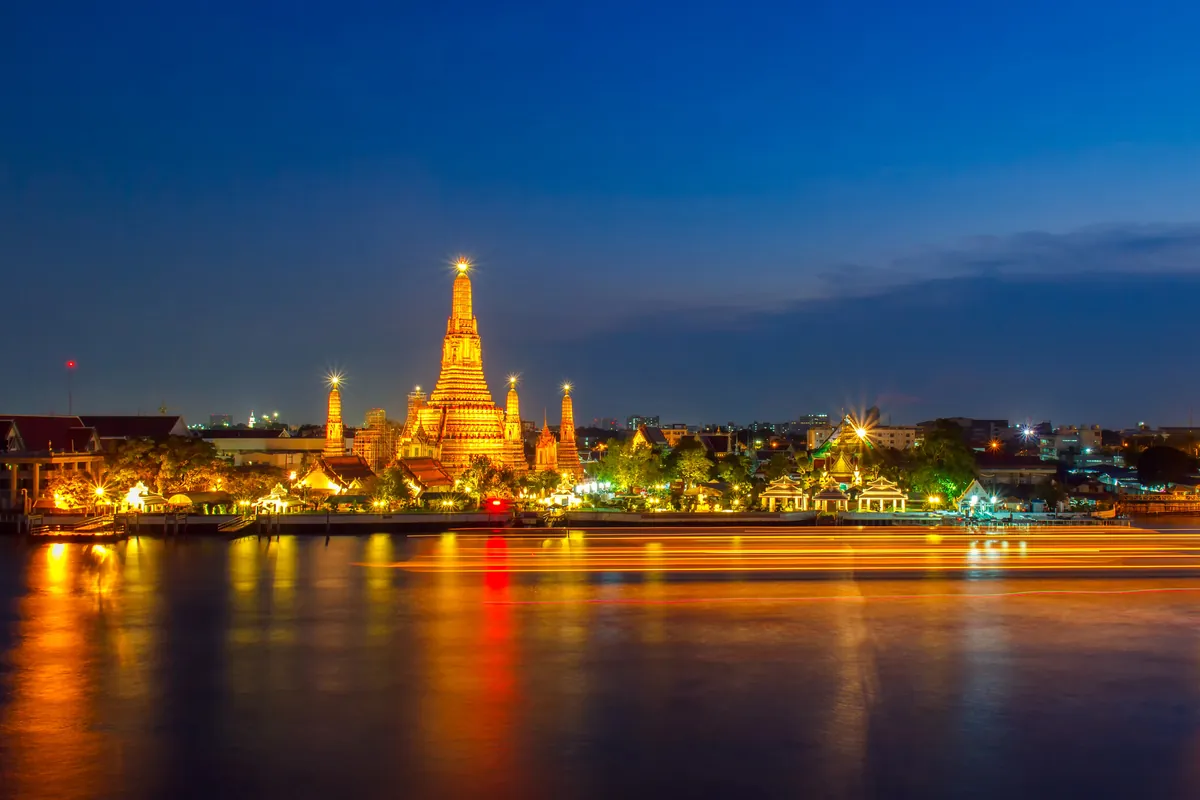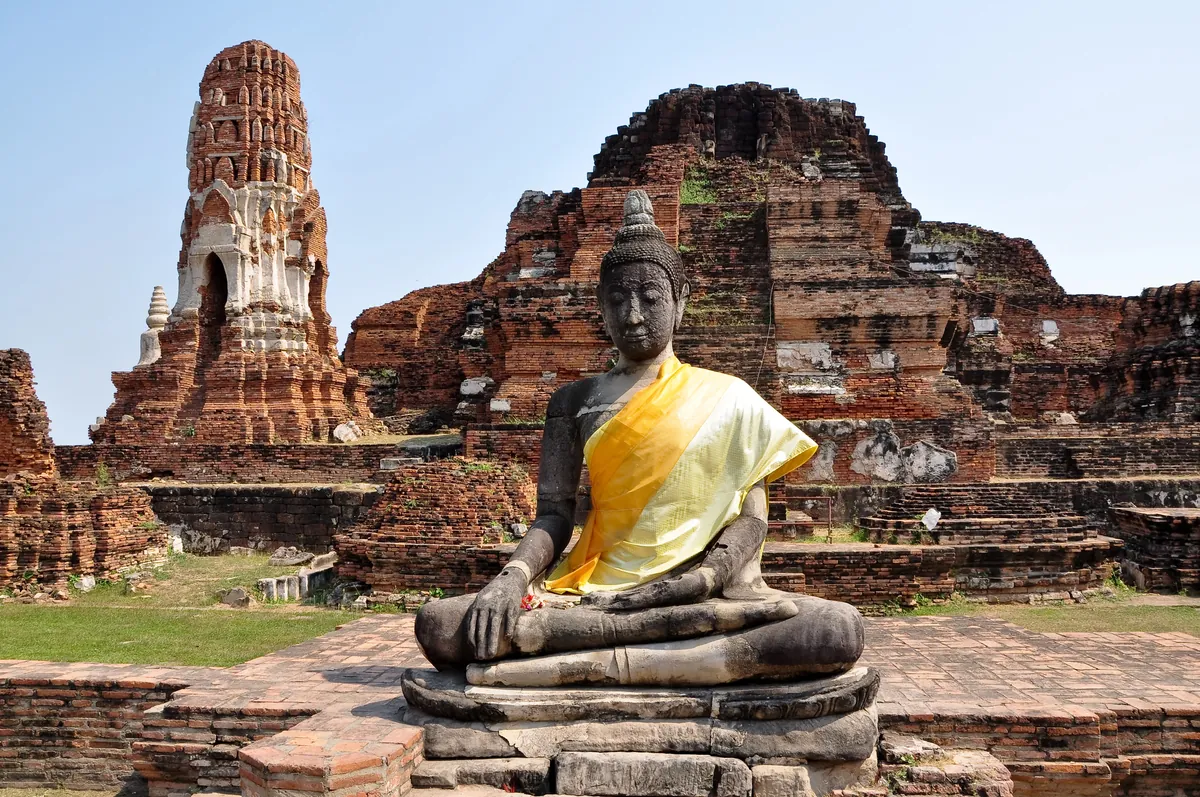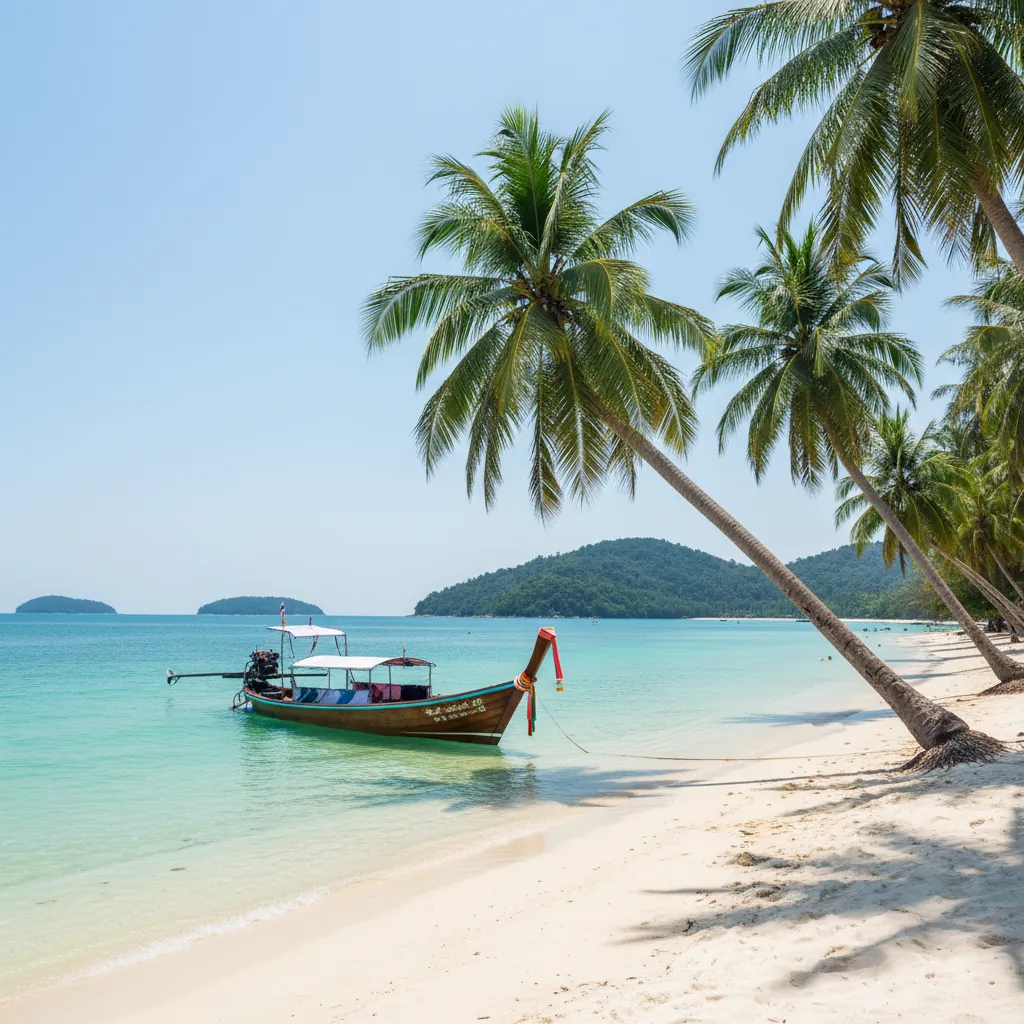


Chiang Rai gets treated as a day trip, and that’s the mistake. Thailand’s northernmost province packs three of the country’s strangest, most photographed temples into one town, then surrounds them with tea plantations, hill-tribe villages and the Mekong border country of the Golden Triangle. Base yourself in Chiang Rai town for two or three nights and everything below is within an hour’s drive. It slots neatly into the final leg of our 7-day northern Thailand itinerary.
The best things to do in Chiang Rai are the White Temple (Wat Rong Khun), the free Blue Temple, the Black House museum, Wat Huai Pla Kang’s 69-metre Guan Yin, the Saturday Walking Street, Choui Fong tea plantation, and a Golden Triangle day along the Mekong.
The full top ten, in the order most trips run them:
- Wat Rong Khun: the White Temple
- Wat Rong Suea Ten: the Blue Temple
- Baan Dam Museum: the Black House
- Wat Huai Pla Kang and the 69-metre Guan Yin
- Clock tower light show and the night bazaar
- Saturday Walking Street on Thanalai Road
- Choui Fong Tea Plantation and the Mae Chan hills
- Golden Triangle viewpoint and a Mekong boat loop
- Akha coffee villages: Ban Pha Hi and Ban Pha Mi
- Khun Kon Waterfall, the province’s tallest
- Must-sees: White Temple (200 THB), Blue Temple (free), Black House (80 THB)
- Best time: November-February, cool and dry; hazy weeks are common in March-April
- Getting there: ~3 hours by bus from Chiang Mai, or direct flights from Bangkok
- Getting around: Rent a car or scooter, or use songthaews and Grab in town
- Evenings: Clock tower light show 19:00, 20:00 and 21:00 nightly; Saturday Walking Street from ~4pm
- Typical stay: 2-3 nights
The White Temple (Wat Rong Khun)
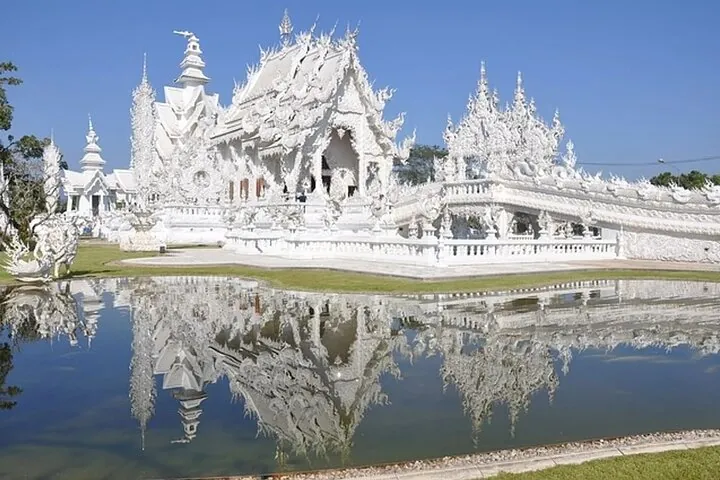
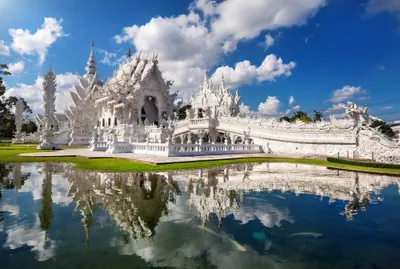
Wat Rong Khun is the reason most people come, and it earns it. Artist Chalermchai Kositpipat started building his all-white, mirror-flecked temple in 1997 and it’s still unfinished. The entrance bridge crosses a pit of sculpted reaching hands, and the murals inside mix Buddhist cosmology with superheroes and world events. Entry is 200 THB for foreigners (free for Thai visitors, over-70s and children under 120 cm) and includes the Cave of Art. Open daily 08:00-17:30, with last entry around 17:00.
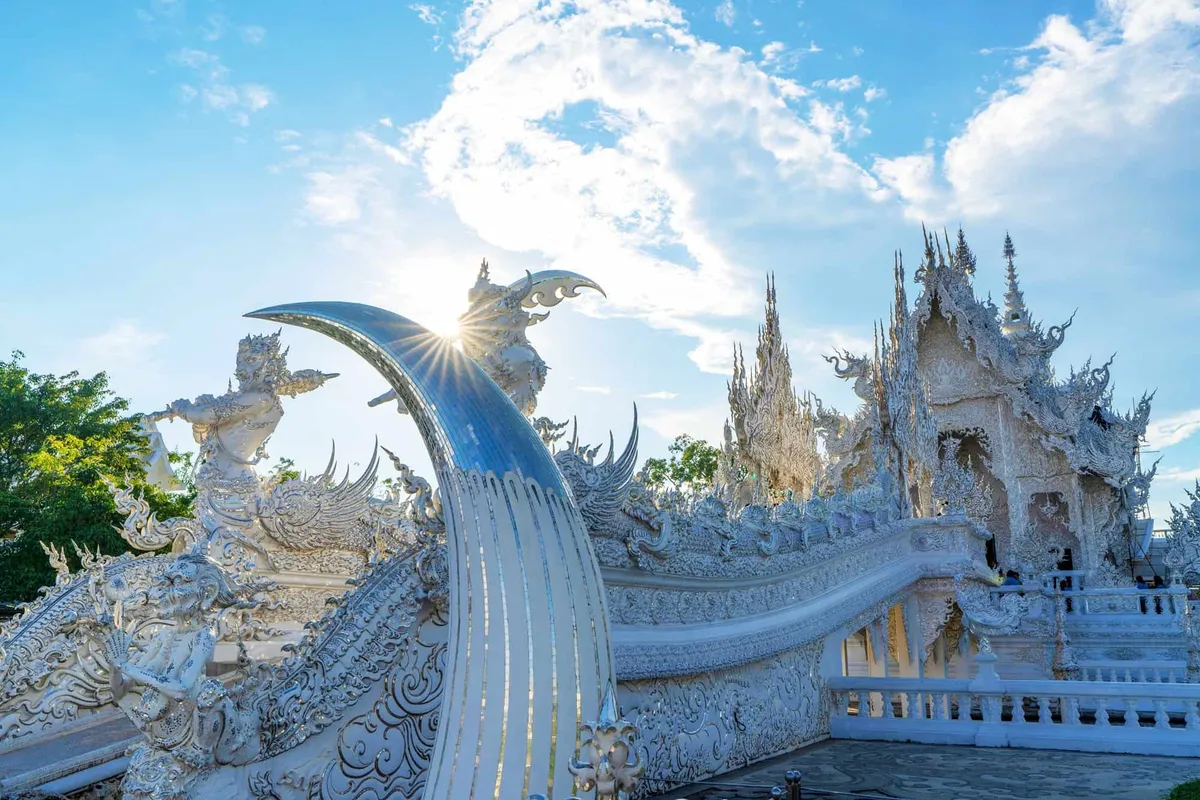
Insider Tip: It sits 13 km southwest of town, and the tour buses from Chiang Mai arrive from mid-morning. Go at 08:00 sharp. You’ll have an hour of relative quiet, and the low light on the mirror fragments is when the building actually glitters.
Allow 60-90 minutes. Photography is fine outside; inside the main ubosot it isn’t.
The Blue Temple (Wat Rong Suea Ten)
Ten minutes from the centre on the north side of the Kok River, Wat Rong Suea Ten is the White Temple’s saturated opposite: deep sapphire walls, neon-bright murals and a porcelain-white seated Buddha that seems to glow in the dim interior. It was finished in 2016 by a student of Chalermchai, which explains the family resemblance in the sculptural style.
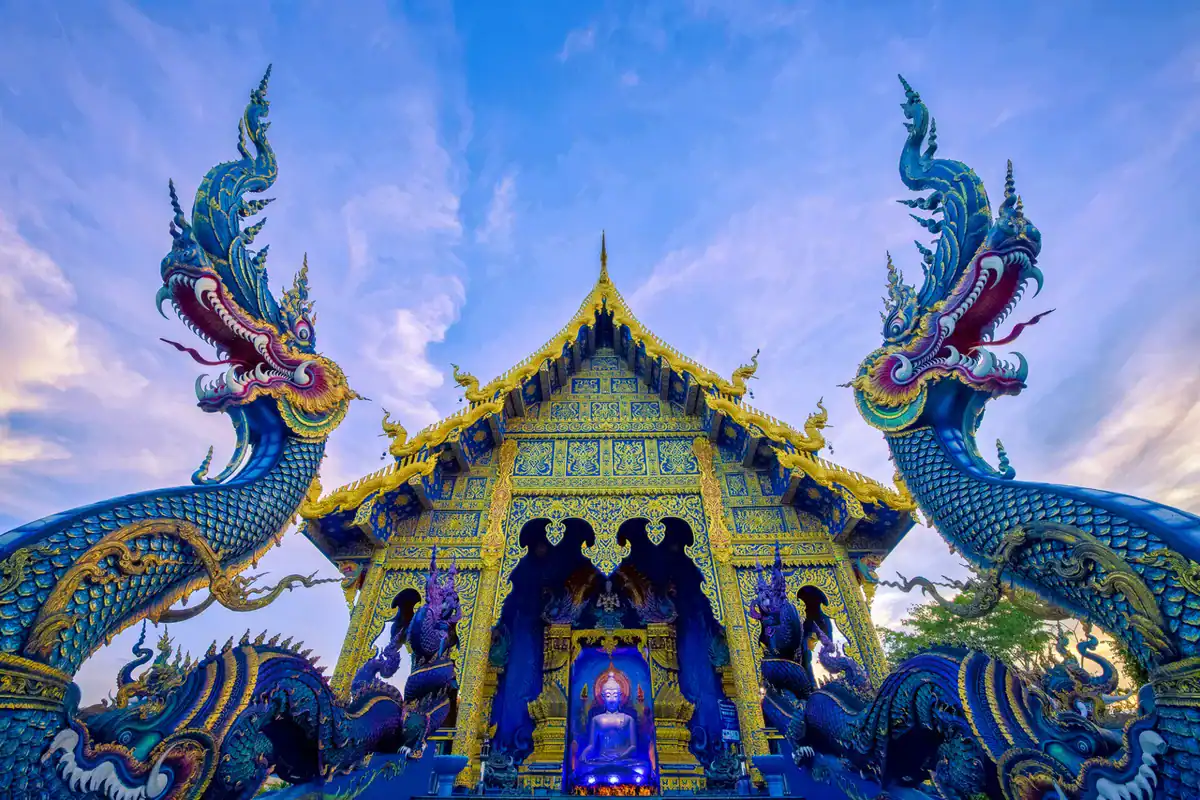
Entry is free and it opens 07:00-20:00 daily, longer hours than the other two art temples, which makes it the natural early-morning or early-evening stop. Dress as you would for any working temple: shoulders and knees covered, shoes off inside.
The Black House (Baan Dam Museum)
The third point of the art-temple triangle isn’t a temple at all. Baan Dam Museum, the Black House, is the life’s work of National Artist Thawan Duchanee (1939-2014): more than 40 black teak buildings in Nang Lae, north of town, filled with buffalo horns, snakeskins, and furniture built from bone. It reads as the dark counterweight to his contemporary Chalermchai’s White Temple, and seeing both in one day is the point.
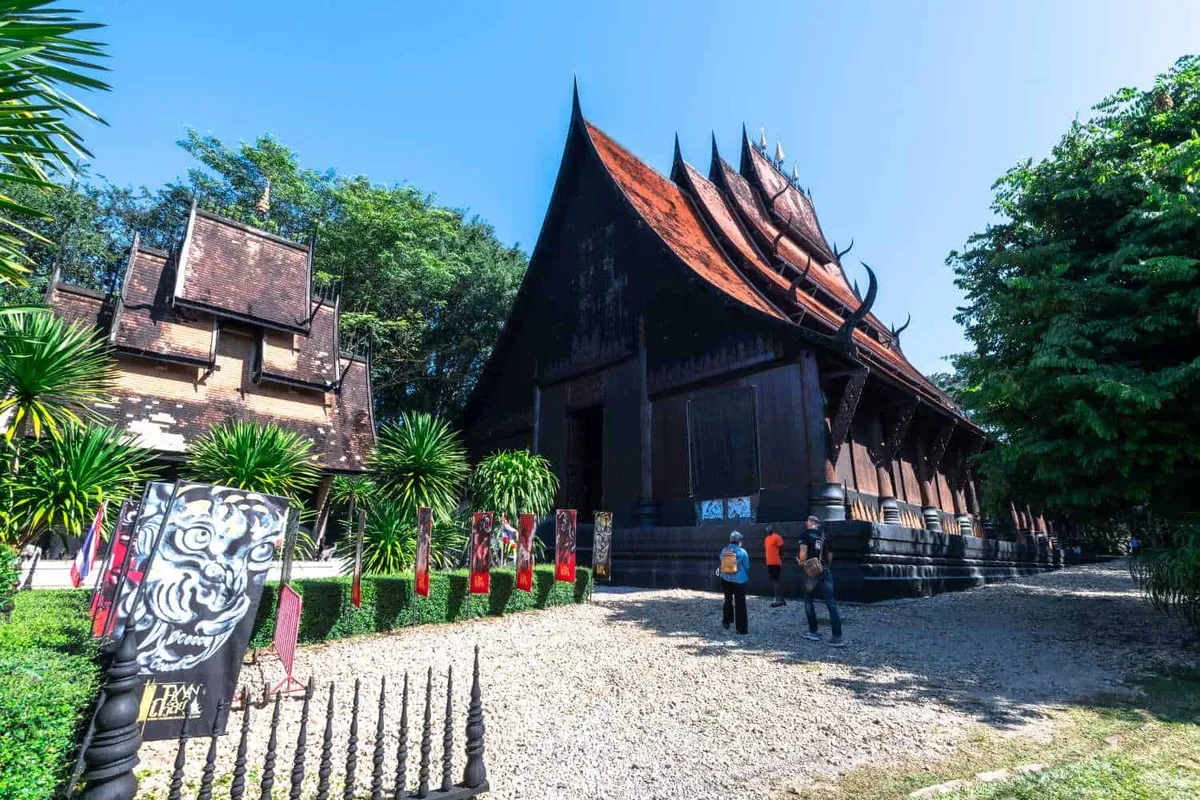
Entry is 80 THB. Open daily 09:00-17:00, but note the midday close from 12:00-13:00. Time your visit around lunch, not into it.
Wat Huai Pla Kang and the giant Guan Yin
The fourth big landmark hides in plain sight: the white figure you’ll spot on the hills northwest of town is not a Buddha but Guan Yin, the Chinese goddess of mercy, roughly 69 metres tall at Wat Huai Pla Kang (often written Wat Huay Pla Kang). A lift runs up to a viewing deck behind her eyes (40 THB for foreigners, 20 THB for Thai nationals) with the temple’s nine-tier pagoda and the Kok valley spread below.
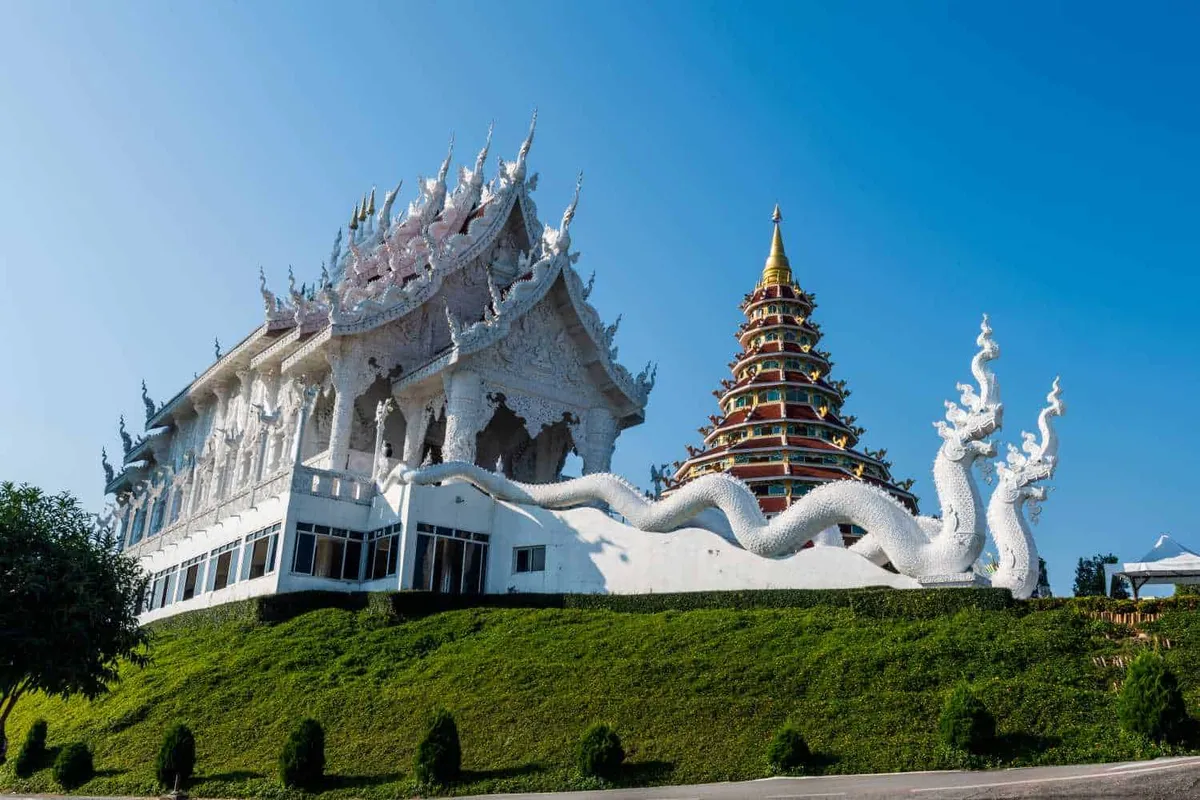
The grounds are free and open 07:00-21:00 (the lift runs 07:00-18:00). It’s 15-20 minutes from the centre and combines naturally with the Blue Temple on the same side of the river.
Evenings: clock tower, night bazaar, Saturday Walking Street
Chiang Rai town runs on a compact evening circuit. At the central roundabout, the golden Chalermphrakiat Clock Tower, another Chalermchai design, runs a free light-and-music show at 19:00, 20:00 and 21:00 nightly. The night bazaar beside the bus station fills with food stalls and northern Thai staples; expect khao soi and grilled sausage rather than big-city polish, and that’s the charm of eating here.
Saturdays add the main event: Chiang Rai Walking Street on Thanalai Road, stalls opening from about 3:30-4pm and the street at its busiest 6-8pm. It’s cash-only at most stalls, and a separate Sunday market runs on San Khong Noi Road if you miss it.
Tea country: Choui Fong and Doi Mae Salong
North of town the province turns to tea. Choui Fong Tea Plantation in Mae Chan district terraces down a hillside with a modernist café cantilevered over the rows. Entry is free, it opens 08:30-17:30 daily, and the green-tea cheesecake with a pot of oolong is the order. There’s no public transport out here; self-drive or scooter via the Doi Mae Salong road is how you reach it.
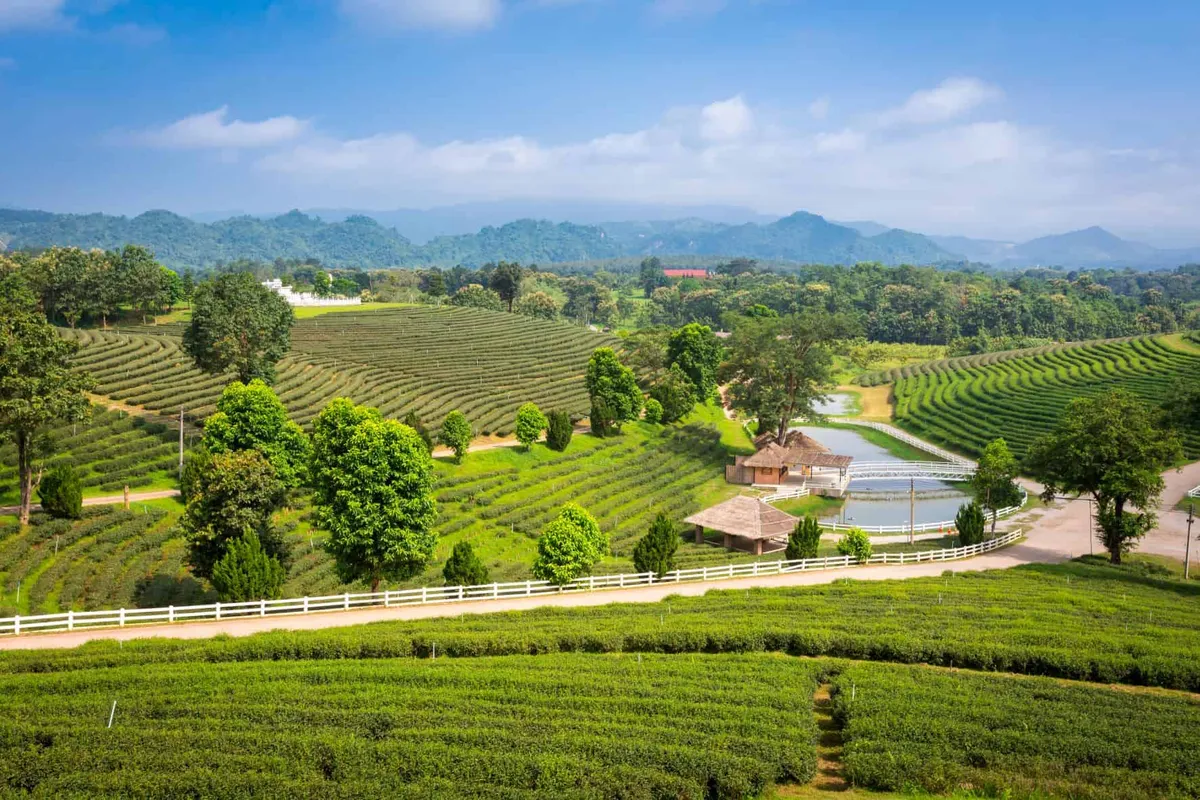
Keep climbing and you reach Doi Mae Salong, a former Kuomintang settlement where the morning market sells Yunnanese noodles and the hillsides grow high-mountain oolong. Nearby Doi Tung adds the Mae Fah Luang royal villa and gardens. Either works as a half-day; together they’re a full, winding mountain day.
The Golden Triangle and the Mekong border
At Sop Ruak, about an hour north, the Mekong and Ruak rivers meet and three countries share the view: Thailand, Laos and Myanmar. Golden Triangle Park marks the spot with a giant golden Buddha on a riverside boat pedestal; entry is free, and short Mekong boat loops run around 400-500 THB per person. The House of Opium museum next door covers, honestly and uncomfortably, the trade that made this border famous.
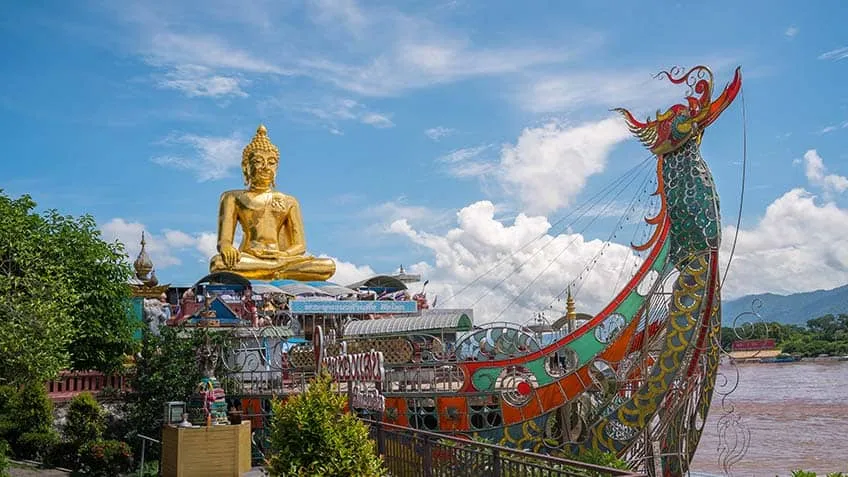
Pair it with old Chiang Saen (ruined city walls and riverside temples 9 km south) and you have the province’s best history day. If you’d rather not drive, a one-day Chiang Rai private tour strings the temples together, and group tours run north to the border.
Watch out: Boat touts at Sop Ruak sell “visits to Laos” landing on Don Sao island market. It’s a sanctioned market stop, not a real border crossing, fine as a souvenir run, but don’t pay a premium expecting more than that.
Mountains, villages and waterfalls
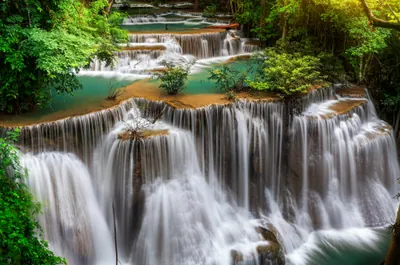
The province’s quiet side is arguably its best. Ban Pha Hi and Ban Pha Mi, Akha coffee villages stacked on the ridge near the Mae Sai border, serve espresso with a view that drops into Myanmar. Our guide to Chiang Rai’s hill tribes covers the etiquette of visiting well. Closer to town, Khun Kon Waterfall is the province’s tallest at 70 metres, reached by an easy 1.4 km forest trail (about 30 minutes each way); it’s free, open roughly 08:30-16:30, and the pool at the base is cold in the best way.
Add Singha Park (the brewery’s vast farm estate with tea rows, zip lines and bike rental, open 09:00-18:00) if you’re travelling with kids or want an easy, pretty afternoon.
Getting there and around
Buses and minivans from Chiang Mai take about three hours; book Chiang Mai to Chiang Rai tickets a day ahead in high season rather than gambling on the next departure. Flying works too: Chiang Rai’s Mae Fah Luang airport takes direct flights from Bangkok.
In town, Grab and songthaews cover the centre cheaply, but the province rewards wheels of your own: the tea country, villages and Golden Triangle all sit on good, quiet roads. Renting a car in Thailand is straightforward with an IDP; if you ride a scooter instead, wear the helmet and check your insurance actually covers riding.
If your trip runs through late January, time it with the Chiang Rai Lantern Festival; November’s Loy Krathong also fills the riverbanks here without Chiang Mai’s crowds.
How to plan your days
Two days covers the core: art temples and Wat Huai Pla Kang on day one with the clock tower show after dark, then tea country or Khun Kon on day two. A third day buys the Golden Triangle and Chiang Saen without rushing. Sleep in town the first night for the evening circuit, and consider a second night up at Doi Mae Salong if mountain mornings appeal. For where to stay, start with the picks on our Chiang Rai guide.