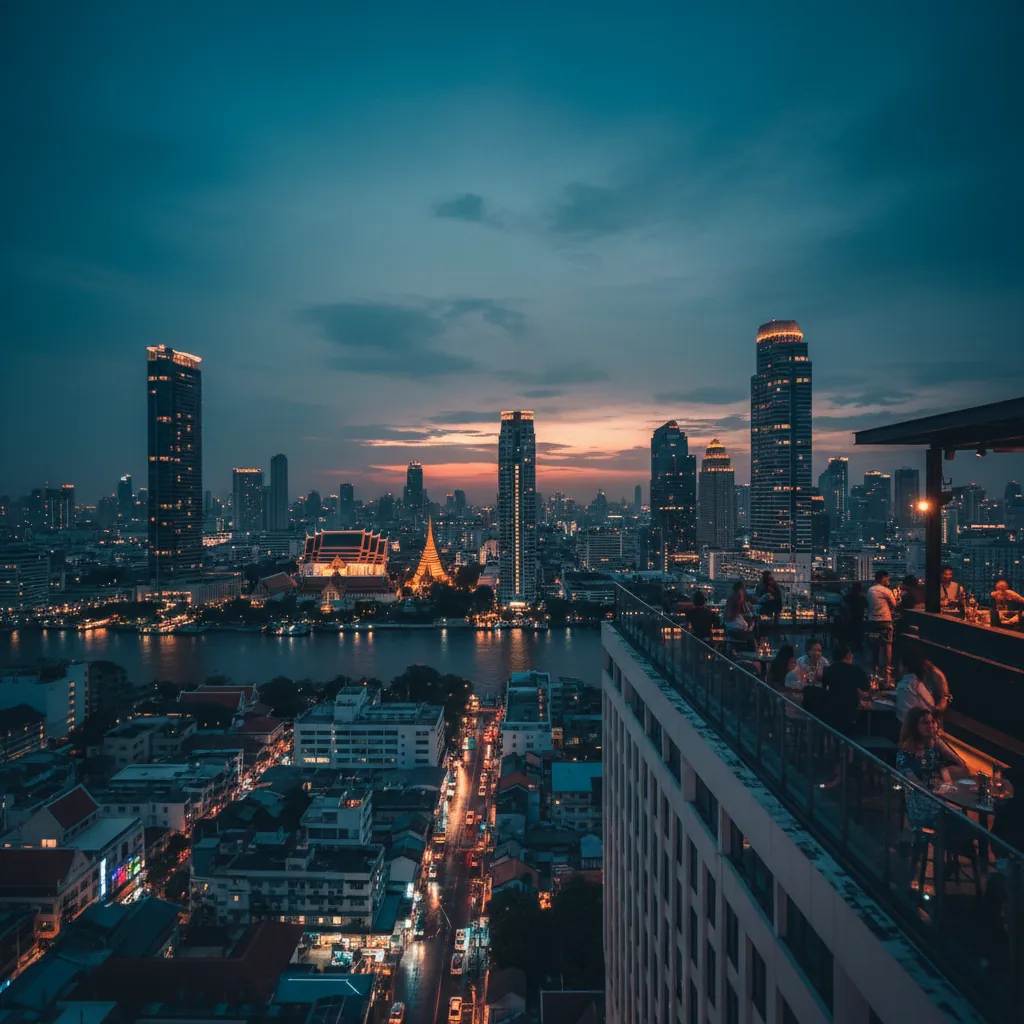


Bangkok has hundreds of temples, and a first-timer can see the essential ones in a focused day or two if you chain them by the river. The trick is to start early — by mid-morning the marquee temples are hot and crowded — and to ignore anyone who tells you a temple is closed for a special ceremony, which is the city’s oldest tourist scam. Dress modestly everywhere: covered shoulders and knees are the rule, strictly enforced at the Grand Palace.
Quick answer
Start with Wat Phra Kaew if it matches your route, then compare Wat Pho and Wat Arun by season, travel time, and crowd level. Use this as a shortlist, not a fixed itinerary; skip anything that adds a long transfer for a small payoff.
| Best for | Pick | Why it belongs | Main tradeoff |
|---|---|---|---|
| Best first pick | Wat Phra Kaew | Strongest planning anchor | Check travel time, season, and opening days before you commit |
| Best alternative | Wat Pho | Good second option when it fits your route | Check travel time, season, and opening days before you commit |
| Best different pace | Wat Arun | Different pace from the obvious pick | Check travel time, season, and opening days before you commit |
| Good fit when nearby | Wat Saket (the Golden Mount) | Worth adding when nearby | Check travel time, season, and opening days before you commit |
| Good fit when nearby | Wat Traimit (the Golden Buddha) | Worth adding when nearby | Check travel time, season, and opening days before you commit |
How we picked these stops
The shortlist keeps to the temples this guide covers properly, ranked by what decides a temple morning: how central the site is, entry fees, dress-code strictness, and how well nearby sights combine into one route. Fees and hours drift — check current opening times before building a day around one site.
Wat Phra Kaew
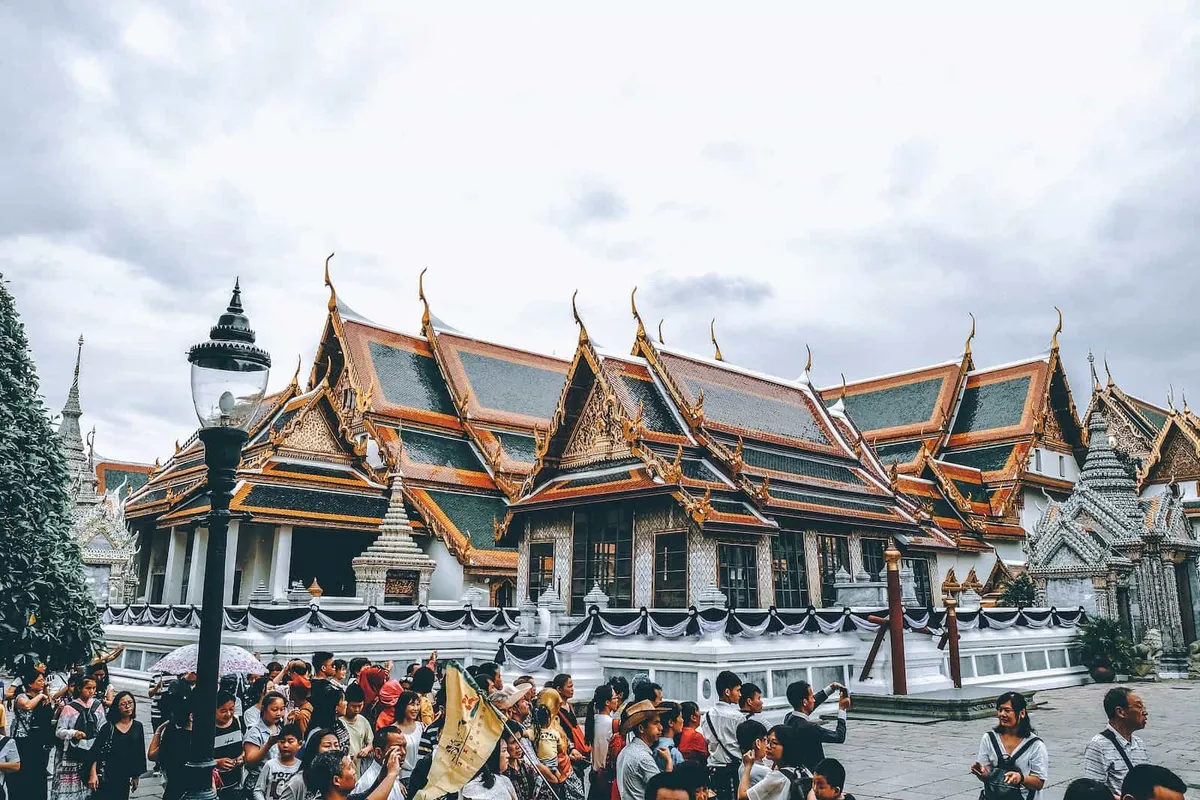
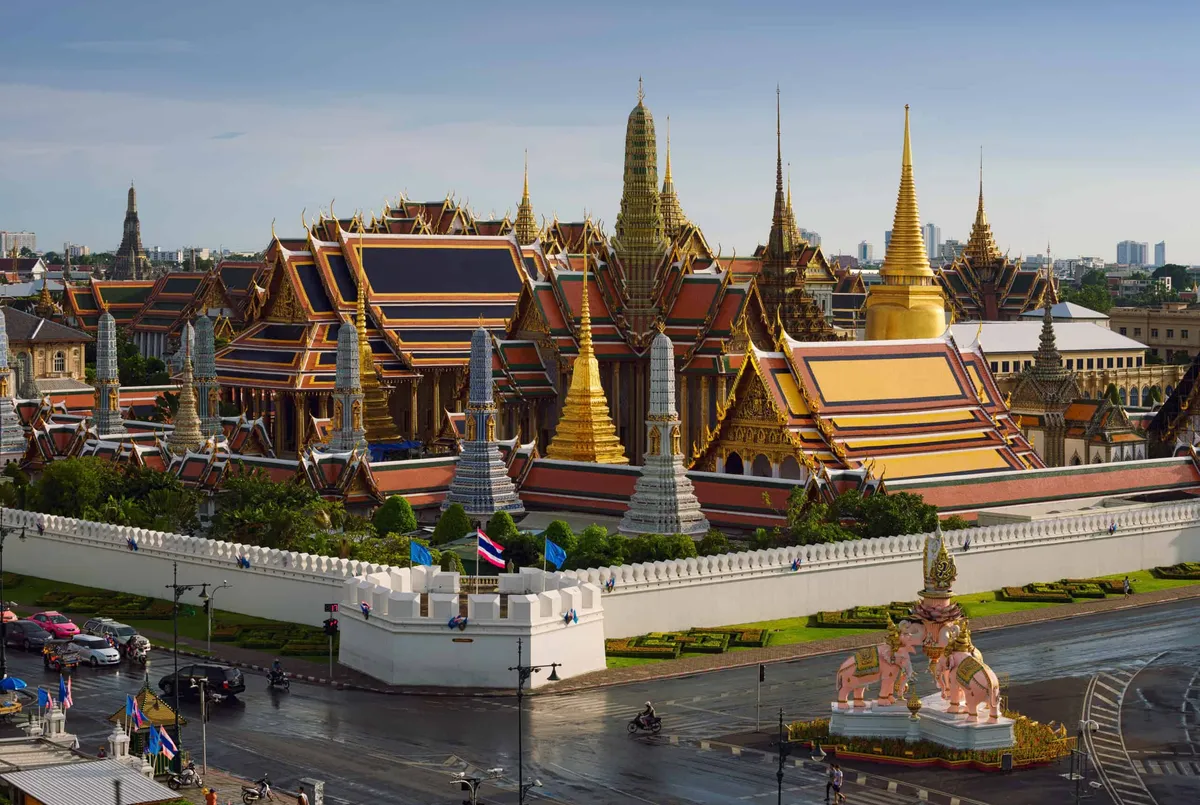
The walled royal compound holds Wat Phra Kaew, home of the Emerald Buddha — a small jade figure on a towering gilded altar, whose robes the king changes with the seasons. Around it spreads the Grand Palace’s gold chedi, mirrored mosaic and mythical guardians. It is one of Thailand’s most visited landmarks and one of the strictest on dress. At 500 THB it is also the priciest ticket in the city. Arrive at opening to beat the coaches.
Wat Pho
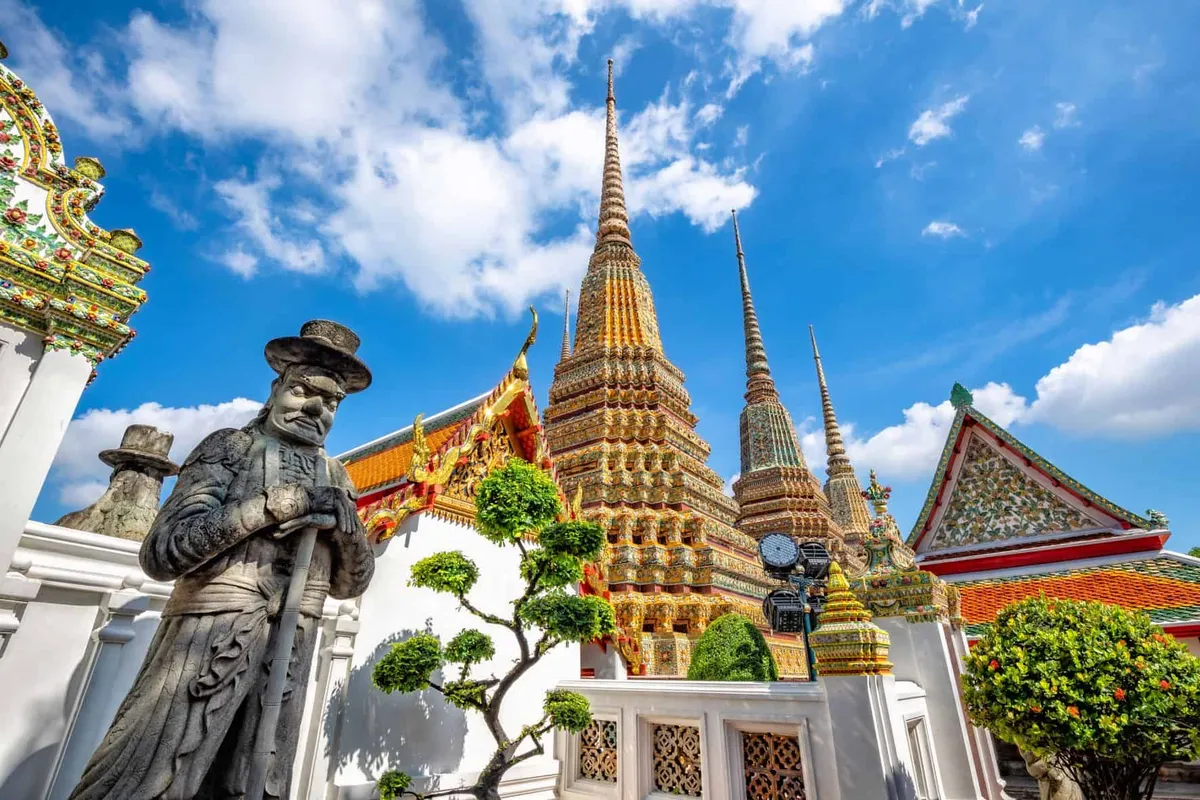
A short walk south, Wat Pho holds the 46-metre gold-leafed reclining Buddha, its feet inlaid with 108 auspicious scenes in mother-of-pearl. The grounds are quieter and greener than the Grand Palace, dotted with hundreds of Buddha images and the spired chedi of past kings. This is also the home of traditional Thai massage — the on-site school gives one of the best (and most legitimate) massages in Bangkok. Entry is around 300 THB and includes a bottle of water.
Wat Arun
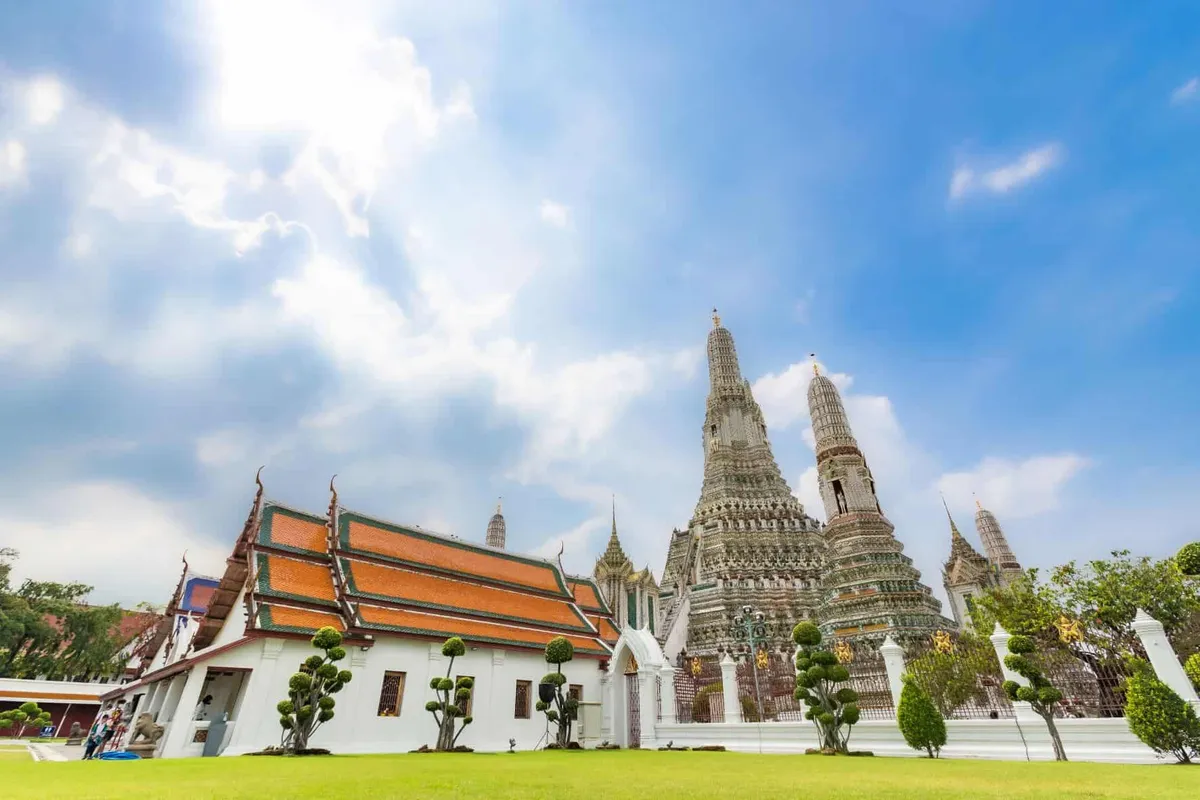
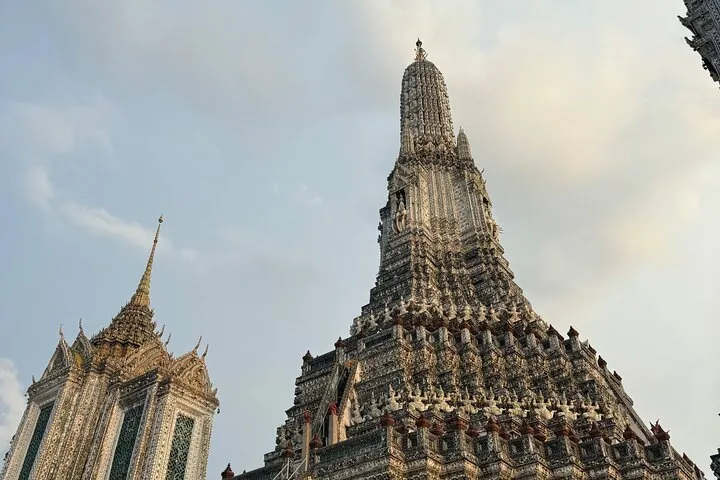
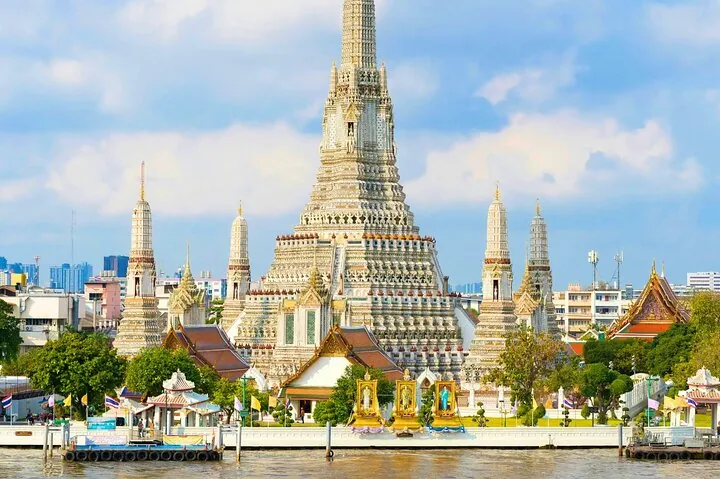
Across the river, the Temple of Dawn rises in a 70-metre central prang encrusted with broken Chinese porcelain that glints in the sun and glows at sunset. You can climb the steep lower steps for a view back over the river to the old city. Reach it on the quick cross-river ferry from the Tha Tien pier by Wat Pho — the three riverside temples form a natural morning circuit. Entry is around 200 THB.
Wat Saket (the Golden Mount)
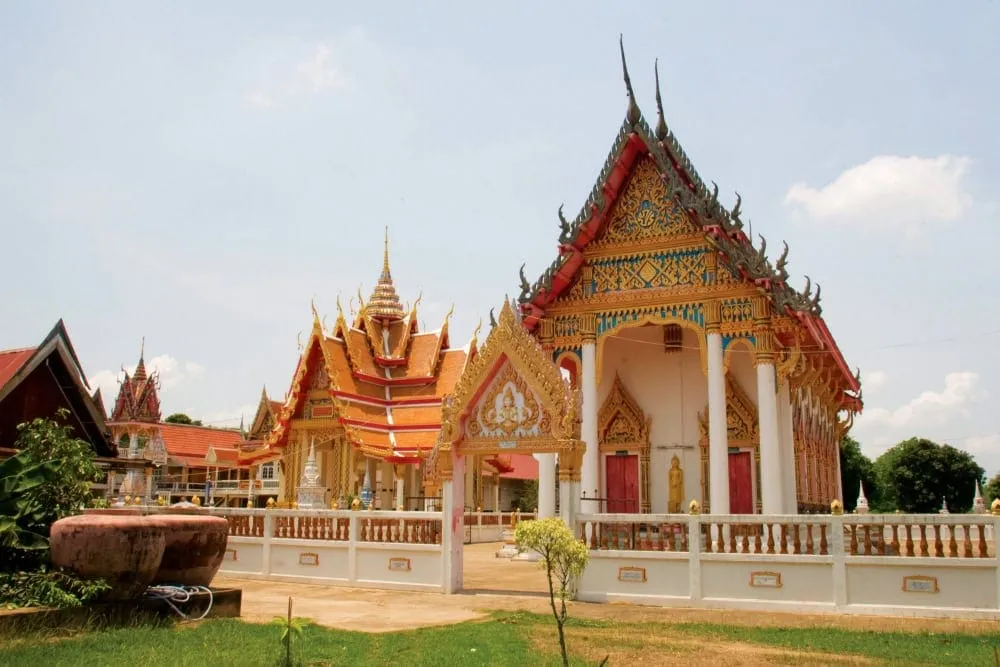
East of the old royal city, Wat Saket crowns an artificial hill with a golden chedi, reached by a 300-step spiral climb past bells and prayer flags. The reward is a rare 360-degree view over the low rooftops, temple spires and river of old Bangkok. It is cheap (around 50 THB) and best in the late afternoon, when the heat eases and the city softens toward dusk.
Wat Traimit (the Golden Buddha)
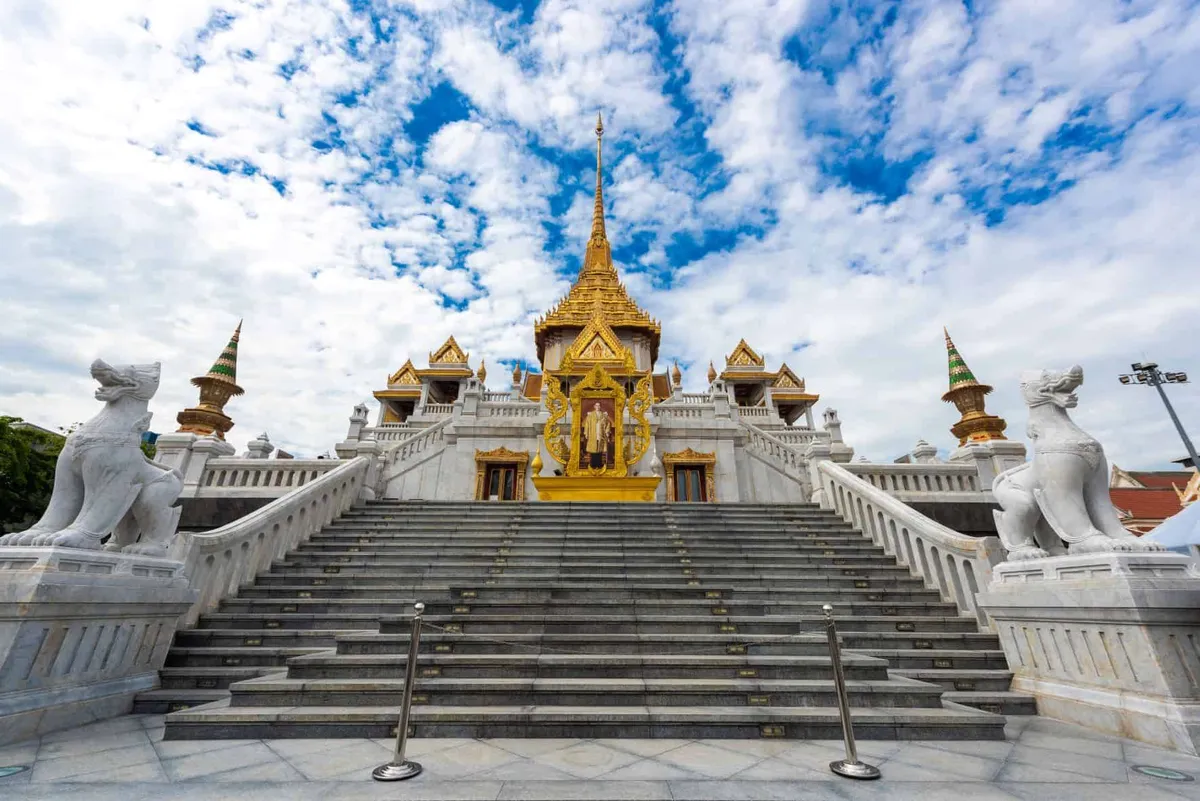
On the edge of Chinatown, Wat Traimit houses a 5.5-tonne solid-gold Buddha — the largest of its kind in the world. It spent centuries hidden under plaster to disguise it from invaders, and was only revealed by accident in the 1950s when it was dropped during a move. A small museum tells the story. It pairs well with a walk through the gold shops and street food of Yaowarat.
Wat Benchamabophit
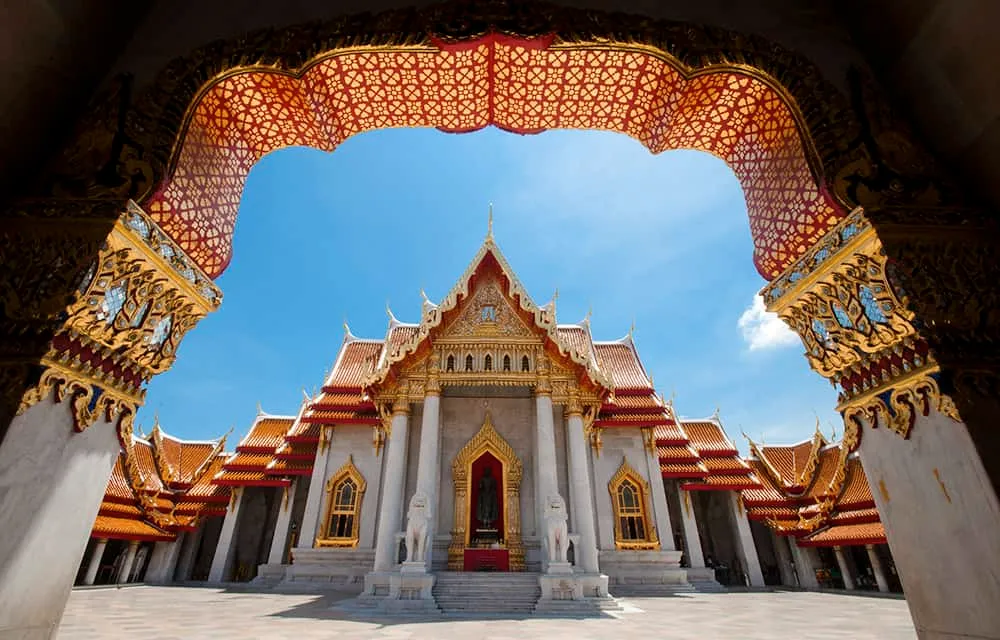
The Marble Temple, built of white Carrara marble by King Rama V, is the most elegant of Bangkok’s royal temples and the one on the back of the old five-baht coin. Its symmetrical courtyard, lined with bronze Buddha images in different regional styles, is a calm, photogenic contrast to the gilded chaos of the river temples. It sees far fewer visitors, which is part of its appeal.
Wat Suthat and the Giant Swing
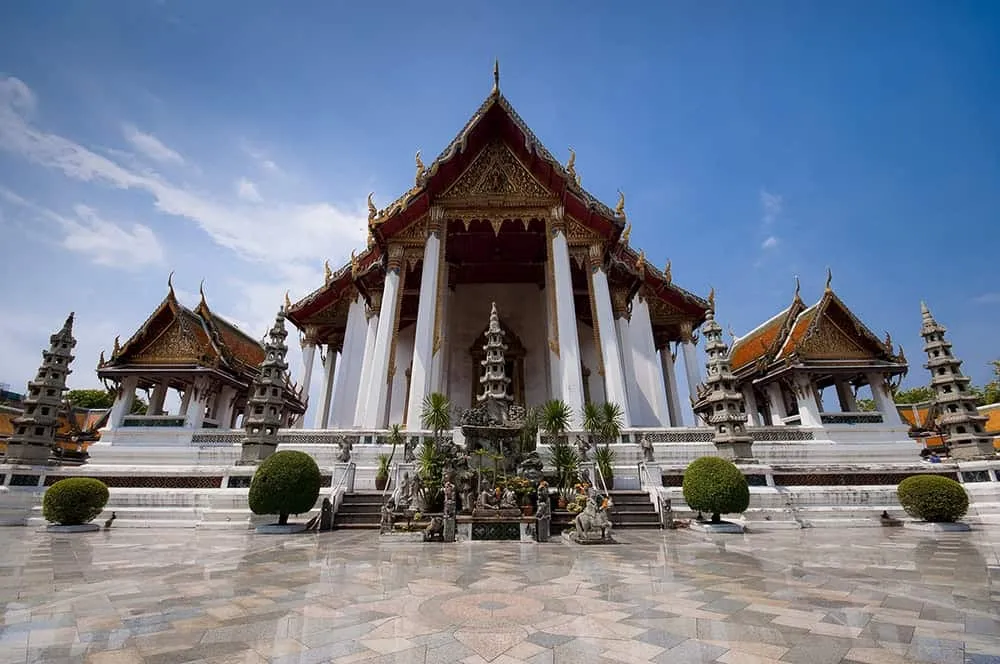
Wat Suthat has a large principal wihan begun under Rama I and completed under Rama III, with murals and a revered bronze Buddha brought from Sukhothai. Outside stands the Giant Swing, the red teak frame once used for a Brahmin swinging ceremony. The surrounding neighbourhood is lined with religious-supply shops and works well as part of an old-town walk.
Wat Ratchanatdaram (Loha Prasat)
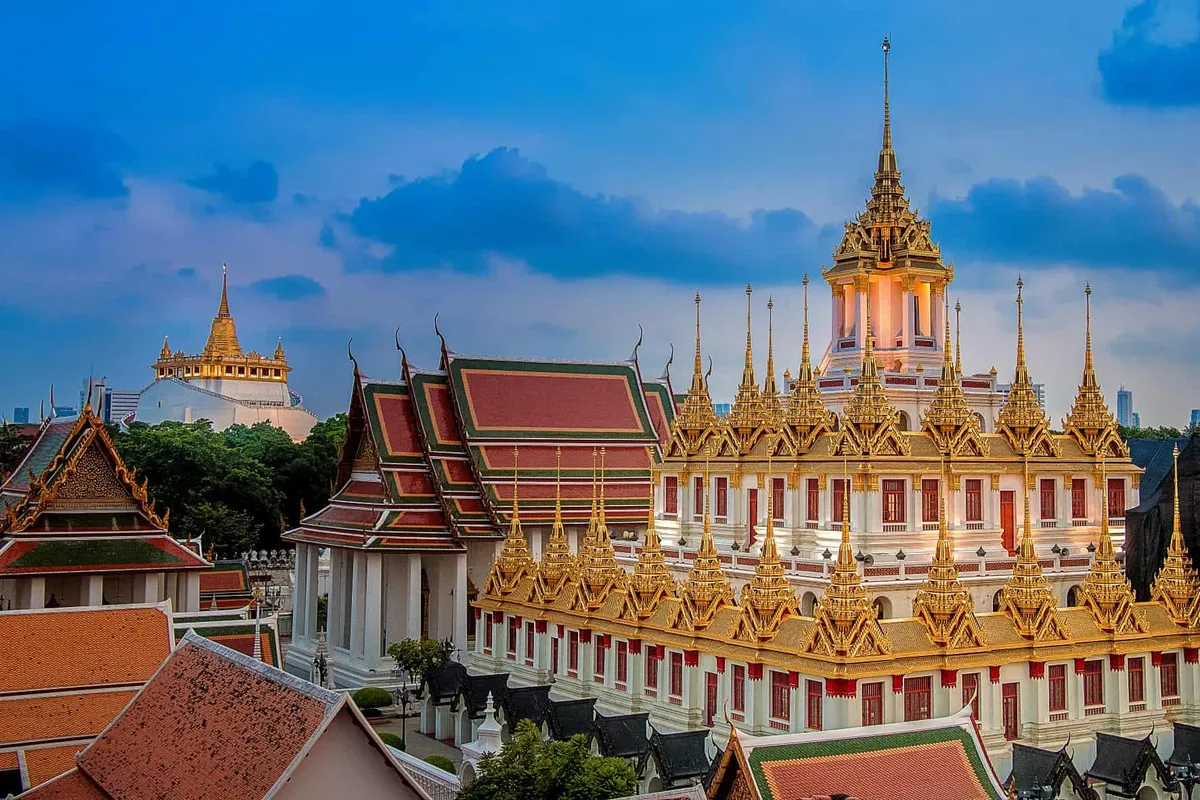
Near the Golden Mount, Loha Prasat — the “Metal Castle” — is a unique multi-tiered structure bristling with 37 black metal spires, one of only a few such buildings ever built. You can climb its central spiral to the top. It is often overlooked despite sitting beside the busy Ratchadamnoen avenue, which makes it a quiet, strange highlight.
Wat Mangkon Kamalawat
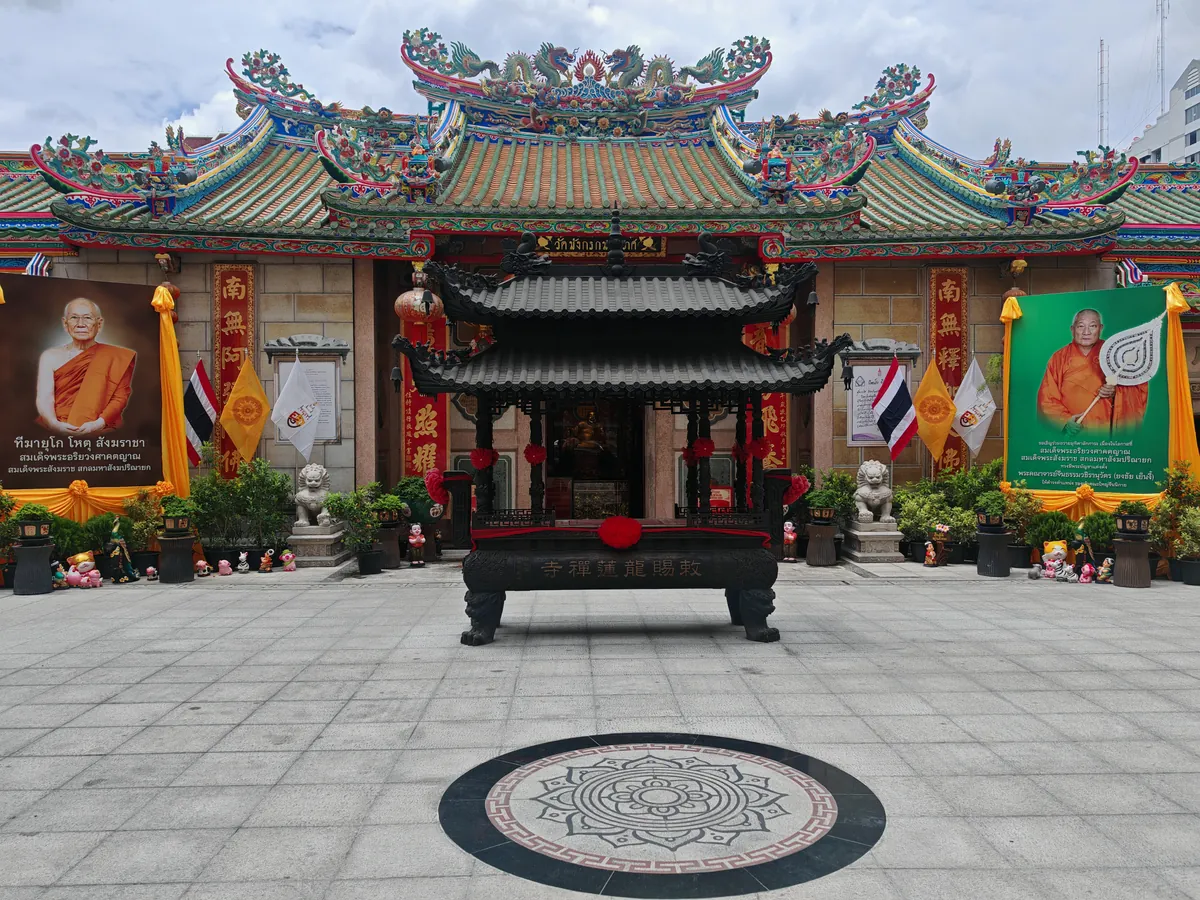
The heart of Chinatown’s spiritual life, Wat Mangkon is a Chinese Mahayana temple thick with incense smoke, red lanterns and gilded deities — a complete change of register from the Thai Buddhist wats. It is at its most alive during Chinese New Year and the Vegetarian Festival, when Yaowarat fills with crowds and food. Free to enter, and a short walk from the MRT station that shares its name.
Wat Paknam Phasi Charoen
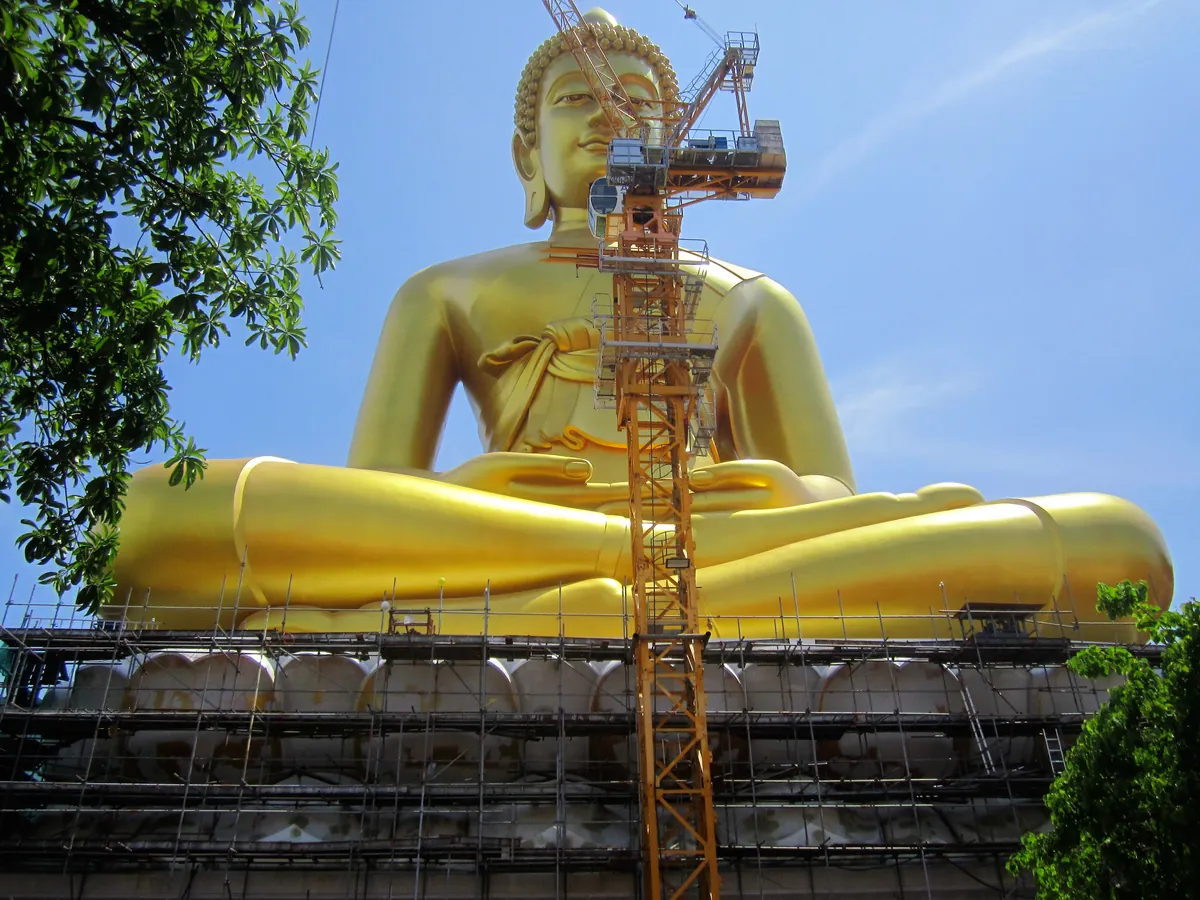
A little out of the centre in Thonburi, Wat Paknam has become known for its enormous green seated Buddha and, inside the white stupa, a ceiling painted as a cosmic mandala in emerald and gold above a green-glass pagoda. Go on a weekday morning for a quieter visit, and allow time to see the large Buddha outside.
How to choose what to do first
Choose by time of day, weather, and transport first. Thailand rewards early starts, and the best-looking stop on a map can be the wrong one if it puts you in midday heat or cross-town traffic.