

Wat Phrathat Chang Kham Worawihan
วัดพระธาตุช้างค้ำวรวิหาร
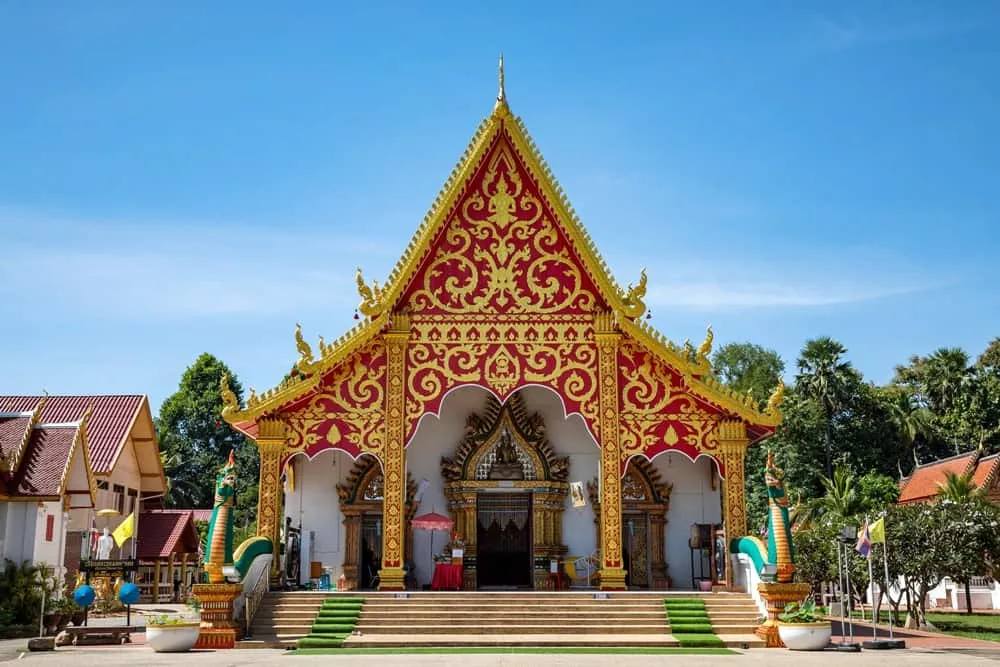
Wat Phrathat Chang Kham Worawihan is a royal temple on Suriyapong Road in Nan, built in 1406 under Chao Pu Khaeng of the Phaya Phukha dynasty and originally named Wat Luang Klang Wiang. It’s free to enter, open daily 07:00–21:00, and sits directly across the road from the Nan National Museum. The two make a natural single stop, since the museum fills in the royal history the temple only gestures at.
The temple’s signature feature is the chedi: a square, tiered, bell-shaped (Lanka-style) stupa whose base is ringed by 24 brick-and-stucco elephants (five along each of the four sides, with one more at each corner) appearing to shoulder the weight of the structure above them. It’s the same design language as Wat Chang Lom in Sukhothai, and the elephants are the reason “Chang Kham” (elephant-supported) is in the temple’s name. A stone inscription recovered on the grounds, one of Nan’s numbered historical inscriptions, records that the city’s ruler, Phayaphon Thep Ruechai, restored the main wihan in 1505, roughly a century after the chedi went up.
Inside the wihan, the principal image is Phra Phuttha Nanthaburi Sri Sakyamuni, a 1.45-metre bronze Buddha in the forgiveness (Abhaya) posture, cast with roughly 65% gold content. Less prominent but historically sharper are the walking Buddha images: five bronze figures cast in 1427 under the Nan noble Phraya San Pha Sum, four of them in the Sukhothai-style walking (Lilā) pose and one in a double-handed forgiveness gesture. Three of the five stand at Wat Phrathat Chang Kham today; the other two are a short walk away at Wat Phaya Phu. The whole complex (chedi, wihan, elephant buttresses, walking Buddhas) is read by Thai art historians as a clear import of Sukhothai artistic influence into 15th-century Lanna Nan, arriving through trade and political contact rather than conquest.
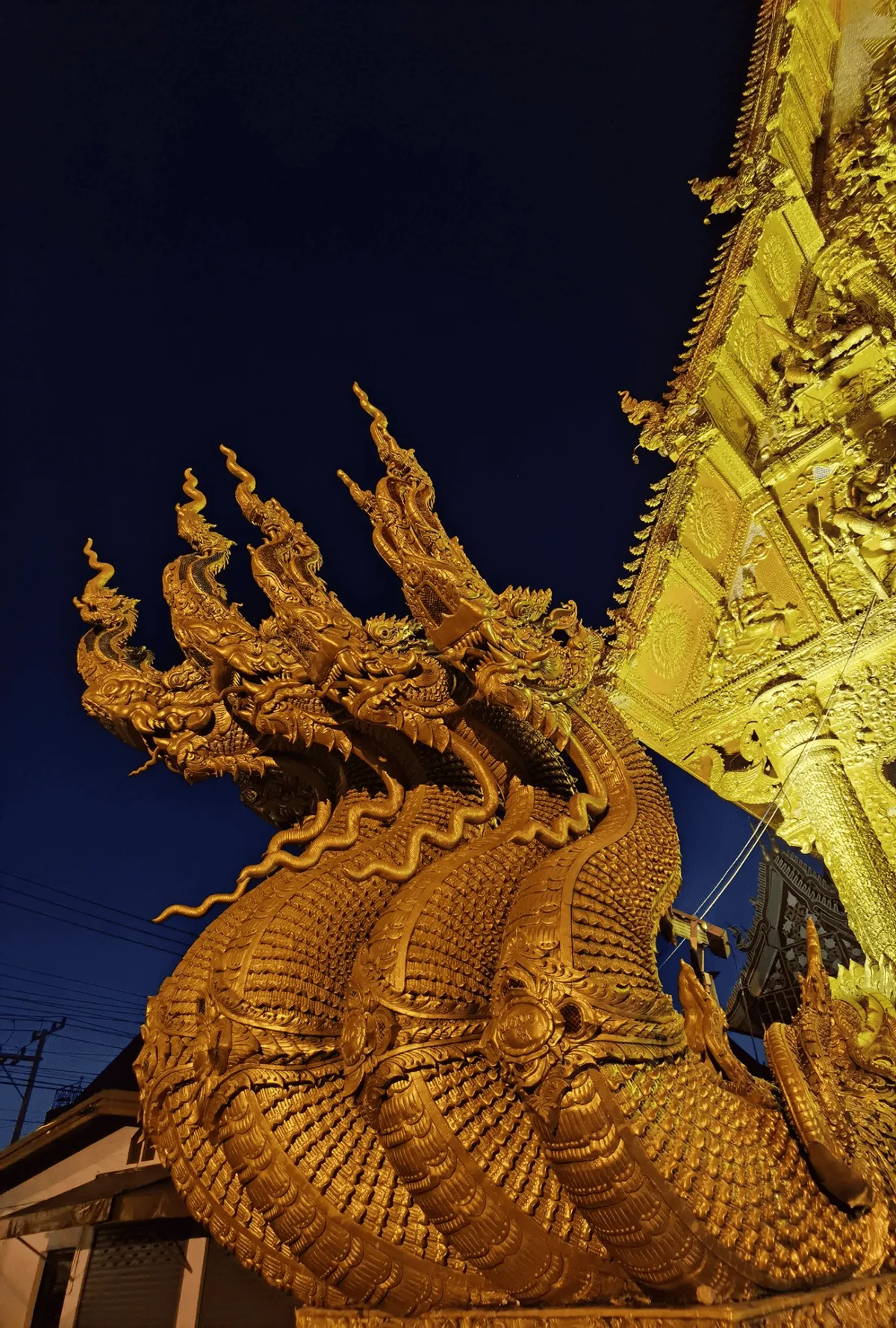
As a royal temple, Wat Phrathat Chang Kham historically doubled as ceremonial ground for Nan’s rulers, used for major Buddhist rites and for the water-oath ceremony, a formal act of allegiance sworn over consecrated water. That royal status is also why the site carries the “Worawihan” designation, marking it out from Nan’s ordinary temples. The 21:00 closing time is later than most Nan temples keep, and the chedi is often lit after dark, worth timing a visit for if a full day of temple-hopping around the old city pushes you here later than planned.
Insider Tip: Go early. Before 8am the temple grounds are close to empty, the light is good for photographing the elephant buttresses without harsh shadow, and you can walk the chedi’s full circumference without waiting for other visitors to clear a shot.
Watch out: Like any working wihan, shoes come off before entering the buildings and shoulders/knees should be covered. There’s no rental service at the gate here the way there is at busier Bangkok temples, so dress appropriately before you arrive.
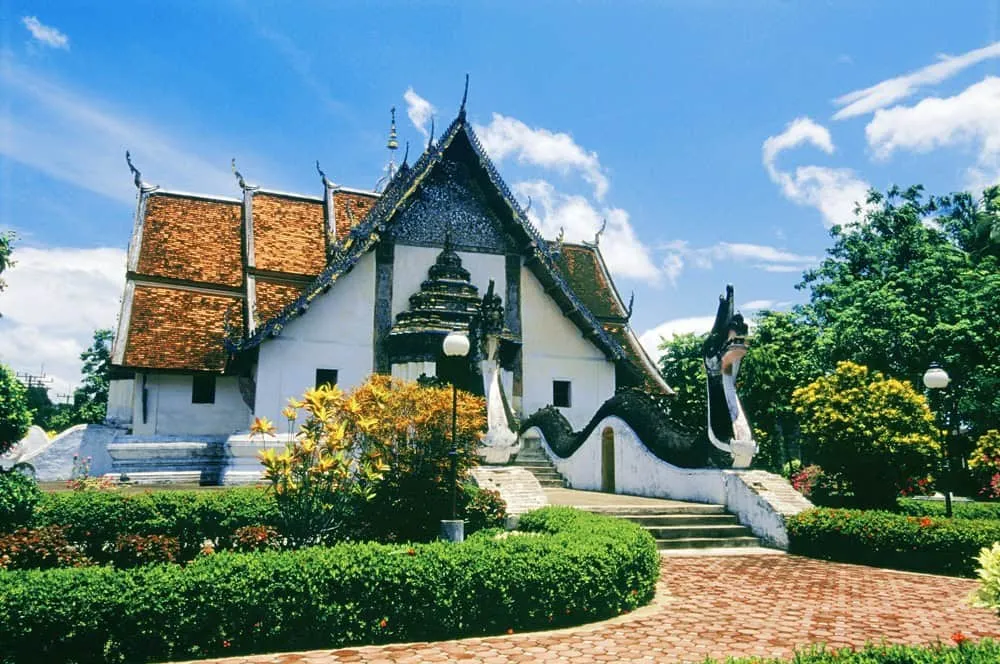
The temple sits in walking distance of Nan’s other major sites: Wat Phumin, with its famous naga-headed entrance staircase and mural paintings, is a few minutes on foot, making it easy to combine both in a single morning around the old city.
- Entry fee: Free
- Hours: Daily, 07:00–21:00
- Built: 1406, restored 1505 (per on-site stone inscription)
- Chedi detail: 24 elephant buttresses around the base, Lanka (bell-shaped) style
- Main Buddha image: Phra Phuttha Nanthaburi Sri Sakyamuni, 1.45m bronze, ~65% gold
Location & Directions
Mueang Nan, Nan
Nan, Thailand
Show your taxi or Grab driver
วัดพระธาตุช้างค้ำวรวิหาร
Frequently Asked Questions
How old is Wat Phrathat Chang Kham Worawihan?
What are the elephants around the chedi?
Is there really a walking Buddha here?
What's the large Buddha image inside the wihan?
Is the temple free to enter?
What else is nearby worth combining with a visit?
Spotted something out of date or incorrect? Let us know
Stay Near Wat Phrathat Chang Kham Worawihan
Live prices for places closest to Wat Phrathat Chang Kham Worawihan: tap a pin to compare.