


DepositPhotos (standard license)
Samut Sakhon
สมุทรสาคร
Thailand's seafood and salt province — the country's busiest fishing port, mahogany-dark salt pans, mangrove coast, and the folk hero Phanthai Norasing, half an hour from Bangkok.
Recommended by us

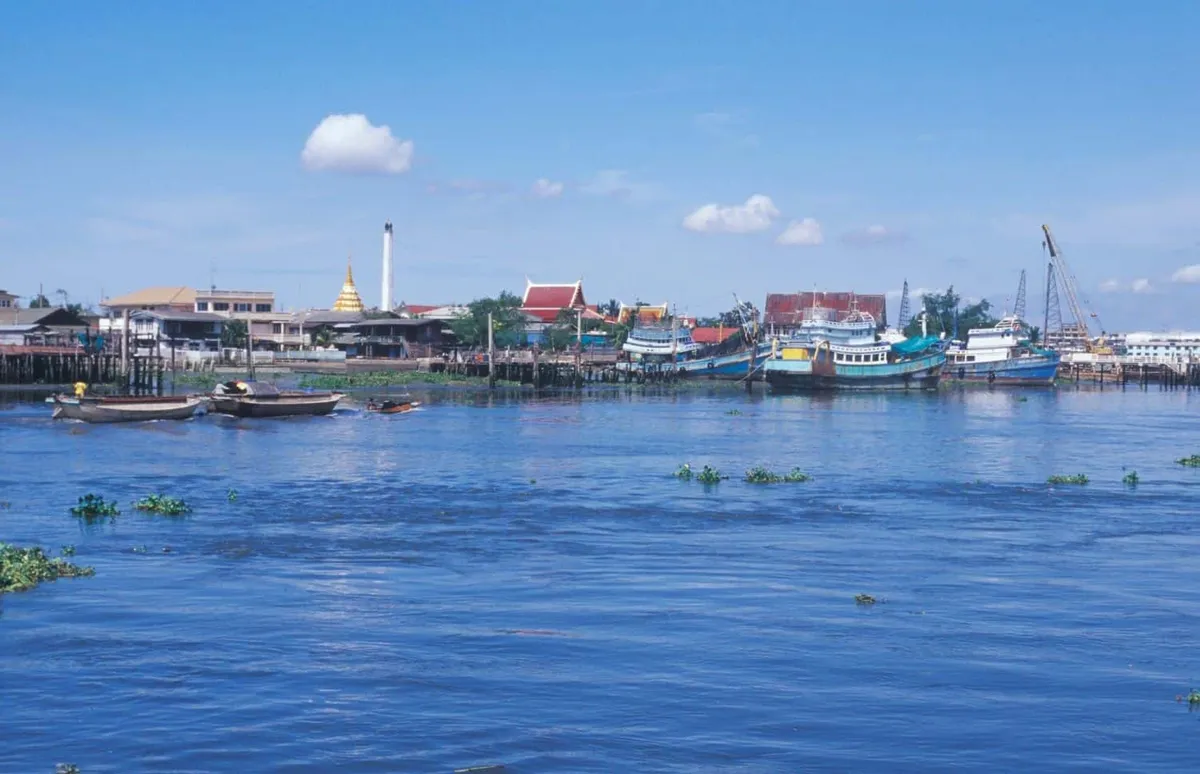
Mahachai Market
The market right beside the fishing port — piles of fresh seafood landed a few hours earlier, stalls cooking it on the spot, and the industrial chaos of the busiest fishing harbour in the country. Go for lunch.

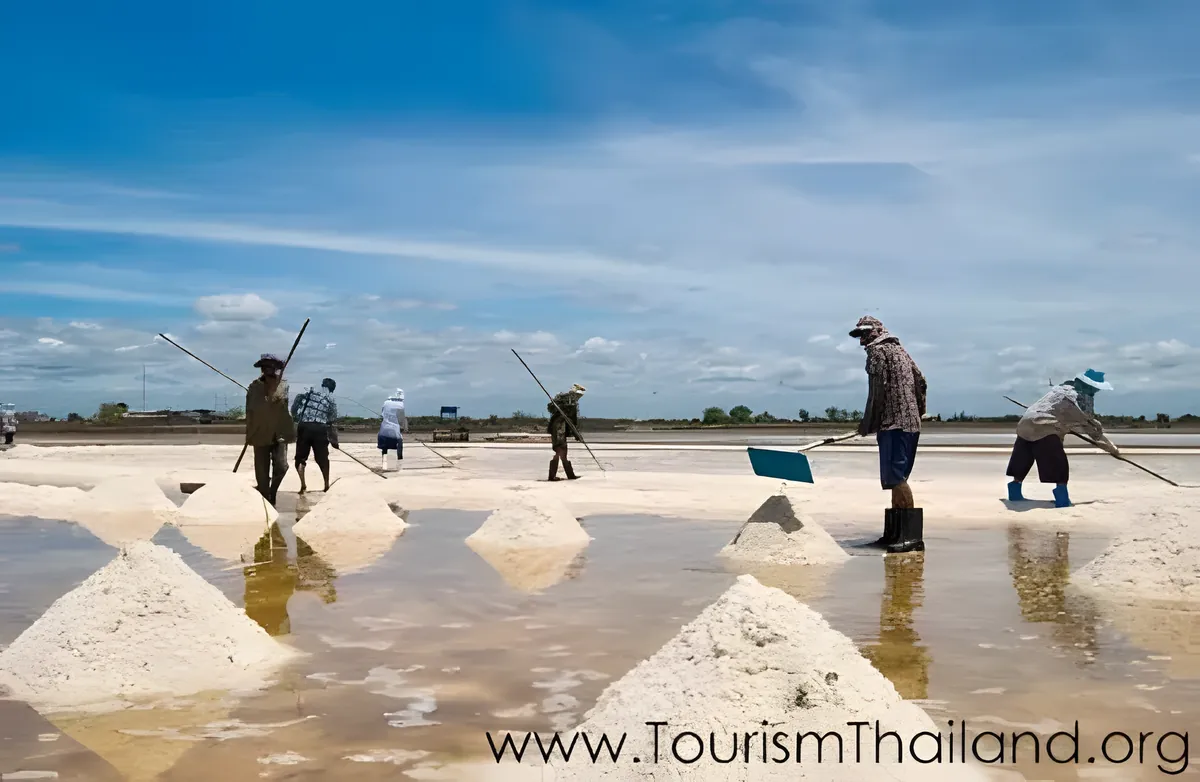
Khok Kham Salt Pans
The salt flats south of town turn a deep mahogany-red in the dry season as the brine concentrates — an unusual landscape that's best seen from November to April. A quiet half-hour detour.

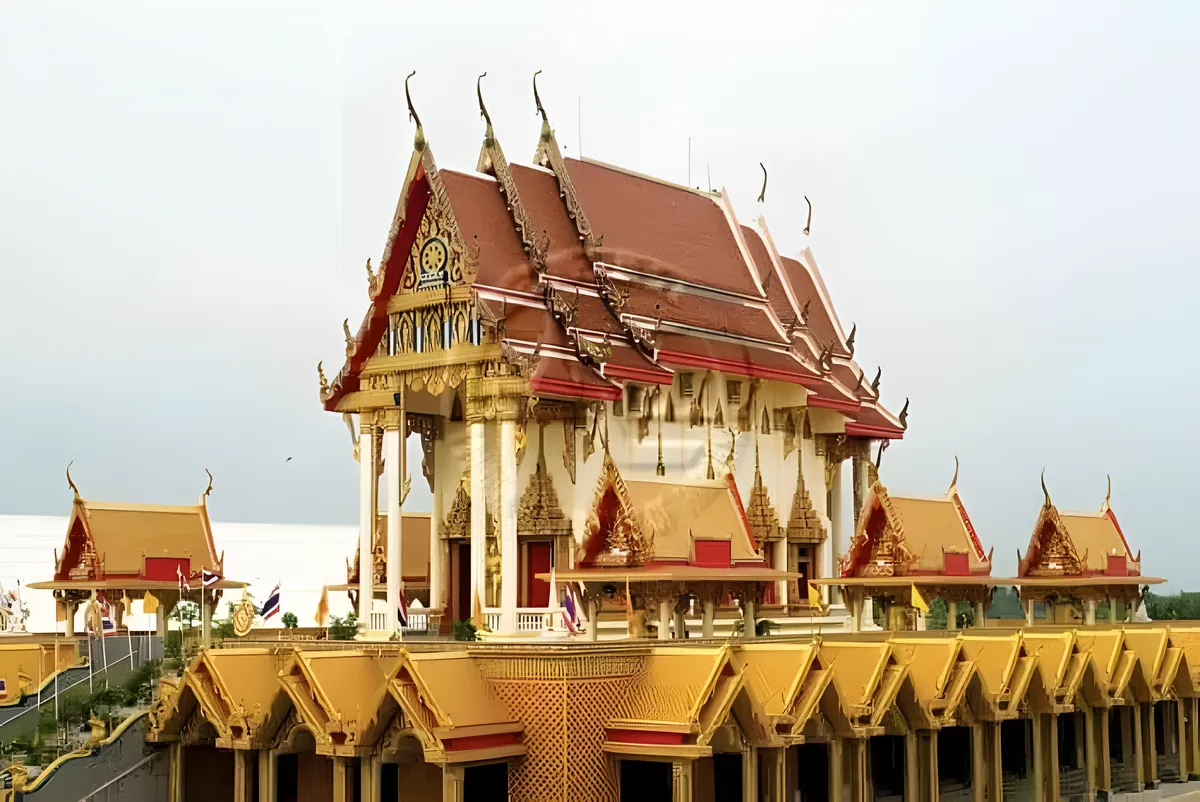
Phanthainorasingh Shrine
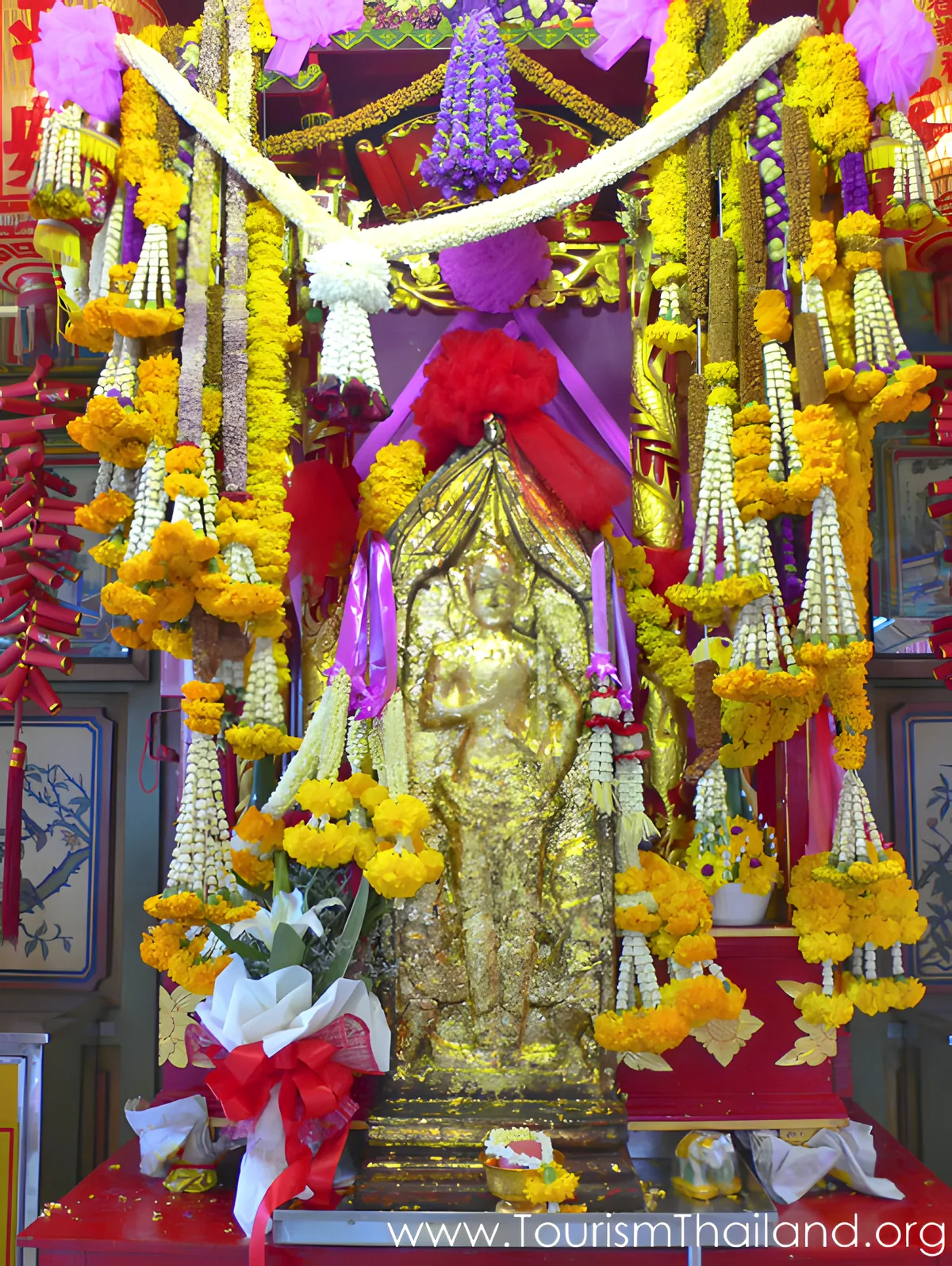
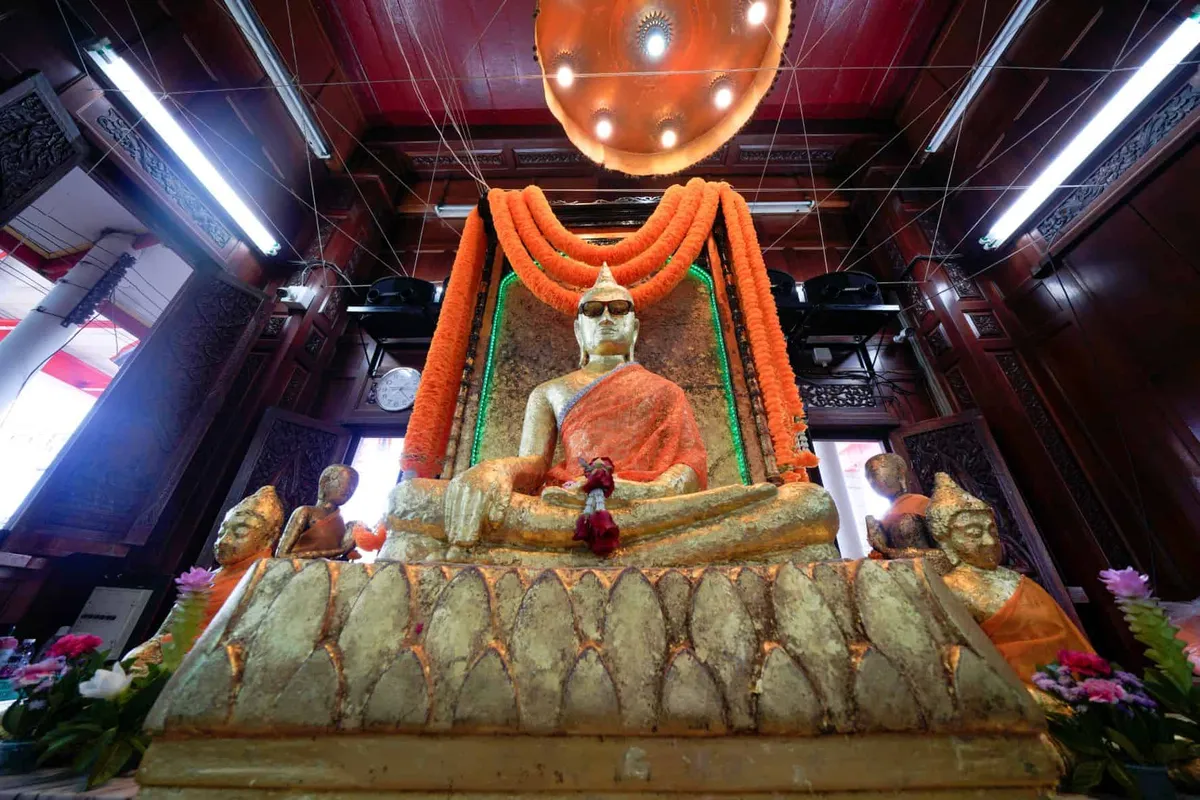
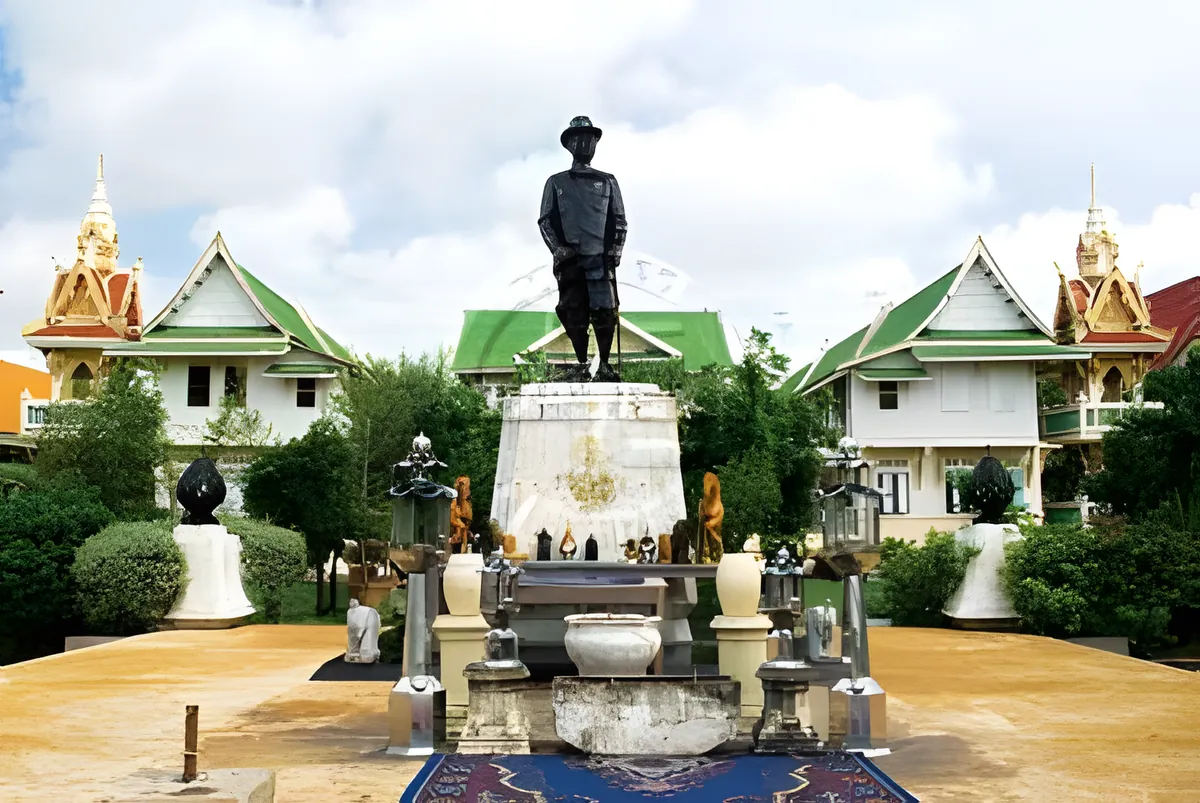
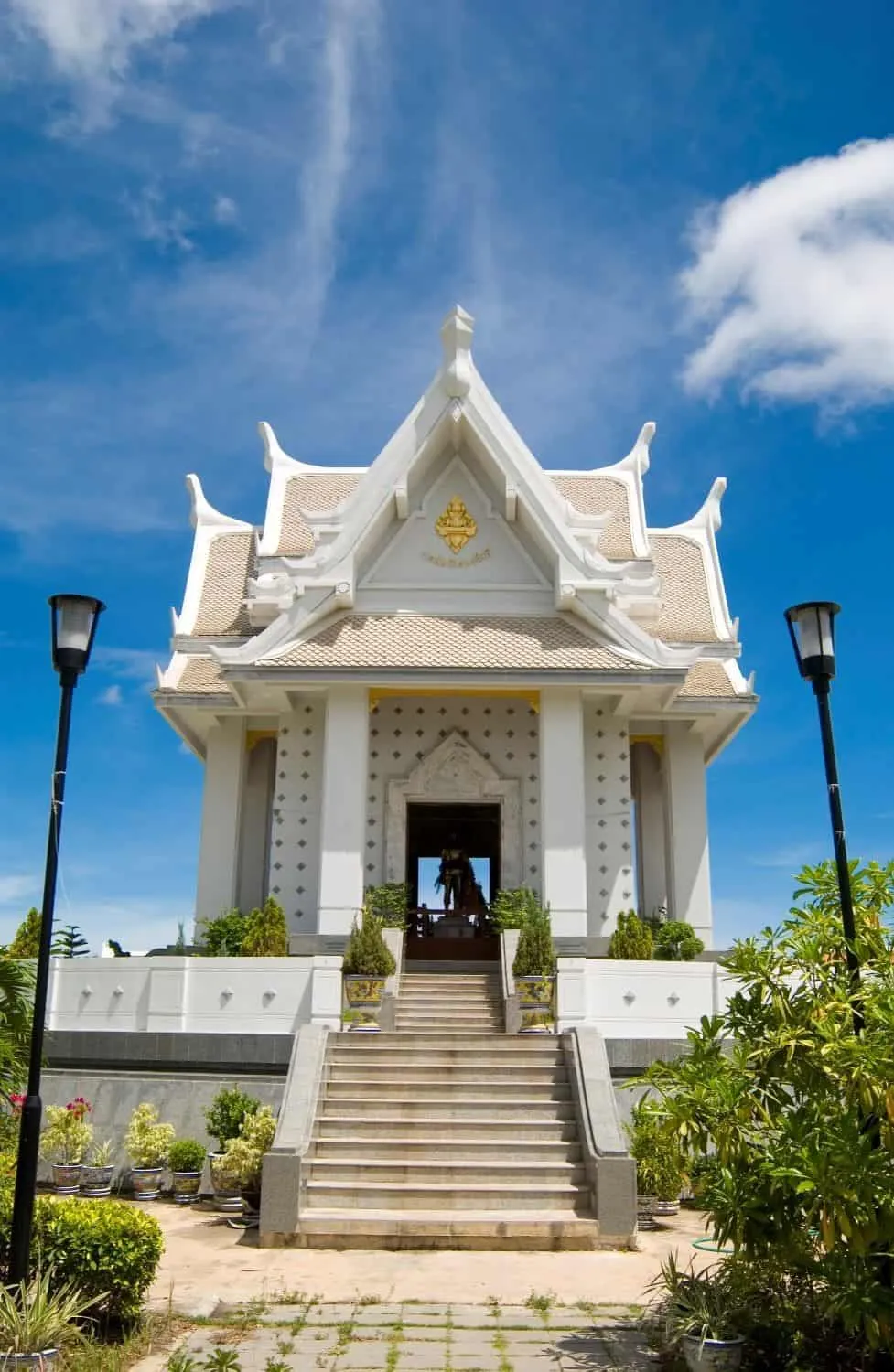
A large shrine to the folk hero Phanthai Norasing, half-giant half-human in local legend — the complex is always busy with Thai visitors making merit, and the craftsmanship of the main statue is elaborate.

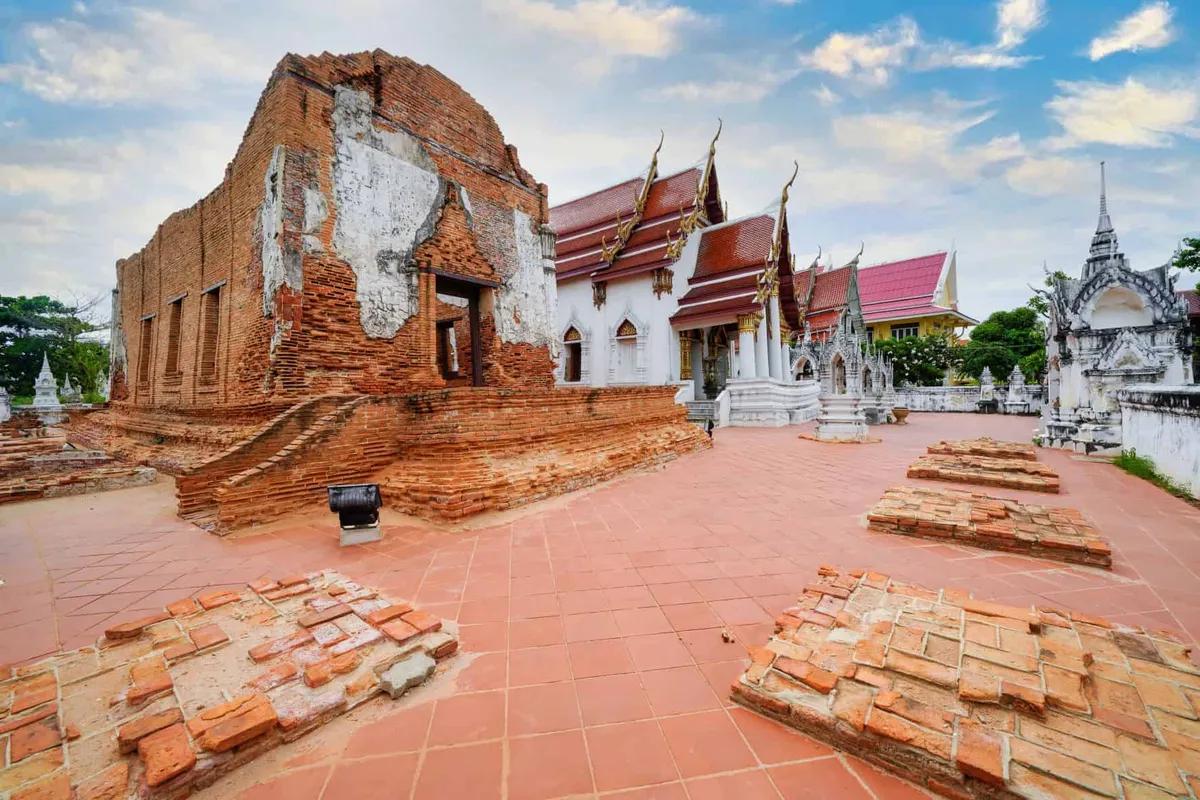
Wat Yai Chom Prasat
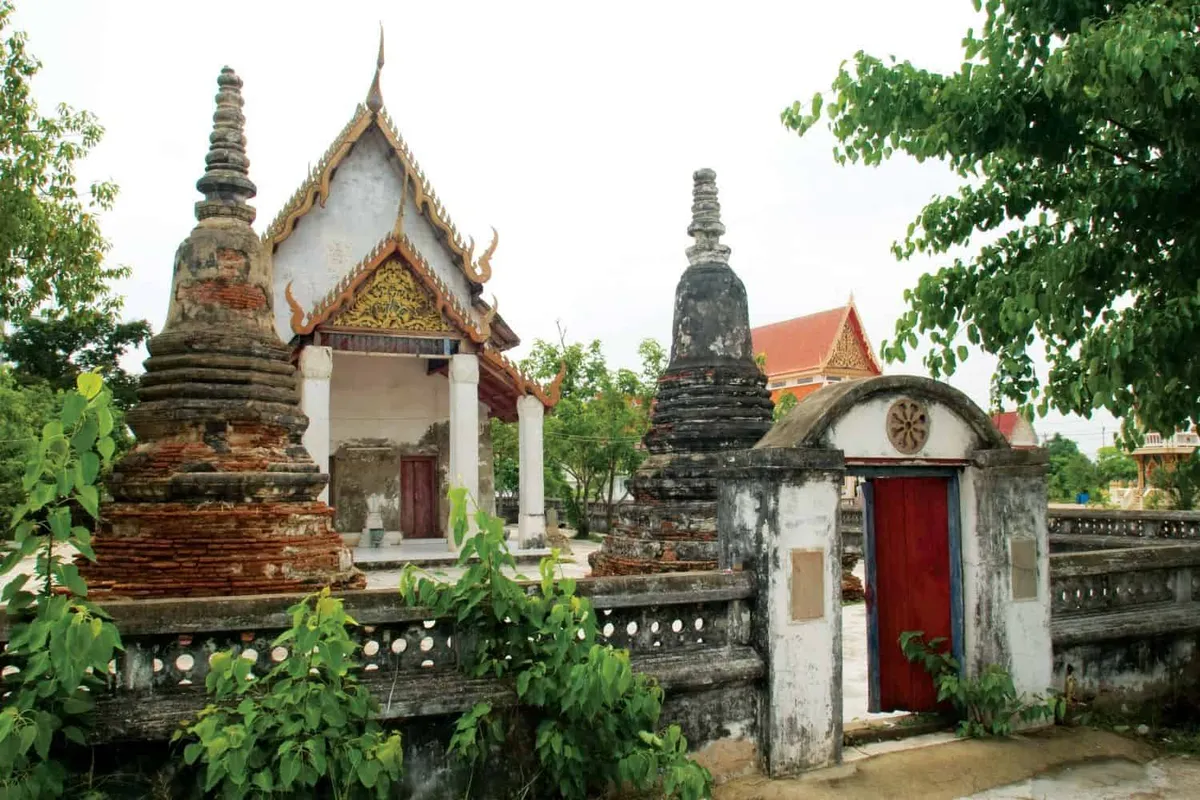
The oldest temple in Samut Sakhon, with an Ayutthaya-era chedi that has survived intact. Worth a look if you're already in town for the market — it's a short walk from the pier.

Get to Samut Sakhon
The Wongwian Yai–Mahachai train leaves Bangkok every 30 minutes and takes about an hour — the cheapest and most direct way in from the city.

eSIM for Thailand
Land with data already working and skip the airport SIM queue. We tested six plans — code THAIHOLIDAY saves 10%.

Travel insurance
A day-trip province close to Bangkok — sort cover before you go even for short trips; medical costs add up fast without it.
Wats, shrines & spiritual sites
Temples in Samut Sakhon











Museums, history & heritage
Museums & culture in Samut Sakhon





Things to do on the map
Tap a pin for details — 21 places in Samut Sakhon plotted.
When to go
Nov–Feb Dry and relatively cool — the easiest window for the fishing port, the seafood markets, and walking the salt pans without rain. The salt-farming season runs in these dry months, so the pans are most active and photogenic from roughly November to April.
Mar–May Hot before the rains, but mornings at the market and the salt fields are still comfortable. This is peak salt-harvest time, when the coastal pans are at their whitest and workers rake the crystallised salt into pyramids.
May–Oct Upper-Gulf wet season, heaviest in September and October. Rain tends to come as afternoon downpours rather than all-day, so morning visits to the port and markets work well. The salt pans flood and lie fallow during the wettest months.
About Samut Sakhon
Last updated September 2026
Overview
Samut Sakhon sits on the upper Gulf of Thailand about 30 kilometres southwest of Bangkok, where the Tha Chin River reaches the sea. Most people know it by the name of its main town, Mahachai. It is a compact, intensely productive province — Thailand’s busiest fishing port, the heart of its seafood-processing industry, and its leading producer of sea salt — wedged between Bangkok to the northeast, Samut Songkhram to the southwest, and Nakhon Pathom inland to the north.
This is not a province built for tourists, and that is part of its character. The draw is the working coast: trawlers unloading at the Mahachai docks before dawn, market halls piled with the day’s catch, and the geometric salt pans that line the shore south of town. Threaded through it is the folk story of Phanthai Norasing, a royal helmsman remembered across Thailand as a symbol of honesty, whose shrine and memorial park stand near the river.
For Bangkok residents, Samut Sakhon is best known as the destination of the Mahachai railway — a charming short-line train from Wongwian Yai in Thonburi that rattles through canal-side communities and squeezes past market stalls before ending at the port. It makes an easy, offbeat half-day out of the city, and combines neatly with neighbouring Samut Songkhram.
Top Things to Do
Mahachai fishing port and seafood market is the centre of provincial life. As Thailand’s largest fishing landing, the port and the adjoining Talat Maha Chai market handle an enormous volume of fish, prawns, squid and shellfish, much of it sold fresh within hours of being landed. The market is busiest and best in the early morning. It sits right beside the railway terminus, so the train ride and the market pair naturally.
Phanthai Norasing Historical Park and Shrine honour the province’s folk hero — the royal helmsman who accepted execution rather than let the king bend the law to spare him. The shrine is a place of genuine local devotion, and the surrounding historical park interprets the legend and the riverine history of the area. It is the most-visited cultural site in the province.
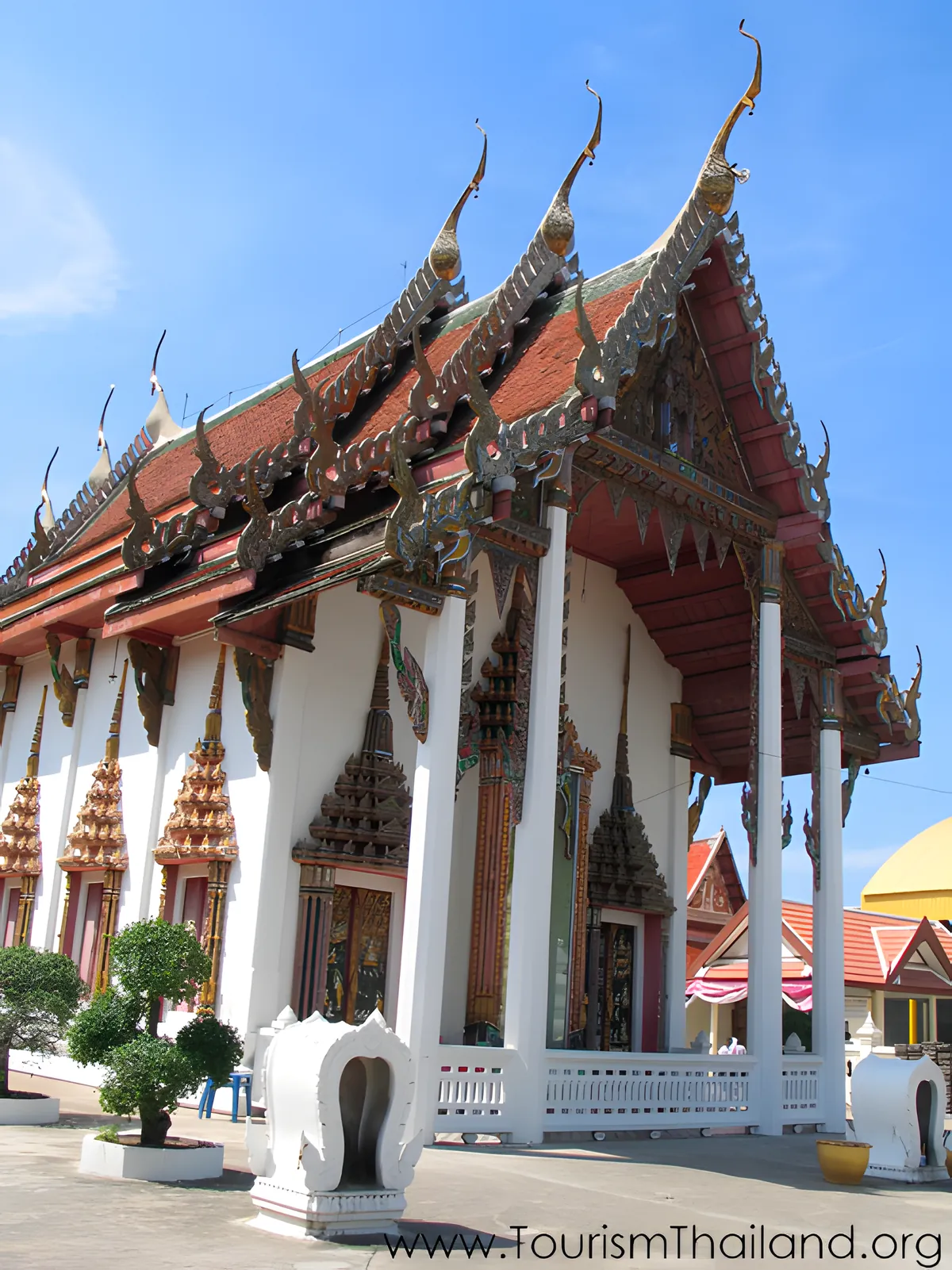
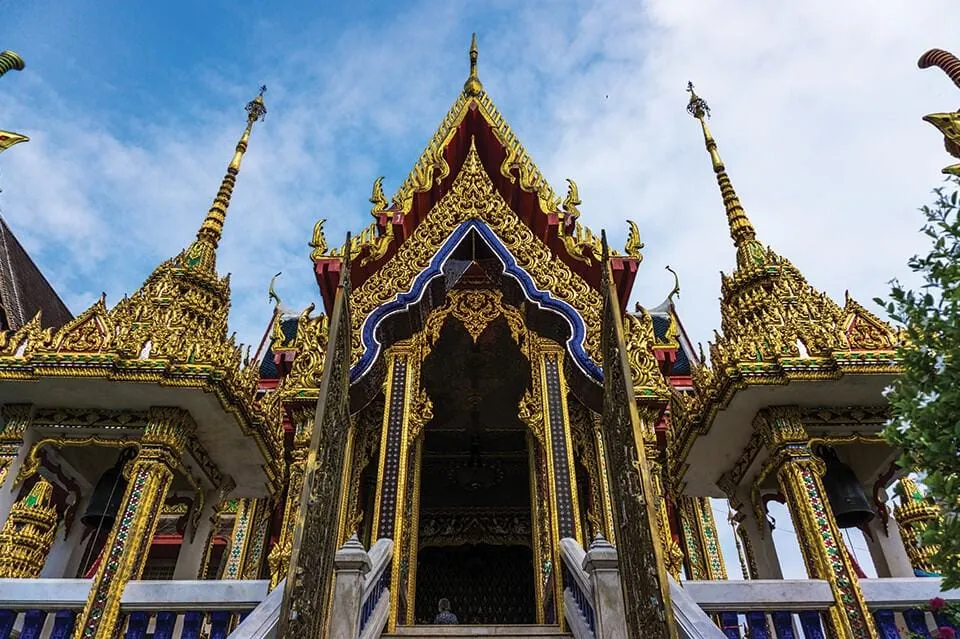
Wat Yai Chom Prasat is a riverside temple celebrated for its ordination-hall doors, carved in extraordinarily fine relief and considered among the finest old woodcarving in the central region. Several other temples cluster along the Tha Chin River, including Wat Chong Lom (Wat Suthiwat Wararam) near the river mouth, making an easy temple-and-river circuit.
The coastal salt pans south of Mahachai are one of central Thailand’s distinctive landscapes. From around November to April, seawater is channelled into shallow clay-floored pans and left to evaporate; workers then rake the crystallised salt into bright white pyramids. The flat, mirror-like fields are especially striking at sunrise and sunset, and roadside stalls sell the finished sea salt and salt-based products.
Ao Mahachai Mangrove Forest Study Centre protects a stretch of the muddy, mangrove-fringed coast at the river mouth, with boardwalks for spotting mudskippers, crabs and shorebirds. It is a quiet, free introduction to the upper-Gulf coastal ecosystem that underpins the province’s fisheries.
Wichian Chodok Fort is a small riverside fort at the mouth of the Tha Chin, built to guard the approach to the capital and still holding its old cannon. It is a brief but evocative stop on the way to the river-mouth temples.
Where to Stay
Samut Sakhon has little in the way of tourist accommodation — a handful of business hotels in Mahachai town serve the fishing and processing trade rather than visitors. The province works best as a day trip from Bangkok, or as a stop paired with an overnight in neighbouring Samut Songkhram, where canal-side guesthouses around Amphawa make a far more atmospheric base.
Getting There
From Bangkok, the characterful route is the Mahachai railway: take the BTS to Wongwian Yai, walk to the adjacent (separate) Wongwian Yai railway station, and ride the short line about 30 kilometres to Mahachai — roughly an hour, for a few baht, through canal communities and squeezing past trackside market stalls. By road, minivans run from Victory Monument, and Highway 35 (Rama II Road) reaches Mahachai by car in about an hour in clear traffic. The BTS and MRT do not extend to the province.
Samut Sakhon sits directly between Bangkok and Samut Songkhram, so the two coastal provinces combine easily: many visitors pair a morning at Mahachai’s port with an afternoon and evening at Amphawa, 30 kilometres further southwest.
Best Time to Visit
The dry, cooler months of November to February are the most comfortable for the port, the markets and the salt fields. They also overlap with the salt-farming season, which runs roughly November to April — the only time the coastal pans are active, white and worth photographing.
The wet season runs May to October on the upper-Gulf pattern, heaviest in September and October, when rain arrives mostly as afternoon downpours and the salt pans flood and lie idle. The fishing port and markets operate year-round and are at their best early in the morning whatever the season.
Frequently Asked Questions about Samut Sakhon
How do I get to Samut Sakhon from Bangkok?
What is Samut Sakhon known for?
Is Samut Sakhon worth a day trip?
Who was Phanthai Norasing?
Spotted something out of date or incorrect? Let us know
Plan your
Samut Sakhon trip