



Namtok Heo Narok
น้ำตกเหวนรก
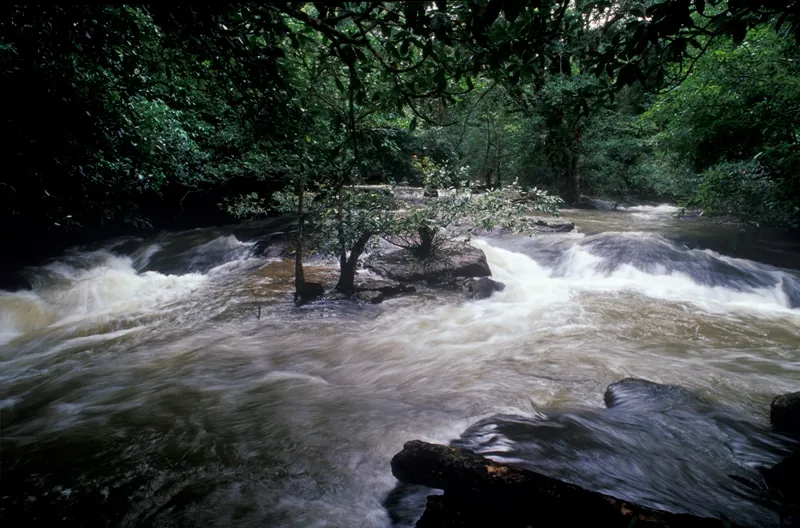
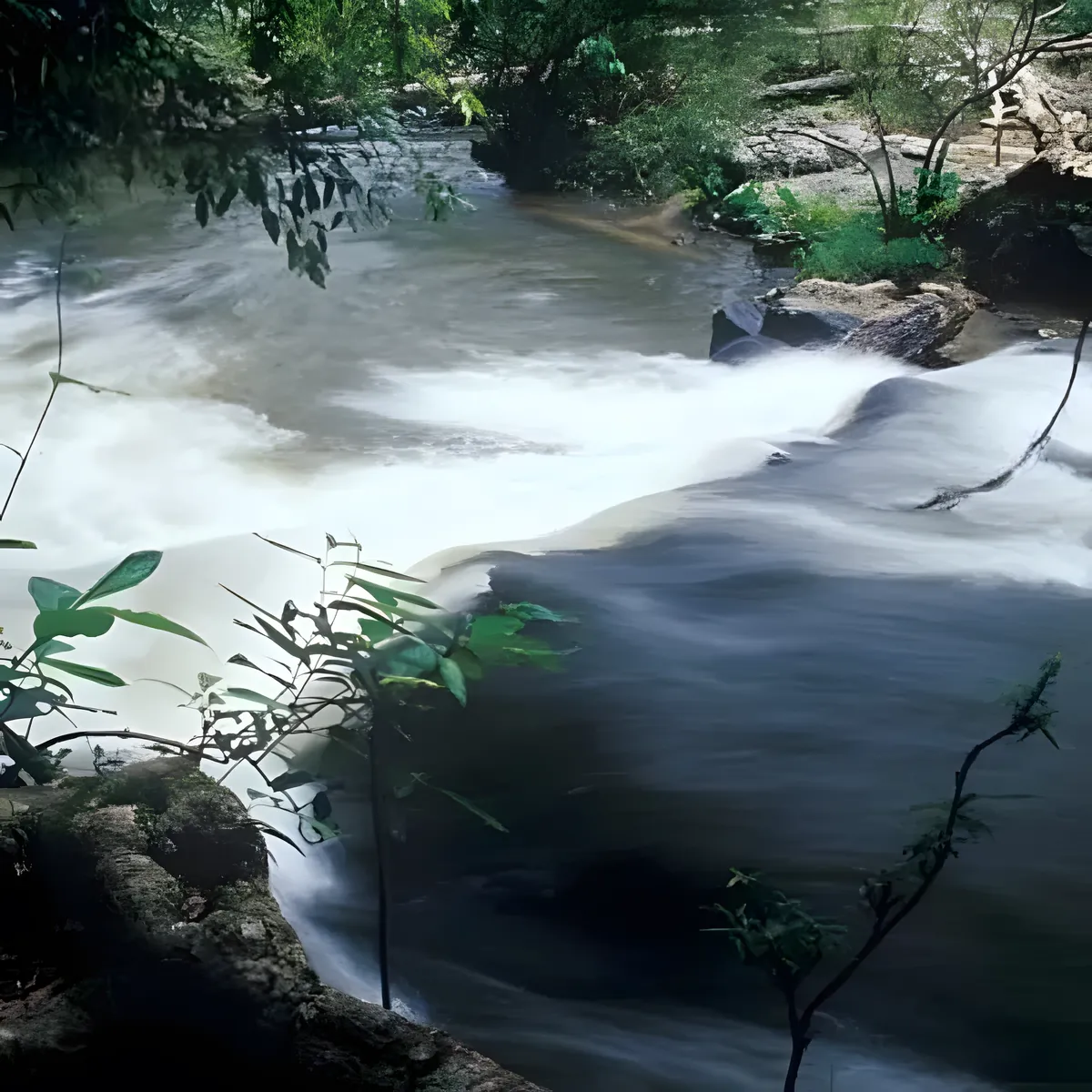
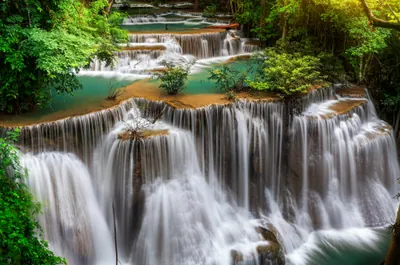
Namtok Heo Narok, also spelled Haew Narok, is Khao Yai National Park’s tallest waterfall, dropping around 150 metres over three rock tiers into a forested gorge. The Thai name translates to “Hell’s Fall,” and it’s not just poetic: wild elephant herds have died here twice in recent decades, crossing the stream above the falls in the dark or during heavy rain, and the site is treated as genuinely dangerous rather than a scenic backdrop for a selfie.
The walk in from the car park is about 1 kilometre on a paved, forested path, followed by a steep staircase descending roughly 50 metres to the viewing platform at the base of the upper tier. It’s a manageable walk rather than a serious trek (30-60 minutes round trip at an easy pace) though the final staircase is steep enough that older visitors or anyone with knee problems may want to take it slowly. The waterfall is most dramatic at the end of the rainy season, roughly September-October, when flow peaks and colourful mushrooms line the trail edges.
Watch out: Swimming is banned at every tier: the currents are stronger than they look and the drop is fatal. Heavy rain can also trigger landslides on the approach trail: in April 2025, a landslide near the bridge to the waterfall’s second tier injured two visitors and closed that section temporarily. Check current trail status at the park visitor centre before setting out after several days of rain.
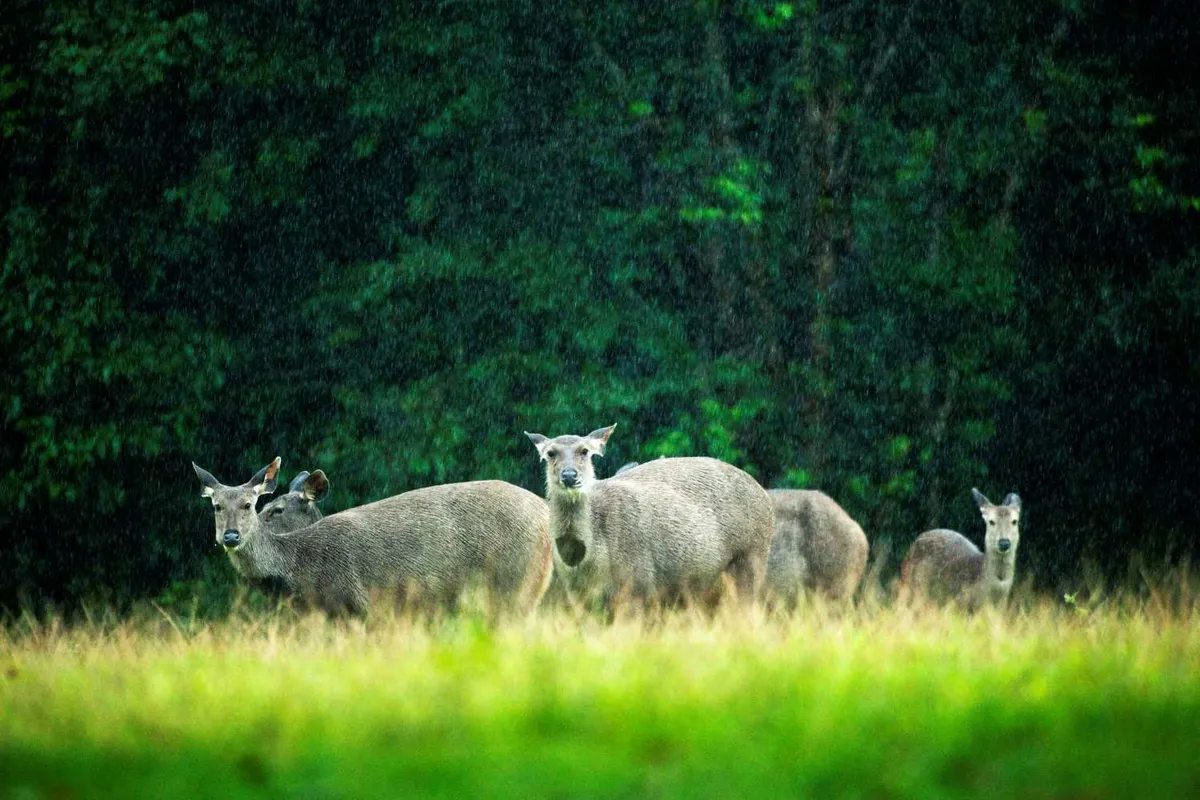
The waterfall’s grim history involves more than the name. On 2 August 1992, a herd of eight wild elephants died after falling into the gorge crossing the stream above the falls at night. On 5 October 2019, a young calf slipped over the edge, and eleven adults died trying to reach it, one of the most widely reported wildlife tragedies in Thai national park history. Rangers now monitor elephant movement near the top of the falls more closely as a result, though the animals still range freely through the area.
Insider Tip: Arrive before 9am. Namtok Heo Narok sits 22 km south of the park’s main visitor centre on Highway 3077, and day-trip groups fill the car park and staircase by mid-morning.
- Fee: Khao Yai park entry applies: 400 THB (foreign adults), 40 THB (Thai adults)
- Height: ~150 metres over three tiers, the park’s tallest waterfall
- Access: ~1 km paved path from the car park, plus a ~50m staircase down to the viewpoint
- Swimming: Banned at every tier
- Best flow: End of rainy season, roughly September-October
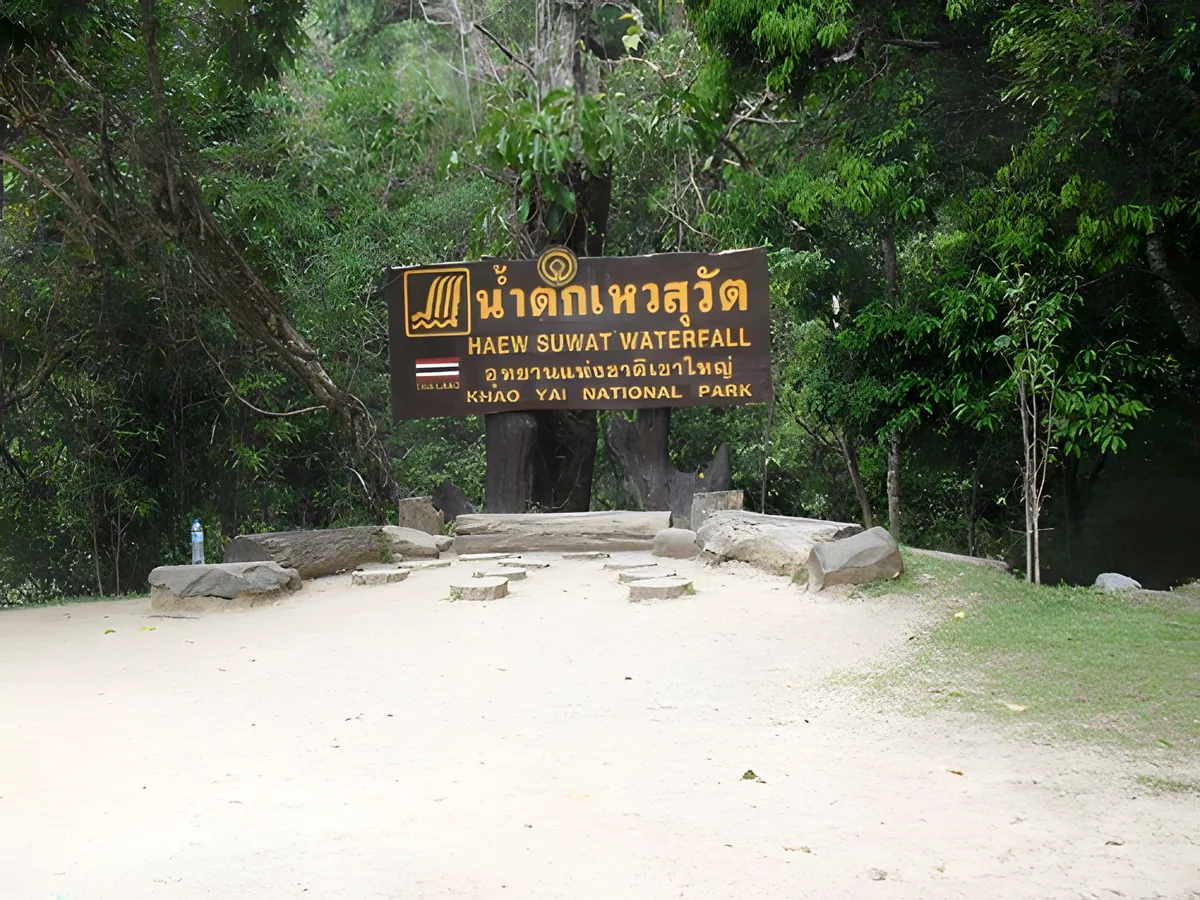
Namtok Heo Narok sits at the southern end of Khao Yai, separate from the Heo Suwat Waterfall and Namtok Pha Kluai Mai cluster further north in the park. Most visitors treat it as its own stop on a driving loop rather than pairing it with the other falls in one day. Full park hours, gates, and wildlife-viewing tips are at Khao Yai.
Location & Directions
Pak Phli, Nakhon Nayok
Khao Yai, Thailand
Show your taxi or Grab driver
น้ำตกเหวนรก
Frequently Asked Questions
Is Namtok Heo Narok free to visit?
How tall is the waterfall and how many tiers does it have?
Is this the same waterfall as Haew Narok?
Can you swim at Namtok Heo Narok?
How far is the walk to the viewpoint?
Spotted something out of date or incorrect? Let us know
Stay Near Namtok Heo Narok
Live prices for places closest to Namtok Heo Narok: tap a pin to compare.