





Non Don Klang Archeological Site
แหล่งโบราณคดีโนนดอนกลาง
A low earthen mound at Ban Kut Kwang Sroi holds one of Nong Bua Lam Phu province’s most significant prehistoric finds: burials and artifacts dated to roughly 2,500 years ago, from the tail end of Thailand’s Bronze Age into the early Iron Age. The mound itself is modest to look at: about 155 by 200 metres, rising only 2–3 metres above the surrounding rice plain east of Phu Khao mountain. What came out of it is the real draw.
American archaeologist William Solheim excavated here first in 1974, with permission from the Fine Arts Department; the Fine Arts Office 7 in Khon Kaen returned for a second dig in 1993. Between the two excavations, the site yielded pottery in the same tradition as the more famous Ban Chiang finds further east, human skeletons, bronze and stone bracelets, glass beads, and sandstone moulds once used to cast bronze axe heads, evidence of a community that was both burying its dead with some ceremony and working metal on-site. Iron tools from a later phase of occupation turned up in the same layers, marking the site’s long span of use. Some of the more significant pieces are now held at the Khon Kaen National Museum; a smaller selection stays closer to home in a village museum near the mound.
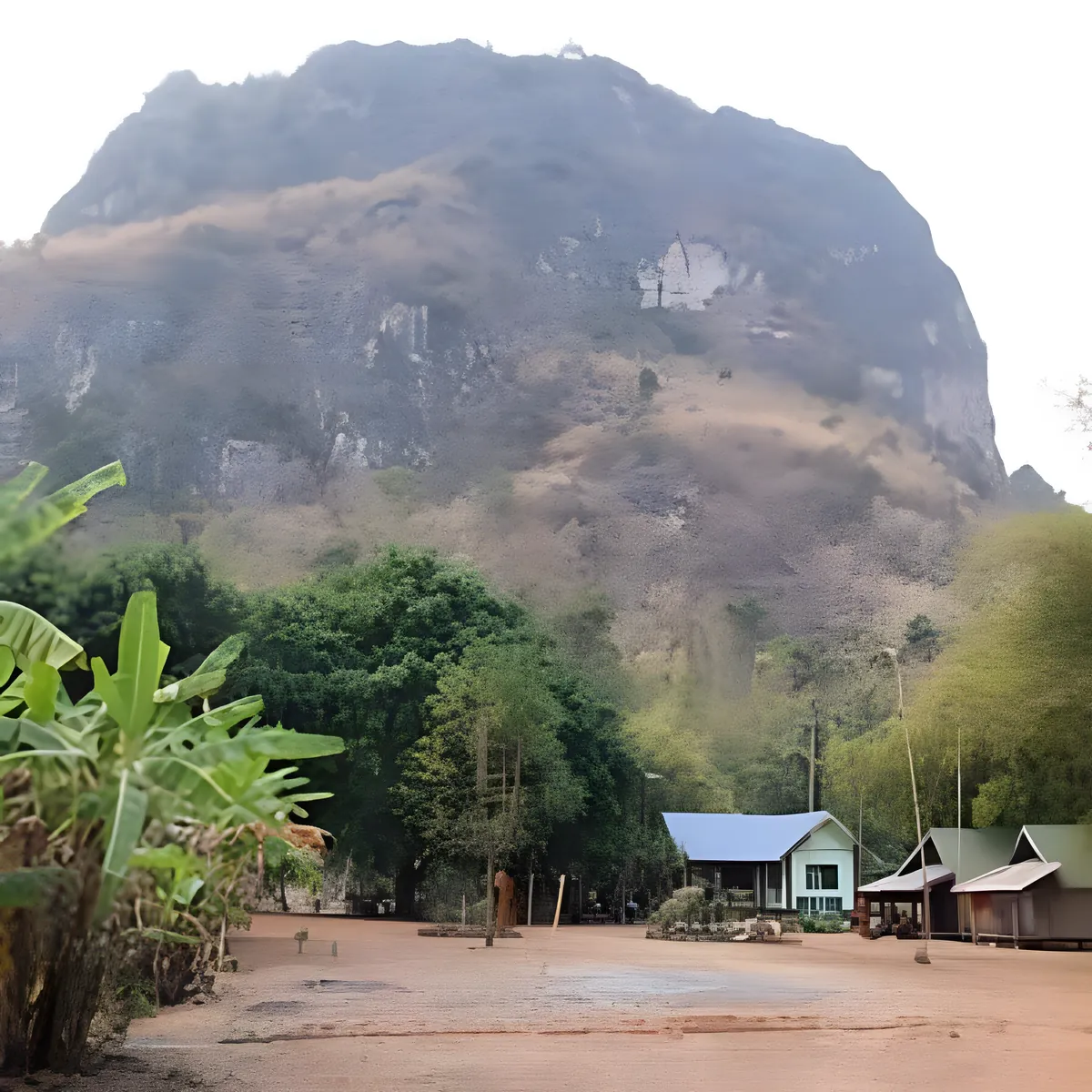
There’s no reconstructed temple or dramatic ruin here. This is a research site more than a spectacle, and what you’re looking at is mostly grassed-over mounding with information panels rather than open excavation trenches on permanent display. That’s part of the appeal for anyone interested in how archaeologists actually piece together Isan’s prehistory: layered evidence rather than a polished monument. The setting is rural and quiet, with rice fields stretching out on all sides and Phu Khao’s low ridge visible to the west.
Insider Tip: Call the local subdistrict office (Ban Thin, tel. 0 4237 0748) ahead of a visit if you want someone to walk you through what’s on display: the site itself has limited English signage.
- Entry fee: Free
- Age: ~2,500 years (late Bronze Age/early Iron Age)
- Distance: ~42 km from Nong Bua Lam Phu town via Highway 2146 towards Non Sang district
- Key finds: Ban Chiang-style pottery, bronze/stone bracelets, sandstone axe-head moulds, human remains
- Nearby: Some artifacts held at Khon Kaen National Museum; others in a village museum on-site
Morning is the better time to visit: direct midday sun on an open mound with little shade gets uncomfortable fast, and the low-angle light does more for photographs of the excavation contours. Comfortable shoes matter more than they sound like they would; the ground is uneven and can be slippery after rain. Nong Bua Lam Phu has two other archaeological sites worth combining with this one: Non Wat Pa, a later Khmer-era ruin in the same Non Sang district, and Phu Pha Ya Archeological Site, with its own Buddhist-era stonework.
Location & Directions
Non Sang, Nong Bua Lam Phu
Nong Bua Lam Phu, Thailand
Show your taxi or Grab driver
แหล่งโบราณคดีโนนดอนกลาง
Frequently Asked Questions
How old are the finds at Non Don Klang?
What was excavated here?
Who excavated the site?
How do I get to Non Don Klang from Nong Bua Lam Phu town?
Is entry free?
Spotted something out of date or incorrect? Let us know
Stay Near Non Don Klang Archeological Site
Live prices for places closest to Non Don Klang Archeological Site: tap a pin to compare.