



Phu Pha Ya Archeological Site
แหล่งโบราณคดีภูผายา
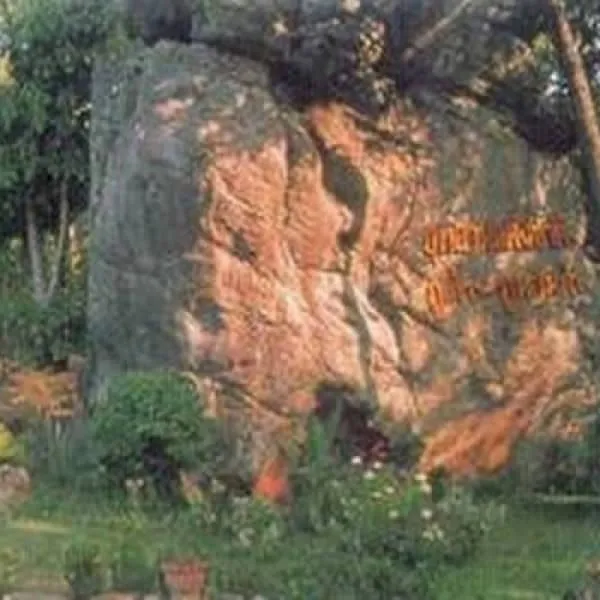
Phu Pha Ya is a prehistoric rock-art site, not the Buddhist ruin its name suggests: red-pigment paintings, estimated at 2,000-3,000 years old, cover a limestone cliff face just north of Ban Na Charoen in Suwannakhuha district, Nong Bua Lam Phu province. The mountain itself is a limestone outcrop separated from the main Phu Phan range, and the paintings are its entire draw. There are no temple foundations, ordination halls, or monastic ruins here.
The art spreads across two cave levels. The lower cave holds a roughly 5-meter stretch of red-painted wall showing geometric patterns, animal figures, and handprints pressed directly into the pigment. The upper cave has a more scattered set of paintings: distinct diamond and rhombus shapes, human figures, reptile-like creatures, and the outlined skeleton of a much larger animal. Archaeologists date the work to roughly the same period as the better-known rock art at Phu Phra Bat Historical Park in Udon Thani, and have noted stylistic similarities to prehistoric paintings found at Hua Shan in Guangxi, China, evidence this kind of cliff-face painting tradition wasn’t isolated to a single valley.
- Type: Prehistoric rock-art site (not a temple ruin)
- Age: ~2,000-3,000 years
- Location: Ban Na Charoen, Tambon Dong Mafai, Suwannakhuha district
- Entry fee: Free
- Nearby: Tham Suwannakhuha Cave
Insider Tip: Bring a torch even in daylight: the paintings sit in shadowed cave recesses, and phone-camera flash washes out the faded red pigment. A raking light held at an angle picks out details a straight-on flash misses entirely.
Getting here means a drive to Ban Na Charoen village followed by a short walk up uneven, rocky terrain. Comfortable shoes and water are non-negotiable, and there’s no vendor or shop at the site itself. Morning visits are cooler and give the best contrast for photographing the paintings before the sun is directly overhead. Few visitors make the trip compared to Nong Bua Lam Phu’s better-known caves, which is exactly the appeal if you’re after genuine prehistoric art without a crowd. Pair it with Tham Suwannakhuha Cave, a Buddhist cave shrine in the same district, for a single day covering both the region’s prehistoric and religious cave heritage.
Watch out: There’s no signage translating the rock art in English, and no on-site guide service: this is a self-directed visit. If you want context on what you’re looking at, read up beforehand rather than expecting interpretation panels at the cliff face.
Location & Directions
Moo 11 Ban Na Charoen
Nong Bua Lam Phu, Thailand
Show your taxi or Grab driver
แหล่งโบราณคดีภูผายา
Frequently Asked Questions
Is Phu Pha Ya a Buddhist temple ruin?
How old are the paintings?
What do the paintings actually show?
Is entry free?
What else is nearby?
Spotted something out of date or incorrect? Let us know
Stay Near Phu Pha Ya Archeological Site
Live prices for places closest to Phu Pha Ya Archeological Site: tap a pin to compare.