



Talat Noi
ตลาดน้อย
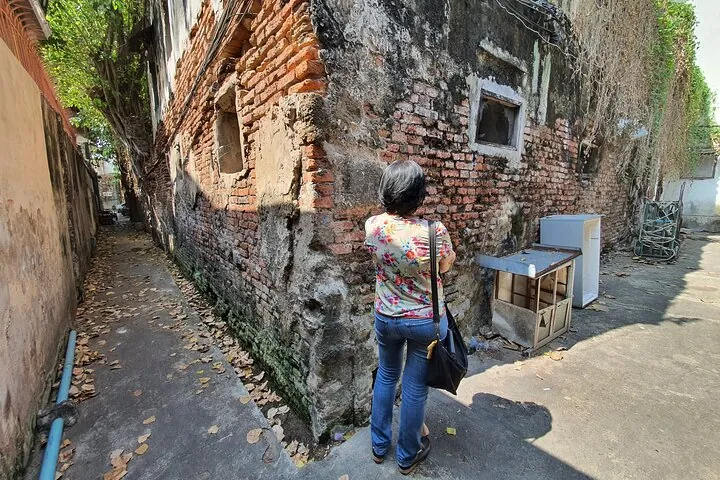
Talat Noi is a Hokkien Chinese riverside neighbourhood in Samphanthawong district, Bangkok, threaded through Soi Charoen Krung 22 and Soi Wanit 2 just south of Chinatown. It grew out of the trade boom along Sampeng in the early Rattanakosin period, when Hokkien families settled the riverbank; the area’s name, “little market”, comes from that early commerce. Entry is free, and it’s best known today for shophouse murals, scrap-metal and vintage-machine-parts shops, and a vintage orange Fiat parked beside a crumbling brick wall on Soi Wanit 2, the district’s most-photographed corner.
The neighbourhood’s centrepiece is So Heng Tai mansion, a four-winged Hokkien courtyard house built around 1797 for Phra Aphaiwanit, a swiftlet’s-nest tax collector known locally as Chao Sua Jad, using carved and pegged timber rather than nails. In 2022 its rear kitchen-and-bathroom wing partially collapsed from age; the main courtyard held, and the house has since reopened in part as a café.
Elsewhere, the alleys carry street-art murals depicting lion dances, old trading scenes, and festival processions, part of a public-art project that turned Talat Noi into one of Bangkok’s most-photographed backdrops. Small Chinese shrines sit among the ironware and spare-parts shops that give the district its working, unpolished feel, a contrast to the restored shophouse cafés opening alongside them.
Insider Tip: Walk in from the river side, near the old Customs House, rather than cutting through from Yaowarat: the quieter approach past the Chao Phraya gives a better sense of Talat Noi as its own community rather than an extension of Chinatown.
Weekday mornings are the quietest time to walk it. By mid-morning on weekends, photographers queue for a shot with the orange Fiat, and the narrow sois get genuinely tight. Riverside cafés and old coffee shops offer shade through the midday heat, and a few of the community’s original ironware workshops still run behind their shopfronts, hammering away much as they have for decades.
Watch out: So Heng Tai’s hours have been irregular since the 2022 partial collapse and repair work. Don’t build a special trip around seeing the courtyard without checking it’s open that day.
Talat Noi sits between the Chao Phraya and Charoen Krung Road, about a 15–20 minute walk from Hua Lamphong MRT station, or reachable on foot from Chinatown (Yaowarat) heading south along Charoen Krung. There’s no admission fee and no fixed hours for the neighbourhood itself (it’s a living community, not a ticketed site), though individual shops and cafés set their own hours. Pair it with Bangkok Local Museum, Samphanthawong, a few minutes’ walk away, or the murals along Street Art, Charoen Krung Road further south.
- Entry fee: Free (So Heng Tai mansion charges ~50 THB when open)
- Location: Soi Charoen Krung 22 / Soi Wanit 2, Samphanthawong
- Nearest transit: Hua Lamphong MRT, ~15–20 minute walk
- Known for: Street art murals, the orange Fiat photo spot, Chinese shrines, riverside cafés
- Best time: Early morning or weekdays, before weekend photographer crowds
Location & Directions
Samphanthawong, Bangkok
Bangkok, Thailand
Show your taxi or Grab driver
ตลาดน้อย
Frequently Asked Questions
Is Talat Noi free to visit?
What is the orange Fiat in Talat Noi?
Is Talat Noi the same as Chinatown (Yaowarat)?
What is So Heng Tai mansion?
How do I get to Talat Noi?
Spotted something out of date or incorrect? Let us know
Tours visiting Talat Noi





Stay Near Talat Noi
Live prices for places closest to Talat Noi: tap a pin to compare.