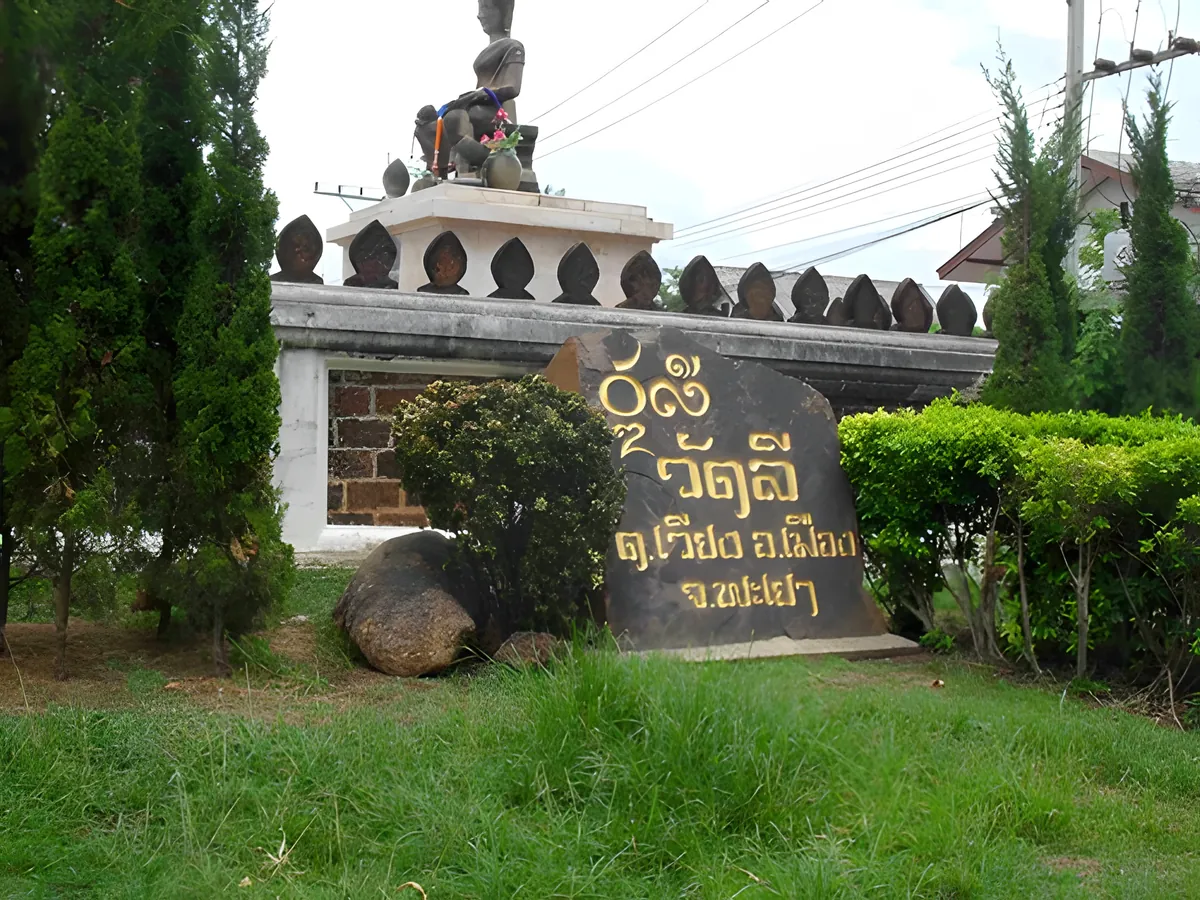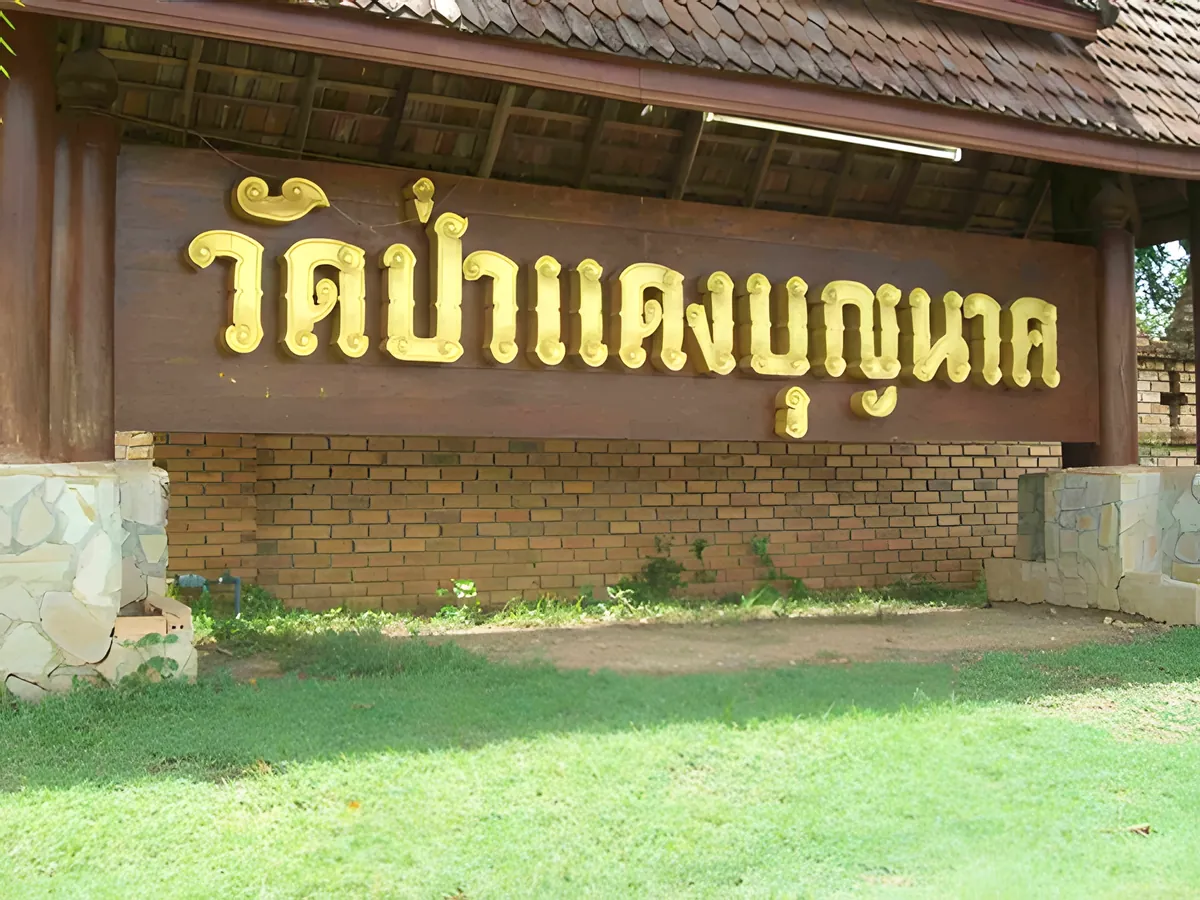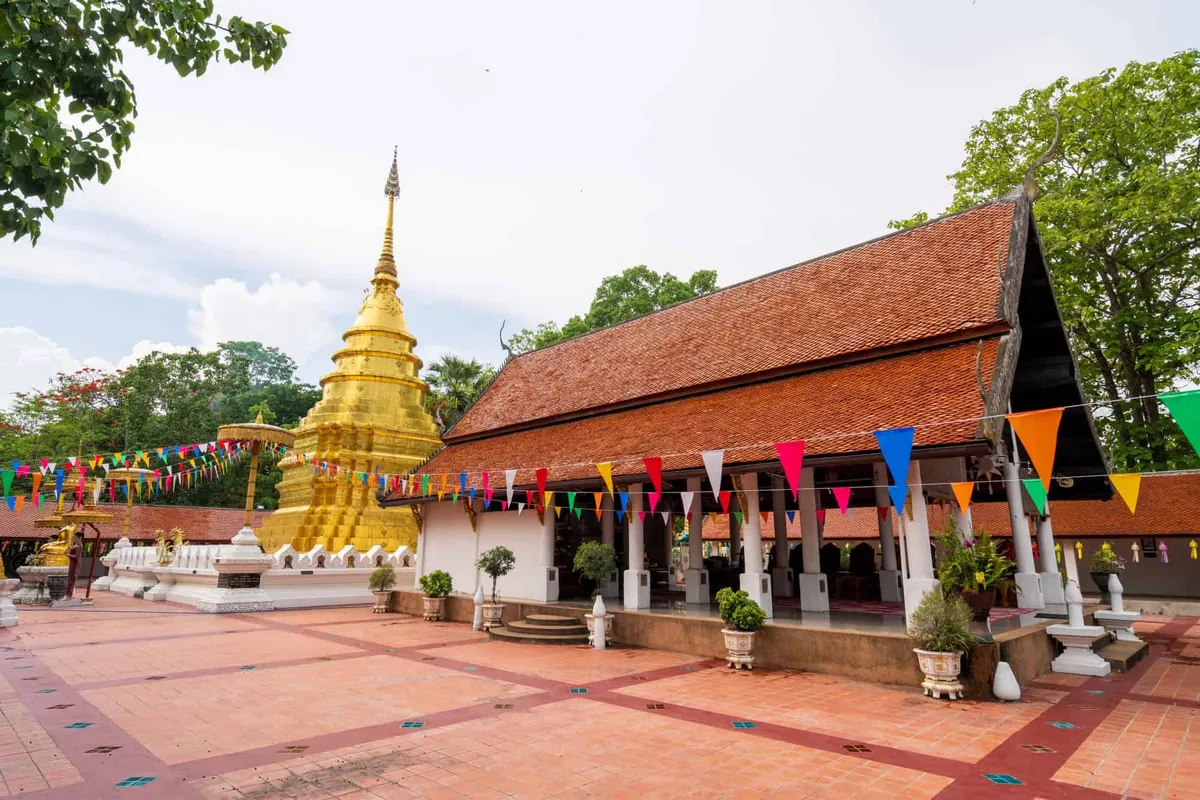



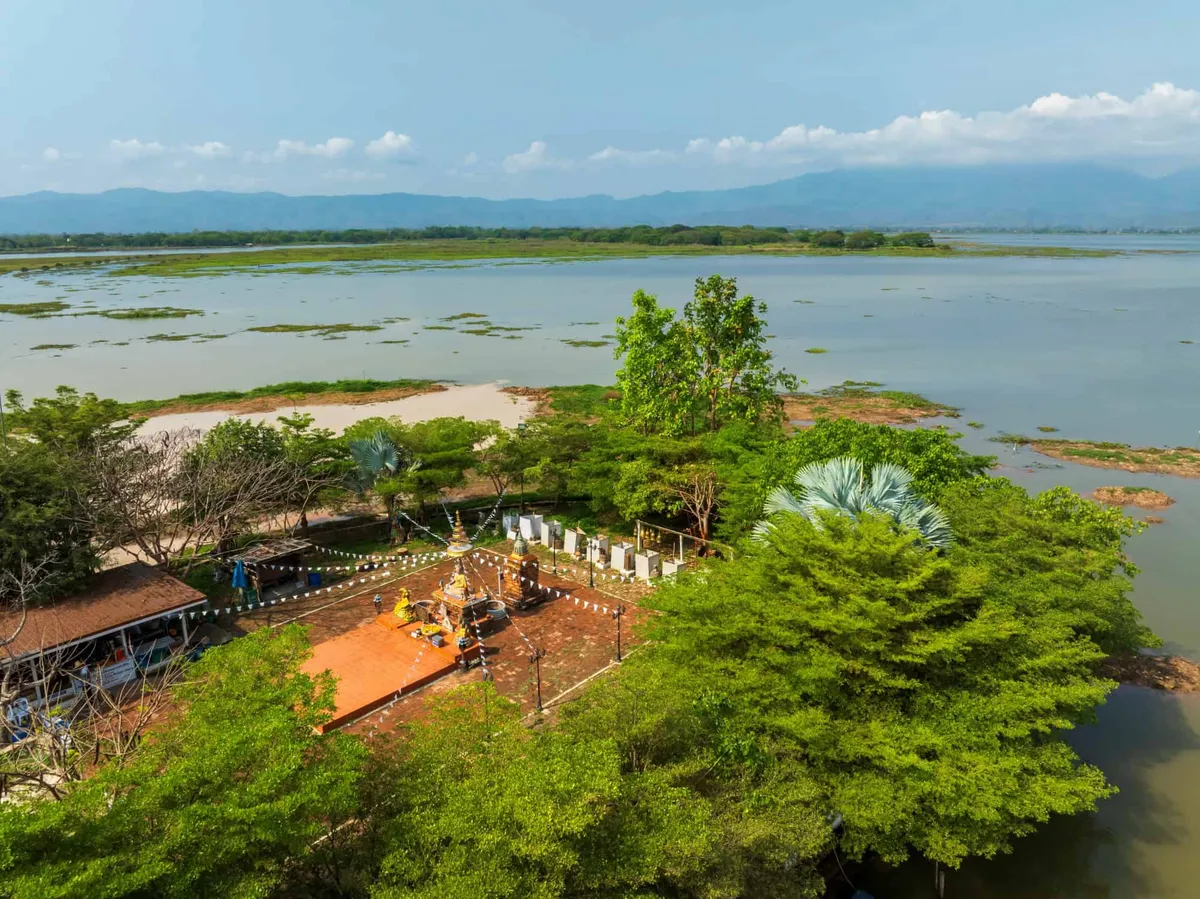
Wat Si U-mongkham stands on built-up ground about 3 km south of Phayao town, a short tuk-tuk ride from the Kwan Phayao lakeside promenade — it doesn’t sit on stilts over the water, despite how it sometimes gets described online. That reputation belongs to its much larger neighbour, Wat Si Khom Kham, home to the giant seated Buddha on the lake shore. Wat Si U-mongkham was built in 1846 on soil villagers dug out while excavating a nearby pond, which is why its earlier name was Wat Sung — “Temple on the Hill.”
- Built: 1846, on artificially raised ground
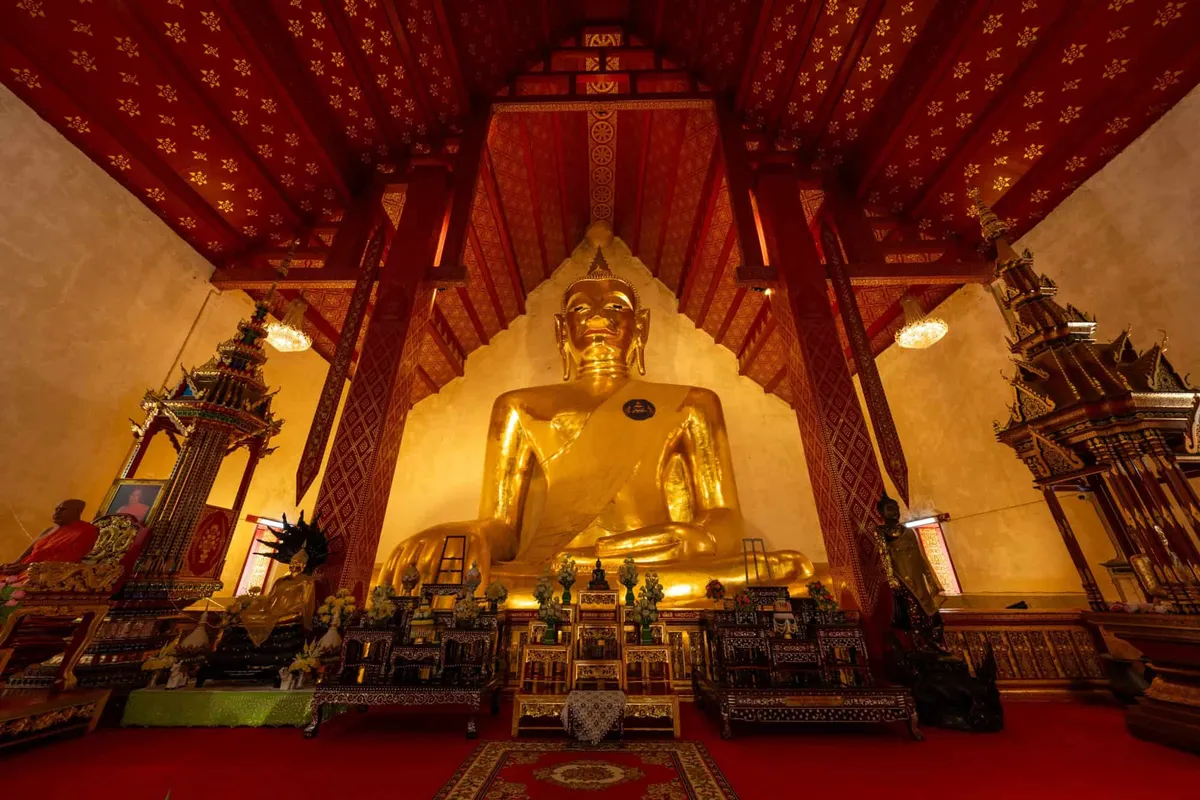
- Main image: Phra Chao Lan Thue (known locally as Luang Pho Ngam Mueang Rueang Rit) — brass, Mara Vijaya pose
- Dimensions: 184 cm across the chest, 270 cm tall
- Entry: Free, daily 08:00–17:00
- Getting there: Tuk-tuk or songthaew, about 10 minutes from Phayao town centre
The main viharn houses Phra Chao Lan Thue, cast in brass in the Mara Vijaya pose — right hand touching the earth to call it as witness. The image measures 184 cm across the chest and stands 270 cm tall. Temple records estimate it dates to around 1600, during the Phayao kingdom period, though the original casting site isn’t recorded. Behind the main hall, an older sanctuary holds smaller sandstone Buddha images from an earlier building phase, and a twelve-cornered stupa base in Chiang Saen style marks the compound’s oldest surviving structure.
Insider Tip: Don’t confuse this temple with Wat Si Khom Kham a few kilometres north — that’s the one with the towering Phra Chao Ton Luang Buddha right on the lake shore, and the temple most guides mean when they say “Phayao’s lake temple.” Wat Si U-mongkham is smaller and quieter, and mornings here are genuinely peaceful.
Local folklore holds that a tunnel runs beneath the main hall connecting to the lake, once used as an escape route — there’s no archaeological evidence for it, but temple caretakers still repeat the story. Fewer tour groups make it out this far than to the town’s headline temples, so the compound stays quiet: incense smoke, a caretaker sweeping the courtyard, birdsong from the trees ringing the grounds.
Watch out: There’s no dedicated parking and little English signage past the main road — set a pin on Google Maps before heading out, and tell your driver “U-mongkham,” not “Si Khom Kham,” to avoid ending up at the wrong temple.
Cover shoulders and knees before entering the viharn, and remove shoes at the door. Combine the visit with a walk along Kwan Phayao lake or a stop at Wat Si Khom Kham — together the two temples make an easy half-day loop from Phayao town.
Location & Directions
Mueang Phayao, Phayao
Phayao, Thailand
Show your taxi or Grab driver
วัดศรีอุโมงค์คำ
Within Walking Distance




Frequently Asked Questions
Is Wat Si U-mongkham actually built over the water?
What's the main Buddha image at Wat Si U-mongkham?
Is there an entry fee?
How do I get to Wat Si U-mongkham from Phayao town?
Is Wat Si U-mongkham the same as Wat Si Khom Kham?
Spotted something out of date or incorrect? Let us know
Stay Near Wat Si U-mongkham
Compare places to stay in Phayao, or open the map for options closest to the attraction.