Phra Yai (Phra Phuttha Kho Dom)
พระใหญ่ เกาะสมุย (วัดพระยาย)
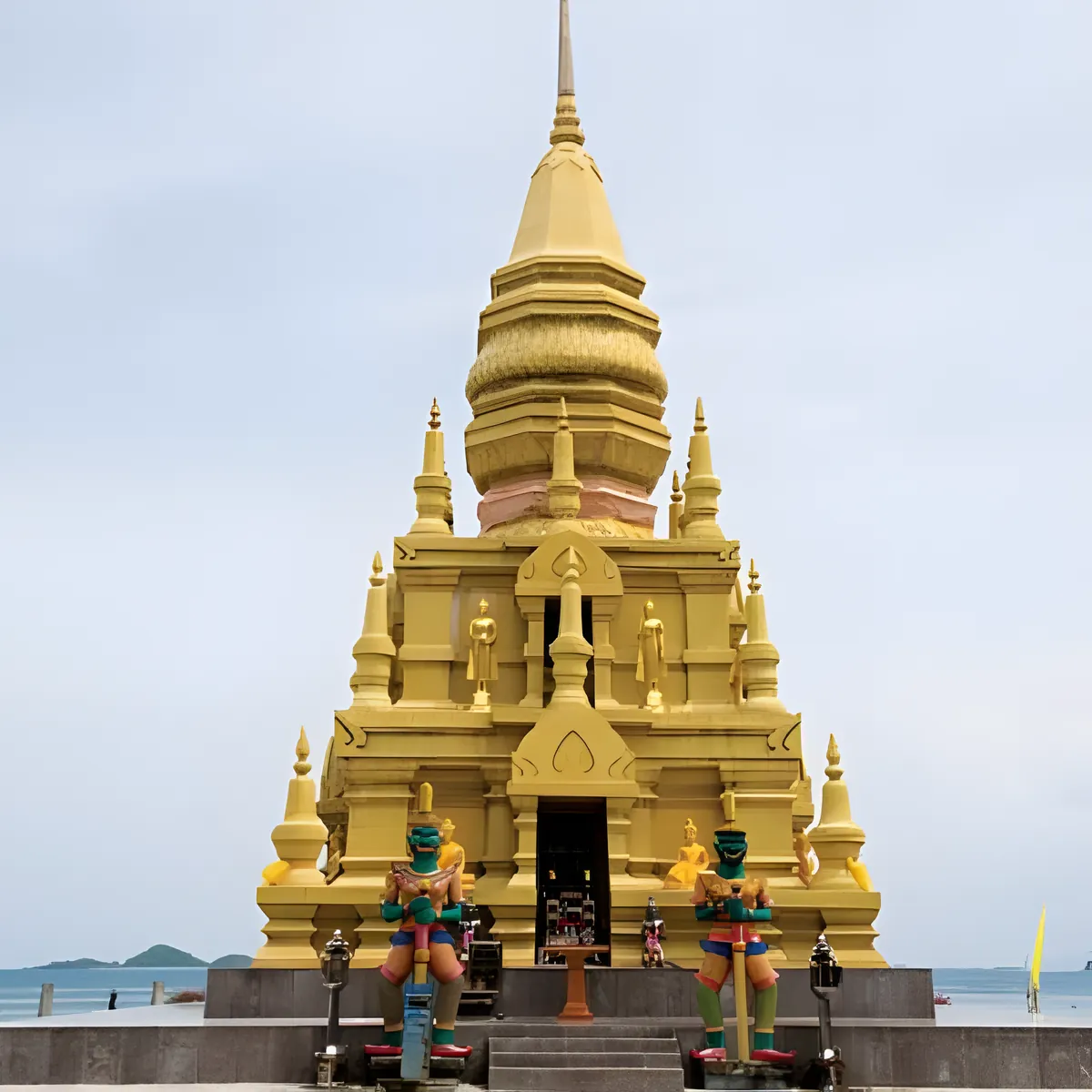
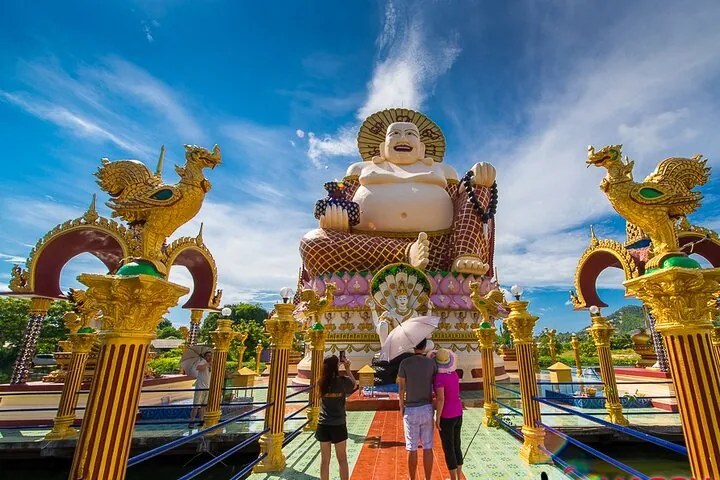
Phra Yai, Koh Samui’s Big Buddha, rises 12 metres over a small rocky islet called Koh Fan, joined to the Koh Samui mainland by a short causeway near Bo Phut on the island’s north coast. The gold-painted statue, formally Phra Phuttha Kho Dom, sits in the Mara posture: right hand resting over the knee, calling the earth to witness the Buddha’s victory over temptation on the night of his enlightenment. Entry is free, and the statue is visible from planes on final approach to Samui Airport a few minutes away.
The temple dates to 1972. Local accounts say the site was originally meant to be a monastery, but after the monk leading the project died, the community redirected the effort into building the giant Buddha instead, and it grew into the island’s most recognisable landmark over the following decades. A dragon-flanked staircase climbs to the elevated platform around the statue’s base, where smaller shrines hold additional Buddha images and offerings of incense, lotus buds, and gold leaf left by local worshippers making merit.
- Height: 12m gold-painted statue
- Built: 1972
- Entry fee: Free
- Location: Koh Fan islet, connected by causeway near Bo Phut
- Nearby: Wat Plai Laem, Samui Airport (~10 minutes) Insider Tip: Go at low tide in the late afternoon: the causeway floods slightly at high tide, and the platform empties out noticeably after the tour-bus groups clear out by mid-afternoon, leaving the sunset light over the Gulf of Thailand largely to whoever’s left.
Watch out: The approach road and car park double as a minor night-market strip on weekend evenings, which is worth a browse but means parking gets tight. Arrive early if you’re driving yourself.
Monks conduct blessings and short ceremonies through the day, and it’s common to see visitors kneel for a wrist-tying or a splash of holy water from a resident monk. Dress modestly (shoulders and knees covered, shoes off before stepping onto the shrine platform) and keep pointing feet away from the Buddha images as you move around the base. Songthaews run regularly from Chaweng, Lamai, and the airport, and most people combine the visit with Wat Plai Laem a short drive away, home to Koh Samui’s other major religious landmark: an 18-armed statue of Guanyin overlooking a lotus pond.
Location & Directions
Koh Samui, Surat Thani
Koh Samui, Thailand
Show your taxi or Grab driver
พระใหญ่ เกาะสมุย (วัดพระยาย)
Frequently Asked Questions
Is this the famous Big Buddha everyone talks about on Koh Samui?
How old is the Big Buddha statue?
Is entry free?
How do I get to the Big Buddha from other parts of Koh Samui?
What else is nearby?
Spotted something out of date or incorrect? Let us know
Tours visiting Phra Yai (Phra Phuttha Kho Dom)





Stay Near Phra Yai (Phra Phuttha Kho Dom)
Live prices for places closest to Phra Yai (Phra Phuttha Kho Dom): tap a pin to compare.