



Sunday Walking Street Market, Chiang Mai
ถนนคนเดินวันอาทิตย์
Every Sunday from 16:00, Chiang Mai’s Sunday Walking Street Market takes over the Old City: 1.1km of Ratchadamnoen Road closes to traffic and fills with food stalls, silver vendors, hill-tribe textiles, and a crowd that densifies as the evening cools. The stretch runs from Tha Phae Gate west to Wat Phra Singh, the largest weekly street market in northern Thailand, and one of the few where genuine northern Thai dishes sit alongside tourist-facing craft stalls.
Looking for the Sunday market on Koh Phangan instead? That is the Chaloklum Sunday Walking Street.
- Hours: Every Sunday, roughly 16:00-22:00/23:00 (stalls set up from about 15:30)
- Entry: Free
- Length: About 1.1km, from Tha Phae Gate west to Wat Phra Singh
- Getting there: Walkable from any Old City hotel; songthaew 30-50 THB, tuk-tuk 80-120 THB from Nimman
- Rules: Alcohol banned on the main road itself; most vendors are cash-only
What to Eat
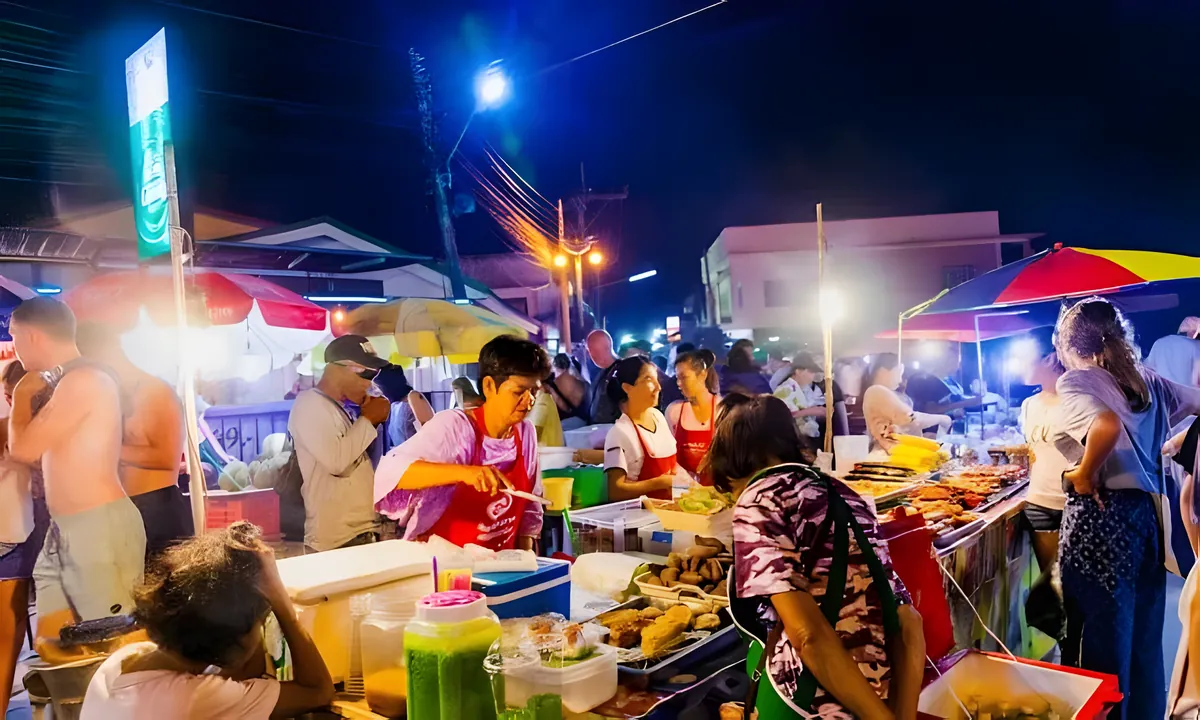
The food is the main event, and the northern Thai options here are genuinely good. Khao soi, the signature curry noodle soup of Chiang Mai, appears at multiple stalls for around 50–70 THB; look for the one with the longest queue. Sai oua (northern pork sausage packed with lemongrass, galangal, and kaffir lime) is sold in links from about 40 THB, best eaten with sticky rice. For sweet endings, mango sticky rice and coconut pancakes are everywhere.
Insider Tip: The best cooking isn’t on Ratchadamnoen itself. It’s in the temple courtyards that branch off it. Wat Phan On and Wat Pan Tao near the midpoint, plus the covered food court behind the Three Kings Monument, each set up proper sit-down food courts with shorter queues and better northern Thai cooking than the skewer carts on the main road.
The market also has plenty of non-Thai options if you’re travelling with someone less adventurous: Japanese takoyaki, Korean corn dogs, crepes, and smoothie bars all appear regularly. Prices are fixed and displayed; no negotiation expected.
Shopping
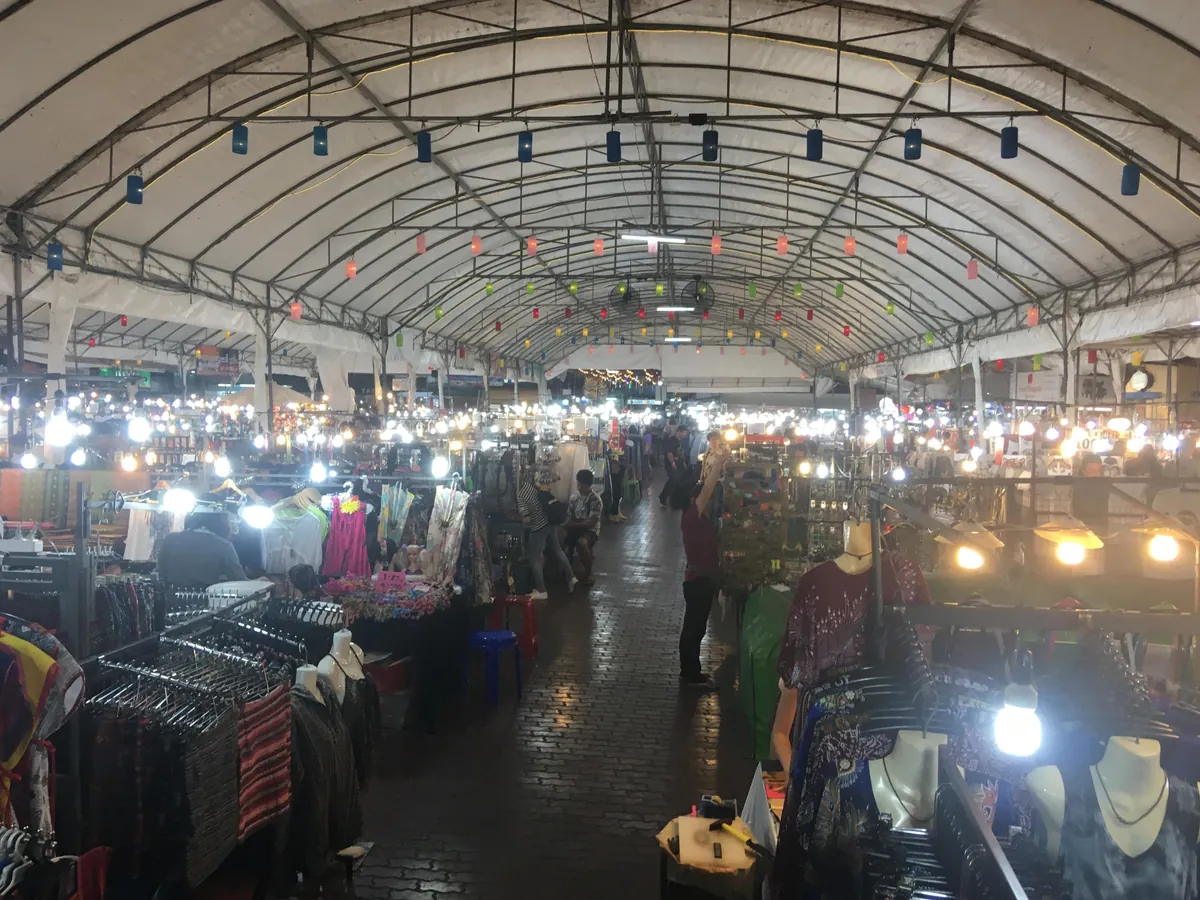
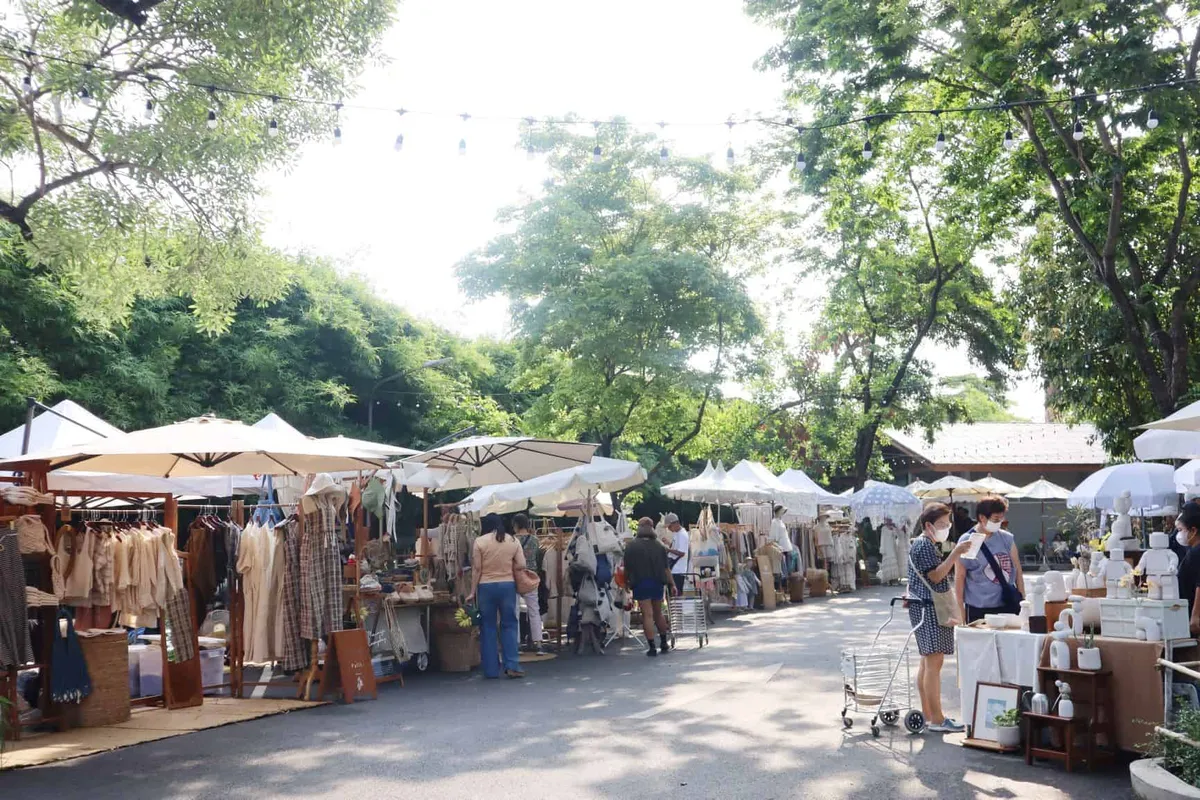
Craft and clothing stalls fill the stretches between food vendors. Quality varies enormously. The best finds are hand-stamped silver jewellery (cheaper and more interesting than the souvenir shops), hand-painted umbrellas from the Bo Sang village style, and textiles from hill-tribe artisans, some of whom sell their own work rather than wholesale goods. Spend a moment looking at the maker, not just the product: you can often tell the difference between a factory-wholesale stall and someone selling what they actually made.
Bring more cash than you think you’ll need. There are ATMs near Tha Phae Gate, but the queues get long after 18:00.
When to Arrive
Peak crowd hits between 18:00 and 20:00. The stretch near Wat Chedi Luang becomes shoulder-to-shoulder. Arriving at 16:30–17:00 means stalls are set up but the road is still walkable. By 22:00 it quietens quickly and vendors start packing down; don’t leave the best food choices until late.
Insider Tip: At 18:00 the Thai national anthem plays over the market loudspeakers and every Thai visitor stops still where they stand. Stop and stand quietly too. It lasts about 90 seconds, and the whole market resumes exactly where it paused. It’s a small cultural observance worth respecting, not an interruption.
Watch out: The road is entirely flat and paved, but the crowd density at peak hours can be overwhelming with a pram or wheelchair. Sunday evenings in December and January (high season) are the busiest. If crowds bother you, the shoulder months of April or October are noticeably calmer.
Getting There
The market is inside Chiang Mai’s Old City moat, walkable from any Old City guesthouse or hotel. From the Nimman area, a tuk-tuk costs around 80–120 THB. Songthaew (shared red truck taxis) run frequently into the Old City from most parts of Chiang Mai for 30–50 THB per person.
Driving in on Sunday evening isn’t worth it: Ratchadamnoen is closed, surrounding streets fill with parked motorbikes, and parking is a 10-minute walk away at best. Come by foot, bike, or shared transport.
Nearby
After the market winds down, Chiang Mai’s café scene stays open late: several good spots cluster on the sois around Nimman and inside the Old City itself. For the broader street food picture, the Old City has daytime options worth combining with a Sunday visit.
Frequently Asked Questions
What time does Sunday Walking Street Chiang Mai open? Stalls start setting up around 15:30–16:00, but the market reaches full capacity by 17:00–17:30. It runs until approximately 22:00–23:00, with the road reopening to traffic around 23:00.
Is Sunday Walking Street in Chiang Mai free? Yes, completely free to enter. Most food dishes cost 30–70 THB. Crafts and clothing start from around 100 THB. Almost all vendors are cash-only.
Can you drink at Sunday Walking Street Chiang Mai? Alcohol is banned on Ratchadamnoen Road itself, with fines up to 10,000 THB. Bars and restaurants on the side streets are not subject to the ban.
How long is Chiang Mai’s Sunday Walking Street? Ratchadamnoen Road from Tha Phae Gate to Wat Phra Singh is about 1.1km. With stalls, crowds, and browsing, most people take 45–90 minutes to walk end-to-end.
What is the difference between Sunday and Saturday Walking Street in Chiang Mai? Sunday’s market on Ratchadamnoen is longer and busier, with more street food variety. Saturday’s market runs along Wualai Road and is particularly known for silver jewellery. Both are free.
Location & Directions
Ratchadamnoen Road, Si Phum, Mueang Chiang Mai District, Chiang Mai 50200, Thailand
Chiang Mai, Thailand
Show your taxi or Grab driver
ถนนคนเดินวันอาทิตย์
Frequently Asked Questions
What are the hours for Chiang Mai's Sunday Walking Street?
Is there an entry fee?
Can I drink alcohol on Sunday Walking Street?
Where exactly does the market start and end?
What food should I try at the Sunday Walking Street?
How does Sunday Walking Street compare to the Saturday market on Wualai Road?
Spotted something out of date or incorrect? Let us know
Popular tours in Chiang Mai





Stay Near Sunday Walking Street Market, Chiang Mai
Live prices for places closest to Sunday Walking Street Market, Chiang Mai: tap a pin to compare.