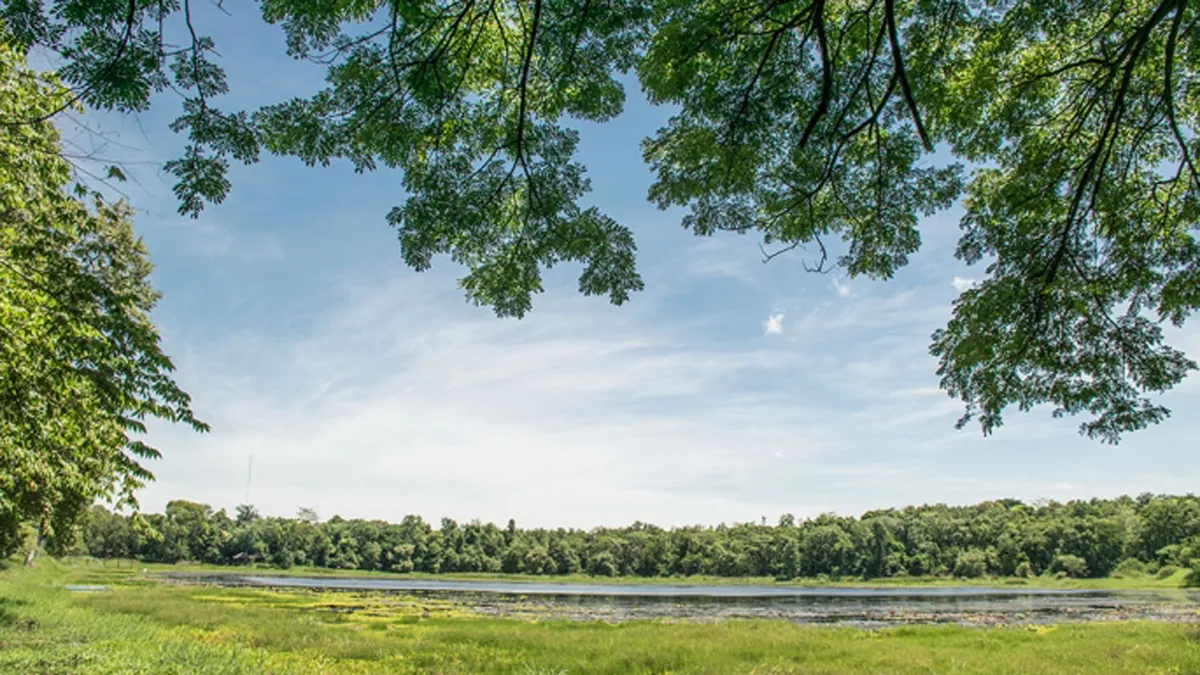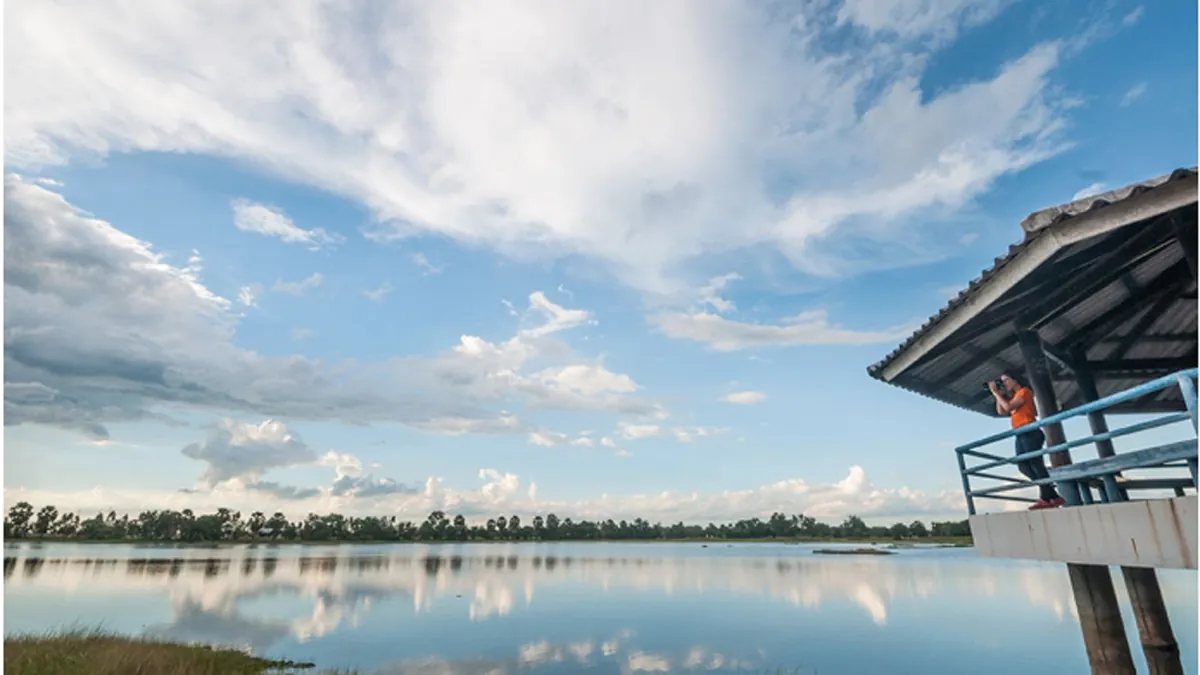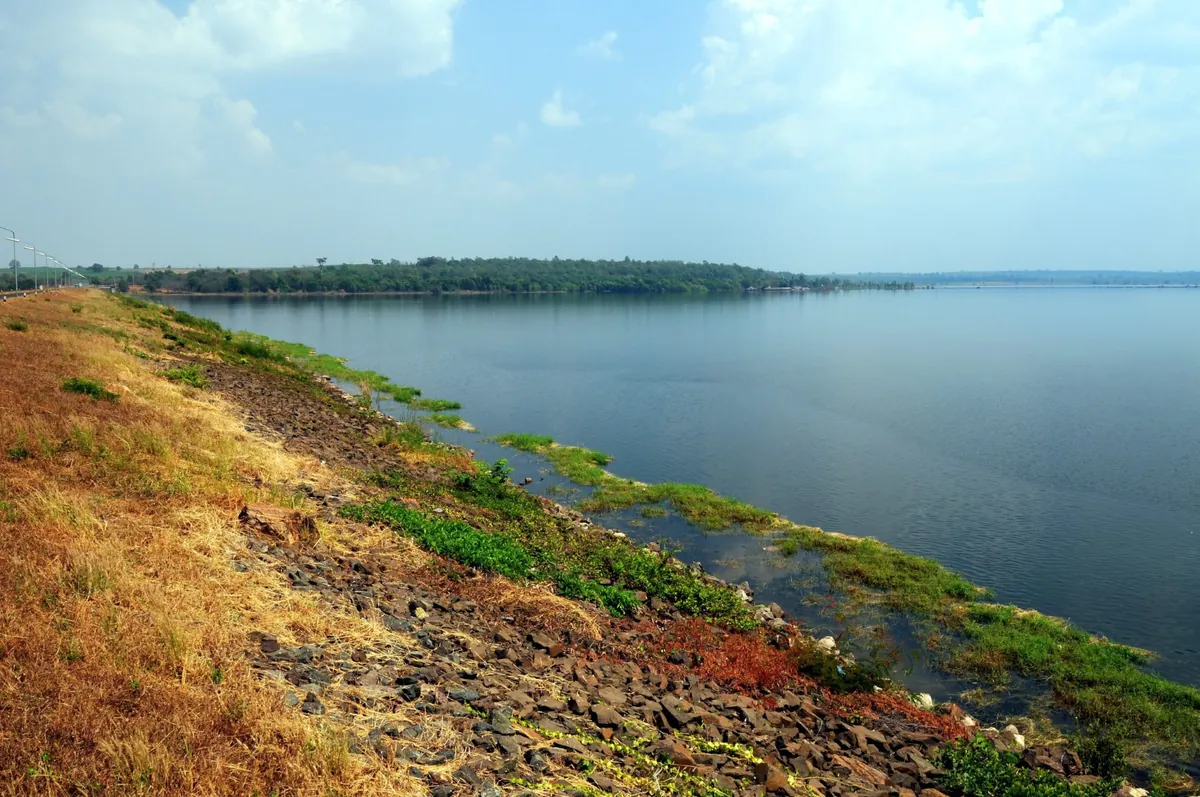






Buri Ram Bird Park is the local name for Huai Talat Reservoir, a wetland about 12 km south of Buriram town on the road toward Prakhon Chai. This is wild birdwatching, not a zoo: open water, reedbeds and grassland where more than 200 recorded species gather on their own, with no walk-through aviaries or ticket booth.
The reservoir is one of several Buriram wetlands where conservationists have reintroduced the eastern sarus crane, Thailand’s tallest flying bird, after it vanished from the wild here in the late 1960s through hunting, agricultural pesticides and wetland loss. Captive-bred birds released since the programme began have rebuilt a wild population that topped 168 by 2024, including chicks hatched in the wild, the first since 2016. From November to April the reservoir also fills with migratory ducks, egrets, herons and waders, and early morning is when they’re most active.
Expect waders picking through the shallows, egrets and herons stalking the margins, and rafts of migratory ducks on open water through the cool season. Released cranes tend to stay close to the wetlands where they were introduced, which makes Huai Talat one of the more reliable spots in Isan to see the species in the wild rather than in an enclosure, though even here, sightings are never guaranteed on any given morning.
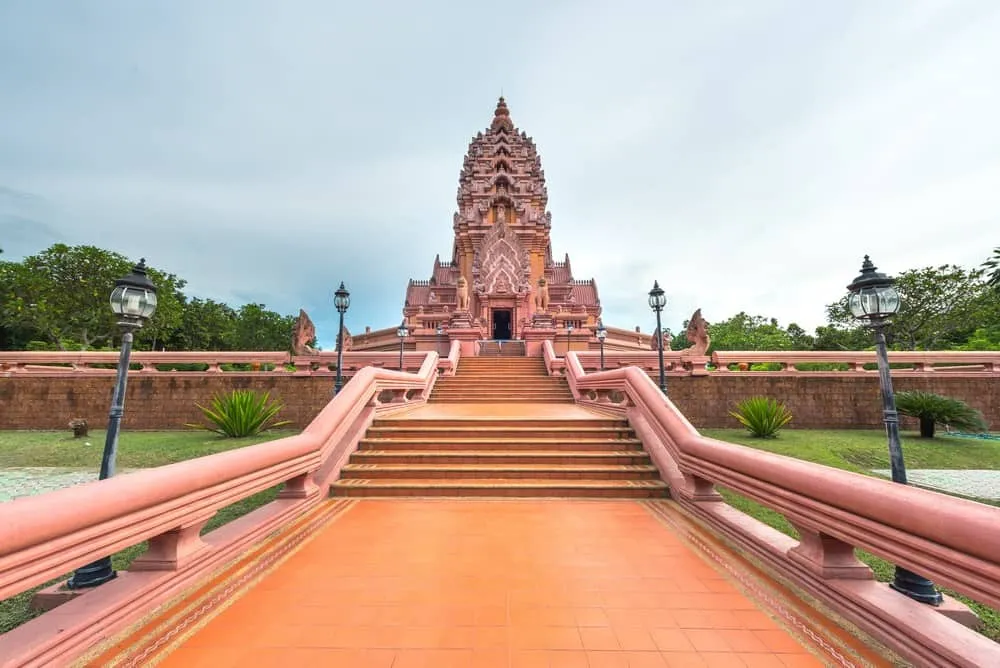
A small private bird garden, Suan Nok, sits beside the reservoir for a closer look at captive species if the wild birding leaves you wanting more. Phukhaofai Kradong Non-Hunting Area, a protected volcanic-crater woodland a few kilometres north with its own hornbills and wild boar, is a reasonable pairing for a fuller day of Buriram wildlife. Travellers building a full day around the province’s wildlife and history sometimes add Phanom Rung Historical Park, Buriram’s Khmer hilltop temple, further south.
Insider Tip: Bring binoculars and a long lens: the birds keep their distance across open water, and there’s no hide or boardwalk bringing you closer. Sun protection and water are worth packing too, since shade is limited along the banks.
There is no entry fee for the reservoir, and the site is easiest to reach with your own transport rather than public transport. Dawn brings both the best bird activity and the coolest temperatures. Arrive early and the reservoir is close to empty of other visitors as well.
- Species recorded: 200+, mostly wild wetland birds
- Best time: Nov-Apr (migratory peak, dry season)
- Signature species: Reintroduced eastern sarus crane
- Distance: About 12km south of Buriram town
- Entry fee: Free
Location & Directions
Mueang Buri Ram, Buri Ram
Buriram, Thailand
Show your taxi or Grab driver
สวนนกบุรีรัมย์
Frequently Asked Questions
What birds can you see at Buri Ram Bird Park?
When is the best time for birdwatching?
What happened to Thailand's sarus cranes?
How do you get there?
Is there an entry fee?
Spotted something out of date or incorrect? Let us know
Stay Near Buri Ram Bird Park
Live prices for places closest to Buri Ram Bird Park: tap a pin to compare.