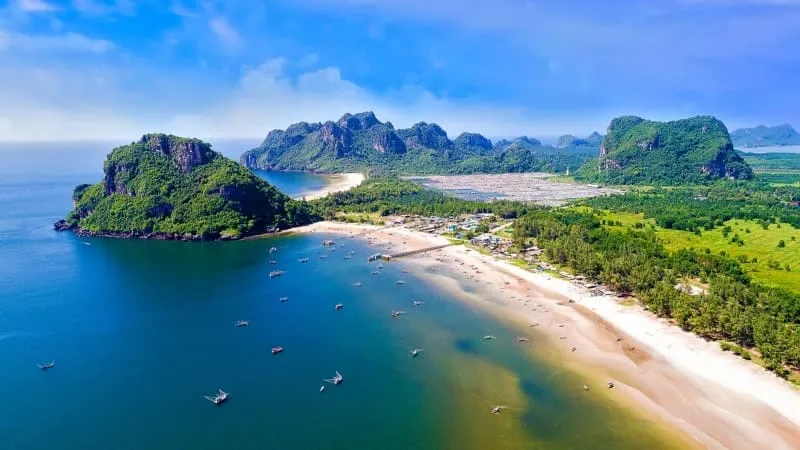
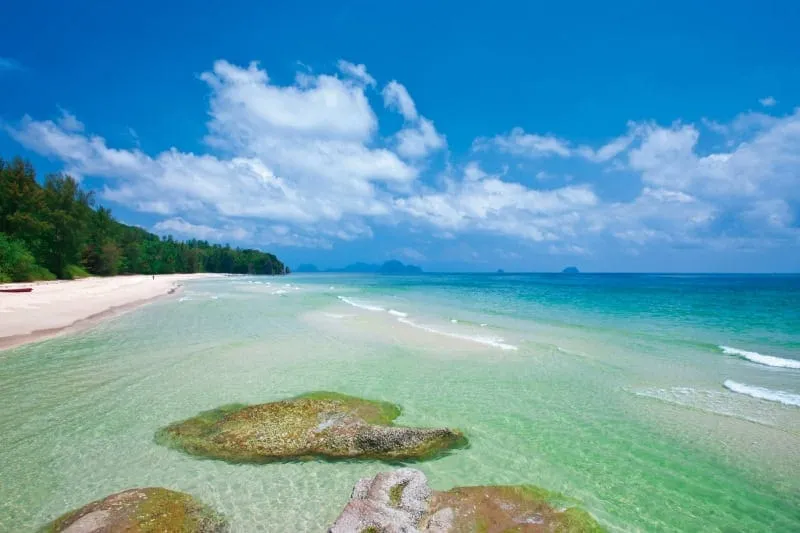
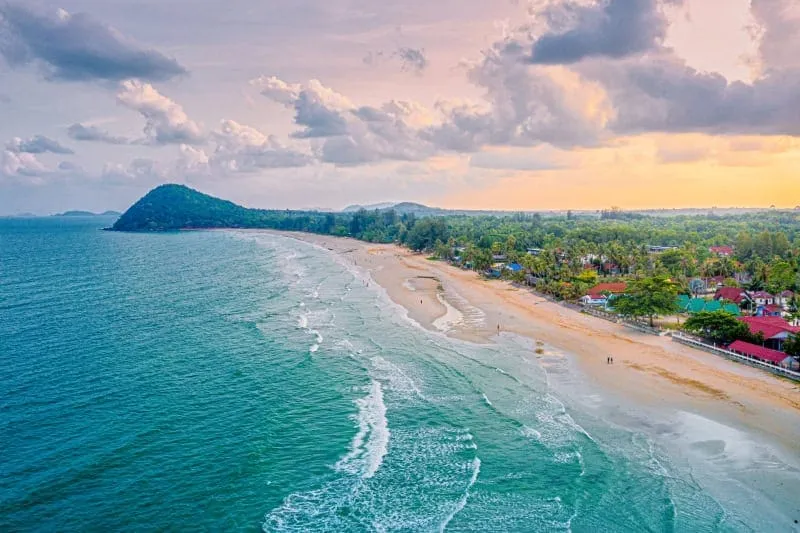
Ban Boet Beach, known locally as Hat Tham Thong-Bang Boet, runs along the Gulf of Thailand in Pathio District, Chumphon, roughly 80 kilometres south of Chumphon Town via Highway 3180. The beach faces east, which keeps the water calm for swimming most of the year, and it sees far fewer visitors than Thung Wua Laen Beach and the province’s other better-known shores.
Its defining feature is the coastal sand dune that runs through the central, unprotected section of shoreline. The Department of Marine and Coastal Resources classes it as Thailand’s largest coastal sand dune system: roughly 10 kilometres of dune rising over 30 metres above sea level across more than 2,000 rai, built up by a wind pattern DMCR describes as not repeated anywhere else in the country. A short nature trail crosses part of the dune, moving from unstable fore-dune sand to a more established backdune forest. At the southern headland, a small cave called Tham Thong gives the beach its fuller local name, a landmark that connects it to Tham Thong Beach, a separate cove further down the same dune coastline.
The dune is also a nesting ground for the Malaysian plover (Charadrius peronii), a small shorebird that needs open sand to breed. A 2020 survey of ten Thai beaches rated Ban Boet the safest of them for plover chicks, with the highest survival rate recorded. Watch out: if you see roped-off or flagged sections of open sand on the dune, especially outside the main swimming stretch, give them a wide berth. They’re usually marking active plover nests, and disturbing the birds can cause them to abandon the clutch.
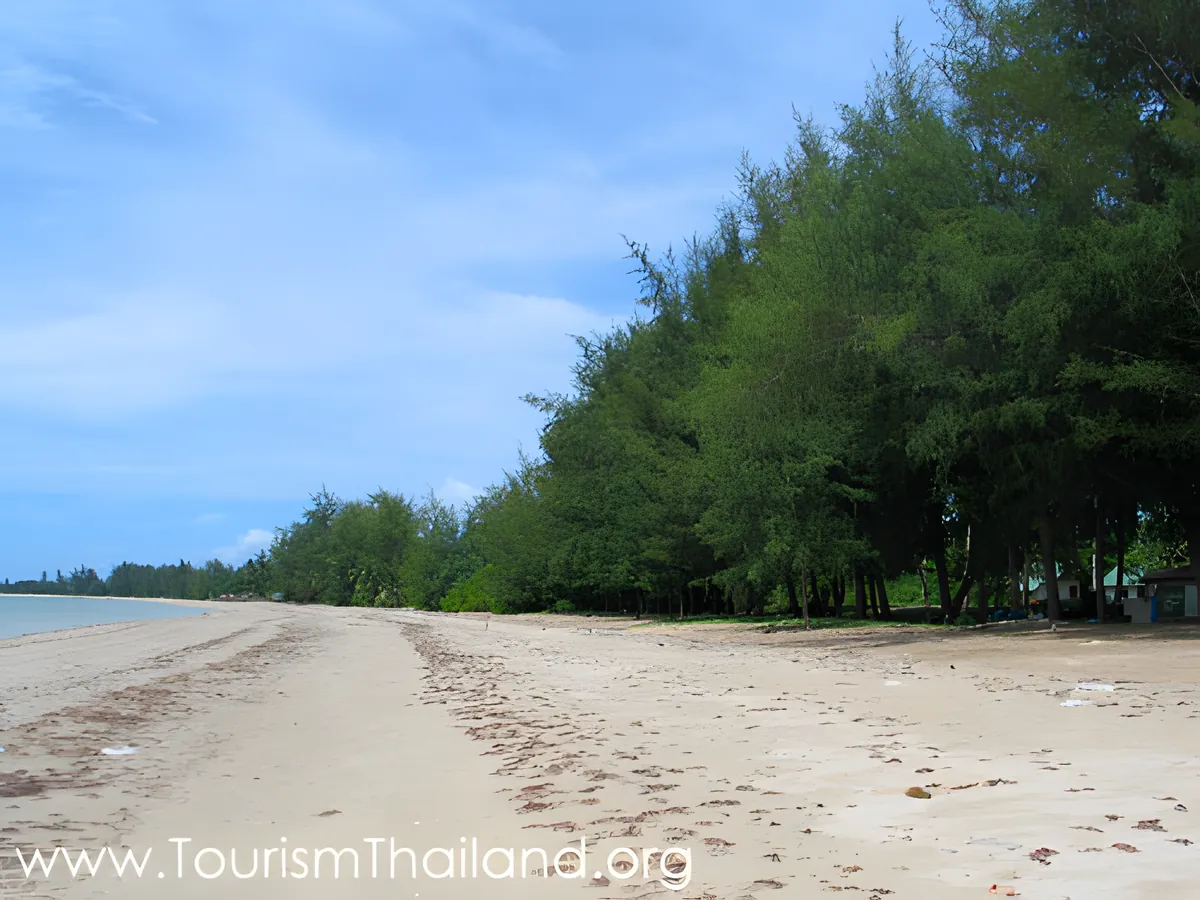
Facilities stay minimal: a handful of simple restaurants near the beach serve fresh seafood and basic Thai dishes, and small fishing boats work the waters offshore. Casuarina trees along parts of the shore give some natural shade, though pine and casuarina planting elsewhere on the dune is itself a conservation concern: introduced trees compete with the native dune plants DMCR is trying to protect.
Insider Tip: Walk the dune trail early, before 8am: the sand holds the morning cool and the light is better for seeing the dune’s contours than the flat glare of midday.
The dry season from November to April brings the calmest seas and clearest skies for a visit. Getting here requires your own transport. Follow Highway 3180 through Pathio District and watch for signs toward Pak Khlong Subdistrict; there’s no direct public transport to the beach itself.
- Entry fee: Free
- Dune size: ~10 km long, 30+ metres high, 2,000+ rai, Thailand’s largest coastal sand dune (DMCR)
- Best season: November–April (calmest seas)
- Getting there: Own transport via Highway 3180, Pathio District
- Wildlife note: Nesting ground for the Malaysian plover. Avoid roped-off dune sections
Location & Directions
Pathio, Chumphon
Chumphon, Thailand
Show your taxi or Grab driver
หาดบางเบิด
Frequently Asked Questions
What makes the Ban Boet sand dune unusual?
Is Ban Boet Beach good for swimming?
Are there facilities at the beach?
Why is the beach also called Tham Thong Beach?
How do I get to Ban Boet Beach without a tour?
Spotted something out of date or incorrect? Let us know
Stay Near Ban Boet Beach
Live prices for places closest to Ban Boet Beach: tap a pin to compare.