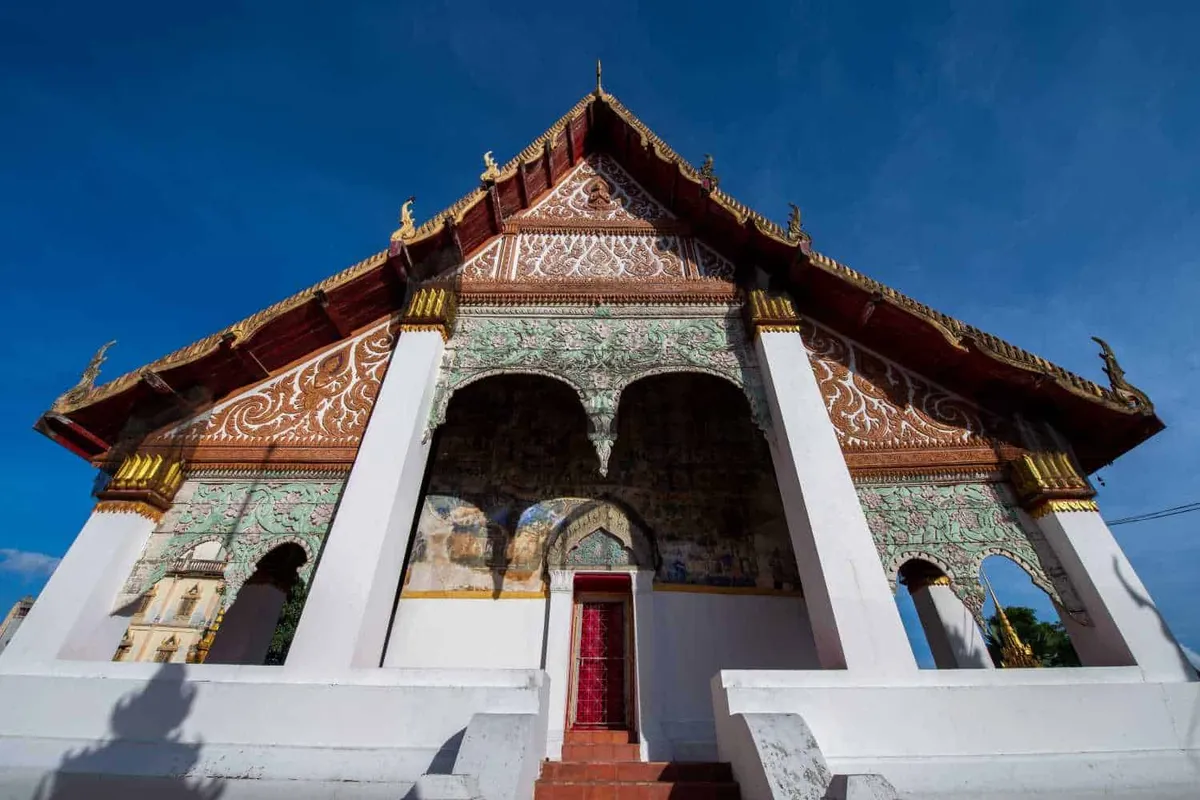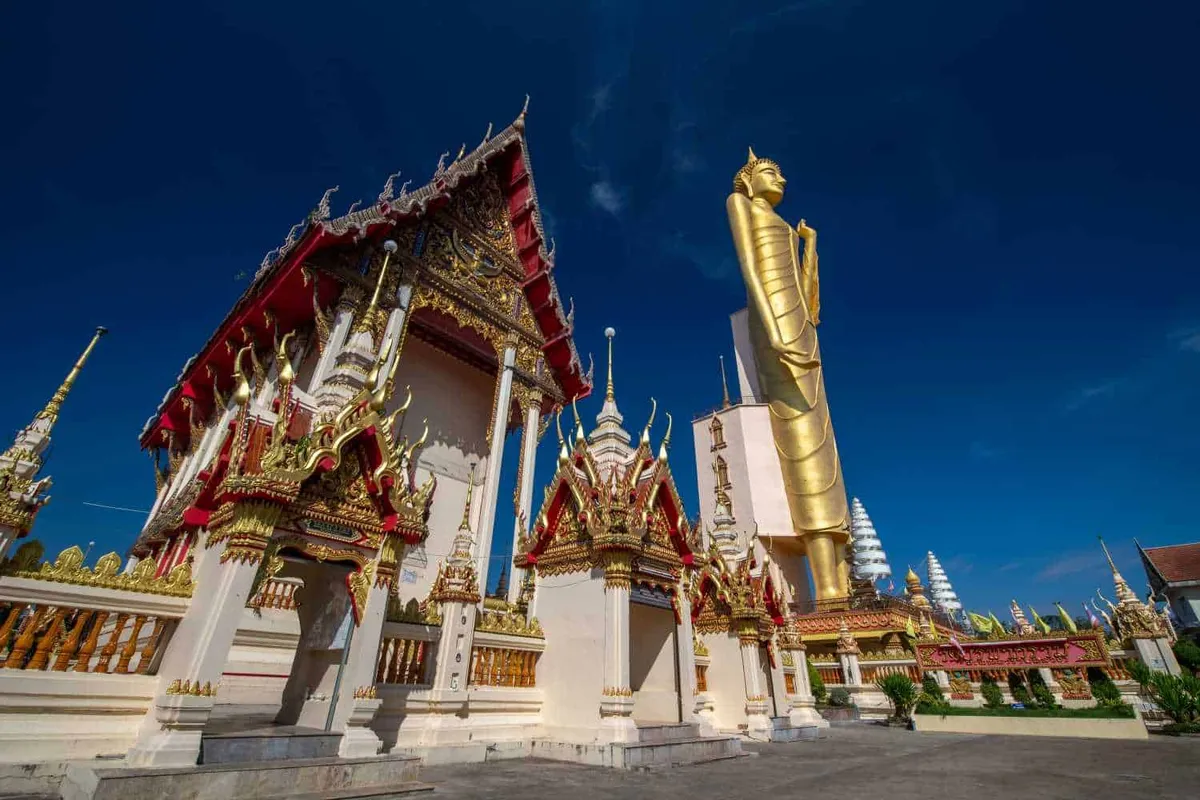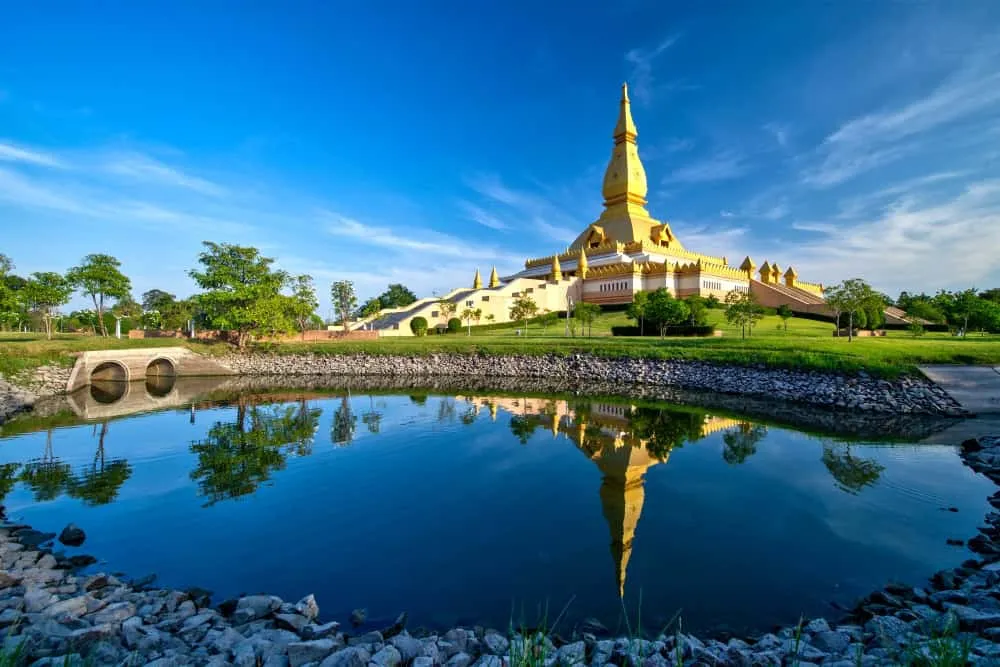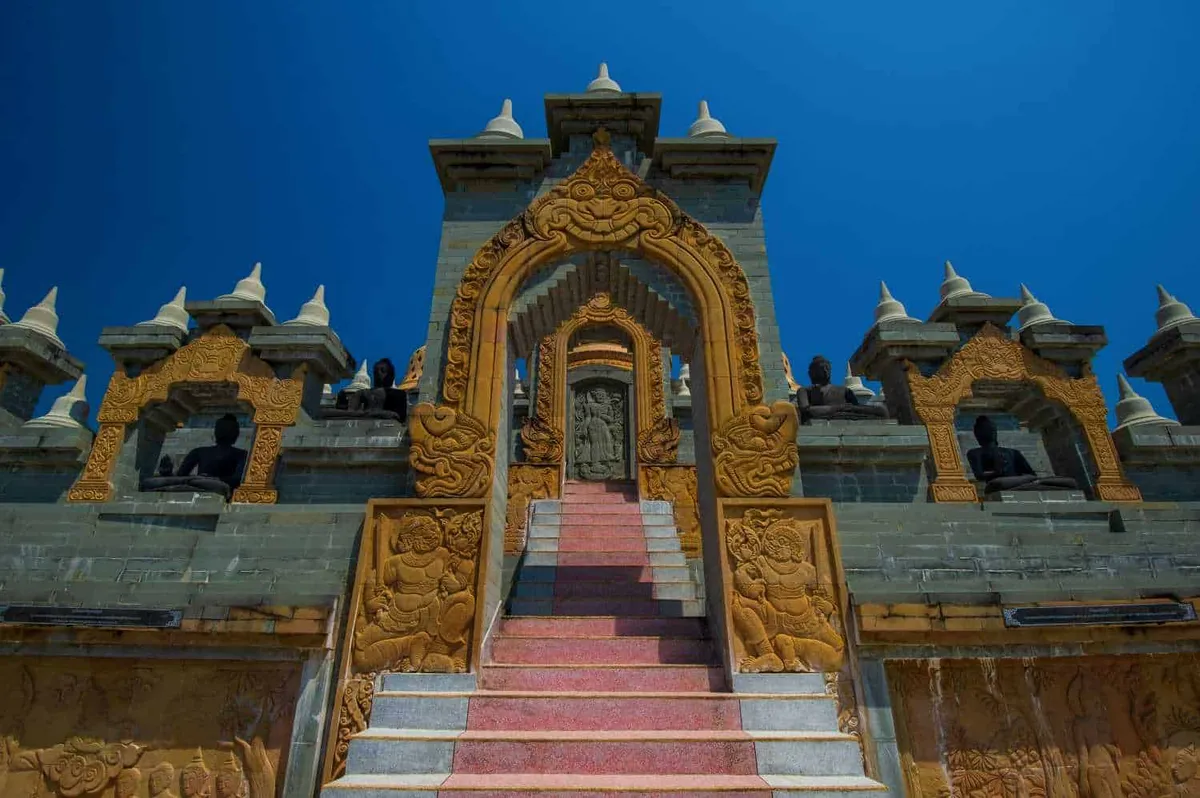


Wat Sa Thong takes its name from the pond on its grounds — “Sa Thong” translates to roughly “golden pond” — a detail that matters more here than at most Thai temples, because that same pond’s water has historically been drawn for royal consecration ceremonies. The temple was originally called Wat Si Mongkol; it became Wat Sa Thong once the pond-side name overtook the old one in local use, formalised in the early 20th century when the temple’s school relocated.
The temple’s real claim to significance is Luang Pho Phra Sangkajai, a Buddha image found in 1782 by Phraya Khattiya Wongsa (known as Thao Thon), Roi Et’s first town governor. He judged it old and sacred enough to install as the city’s guardian image, and for years afterward, Roi Et officials made an annual pilgrimage here to swear their oath of loyalty before it — a civic ritual as much as a religious one. The ordination hall also holds Phra Phuttha Suwan Mongkol, a Buddha image cast in 1849 according to an ancient script inscription at its base, alongside murals depicting scenes from the Buddha’s life across the interior walls.
This is Isan (northeastern Thai) temple architecture, not the Lanna style of the far north — expect the region’s characteristic ordination-hall proportions and decoration rather than multi-tiered Lanna roofs. Set within central Roi Et town on Hai Sorot Road, the temple keeps an active daily rhythm: resident monks, regular merit-making by local families, and a quiet compound that rarely sees crowds outside festival days.
Insider Tip: Ask a monk or temple attendant to point out the Sangkajai image’s shrine specifically — it’s easy to walk past the main hall’s more decorative Buddha statues and miss the historically significant one tucked among them.
Watch out: There’s little English-language signage inside the compound, so the historical detail (the 1782 discovery, the oath-taking tradition) isn’t obvious from a self-guided walk-through — this is a temple that rewards knowing the backstory before you arrive rather than reading it on-site.
Dress modestly with shoulders and knees covered, remove shoes before entering the halls, and keep voices low near the ordination hall during prayer times. The temple is walkable from central Roi Et hotels and easy to combine with a wider stroll around Roi Et town’s old quarter.
- Entry fee: Free
- Hours: Daily, approximately 08:30-16:30, including public holidays
- Centrepiece: Luang Pho Phra Sangkajai, Roi Et’s guardian Buddha image, found 1782
- Also on site: Phra Phuttha Suwan Mongkol (cast 1849) and a pond whose water has been used in royal ceremonies
- Location: Hai Sorot Road, Nai Mueang subdistrict, central Roi Et town
Location & Directions
Mueang Roi Et, Roi Et
Roi Et, Thailand
Show your taxi or Grab driver
วัดสระทอง
Frequently Asked Questions
Why is it called the Golden Pond Temple?
What is the Sangkajai image locals mention?
Is entry free?
Is the temple architecture Lanna style?
What else is notable on site?
Spotted something out of date or incorrect? Let us know
Stay Near Wat Sa Thong
Live prices for places closest to Wat Sa Thong — tap a pin to compare.