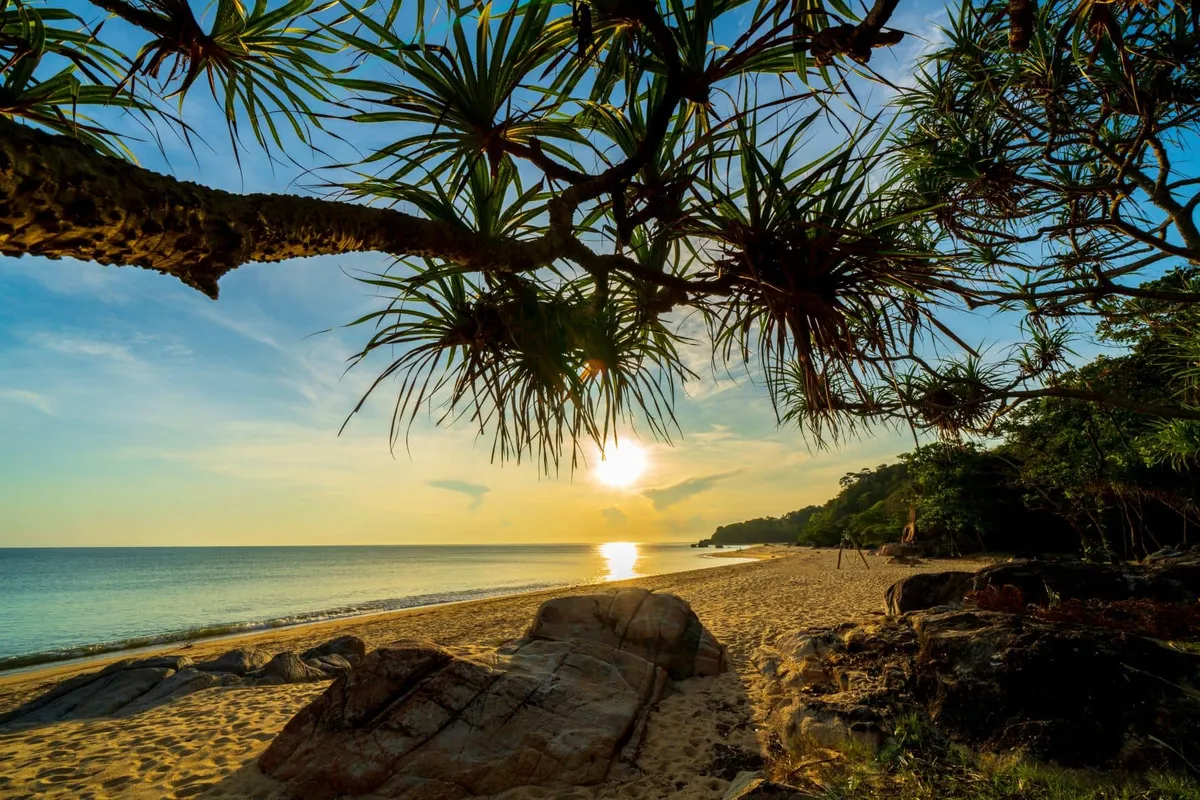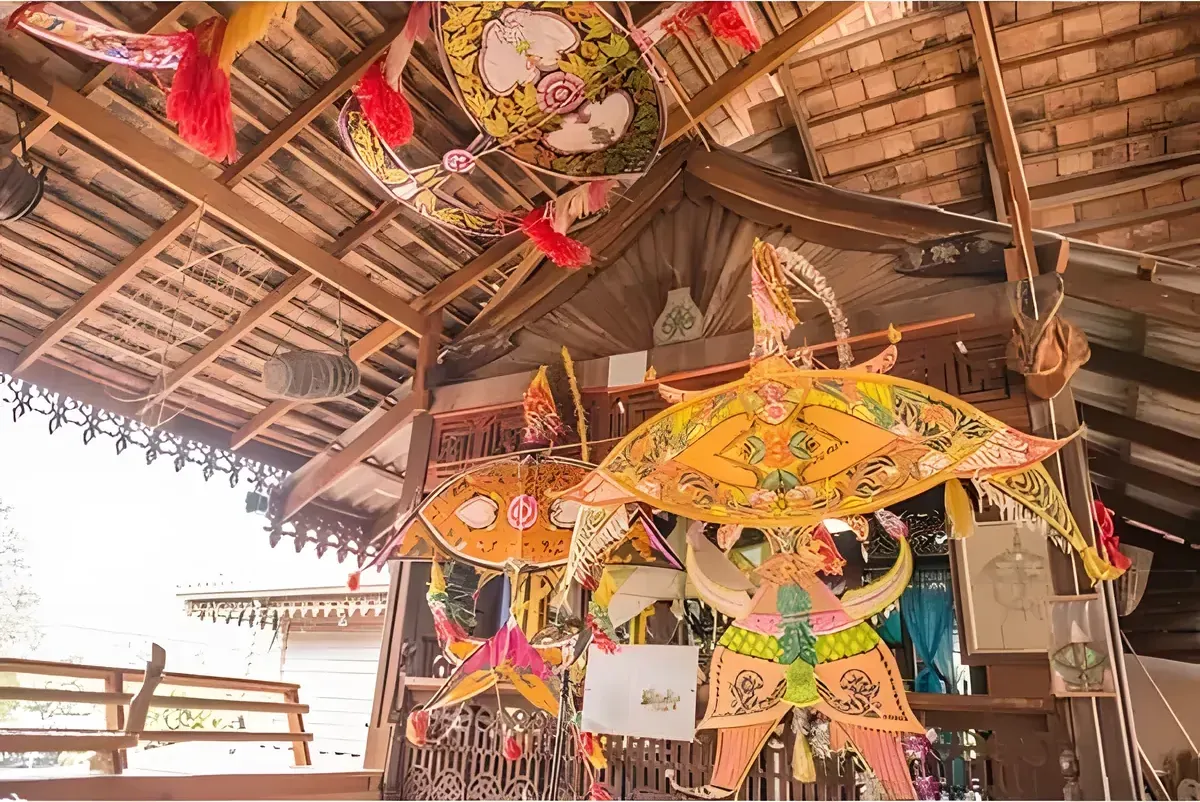





Budo-Su-ngai Padi National Park (Pacho Waterfall)
อุทยานแห่งชาติบูโด-สุไหงปาดี
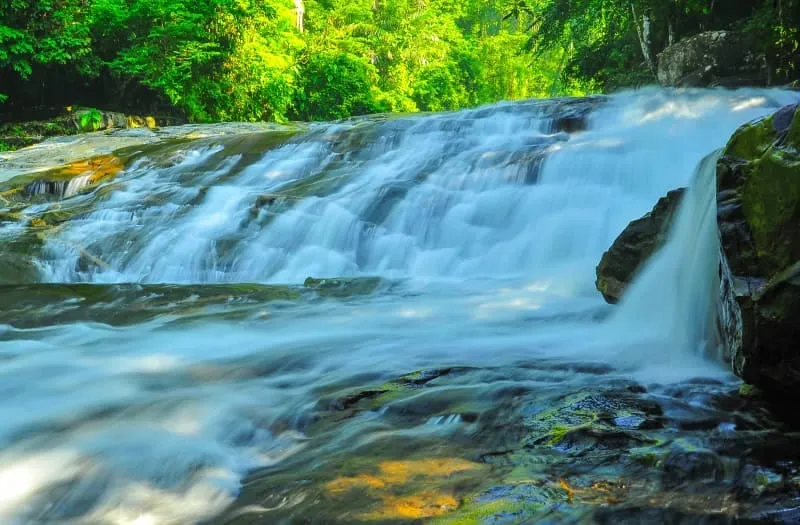
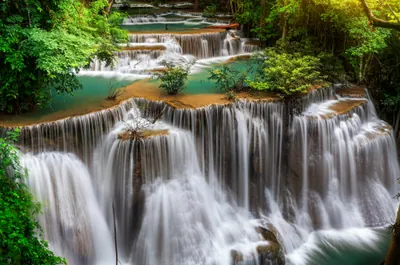
Budo Su-ngai Padi National Park protects roughly 341 square kilometres of rainforest across six Narathiwat districts, plus slivers of Yala and Pattani, centred on Khao Tawei, the park’s highest peak at 1,182 metres. Its best-known feature is Pacho Waterfall (also spelled Bacho), a multi-tier cascade near Ban Pacho where the largest drop pours around 60 metres over a wide rock terrace into a broad pool. Entry costs 100 THB for foreign adults (50 THB for children) and 20 THB for Thai nationals; the park is open daily 08:00-16:30.
The walk to the falls follows a shaded forest trail from the park office, crossing streams that run year-round even in the dry season. The pool below the first tier is where most visitors swim; the tiers above require more scrambling over wet rock and are quieter. Away from the water, the forest is one of the last strongholds in the deep south for several hornbill species, along with dusky langurs that move through the canopy at dawn. Botanists come for Bauhinia aureifolia — a large, golden-leafed vine known locally as ya-dao (ย่านดาโอ๊ะ) — believed to have been identified here for the first time anywhere in the world, and still commonly found around the park office and the surrounding Budo forest. For more of the deep south’s rainforest, Hala-Bala Wildlife Sanctuary protects similar habitat further south, while Ao Manao-Khao Tanyong National Park covers the coastal side of the province.
Rain falls most months this far south, so the waterfall rarely thins out, but the trail gets slick after a downpour — trainers with grip do better than sandals. Early morning, before 9am, is coolest and gives the best odds of spotting hornbills before the heat pushes wildlife into cover. Weekday visits are noticeably quieter than weekends, when local families picnic at the lower pools.
The park sits in Bacho district, reached via signposted roads off the Narathiwat-Rueso route; a car or hired driver is the practical option, since public transport doesn’t run to the park office. Watch out: Narathiwat is part of Thailand’s deep south, where the government has maintained a long-running security presence in some rural districts; the park and its waterfall trail are regularly visited by Thai tourists and considered safe, but check current travel advisories and stick to marked trails and daylight hours — see Narathiwat for wider practical guidance. Insider Tip: bring cash, since there’s no card payment at the gate, and pack a dry bag if you plan to swim — the changing area is basic.
- Entry fee: 100 THB (foreigners), 50 THB (foreign children), 20 THB (Thai nationals)
- Hours: Daily 08:00-16:30
- Highest peak: Khao Tawei, 1,182m
- Waterfall drop: approx. 60m at the first tier
- Notable species: Bauhinia aureifolia (golden vine), hornbills, dusky langurs
Location & Directions
Bacho, Narathiwat
Narathiwat, Thailand
Show your taxi or Grab driver
อุทยานแห่งชาติบูโด-สุไหงปาดี
Frequently Asked Questions
What is the entrance fee for Budo Su-ngai Padi National Park?
How tall is Pacho Waterfall?
What is Bauhinia aureifolia?
Is it safe to visit Budo Su-ngai Padi given Narathiwat's location in the deep south?
What wildlife might I see at the park?
Spotted something out of date or incorrect? Let us know
Stay Near Budo-Su-ngai Padi National Park (Pacho Waterfall)
Live prices for places closest to Budo-Su-ngai Padi National Park (Pacho Waterfall) — tap a pin to compare.