


Chedi Yot Duan
เจดีย์ยอดด้วน
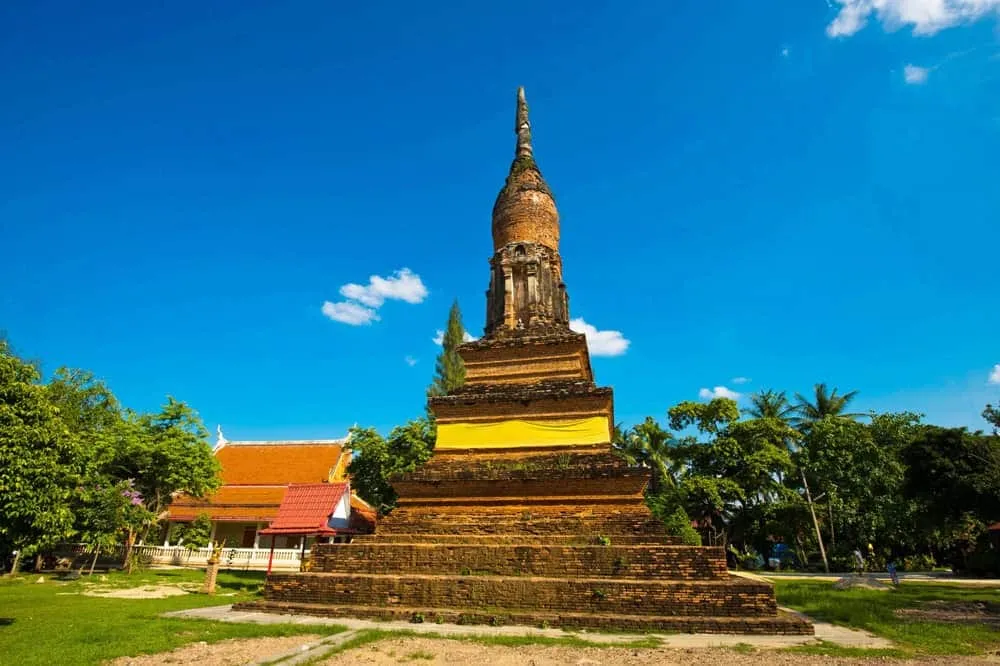
Crowning the summit of Khao Samo Khlaeng, the highest hill in Wang Thong, Chedi Yot Duan is one of Phitsanulok’s oldest monuments — a Sukhothai-era chedi thought to be around 700 years old. Its name, “Yot Duan,” means “broken spire”: where most Thai chedis taper to a fine point, this one ends in a blunt half-dome, an unusual silhouette that has made it a local landmark for centuries. Its full formal name is Phra Maha Chai Chedi Si Samo Khlaeng.
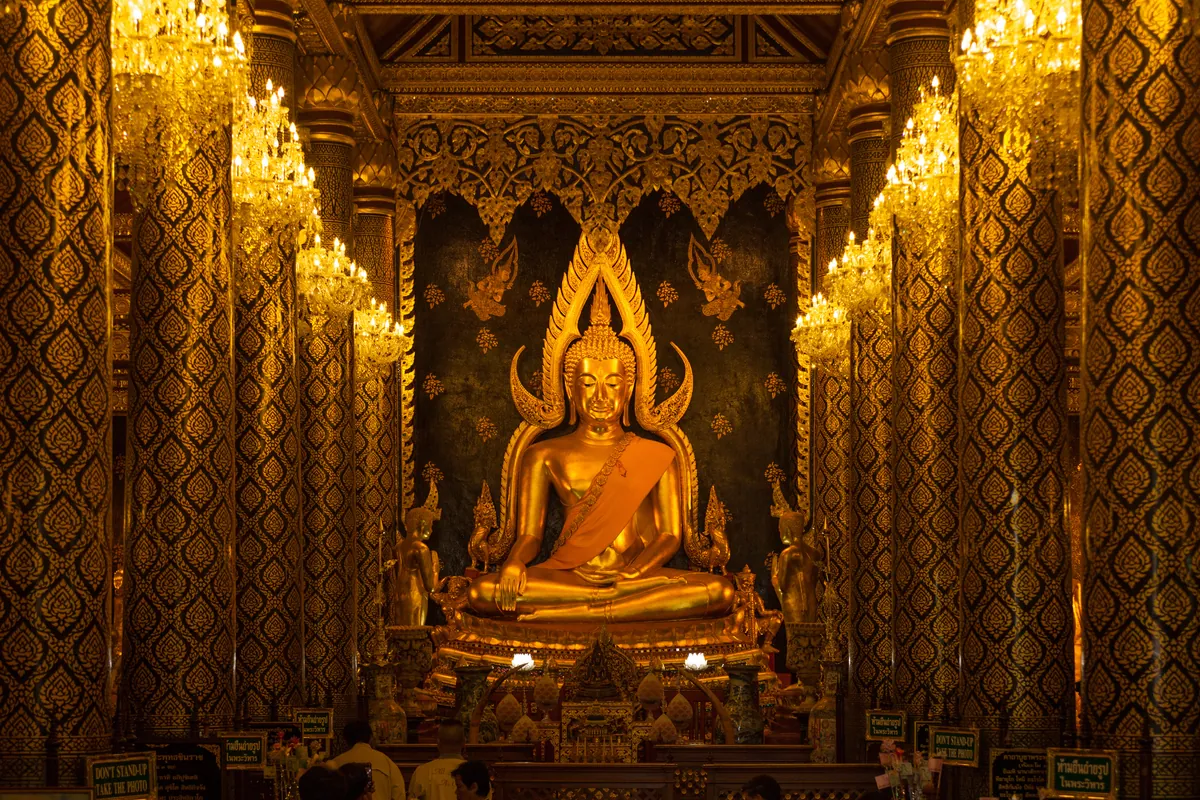
The Northern Chronicles credit its construction to a ruler of Nan, said to have built it to enshrine relics of two arahant monks — Phra Ubali Thera and Phra Siri Mannon Thera — remembered for presiding over the casting of the revered Phra Buddha Chinnarat image in Phitsanulok. The chedi rises in the classic Lankan form: a tiered square base, an octagonal mid-section, and a bell-shaped dome, all weathered by age and repeated restorations.
Khao Samo Khlaeng once held seven temples, drawn to the hill by a year-round natural pool, and the climb still rewards visitors with sweeping views over the Wang Thong countryside toward Phitsanulok city, around 12 km to the west. The summit also carries a 1975 geodetic survey marker, a reminder of the hill’s standing as the area’s high point.
The grounds are open and free to visit. Dress modestly, remove your shoes before entering any shrine building, and keep your head below the Buddha images when seated. Early morning and late afternoon bring the softest light for the views and the most comfortable temperatures for the hilltop climb.
Insider Tip: Combine the hilltop with Namtok Kaeng Song, a rock-shelf waterfall in the same district — both make a half-day loop out of Wang Thong without backtracking through Phitsanulok city.
- Entry fee: Free
- Hours: No set hours — open hilltop site
- Age: Around 700 years, Sukhothai period
- Landmark feature: Blunt “broken spire” instead of the usual tapered chedi point
- Views: Wang Thong countryside and Phitsanulok city, roughly 12 km west
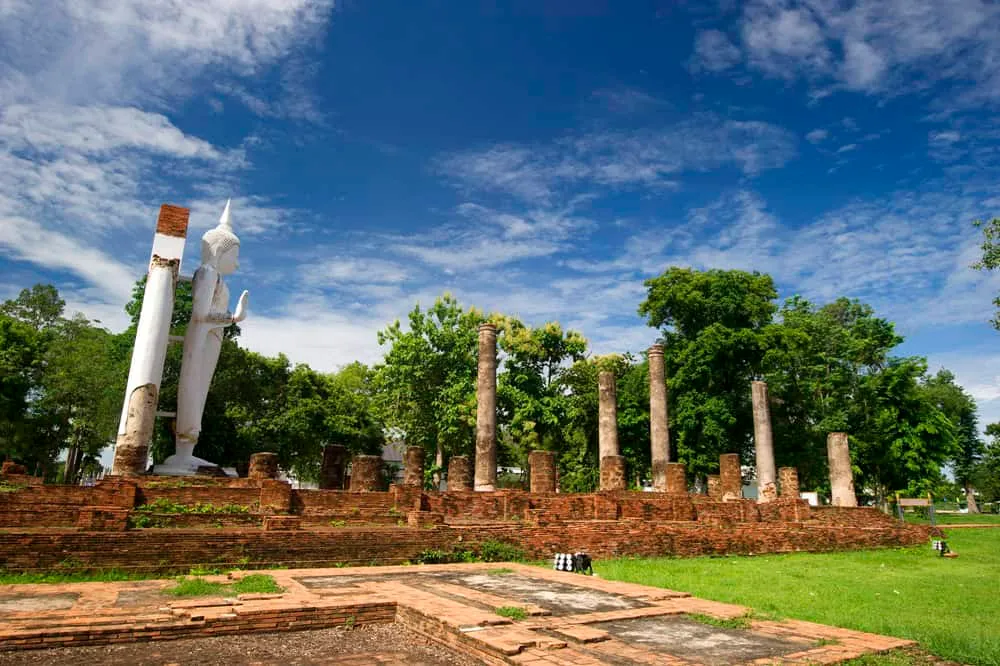
The chedi is one of the few Sukhothai-era monuments accessible on foot within Phitsanulok’s city limits, alongside the excavated foundations of Chan Palace in the city centre — both worth pairing if Sukhothai-period history is the draw of a Phitsanulok stop.
Location & Directions
Wang Thong, Phitsanulok
Phitsanulok, Thailand
Show your taxi or Grab driver
เจดีย์ยอดด้วน
Frequently Asked Questions
Is there an entrance fee for Chedi Yot Duan?
Why is it called the "broken spire" chedi?
How old is Chedi Yot Duan?
What can you see from the summit?
How do you get to the chedi?
Spotted something out of date or incorrect? Let us know
Stay Near Chedi Yot Duan
Live prices for places closest to Chedi Yot Duan — tap a pin to compare.