



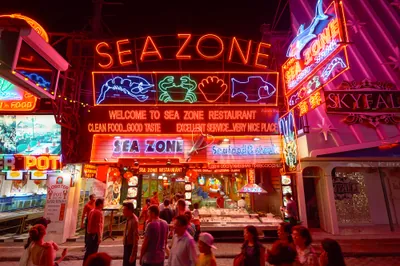



Phuket’s food scene is nothing like the tourist-strip image suggests. Spend your first day in Phuket Old Town eating at a 100-year-old shophouse and you’ll understand why serious food travellers make the island a dedicated culinary stop. The south has its own fiery, coconut-heavy cuisine, and the seafood is as fresh as you’d expect from an island surrounded by the Andaman Sea.
Insider Tip: Plan Old Town for lunch, not late dinner. Raya, Tu Kab Khao, and One Chun do their best trade around midday, while Rawai and Chalong make more sense for a seafood dinner after the beaches.
Quick answer
The best restaurants in Phuket span Raya and Tu Kab Khao for Old Town heritage Thai, Rawai Seafood Market for fresh catches cooked your way, PRU for Michelin-starred farm-to-table, and Tambu for award-winning progressive Indian charcoal cuisine. If you only have one food day, start in Old Town, save Rawai or Chalong for dinner, and skip Patong’s beach-strip restaurants unless you are going specifically to Baan Rim Pa or Tambu.
| Best for | Place | Area | Why pick it | Main tradeoff |
|---|---|---|---|---|
| Classic Phuket crab curry | Raya Restaurant | Old Town | 300–600 THB pp | Busy lunch room; book ahead on weekends |
| Michelin-listed value | Tu Kab Khao | Old Town | 200–300 THB pp | Simple service, not a beach setting |
| Late-night rice porridge | Go Benz Rice Porridge | Old Town | 60–150 THB | Cash only; closed Buddhist holy days |
| Pick-your-own seafood | Rawai Seafood Market | Rawai | Market price + 100–200 THB cooking fee | Prices vary by stall; compare before buying |
| Comfortable bay-view seafood | Kan Eang@Pier | Chalong | 400–800 THB pp | Costs more than Rawai market eating |
| One-star fine dining | PRU at Trisara | Choeng Thale | From 4,500 THB pp (++) | Needs advance reservations and a bigger budget |
| Progressive Indian tasting menu | Tambu | Patong | 1,500–2,000 THB pp | Evenings only; book ahead |
| Cliffside Thai dinner | Baan Rim Pa | Patong Headland | 800–1,500 THB pp | More polished and pricier than local Thai spots |
- Budget local meal: 80–200 THB per dish at hawker stalls
- Mid-range Old Town restaurant: 300–600 THB per person
- Fine dining (PRU tasting menu): from around 4,500 THB per person (++)
- Rawai seafood: 400–1,500 THB/kg from market, plus 100–200 THB cooking fee
- Best area for food: Phuket Old Town and Rawai/Chalong
- Booking: Required for PRU and Tambu; recommended for Raya (accepts email and platform bookings); walk-in fine at most others
- Payment: Cash preferred at hawker stalls and markets; cards accepted at mid-range and above
How we picked these restaurants
This shortlist balances four food trips people actually take: Old Town heritage cooking, southern Thai street food, fresh seafood, and special-occasion dining. Prices are working ranges rather than promises; check the current menu before making a long cross-island journey.
We weighted places that give visitors a clear reason to cross the island: Michelin-listed cooking, long-running local reputation, a distinct neighbourhood, or a dish that explains Phuket’s food culture. The list does not try to cover every good beach restaurant, because the point is to help you choose the meal worth planning around.
Best Restaurants in Phuket Old Town: Heritage Thai Done Right
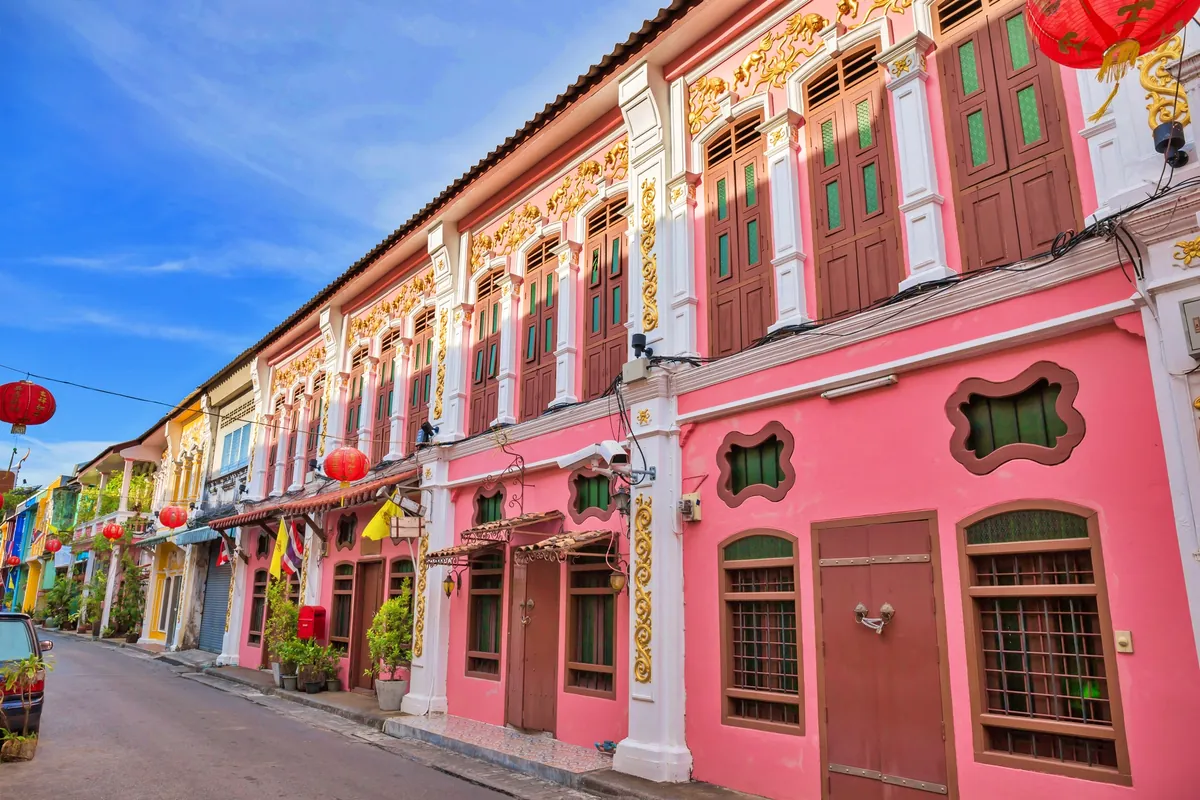
Old Town is where the real Phuket food culture lives. The Sino-Portuguese shophouses date back over a century, and several restaurants in them have been serving the same family recipes for decades.
Raya Restaurant
The most storied restaurant in Phuket Old Town — opened in 1994 by Pa Kularb in a heritage mansion, still filling up at noon every day. Order the kang pu (crabmeat yellow curry over thin rice vermicelli, 400 THB for a small) and the moo hong (slow-braised pork belly with five-spice, 350 THB). Raya held a Michelin Bib Gourmand from 2019–2024 and was removed from the 2026 guide, but the cooking hasn't changed. Book ahead for weekend lunch.
- Area
- Old Town · 48/1 Dibuk Rd, Talat Yai
- Hours
- Daily, roughly 10am–10pm — confirm ahead for weekend lunch
- Price
- 300–600 THB per person
- Go for
- Kang pu (crab curry) with rice vermicelli
Tu Kab Khao
Sits in a grand Chino-Portuguese building on Phang Nga Road and appears in the Michelin Guide. The gaeng som pla (fish in a sharp turmeric-and-tamarind broth) is textbook southern Thai: intensely sour, deeply savoury. The sen mee gaeng poo (crab curry with rice noodles) is 180–250 THB. Simple room, no-frills service, exactly the point.
- Area
- Old Town · 8 Phang Nga Rd, Talat Yai
- Hours
- Daily, roughly 11am–9pm
- Price
- 200–300 THB per person
- Go for
- Gaeng som pla (fish in turmeric-tamarind broth)
One Chun Cafe & Restaurant
A shade more polished than its Old Town neighbours — printed menu, air-conditioning, retro decor with vintage clocks and old radios covering the brick walls. Holds a Michelin Bib Gourmand and works well for first-timers who want an approachable entry into Phuket cuisine. The pad sataw (stir-fried stink beans with shrimp) is the dish to order.
- Area
- Old Town · 48/1 Thepkrasattri Rd, Talat Yai
- Hours
- Daily, roughly 10am–10pm
- Price
- 200–350 THB per person
- Go for
- Pad sataw (stir-fried stink beans with shrimp)
Insider Tip: Raya gets packed from 11:30am to 1pm. Go at 10am for a quiet table or after 2pm when the lunch rush clears. Reservations are now accepted via email and third-party platforms — book ahead, especially for weekend lunch.
- Authentic recipes unchanged for decades
- Old Town setting adds atmosphere
- Tu Kab Khao is exceptionally good value
- Raya can have a wait at peak lunch
- Parking in Old Town is tight; better to walk from a nearby car park or take a grab
Street Food & Hawkers: Go Benz and the Night Markets
Phuket’s street food scene punches well above what most beach resorts manage.
Go Benz Rice Porridge
A Michelin Bib Gourmand winner since 2019 — one of the longest-running on the island. The signature is dry rice soup (joke haeng): whole grains topped with crispy pork, minced pork, offal, and fried garlic. A bowl runs 60–90 THB and is the right call any time from early evening through the small hours. Cash only; closes when the porridge runs out.
- Area
- Old Town · Krabi Rd, Talat Nuea
- Hours
- Evenings until late (from around 5:30pm); closed Buddhist holy days
- Price
- 60–150 THB
- Go for
- Dry rice soup (joke haeng) with crispy pork
The Naka Weekend Market, open Saturday and Sunday near Wirat Hong Yok Road, is the larger weekend street-food sweep. Walk the full length before committing: grilled pork skewers (moo ping), fried taro cakes, oh aew (Phuket’s grass-jelly shaved-ice dessert), and rotating stalls of freshly made roti with banana and condensed milk. For an Old Town evening, Lard Yai runs on Thalang Road on Sundays; Phuket Indy Market is a separate, smaller market at Limelight Avenue.
For deeper local eating, popular Thai food dishes like pad krapow (basil stir-fry) and tom kha (coconut galangal soup) are everywhere, but in Phuket the version to seek out is kaeng massaman — a rich, mild Muslim-influenced curry that reflects the island’s diverse heritage.
Insider Tip: Go Benz is cash only and closes when the porridge runs out. It is an evening-focused restaurant, not a breakfast spot — aim for after 6pm, and later on weekends when the night crowd keeps it going past midnight.
Fresh Seafood: Rawai, Chalong Bay, and Laem Hin
The southern tip of Phuket is where to eat seafood without the tourist markup.
Rawai Seafood Market
Walk the iced-seafood stalls run by the local Chao Ley (sea-gypsy) community, choose your fish, prawns, crab or lobster, then carry your bag to an adjacent restaurant and pay a cooking fee of 100–200 THB/kg. You pick the preparation — steamed with lime and garlic, deep-fried with turmeric, or grilled whole. Prices vary between stalls, so compare two or three before buying.
- Area
- Rawai · Rawai Pier, Wiset Rd, Rawai
- Hours
- Daily, roughly 11am–9pm
- Price
- 400–1,500 THB/kg (market price) + 100–200 THB cooking fee
- Go for
- Pick your own — barramundi grilled whole or tiger prawns steamed with lime and garlic
Kan Eang@Pier
A long-established seafood restaurant on Chalong Bay — nearly 50 years in the same location, with views of the pier and the limestone hills of Phang Nga beyond. The grilled barramundi is 350–450 THB and reliably good. The better choice if you're with children or want a full-service dinner rather than the market experience at Rawai.
- Area
- Chalong · Chalong Bay, Moo 5, Chao Fa Rd
- Hours
- Open daily for lunch and dinner — confirm hours ahead
- Price
- 400–800 THB per person
- Go for
- Grilled barramundi
Laem Hin Seafood
A locals' seafood spot on the waterfront near Leam Hin Pier in Koh Kaew — less known to tourists than the Rawai strip, with brisk lunchtime business from fishermen and residents. The hoy tod (crispy fried mussel pancake) is consistently better than what beach restaurants charge double for. A reliable no-frills option if you're already on the Phuket Town side.
- Area
- Koh Kaew / Phuket Town · 90/10 Thepkrasattri Rd, Ko Kaeo
- Hours
- Daily, roughly 10am–9pm
- Price
- 200–500 THB per person
- Go for
- Hoy tod (crispy fried mussel pancake)
Insider Tip: At Rawai, prices for the same species vary between stalls. Check two or three before buying, confirm whether the quote is per item or per kilogram, and agree the cooking fee separately.
Phuket’s food scene pairs well with its beaches. Read the things to do in Phuket guide if you’re planning a full itinerary around the south.
Fine Dining: PRU, Tambu, and Baan Rim Pa
PRU at Trisara
Phuket's only Michelin-starred restaurant — one star plus a Michelin Green Star for sustainability. PRU stands for Plant, Raise, Understand: the kitchen is supplied by Pru Jampa, the restaurant's own organic farm; seafood comes from Thai fishermen the kitchen has long-term relationships with; the wild honey is sourced from Phuket's forests. Tasting menus run 12–16 courses from around 4,500 THB (++). Reserve well in advance through the Trisara website.
- Area
- Choeng Thale · Trisara Resort, 60/1 Moo 6, Srisoonthorn Rd
- Hours
- Dinner Tue–Sat; lunch Fri–Sat only. Closed Sun–Mon
- Price
- From 4,500 THB per person (++)
- Go for
- The full tasting menu — farm-sourcing changes seasonally
Tambu
Named Asia's Best New Restaurant at the World Culinary Awards 2024 and listed in the Michelin Guide. Chef Saurabh Sachdeva (Iron Chef Thailand winner) serves progressive Indian charcoal cuisine in a rooftop tented-palace setting inspired by Mughal court cooking. The 8-course tasting menu runs around 1,500–2,000 THB. Book at least two weeks out.
- Area
- Patong · Avista Hideaway Phuket Patong, 39/9 Muen Ngern Rd, Patong
- Hours
- Evenings only — confirm current service days on booking
- Price
- 1,500–2,000 THB per person
- Go for
- 8-course tasting menu
Baan Rim Pa
Phuket's long-running upscale Thai institution since 1991 — on a cliff above Patong Bay, every table looks out over the Andaman Sea. The tom yum goong here is the refined version of what tourists think they've eaten everywhere else. Mains range from 450–1,200 THB. Grand piano and pianist nightly. The better choice than Patong's beach strip for a proper sit-down dinner.
- Area
- Patong Headland · 249/4-5 Prabaramee Rd, Kalim, Patong
- Hours
- Daily, noon-11pm; kitchen closes at 10pm
- Price
- 800–1,500 THB per person
- Go for
- Tom yum goong
Insider Tip: PRU requires a reservation well in advance — the restaurant has limited covers and fills on weekdays as well as weekends. Email or book through the Trisara website rather than third-party platforms.
Quieter Beaches: Kata and Karon Alternatives
Kata and Karon sit between the Rawai seafood south and Patong’s chaos to the north, and they’ve quietly developed a decent mid-range dining scene.
For Thai, the small restaurants along the back roads behind Kata Beach serve reliable som tam (green papaya salad), pad thai, and grilled fish at 100–200 THB per dish without the beach-view premium.
The Boathouse Restaurant
A long-running Kata Beach restaurant with tables beside the sand and views across the bay. The menu covers southern Thai and international dishes, while the wine cellar gives the sommelier plenty of pairing options. Come for the beachfront setting rather than a fixed tasting-menu experience.
- Area
- Kata Beach · Boathouse Hotel, 182 Koktanode Rd, Kata Beach
- Hours
- Daily for lunch and dinner
- Price
- 800–1,500 THB per person
- Go for
- Ask the sommelier for a pairing from the wine cellar
If you’re visiting with children, the best family resorts in Phuket often have on-site restaurants that work better than driving across the island at meal times — worth factoring in when booking accommodation. At the top end, our luxury hotels in Phuket shortlist compares the 5-star beach resorts beach by beach.
How to choose where to eat in Phuket
Get a local SIM or eSIM first. Maps and translation apps save you significantly when navigating Old Town and the night markets. The best eSIM for Thailand options are available before you land and cost around 300–500 THB for a week of data.
Choose lunch or dinner by restaurant. Raya is busiest around lunch, while Tu Kab Khao and One Chun also serve into the evening. One Chun currently lists daily service from 10am to 10pm, but check before making a special journey.
Cash at hawker stalls, cards everywhere else. Markets and street vendors are cash-only. Mid-range restaurants accept cards but occasionally add a 2–3% fee for international cards. Withdraw cash at one of the ATMs in Old Town before heading to Rawai.
Check transport before crossing the island. Phuket is large and journey times change sharply with traffic. Compare the live Grab or taxi fare before leaving; if you rent a scooter, confirm the current daily rate, insurance terms, licence requirements, and helmet provision with the operator.
Ask for the spice level honestly. Southern Thai food is the spiciest regional cuisine in Thailand. Pet nit noi (a little spicy) still means significant heat by most international standards. Mai pet (not spicy) is your safer starting point at places like Tu Kab Khao.
9Verdict: Phuket’s dining scene rewards travellers who move past the beach-resort restaurants and into Old Town. Tu Kab Khao and Go Benz appear in the Michelin Guide, Raya remains a long-running local institution, and PRU covers the special-occasion end of the range. Eat in Old Town, compare seafood prices at Rawai, and save PRU for a planned dinner. Rating: 9/10