




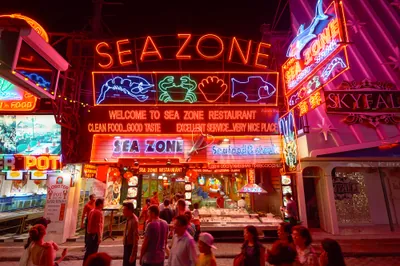



Phuket’s street food reflects southern Thai, Hokkien Chinese and Peranakan influences. Local dishes include moo hong braised pork, Hokkien noodles, o-tao and a-pong. For more on the island, see the Phuket guide and our popular Thai food guide.
The top Phuket street food spots: Lock Tien and Mee Ton Poe for Hokkien noodles and moo hong in the Old Town; Lard Yai Sunday Market for the widest variety; O Tao Bang Niao for a Michelin-noted taro cake; Boon Rad for early-morning dim sum.
- Best street food area: Phuket Old Town (Thalang Road, Dibuk Road, Phang Nga Road)
- Prices: Check displayed prices before ordering
- Lard Yai Sunday Market: Sunday evenings on Thalang Road
- Naka Weekend Market: Weekend market from 4pm; confirm the closing time
- Payment: Carry cash as a backup; acceptance of Thai QR payments varies
- Getting there: Grab (ride-hailing app) to Old Town is the easiest option; no dedicated parking on Thalang Road during the market
- Dress code: None, but lightweight clothes and comfortable shoes are advisable — it gets warm in a packed street market
Quick answer
Start with Lock Tien in Old Town for the strongest all-round pick. Use Mee Ton Poe for Hokkien noodles, Boon Rad Dim Sum for dim sum, and A-Pong Mae Sunee when Bib Gourmand street food matters most.
| You want | Go to | Area / Price |
|---|---|---|
| Hokkien noodles (Hokkien mee) | Lock Tien | Old Town / confirm hours |
| Hokkien noodles near the clock tower | Mee Ton Poe | Phuket Road / daytime |
| O-tao | O Tao Bang Niao | Phuket Road / evening |
| Early-morning dim sum | Boon Rad Dim Sum | Old Town / confirm hours |
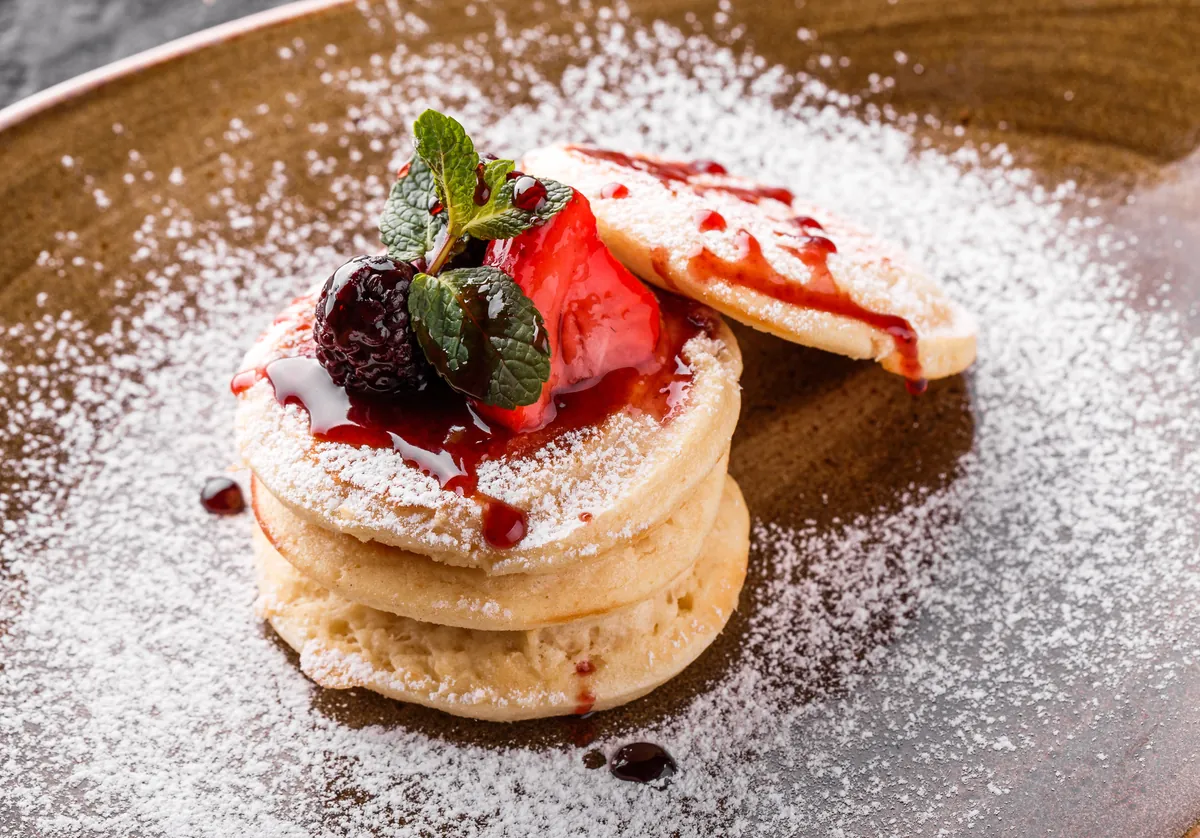
| A-pong coconut pancakes | A-Pong Mae Sunee | Old Town / morning |
| Sunday market browse | Lard Yai Sunday Market | Thalang Road / Sunday evening |
| Big weekend browse | Naka Weekend Market | Near Central Phuket / from 4pm |
How we picked these food stops
We checked operator and Michelin Guide listings for addresses, opening days and defining dishes. Prices and historical claims are omitted where a dependable current or primary source was not available.
Street food in Phuket Old Town
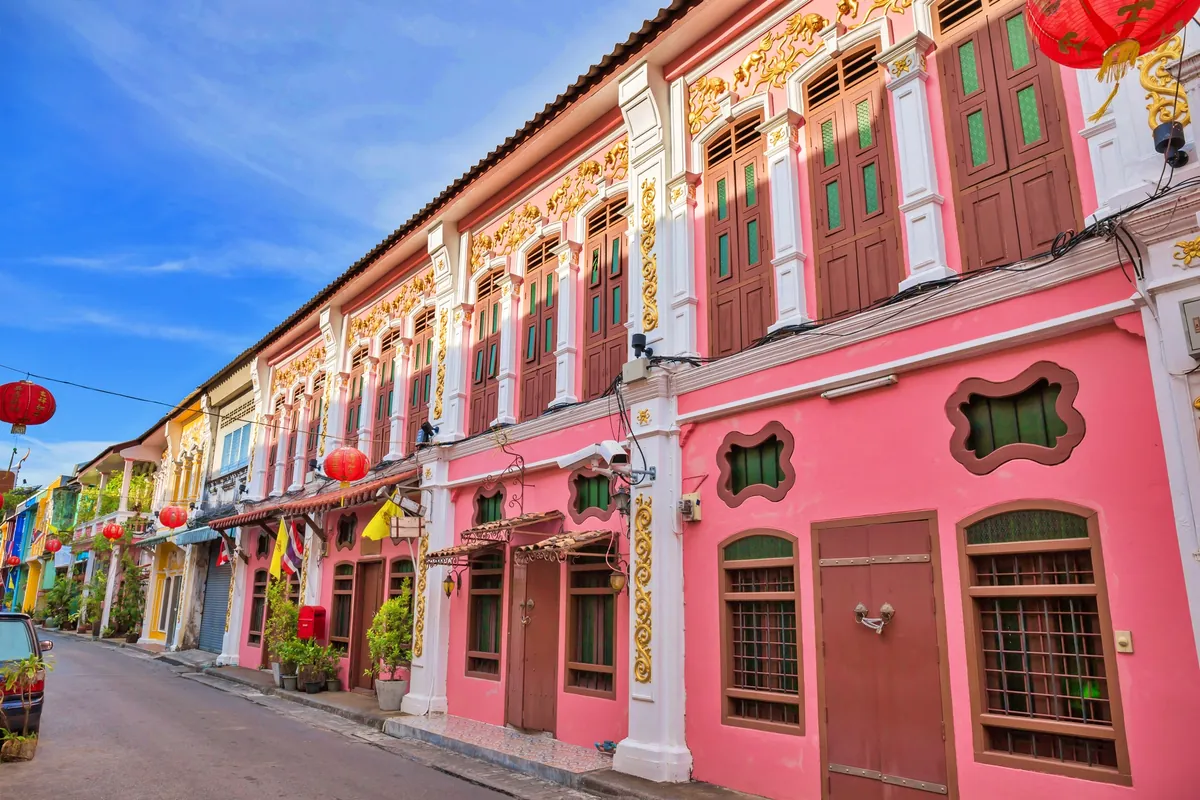
Old Town is where the island’s Hokkien Chinese food heritage is most concentrated. The shophouse streets — Thalang, Dibuk, Phang Nga, Yaowarat — hold restaurants that have been run by the same families for three or four generations. Many open for breakfast and lunch only, so an early start pays off.
Lock Tien
An Old Town food court known for Phuket-style Hokkien noodles and other local dishes. Published hours vary, so confirm before making a special trip.
- Area
- Old Town · 59/14 Bangkok Rd, Talat Nuea
- Hours
- Roughly 9am–5pm; confirm before visiting
- Price
- Check the current menu
- Go for
- Hokkien mee (wide yellow noodles, barbecue pork, squid)
Mee Ton Poe
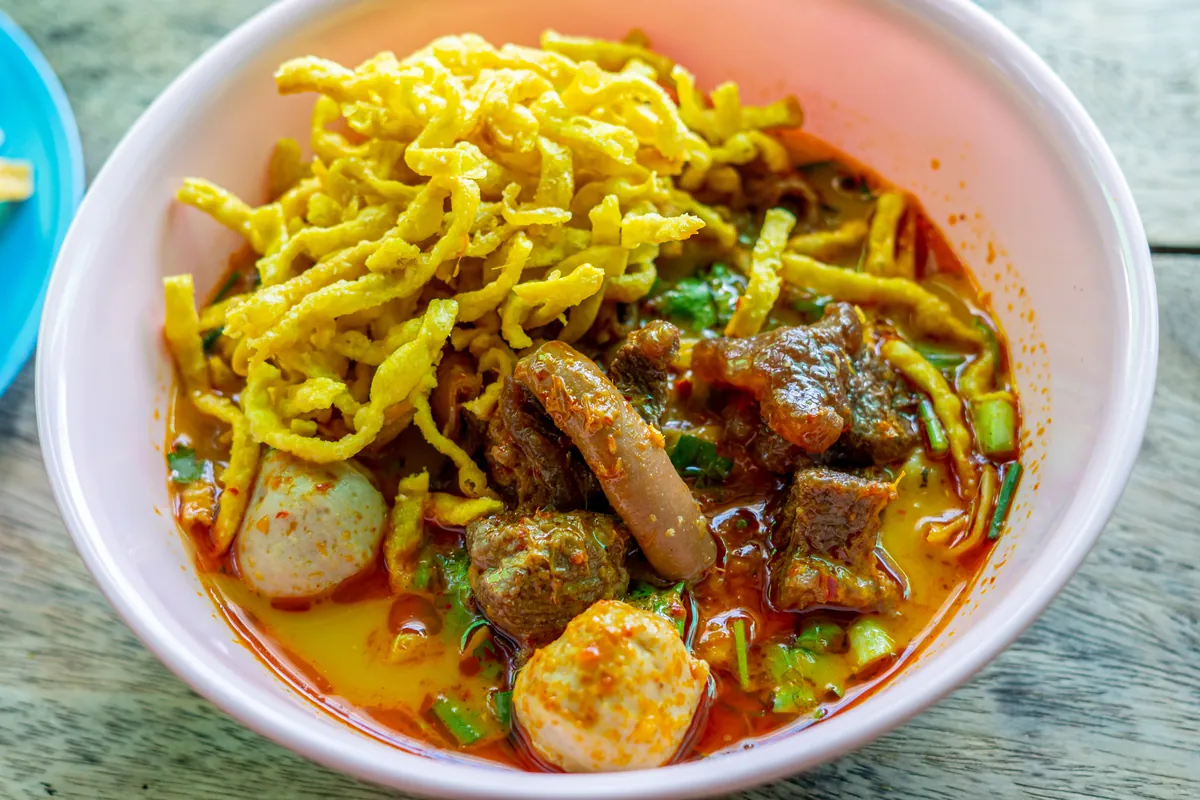
The Phuket Road branch near the clock tower serves thick yellow Hokkien noodles with seafood, pork and vegetables. Confirm the day's closing time before a late visit.
- Area
- Old Town · 9/109 Phuket Rd, Talat Yai
- Hours
- Daily 10am–6pm; confirm closing time
- Price
- Check the current menu
- Go for
- Hokkien mee with a half-cooked egg
Practical point: Several Old Town specialists close during the afternoon. Check the day’s hours before building a route around one shop.
- Concentrated choice of Phuket, Hokkien Chinese and Peranakan dishes
- Several specialist shops within the wider Old Town area
- Many Old Town restaurants close by 2 PM or 3 PM
- Parking is genuinely difficult on weekends; Grab is less stressful than driving
Lard Yai Sunday Walking Street (the big one)
Every Sunday evening, Thalang Road hosts Lard Yai Walking Street with food, crafts and performances. Confirm the current closing time before travelling.
Offerings change by week, but local sweets, grilled food, noodles and southern dishes are common. Check prices at the stall before ordering.
A-Pong Mae Sunee
A permanent stall on Yaowarat Road recognised in the 2026 Michelin Guide with a Bib Gourmand. Khanom a-pong are small coconut pancakes cooked over charcoal in cast-iron moulds — crispy at the edges, soft in the centre. She also sets up at the Sunday Lard Yai market, but the Yaowarat stall is open daily and the more reliable option.
- Area
- Old Town · 99 Soi Soon Uthit, Yaowarat Rd
- Hours
- Daily 9am–2pm (or until sold out)
- Price
- Check the current price
- Go for
- A-pong coconut pancakes (khanom a-pong)
Arriving near the start can make browsing easier. The Phuket nightlife guide covers later options, but confirm venue hours before pairing stops.
Walk the market once before ordering if you want to compare dishes and prices.
Dim sum and the Hokkien breakfast culture
Phuket’s morning food culture is Chinese in origin and the dim sum tradition runs deep. Several shophouses in Old Town open at 6 AM or 7 AM for working locals, and the food is eaten fast and cheap.
Boon Rad Dim Sum
An early-morning dim sum shop on Bangkok Road serving steamed dumplings, sticky rice and salapao buns. Current hours and prices are not published reliably, so confirm before an early visit.
- Area
- Old Town · 26/41 Bangkok Rd, Talat Nuea
- Hours
- Confirm the current early-morning schedule
- Price
- Check the current menu
- Go for
- Steamed dumplings and barbecue pork buns (salapao)
Go La
A Michelin Guide-listed noodle shop on Kra Road. Hokkien mee is the main order; the current listing gives Tuesday to Sunday hours from 11am to 8pm.
- Area
- Old Town · 11 Kra Rd, Talat Yai
- Hours
- Tue–Sun 11am–8pm; closed Monday
- Price
- Check the current menu
- Go for
- Hokkien mee with an extra egg
Both of these sit within a short walk of each other in Old Town, making a morning dim sum run followed by lunch noodles a logical pairing. A luxury hotel base in Phuket makes the early-morning market runs easier — many are a quick Grab ride from Old Town.
Insider Tip: Phuket dim sum is lighter and less rich than Hong Kong-style dim sum. The steamed varieties tend to be better than the fried ones at most Old Town shophouses. If you see kanom jeen nam ya (rice noodles with fish curry sauce) on the menu at a dim sum stall, order it — it’s a southern Thai addition to the menu that doesn’t exist in the north.
O-tao, loba, and the dishes that don’t travel
The most interesting things to eat in Phuket are the dishes you simply won’t find anywhere else. They’re all connected to the island’s Hokkien Chinese heritage and they show up at stalls and small restaurants across Old Town.
O Tao Bang Niao
A Michelin Guide-listed shop for o-tao: taro, seafood and egg cooked on a griddle and commonly served with pork crackling. The current listing gives daily hours from 4pm to 11pm.
- Area
- Bang Niao / Phuket Rd · 362 Phuket Rd, Talat Yai
- Hours
- Daily 4pm–11pm
- Price
- Check the current menu
- Go for
- O-tao (taro and seafood on a griddle, pork crackling)
Loba Bang Niao
A Michelin Guide-listed shop on Mae Luan Road for loba: fried pork offal and tofu served with a five-spice sauce. The current listing gives daily hours from 10:30am to 5pm.
- Area
- Bang Niao · 18/61 Mae Luan Rd, Talat Nuea
- Hours
- Daily 10:30am–5pm
- Price
- Check the current menu
- Go for
- Mixed loba (pork offal, tofu, five-spice sauce)
Mee sua — thin wheat vermicelli in a clear broth — is the lighter counterpoint to the richer Hokkien noodle dishes. Several Old Town restaurants include it on their morning menus.
Khao Tom Thanon Di Buk
A Michelin Bib Gourmand morning restaurant on Dibuk Road serving mee sua and rice porridge. It currently opens Friday to Tuesday from 6am to 1pm and closes Wednesday and Thursday.
- Area
- Old Town · 72/14 Dibuk Rd, Talat Yai
- Hours
- Fri–Tue 6am–1pm; closed Wednesday and Thursday
- Price
- Check the current menu
- Go for
- Mee sua (thin wheat vermicelli in clear broth)
These dishes are useful introductions to Phuket’s local food traditions. Families can stay near Old Town — see family resorts in Phuket — and visit in the morning or evening. See rooftop bars in Phuket for later options, noting that several independent venue statuses need confirmation.
Naka Weekend Market and the beach-town alternatives
Naka Weekend Market operates on Saturday and Sunday from 4pm. The operator’s own pages disagree on closing time, so confirm before a late visit.
Naka combines prepared food with clothing and general-goods stalls. The selection and crowd level vary by evening, so browse first and check displayed prices.
Beach areas such as Patong also have evening food carts and small restaurants. Selection, prices and opening times vary more than at the named Old Town specialists.
Connecting the island is easier with a data connection — the best eSIM for Thailand lets you use Grab anywhere on the island without hunting for WiFi.
How to choose where to eat in Phuket
Timing matters. Old Town stalls run morning through to early afternoon — much of the best food is gone by 2 PM. Sunday market starts at 4 PM. If you’re staying near the beaches, build at least one full morning around a trip to Old Town.
Carry cash as a backup. Payment methods vary, and some vendors accept Thai QR payments.
Plan transport. Road closures affect Old Town on market evenings. Arrange a taxi or ride-hailing pickup and confirm the fare.
Order what’s popular. If a dish is nearly sold out, that’s the one to get. If a stall has a laminated menu in four languages, that’s a sign to look at the stall next door.
Ask about spice. Southern Thai food defaults to hot. For anything with curry paste or sauce, say “mai pet nit noi” (a little less spicy) or “mai pet” (not spicy) if you’re heat-averse.
For broader Phuket dining beyond street food — rooftop spots, seafood restaurants, craft coffee — the best restaurants in Phuket guide covers sit-down options across the island, and best cafes in Phuket has the coffee-shop scene. Both are useful complements to a street food itinerary.
Phuket Old Town is the most useful base for comparing local noodle, dim sum and Peranakan-influenced dishes. Check opening days carefully: several specialists are daytime businesses, while Lard Yai runs on Sunday evening only.