

Ban Tha Pai Tourism Community Mae Hong Son Province
ชุมชนท่องเที่ยว OTOP นวัตวิถี บ้านท่าปาย
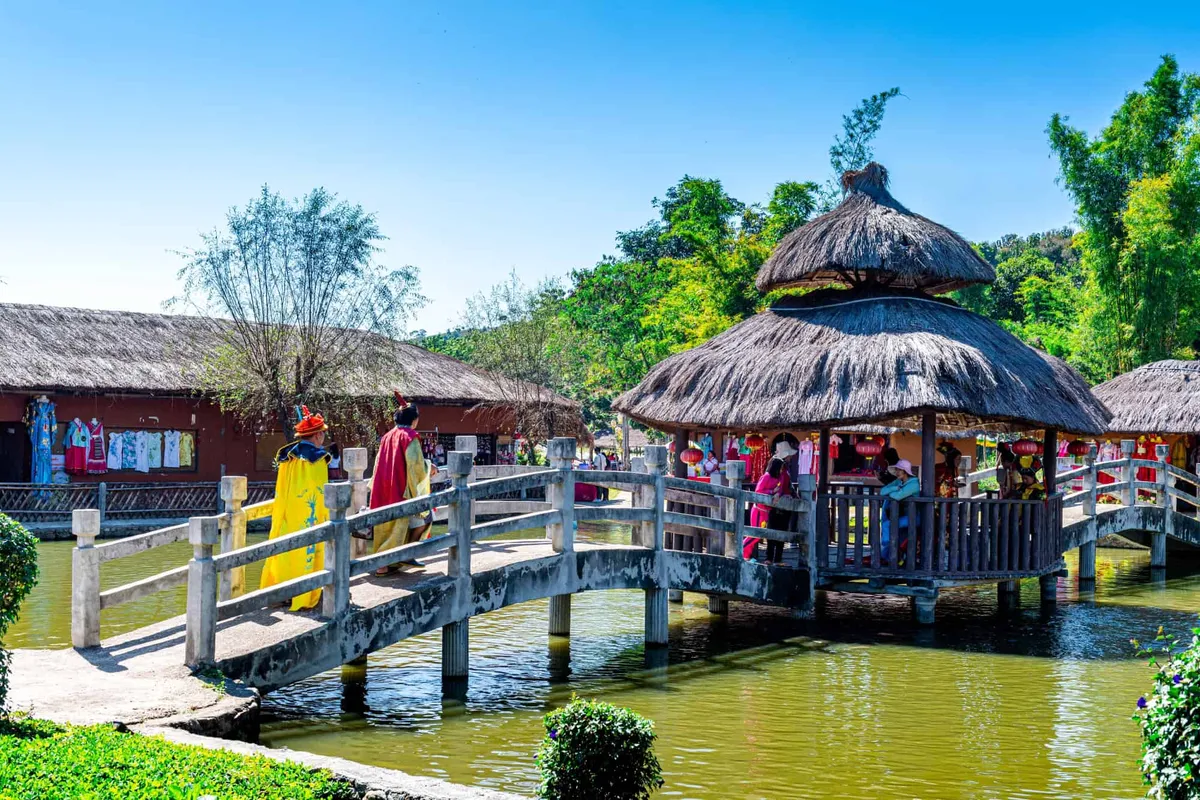
Ban Tha Pai is Village 3 of Tambon Mae Hi, a farming community about 3 kilometres from Pai town along the road toward the hot springs, settled by Shan (Tai Yai) and Khon Mueang (northern Thai) families. Registered under Thailand’s OTOP Nawatwithi community-tourism scheme, the village gives visitors a look at rural northern life — rice cultivation, bamboo craft, small-scale weaving — without a packaged-tour structure built around it. Walking the village is free.
The centrepiece for most visitors is the Tha Pai Memorial Bridge, an iron bridge built during the Second World War when Japanese forces used the route to move supplies toward Myanmar; the original wooden structure has since been rebuilt, but it remains a working crossing and a common photo stop. Around the village, small OTOP stalls sell bamboo baskets, woven textiles, and local produce directly from the people who make them — prices are modest and bargaining isn’t really the custom here. The Nawatwithi model behind the project deliberately keeps commerce inside the village rather than routing it through Pai’s tourist strip: income from workshops, homestays, and craft sales stays with the families hosting them rather than passing through a middleman operator.
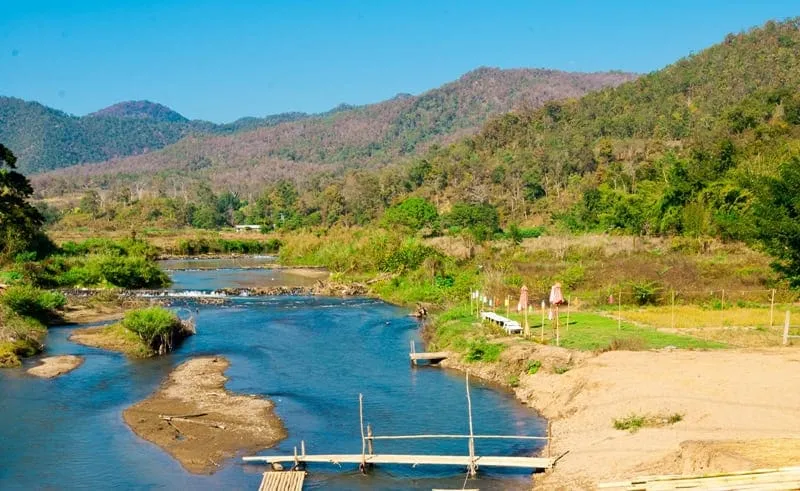
Two of the area’s more-visited sites sit a short distance further along the same road, not inside the free village area itself. Tha Pai Hot Springs, a geothermal site inside Huai Nam Dang National Park, has source pools reaching 80–100°C that cool to bathing temperature in the designated pools; entry runs a separate national park fee (around 300 THB for foreign visitors, 50 THB for Thai nationals), open roughly 06:00–18:00 daily. Maenam Pai runs alongside the village, and bamboo rafting trips on the river are arranged through community contacts or Pai-based operators for a gentle look at the valley from the water.
Insider Tip: Visit in the late morning, after the overnight cool has burned off but before the hot-spring day-trippers arrive from Pai — the village lanes are quieter and stallholders have more time to talk about what they’re making.
Watch out: There’s no fixed opening schedule or ticket booth for the village itself — it’s a working community, not an attraction with staffed hours. Turning up without arranging a guide in advance through Pai means a self-directed walk rather than a hosted visit.
The cooler dry season, November to February, is the most comfortable time for walking the lanes and the riverside. Getting here is easiest by rented motorbike or songthaew from Pai town; there’s no scheduled public transport running this specific stretch of road.
- Entry fee: Free to walk the village
- Distance from Pai town: About 3 km
- Landmark: WWII-era Tha Pai Memorial Bridge
- Nearby (separate fee): Tha Pai Hot Springs, ~300 THB foreigners
- Best season: November–February
Location & Directions
Moo 3, Tambon Mae Hi, Amphoe Pai, Mae Hong Son.
Pai, Thailand
Show your taxi or Grab driver
ชุมชนท่องเที่ยว OTOP นวัตวิถี บ้านท่าปาย
Frequently Asked Questions
Who lives in Ban Tha Pai?
Is it free to visit Ban Tha Pai?
How far is Ban Tha Pai from Pai town?
Are the hot springs part of the village visit?
What can I actually do in the village?
Spotted something out of date or incorrect? Let us know
Stay Near Ban Tha Pai Tourism Community Mae Hong Son Province
Live prices for places closest to Ban Tha Pai Tourism Community Mae Hong Son Province — tap a pin to compare.