




Pai Canyon
ปายแคนยอน
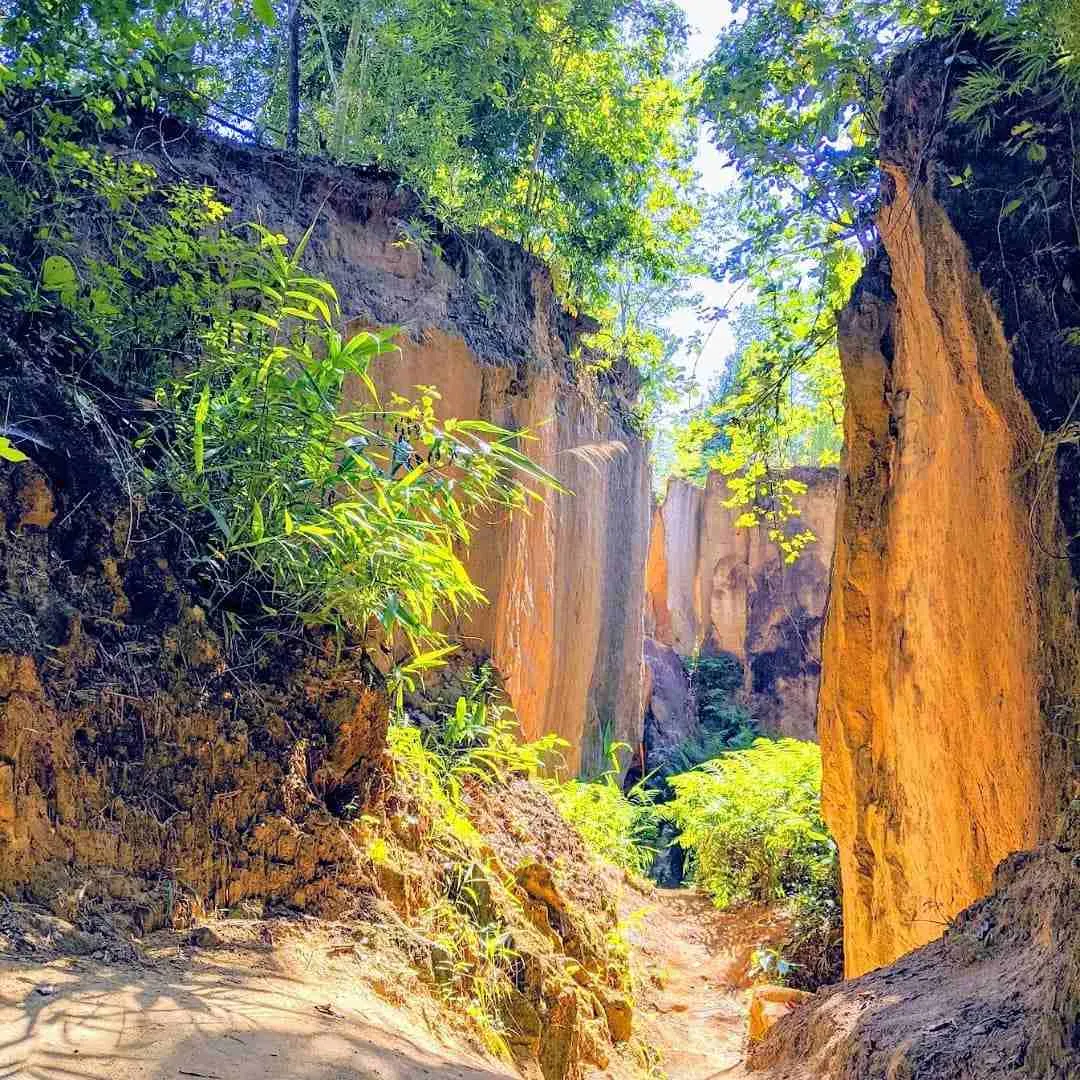
Pai Canyon — known locally as Kong Lan — sits 8 km south of Pai town on Highway 1095, carved into the hillside by centuries of erosion into a series of narrow sandstone ridges above the valley floor. It’s not large by canyon standards anywhere in the world, but the narrowness is the point: some trails are barely half a metre wide, with unguarded drops of around 30 metres on either side, and the valley views stretch to the hills of Mae Hong Son Province.
Entry is free. A handful of vendors at the trailhead sell cold drinks, snacks, and the occasional rain poncho, so there’s no need to arrive loaded up. The first viewpoint is a short, steep climb up concrete steps from the car park — five minutes, manageable for most people, and the views from this platform justify the trip on their own. Beyond the platform is where things get serious.
- Entry fee: Free (as of mid-2025; check locally as fees at smaller sites can change)
- Hours: Open all day (no gates or official close time)
- Difficulty: First viewpoint — easy. Ridge trails — moderate with exposure; no railings
- Footwear: Closed shoes required. Flip-flops and sandals are hazardous on the ridges
- Getting there: 8 km south of Pai on Highway 1095; 10-15 min by scooter or songthaew
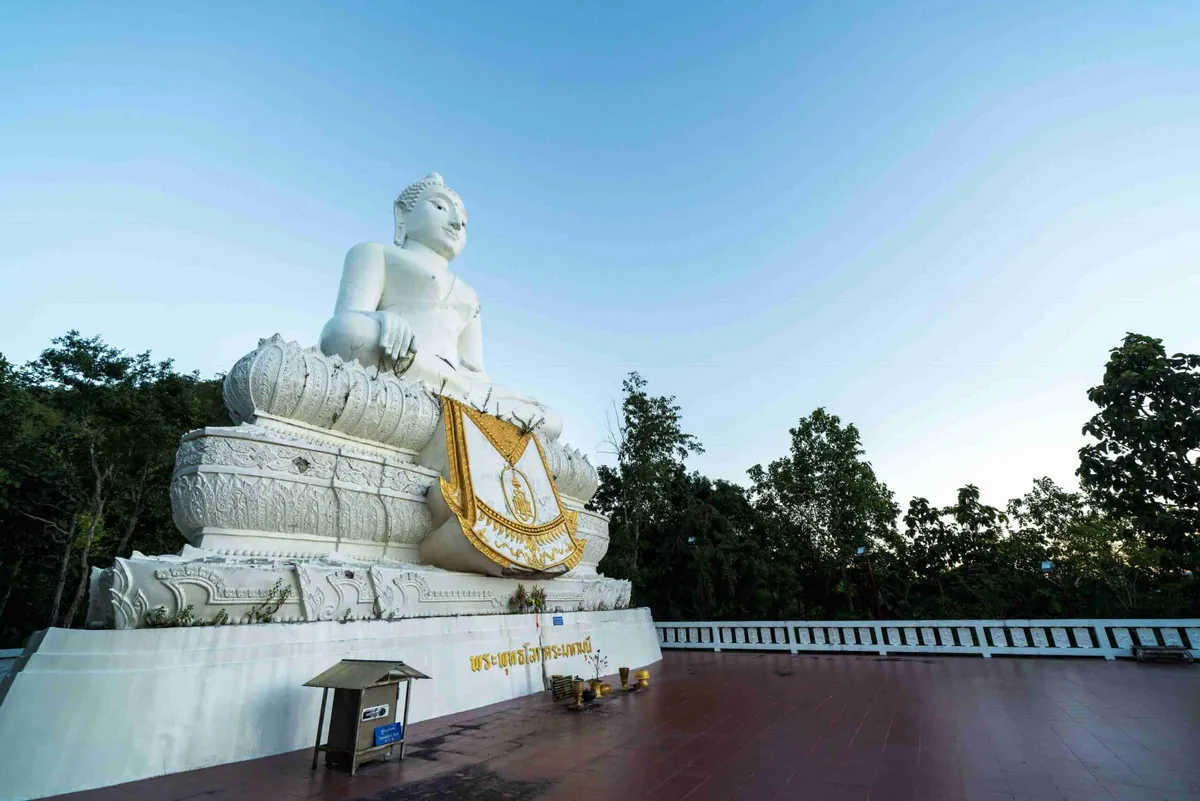
- Best time: Sunset (arrive 30-45 min early) or early morning (cooler, no crowds)
- Avoid: February–April burning season — valley fills with agricultural smoke haze
The Ridge Trails
The trails beyond the first platform weave along the spine of the canyon in a rough loop. The terrain is compacted dirt and loose sandstone — good traction in dry conditions, genuinely slippery after rain. Drops fall away on both sides: not a theatrical cliff, but enough that a stumble carries real consequences. There are no barriers anywhere along the trail once you leave the main platform, which is either exhilarating or sobering depending on your relationship with heights.
Go slowly, especially on the narrower sections, and give way to people coming the other direction without rushing. The loop takes around 45 minutes to an hour at a comfortable pace, longer if you stop to photograph. The dusty golden ridgeline photographs well in both the warm morning light and the long shadows of late afternoon.
Safety Tip: Children and anyone uncomfortable with unguarded heights should stay at the main viewpoint platform. The trails are not fenced or supervised. If the path feels precarious, it is — trust that instinct and turn around. After rain, skip the ridges entirely.
Sunset and the Crowd Question
Sunset is the defining Pai Canyon experience and the reason the site gets busy. On a clear evening from December to February, the western sky turns orange and pink behind the silhouetted ridgeline, and the valley below shifts from green to gold. It’s legitimately good.
The catch is that every other traveller in Pai has the same idea. The main viewpoint platform fills completely during peak season (December–February). Arrive 30 to 45 minutes before sundown to get a decent position, or walk further along the ridge trails to find a quieter spot with equally good angles. The early-evening light rewards patience.
Insider Tip: If you want the canyon mostly to yourself, come at 08:00. The light is softer than midday, the temperature is 5-8°C cooler, and the only company you’ll have is a few birds and the occasional monk from a nearby temple.
Getting There and Around
From Pai town, head south on Highway 1095 toward Mae Hong Son. The Pai Canyon car park and trailhead appear on the right after 8 km, clearly signed. By scooter it’s a straightforward 15-minute ride — scooters rent for around 150-200 THB per day in Pai town, and the road is well-surfaced. Songthaew (shared red truck taxis) can drop you at the site, though agreeing a return pickup is wise given the limited traffic.
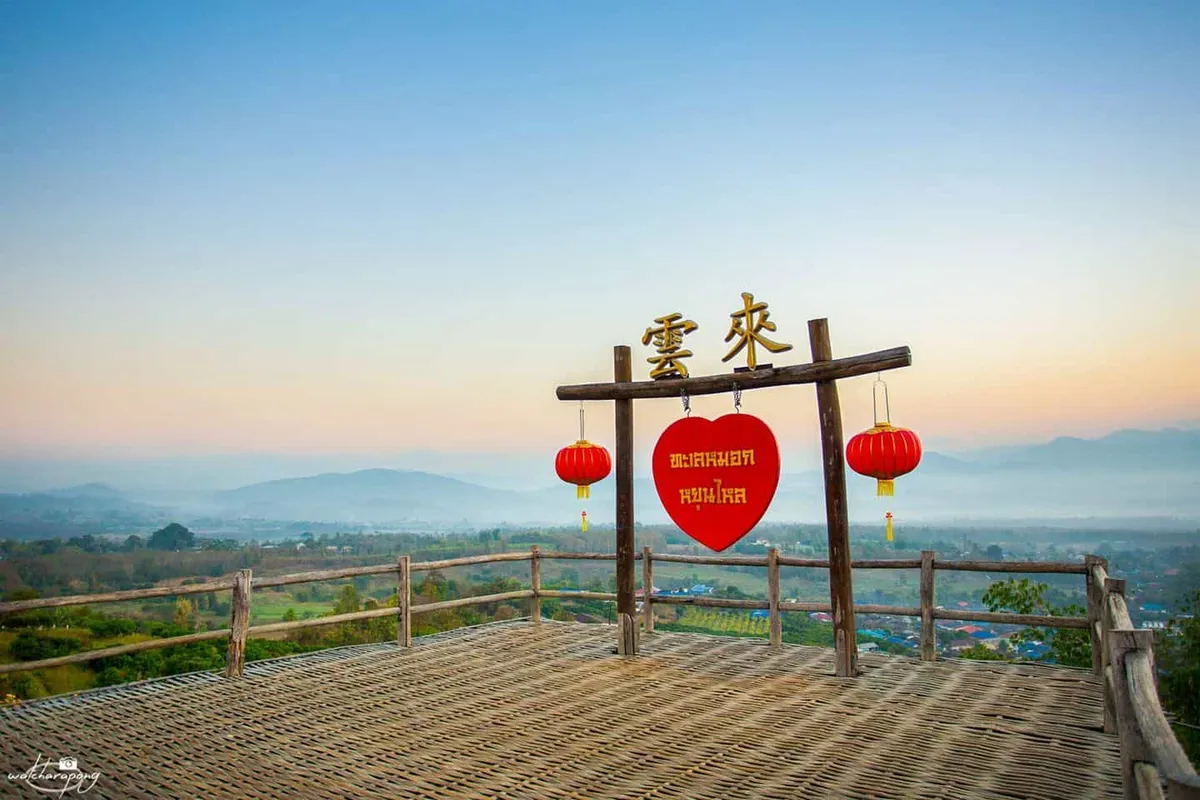
Combine the canyon with other nearby sights: Yun Lai Viewpoint, which looks down over a sea of clouds in the cool season, is about 15 km northwest of Pai, and the Tha Pai Hot Spring is a popular afternoon stop on the way back into town. The Pai Walking Street runs Friday through Sunday evenings and pairs naturally with a canyon sunset as a half-day loop.
The nearest reference point back in Pai is the town itself, which has a growing number of cafes, guesthouses, and live-music bars concentrated around the main walking street.
Seasons and Visibility
The canyon looks completely different depending on when you visit. November through February brings cool, clear weather with sharp visibility across the valley — this is the undisputed best period. March and April can be hazy from agricultural burning across northern Thailand; on bad days, the Mae Hong Son hills disappear entirely behind a white-grey curtain and the sunset turns muted and monochrome.
The rainy season (June–October) brings a different reward: the valley greens up dramatically, mist drifts through the ridges in the morning, and crowds thin out. The ridge trails get slippery and some sections become genuinely hazardous in wet conditions — stick to the viewpoint platform if there’s been recent rain.
Location & Directions
Mae Hi, Pai District, Mae Hong Son 58130
Pai, Thailand
Show your taxi or Grab driver
ปายแคนยอน
Frequently Asked Questions
Is Pai Canyon free to enter?
How far is Pai Canyon from Pai town?
Is Pai Canyon safe to hike?
What is the best time to visit Pai Canyon?
When should I avoid visiting Pai Canyon?
Spotted something out of date or incorrect? Let us know
Stay Near Pai Canyon
Live prices for places closest to Pai Canyon — tap a pin to compare.