




Wat Thai Watthanaram (Wat Mae Tao Ngiao or Wat Thai Yai)
วัดไทยวัฒนาราม (วัดแม่ตาวเงี้ยว หรือวัดไทยใหญ่)
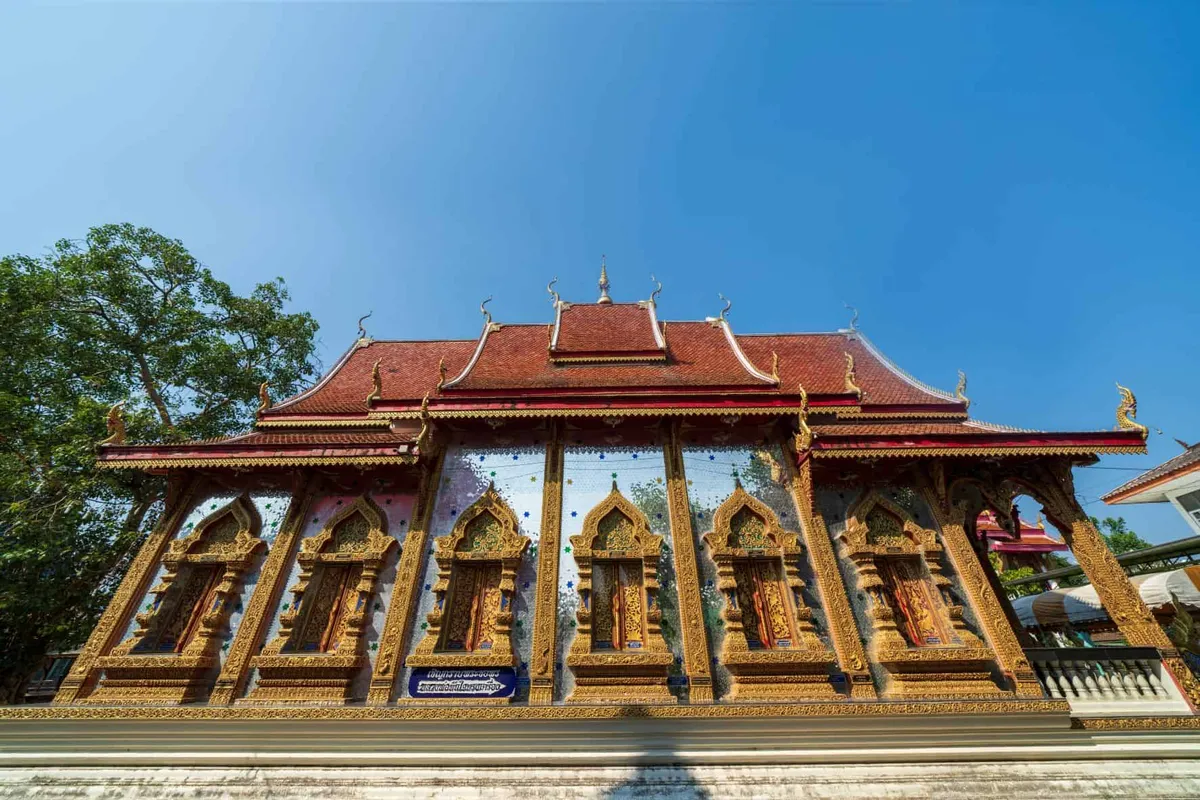
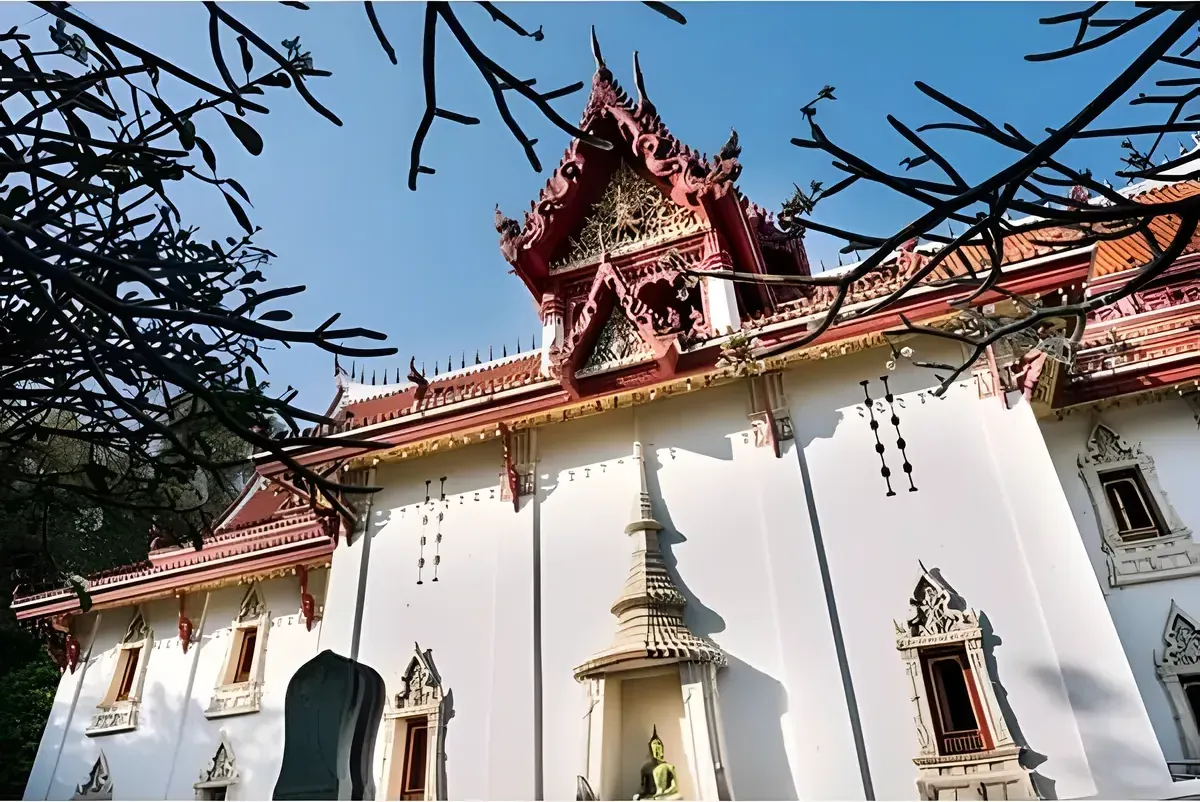
Wat Thai Watthanaram carries three names because three groups of people have claimed it as their own: the formal Thai name on its registration, “Wat Mae Tao Ngiao” among older Mae Sot residents, and “Wat Thai Yai” for the Tai Yai (Shan) community from Myanmar who built and still run it. A Shan settler named Mung founded the temple in 1857 after migrating from Shan State with his family, and it’s remained a Shan cultural anchor in this Thai-Myanmar border town ever since. Entry is free, and the grounds are open daily from 08:00 to 17:00.
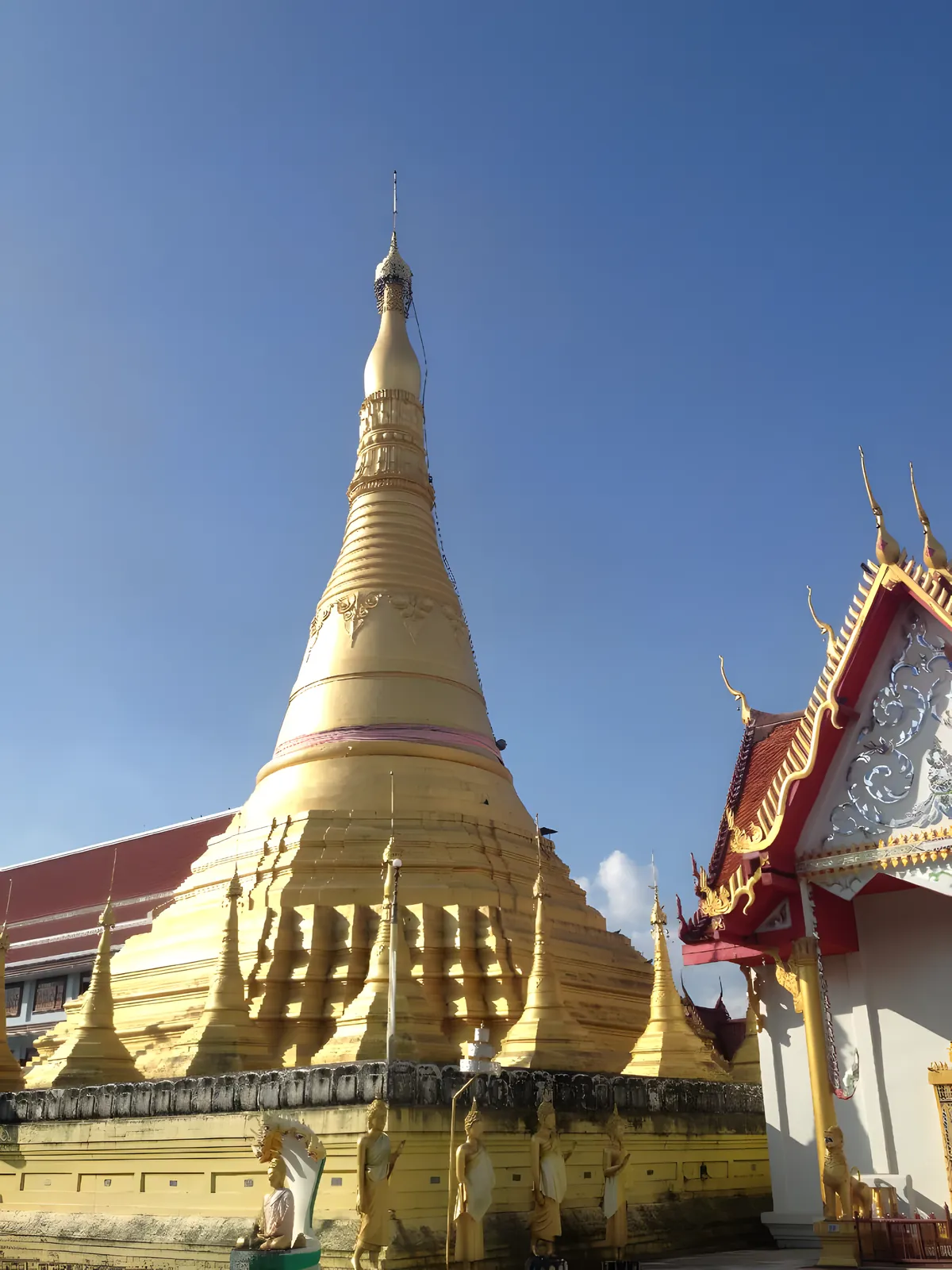
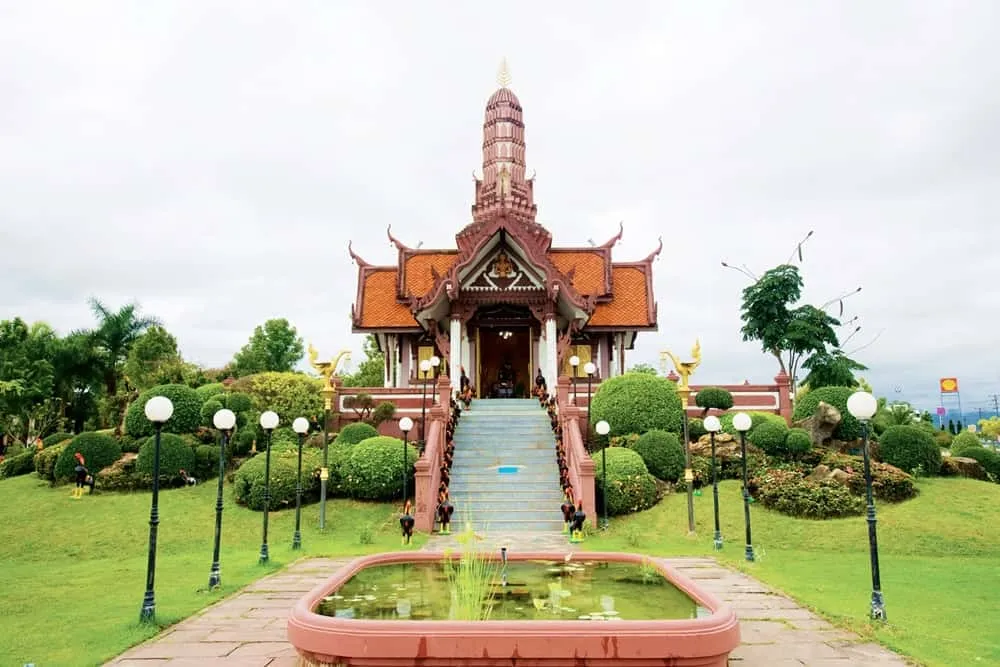
The temple’s best-known feature is set back from the main entrance rather than announced by it: a Burmese-style reclining Buddha roughly 60 metres long, gilded and half-shaded by the surrounding trees. Near the front of the compound, a scaled replica of Yangon’s Shwedagon Pagoda — the gold-spired stupa that anchors Burmese Buddhism — sits alongside a slimmer, more graceful Shan-style chedi, giving first-time visitors two very different silhouettes to compare within a few dozen metres of each other. A separate viharn houses a bronze replica of the Mahamuni Buddha, one of the most venerated images in Burmese Buddhism, whose original sits enshrined in Mandalay; devotees here press gold leaf onto the replica much as pilgrims do at the source image across the border.
The mix of architecture reflects Mae Sot’s position, in Tak province, as a trading town shaped as much by Myanmar as by Thailand — cross-border commerce, migrant labour, and Shan, Karen, and Burmese communities have defined the district for generations, and this temple is one of the clearest physical expressions of that history still standing. Merit-making follows a Shan rhythm as much as a Thai one: expect Burmese-language chanting on some days and a steadier flow of cross-border visitors than at most Thai temples this far from a major tourist circuit. Mae Sot’s Thai-Myanmar Friendship Bridge over the Moei River is a short drive away, and the same border trade that brings goods and workers across daily also keeps this temple’s Shan community connected to relatives and traditions on the Myanmar side.
Insider Tip: Walk to the back of the compound for the reclining Buddha — most first-time visitors stop at the Shwedagon replica near the gate and miss it entirely. Watch out: cover your shoulders and wear long trousers rather than shorts; this is a working temple for a conservative border community, not a tourist attraction geared toward casual dress. The site is within walking distance of central Mae Sot, so tuk-tuk or on-foot access from most guesthouses is straightforward.
- Founded: 1857, by Shan (Tai Yai) settlers from Myanmar
- Notable feature: ~60m Burmese-style reclining Buddha
- Also known as: Wat Mae Tao Ngiao, Wat Thai Yai
- Entry fee: Free
- Hours: Daily 08:00-17:00
Good to Know
Good for
On site
Location & Directions
Mae Sot, Tak
Mae Sot, Thailand
Show your taxi or Grab driver
วัดไทยวัฒนาราม (วัดแม่ตาวเงี้ยว หรือวัดไทยใหญ่)
Within Walking Distance


Frequently Asked Questions
Why does this temple have three names?
How big is the reclining Buddha?
When was the temple built?
Is there an entry fee?
What else is inside besides the reclining Buddha?
Spotted something out of date or incorrect? Let us know
Stay Near Wat Thai Watthanaram (Wat Mae Tao Ngiao or Wat Thai Yai)
Compare places to stay in Mae Sot, or open the map for options closest to the attraction.