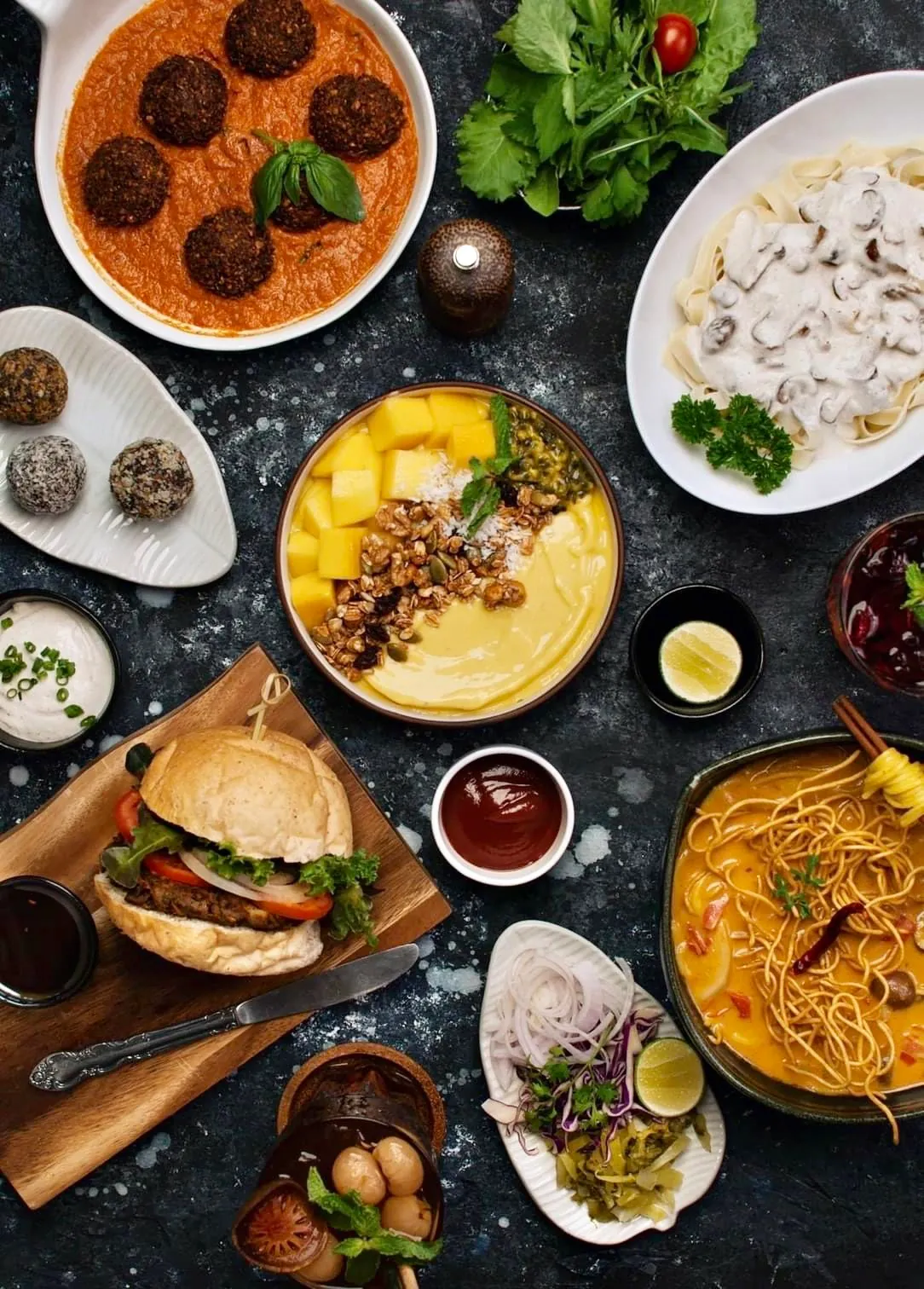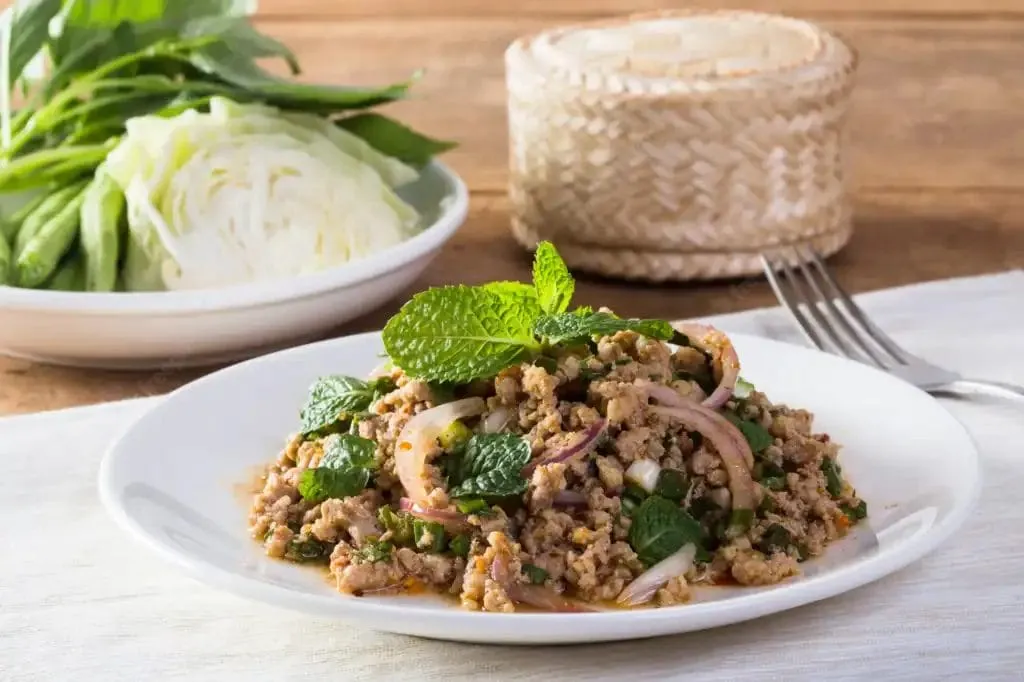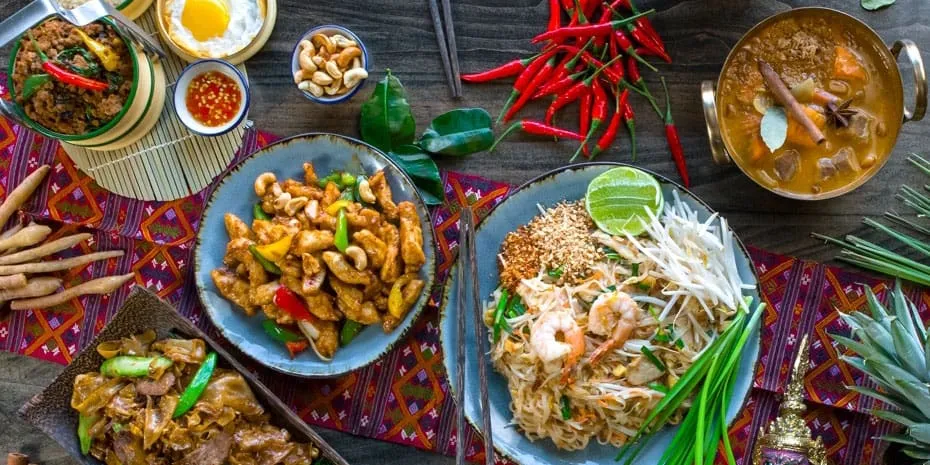







Bangkok combines a centuries-old Buddhist vegetarian tradition, called jay, with a newer group of dedicated vegan restaurants. Options range from inexpensive street food to polished sit-down meals, although prices and opening hours should be checked before making a special trip.
The short answer on where to go: Broccoli Revolution on Soi 49, May Veggie Home (main branch at Soi 101, Express at Soi 23), Govinda on Soi 22, Veganerie across multiple locations, and any jay stall in Chinatown flying a yellow flag.
Head to /visit/bangkok/ for the broader city guide if you’re still planning your trip.
- Budget street food: 40-80 THB per dish (Chinatown jay stalls)
- Mid-range restaurants: 150-280 THB per main
- Premium plant-based: 300-500 THB per main, 400-600 THB per person with drinks
- Best neighbourhoods: Sukhumvit (Thong Lo/Soi 49), Ari, Chinatown (Yaowarat)
- Getting there: BTS Skytrain covers Sukhumvit well; Chinatown via MRT Wat Mangkon (Blue Line, closest to Yaowarat Road) — see Bangkok mass transit
- Jay stall hours: Mostly morning until 2 PM; restaurant hours typically 11 AM-9 PM
- Booking: Walk-in works at most places; Broccoli Revolution books up on weekends — arrive early or reserve ahead
Quick answer
Start with Broccoli Revolution in Thong Lo / Soi 49 for the strongest all-round pick. Use Veganerie for fully plant-based food, Govinda for Italian food, and May Veggie Home when fully vegan food matters most.
| You want | Go to | Area / Price |
|---|---|---|
| The best all-rounder vegan restaurant | Broccoli Revolution | Soi 49, Thong Lo — 200-350 THB |
| Cheap, authentic vegan Thai | May Veggie Home | Sukhumvit Soi 101 (Punnawithi) + Soi 23 Express — 80-180 THB |
| Buddhist jay street food | Yaowarat jay stalls | Chinatown — 40-80 THB |
| Italian vegan (genuinely good) | Govinda | Soi 22, Sukhumvit — 180-320 THB |
| Plant-based brunch, weekend splurge | Nature’s Charm Cafe | Thong Lo, Soi 51 — 200-350 THB |
| Multiple-location convenience | Veganerie | Multiple BTS locations — 150-280 THB |
| Local café, no tourists | Ari neighbourhood spots | Ari — 120-250 THB |
How we picked these food stops
This shortlist starts with the place information already maintained for this guide in Bangkok, then weights the practical signals readers need most: area, price, hours, ratings when listed, booking or website links, and the specific use case named on each card. Missing prices, ratings, images, or booking links stay blank rather than being guessed.
We also kept the awkward parts visible. A good food stop is only useful when the area, timing, crowd level, and transport fit the trip you are actually taking.
Sukhumvit: The Plant-Based Hub
Sukhumvit has several established plant-based restaurants within reach of the BTS, making it a practical area for combining a meal with the rest of a Bangkok itinerary.
Broccoli Revolution
The benchmark for Bangkok's vegan restaurant scene — 100% plant-based, spanning Thai, Asian fusion, Middle Eastern, and European in a single sitting. The quinoa burger with broccoli purée and mango salsa is the signature; the tofu green curry (*gaeng khiao wan jay*) at around 200 THB is genuinely good. Weekend brunch runs 400–600 THB per person with organic cold-pressed juice. The place fills up by noon on Saturdays — come at 11am or book ahead.
- Area
- Thong Lo / Soi 49 · 899 Sukhumvit Soi 49, Thong Lo
- Hours
- Daily 8am–9pm (last order 8:45pm)
- Price
- 200–350 THB
- Go for
- Quinoa burger with broccoli purée & mango salsa
Veganerie
One of Bangkok's first fully plant-based restaurant chains and still a reliable standby. Its current branches are Concept on Sukhumvit 24, Grand Palace, Nana, Ratchathewi, Lasalle, and Silom. The menu covers Thai staples and Western comfort food at 150–280 THB per main; check the branch location before setting out.
- Area
- Multiple BTS locations · Concept (Sukhumvit 24), Grand Palace, Nana, Ratchathewi, Lasalle, Silom
- Hours
- Daily, 9am–10pm (varies by branch)
- Price
- 150–280 THB
- Go for
- Pad krapow with plant-based mince
Govinda
An Italian vegetarian and vegan pizzeria at the back of a quiet Sukhumvit 22 plaza. Wood-fired pizza, pasta, and vegan desserts make it a useful group option when plant-based Thai is not on everyone's agenda. It currently serves continuously from noon to 11pm.
- Area
- Sukhumvit Soi 22 · 6/5-6 Sukhumvit Soi 22, Khlong Toei
- Hours
- Daily noon–11pm
- Price
- 180–320 THB
- Go for
- Wood-fired pizza margherita or vegan tiramisu
Vistro
Bangkok's award-winning plant-based kitchen — voted Thailand's best plant-based restaurant in 2020 and 2021, and still earning it. Global fusion spanning Thai, Mediterranean, Mexican, and café favourites, with a particular strength in vegan nachos and gyro rolls. Owner-run feel despite the accolades. On Soi 24 near Phrom Phong BTS.
- Area
- Phrom Phong / Soi 24 · 46/1 Sukhumvit 24 Alley, Klongton, Khlong Toei
- Hours
- Daily, 10:30am–9pm (last order 8:30pm)
- Price
- 200–350 THB
- Go for
- Vegan nachos or gyro roll
- Several dedicated vegan restaurants within the same broad corridor
- BTS access to most spots; easy to combine with other Sukhumvit plans
- Wide price range, from budget to premium, within a few stops
- Popular spots get busy from noon; weekend waits at Broccoli Revolution
- Sukhumvit traffic makes short walks between sois slower than the map suggests
May Veggie Home and the Asok Cluster
May Veggie Home
A long-running vegan Thai kitchen, open since 2011. Chef May's menu lists dishes that usually don't come vegan: *tom yum* without fish sauce, Penang curry with brown rice, jackfruit burgers, cauliflower wings. Mains run 80–180 THB. The main branch is near Punnawithi BTS (relocated from Asok in 2024) — the Soi 23 Express branch is smaller but closer to the Asok/Nana end.
- Area
- Punnawithi (Soi 101) · 738 Sukhumvit Soi 101, Punnawithi
- Hours
- Tue–Sun, 10am–9pm; closed Mon
- Price
- 80–180 THB
- Go for
- Vegan tom yum or Penang curry with brown rice
May Veggie Home Express
The compact Soi 23 outpost of May Veggie Home — counter-service, 12 seats, and the same vegan Thai menu at the same prices. Well-placed if you're staying around Asok or Nana and don't want to ride to Punnawithi. Wait times are shorter than the main branch.
- Area
- Asok / Soi 23 · 45 Sukhumvit Soi 23, 2nd fl, Prasarnmit Plaza
- Hours
- Daily, 10am–9pm
- Price
- 80–180 THB
- Go for
- Jackfruit burger or vegan Penang curry
Insider Tip: The Soi 23 Express location is smaller and well placed if you’re coming from the Asok/Nana end of Sukhumvit — wait times are shorter and the menu covers most of the hits.
The Asok area also has a cluster of food-court options in Terminal 21 and surrounding malls. Ask for jay at the Thai stalls in the food court (floor B1 in Terminal 21) and most vendors will understand; prices drop to 60-100 THB per dish. It’s not the same as a dedicated restaurant, but it works at speed.
Nature's Charm Cafe
The weekend brunch option in Thong Lo — inventive rather than authentic, with banana-blossom fish and chips, jackfruit burgers, and Thai Tom Yum mac and cheese. A short walk from BTS Thong Lo station. Better for a leisurely Saturday lunch than a quick weeknight dinner.
- Area
- Thong Lo / Sukhumvit 51 · 29 Sukhumvit 51 Alley, Khlong Tan Nuea, Watthana
- Hours
- Daily, 9am–8pm
- Price
- 200–350 THB
- Go for
- Banana-blossom fish & chips or jackfruit burger
Chinatown: Jay Food, the Original
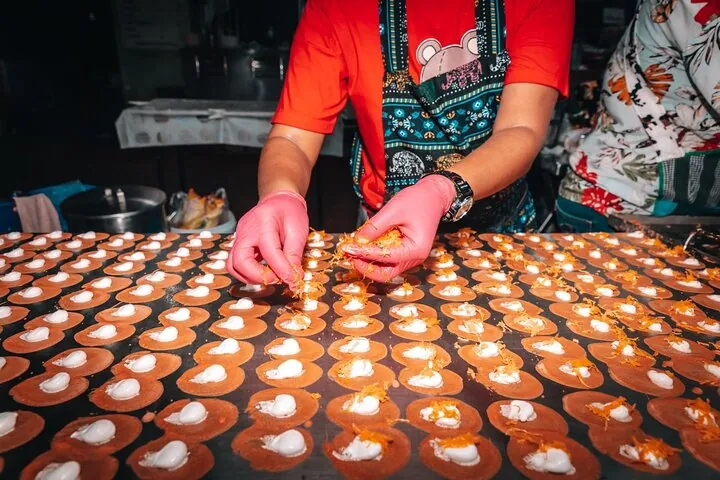
Long before the plant-based trend reached Bangkok, Chinatown’s Sino-Thai community was serving jay food. This is Buddhist vegetarian food rooted in Chinese practice — no meat, no seafood, no eggs, no dairy, and no pungent vegetables including garlic and onion. The result is a distinct flavour profile: lighter, cleaner, slightly different from the popular Thai food you’ll find elsewhere.
The yellow flags with red Chinese and Thai text are the signal. Walk down Yaowarat Road and into the lanes between Charoen Krung and Plaeng Nam Road and you’ll find stalls selling three dishes over rice for as little as 40 THB.
Lee Jae Veg
A family-run *jay* stall tucked in a Chinatown side alley near Check Inn — open-air seating, 30-plus plant-based Thai and Chinese dishes, everything 50–60 THB. Tofu, glass noodles, and rice-based plates at prices that feel out of place in 2026. Come in the morning before the best dishes sell out.
- Area
- Chinatown / Yaowarat · 188 Charoen Krung Soi 14, Samphanthawong
- Hours
- Daily, 8am–5:30pm
- Price
- 50–80 THB
- Go for
- Rice with three jay dishes (~50–60 THB)
The stalls operate on morning-to-midday hours, typically 7 AM-2 PM, though Lee Jae Veg runs later. Come late and most are sold out. During October’s Vegetarian Festival — when much of the city goes jay for around ten days — Chinatown goes into full swing, with stalls open all day and evening.
Insider Tip: The Vegetarian Festival (usually October) is when Bangkok’s jay food scene peaks. Stalls you’d never normally find come out across the city, not just in Chinatown. If your visit overlaps, eat your way through it.
Jay food is also worth understanding for street food more broadly. When you’re navigating Bangkok’s street food scene, the yellow jay flag cuts through any language barrier. It’s a reliable signal that what’s being served contains no animal products.
Ari and Other Neighbourhood Cafes
Ari, north of Victory Monument on the BTS, is low-rise, walkable, café-heavy, and less tourist-facing than Sukhumvit. The vegan options here tend to be small owner-run cafés rather than full restaurant operations.
The Ari neighbourhood generally suits people who are staying in the area or who want to eat without other tourists. Café options are plentiful — most serve at least some plant-based items even if they’re not dedicated vegan spots. For the clearest picture of what’s open right now, the HappyCow app maps verified vegan restaurants with current hours and user reviews.
Buddhist Context and Jay Vocabulary
Understanding jay makes Bangkok easier to navigate as a vegan traveller. The tradition arrived with Hokkien Chinese migrants and sits alongside, but separate from, mainstream Thai vegetarianism. Jay practitioners avoid the five “pungent roots” — garlic, onion, shallot, spring onion, and chives — which means jay dishes have a different taste from garlic-heavy stir-fries even when those stir-fries are technically meatless.
The words to know: jay or เจ means strictly no animal products (Buddhist sense); mangsawirat (มังสวิรัติ) means vegetarian in a broader Thai sense and may include eggs or dairy. If you’re fully vegan, jay is the safer call.
For pad thai ordered vegan, say “pad thai jay” — most street vendors understand this, though results vary. The same applies to som tam (som tam jay), which skips the dried shrimp and fish sauce. Mango sticky rice is naturally vegan in most preparations. The popular Thai food guide covers which Thai dishes are easiest to adapt.
Taking a Thai cooking class that focuses on plant-based cooking is worth considering if you want to understand these dishes beyond eating them. Several Bangkok schools offer dedicated vegetarian curriculum.
How to Navigate Bangkok’s Vegan Scene
Getting around Bangkok’s vegan restaurants is straightforward with the right approach. The BTS Skytrain covers most of Sukhumvit; the MRT reaches Chinatown via Wat Mangkon station (Blue Line, the closest stop to Yaowarat Road). Full transport breakdown at Bangkok mass transit.
For restaurants: Most dedicated vegan spots are walk-in friendly on weeknights. Broccoli Revolution is the exception — Saturday lunch especially. Govinda and Nature’s Charm also fill up on weekends.
For street food: Morning is best for Chinatown jay stalls (before 1 PM). Evening Bangkok street food is harder for vegans — the good stalls are meat-heavy. Khao San Road area has multiple vegan-friendly stalls catering to international visitors.
For apps: HappyCow is genuinely reliable in Bangkok — listings are maintained and user reviews are current. It works better than Google Maps for filtering actually-vegan options versus “has one salad” restaurants.
On budget: A day of eating vegan in Bangkok costs 200-300 THB if you use jay stalls and food courts. Add one sit-down restaurant and it’s 500-700 THB. Fine if you’re watching spend — Bangkok is cheap even at the premium plant-based level. Cheap hotels in Bangkok alongside a vegan street food approach keeps daily costs very low.
If you’re a digital nomad using Bangkok as a base, Ari and Thong Lo have useful café-restaurant overlap, including places with Wi-Fi and plant-based menu options.
How to choose where to eat in Bangkok
Choose by meal and neighbourhood, not just by reputation. The useful clusters here are Thong Lo / Soi 49, Multiple BTS locations, Sukhumvit Soi 22; pick the one closest to the rest of your day before you chase a single name. Markets and local restaurants reward early timing and small cash; higher-end places need reservations.
9Verdict: Bangkok gives vegan and vegetarian travellers a useful mix of long-standing jay food and newer plant-based restaurants at several price points. Use Sukhumvit for polished sit-down meals, Chinatown for traditional jay stalls, and Ari for smaller neighbourhood cafés. Rating: 9/10