




Chao Mae KuanIm Shrine
ศาลเจ้าแม่กวนอิม
Chao Mae KuanIm Shrine is a small Chinese temple on Koh Phangan’s road between Thong Sala and Chaloklum, built in 1992 to honour Kuan Im (Guanyin), the Buddhist goddess of mercy. Entry is free, and the shrine sits on a rise with a view back over the surrounding coast — a five-minute stop for anyone already heading north toward Chaloklum or Bottle Beach.
A Lighthouse That Became a Temple
The shrine’s origin is more specific than most roadside Chinese shrines in Thailand. A local woman, Khun Malawan, dreamed that Kuan Im asked her to help build a lighthouse to guide the island’s fishermen safely home at night. Word spread, and islanders donated money toward the project — but partway through, the plan shifted from a practical lighthouse to a shrine honouring the goddess who’d inspired it. The result, finished in 1992, is this modest Chinese temple: red pillars, gold trim, and a Kuan Im statue at the centre of the altar, usually dressed in silk and surrounded by fresh lotus offerings.
What You’ll Find There
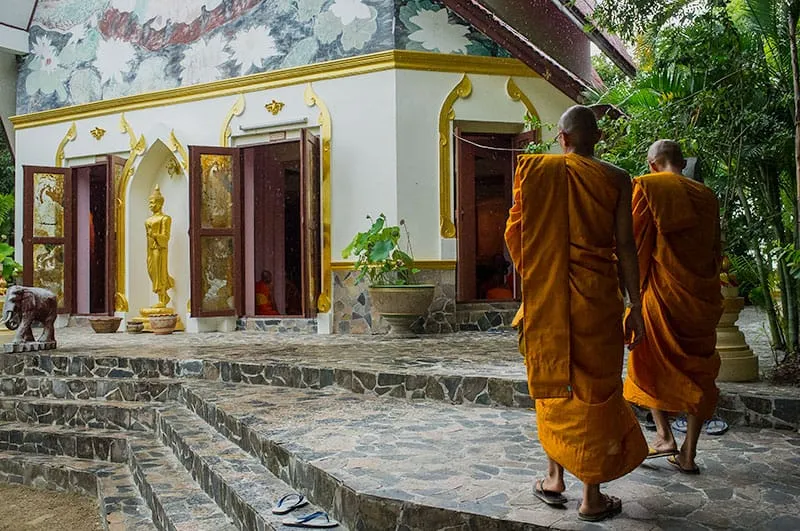
The shrine is compact rather than grand — a single prayer hall rather than a temple complex — but it’s an active one. Incense sticks are sold at the entrance for anyone who wants to make an offering, and Thai-Chinese families from around the island stop by regularly, particularly around Chinese New Year and Vegetarian Festival dates. Children are brought along and taught to wai before the altar; older devotees sit and pray quietly. It functions as a working neighbourhood shrine rather than a tourist sight, which is part of what makes a visit feel genuine rather than staged.
Insider Tip: Visit around 7-8 AM if you want the shrine to yourself — later in the day it sees a steady trickle of locals coming to light incense, which is worth witnessing but changes the quiet, contemplative feel of an early visit.
Watch out: Because this is a working local shrine rather than a temple built for tourism, there’s no fixed schedule of ceremonies or guided information on-site — what you see depends entirely on who else is there when you arrive.
Practical
The shrine sits at Moo 7, a short songthaew or taxi ride north of Thong Sala, Koh Phangan’s main pier town. Dress reasonably modestly and remove your shoes before stepping into the prayer hall — it’s a small courtesy that’s appreciated at any Chinese or Buddhist shrine in Thailand. A small donation toward upkeep is welcome but not required. Combine the stop with Wat Khao Tham or Wat Phu Khao Noi, Koh Phangan’s two other well-known hilltop temples, for a half-day loop around the island’s quieter spiritual sites away from the beach clubs.
- Entry fee: Free
- Built: 1992
- Location: Moo 7, on the road between Thong Sala and Chaloklum
- Best time: Early morning (7-8 AM) for a quiet visit
- Getting there: Songthaew or taxi from Thong Sala pier
Location & Directions
Moo 7
Koh Phangan, Thailand
Show your taxi or Grab driver
ศาลเจ้าแม่กวนอิม
Frequently Asked Questions
What is the story behind the Chao Mae KuanIm Shrine on Koh Phangan?
Is the shrine free to visit?
Who is Chao Mae Kuan Im?
How do I get there from Thong Sala?
Is this the same as the famous Guanyin shrines in Bangkok or Phuket?
Spotted something out of date or incorrect? Let us know
Popular tours in Koh Phangan




Stay Near Chao Mae KuanIm Shrine
Live prices for places closest to Chao Mae KuanIm Shrine — tap a pin to compare.