





Bo Sang Umbrella Festival 2027: Chiang Mai Handicrafts


Some links are affiliate links. If you book through them we may earn a small commission at no extra cost to you.
Bo Sang has been making handmade umbrellas for longer than anyone in the village can reliably trace. The craft centre of San Kamphaeng district, 9km east of Chiang Mai, the village’s narrow main street is lined with workshops where artisans stretch mulberry-bark paper (saa paper) over bamboo frames and paint it by hand. Every third weekend of January, the Bo Sang Umbrella Festival turns that ordinary working week into a three-day celebration, with the 2027 edition expected 15-17 January.
The streets fill with hundreds of decorated umbrellas and parasols hung overhead and displayed in doorways, giving the whole village the effect of a canopy of colour. Craft demonstrations run throughout the day inside open workshops: visitors can watch umbrella-making, wood-carving, silverwork, and lacquerware being produced in real time. Most workshop owners are happy to explain their process; a few offer short hands-on sessions for an informal fee. The range of goods on sale covers umbrellas of all sizes, hand-painted fans, silk scarves, and decorative items, all made in the village or in nearby San Kamphaeng.
- Dates: 15-17 January 2027 expected (third weekend of January annually)
- Location: Bo Sang village, San Kamphaeng district, ~9km east of Chiang Mai city centre
- Entry: Free
- Getting there: Songthaew (shared red truck taxi) from Warorot market area, or Grab: around 20-30 minutes; 50-80 THB by songthaew
- Best time to arrive: Friday afternoon for the opening ceremony and float parade (16:00-20:00 in 2026); times shift each year
- Weather: Cool and dry: January is peak season in Chiang Mai, expect 15-28 degrees Celsius
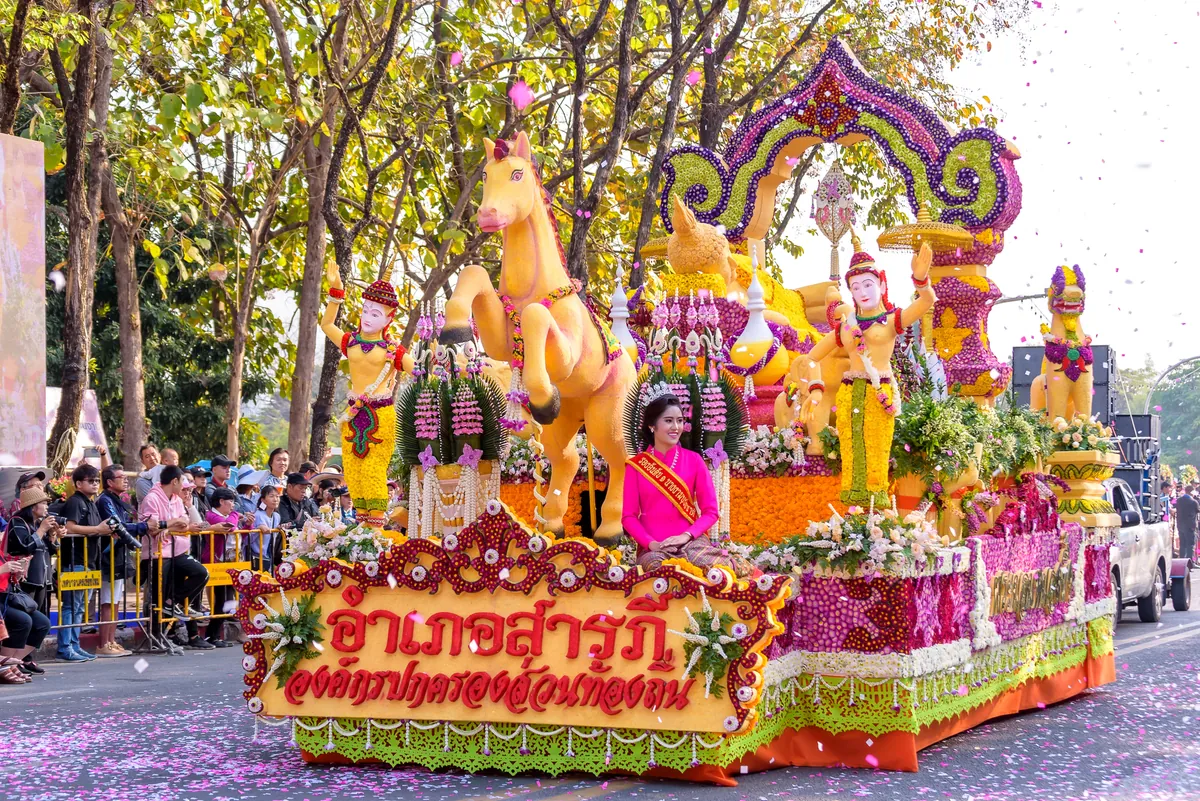
The opening parade is the festival’s most photographed moment; in 2026 it ran on the Friday, 16:00-20:00. A procession moves through Bo Sang’s main street with villagers and performers in traditional Lanna dress, accompanied by live music: cymbals, hand drums, and the pii oboe that defines northern Thai ceremonial sound. Decorated floats and umbrella-carrying dancers add spectacle, umbrella bicycle parades run each day, and the Miss Bo Sang Umbrella contest takes the stage on Sunday evening. The procession is slow-moving and the street is narrow, so staking out a spot near the umbrella-draped archway at the village entrance gives the best backdrop for photographs.
Pro Tip: Bo Sang is a working craft village year-round, not just during the festival. If the January crowds are not appealing, the workshops are open and welcoming on any weekday: you can commission hand-painted umbrellas directly and arrange shipping home. Festival weekend prices are broadly the same as the rest of the year; there is no festival surcharge.
Saturday and Sunday bring umbrella-painting contests, cultural performances, and traditional Lanna music and dance in the village square. In 2026 the festival ran roughly 10:00-21:00 each day; check the programme each year, as times shift. Chiang Mai’s night markets and restaurants are a short ride away for the evenings. January is high season, so book accommodation in the city at least a few weeks ahead.
The broader San Kamphaeng Road (Route 1006) running east from Chiang Mai is essentially a 10km craft corridor. Beyond Bo Sang itself, the road passes workshops specialising in silk weaving, teakwood furniture, celadon ceramics, and silver jewellery. Many are factory-outlet scale rather than artisan studios, but the silk and celadon workshops at the far end of the road are genuine and worth a stop. Combine the Bo Sang festival visit with an hour or two driving the full stretch if you have a rental scooter or car.
Bo Sang’s umbrella craft has been practised for over a century and is recognised as a cornerstone of northern Thailand’s craft heritage, and the village has maintained it despite pressure from cheap imported alternatives. The saa paper umbrellas sold here are lighter than they look, pack flat, and survive checked luggage surprisingly well inside a cardboard tube. Most shops will pack them for you. A medium-size painted parasol is modestly priced; large hand-painted decorative pieces with lacquered rims cost considerably more. The cheap miniatures sold at Bangkok’s tourist markets are not made here.
Hero image: Bo Sang saa-paper umbrellas, Chiang Mai, Grossbildjaeger, CC BY-SA 3.0, via Wikimedia Commons.